


An Interview With Vanessa Ogle
Let go of assumptions: There is a reason why it’s the first step in LEAP. Without letting go of our assumptions and recognizing our cultural blind spots, nothing else is possible. I learned it the hard way from Kenji. Once I let go of my cultural assumptions around the student-teacher dynamic, I became a better teacher and a more effective communicator.
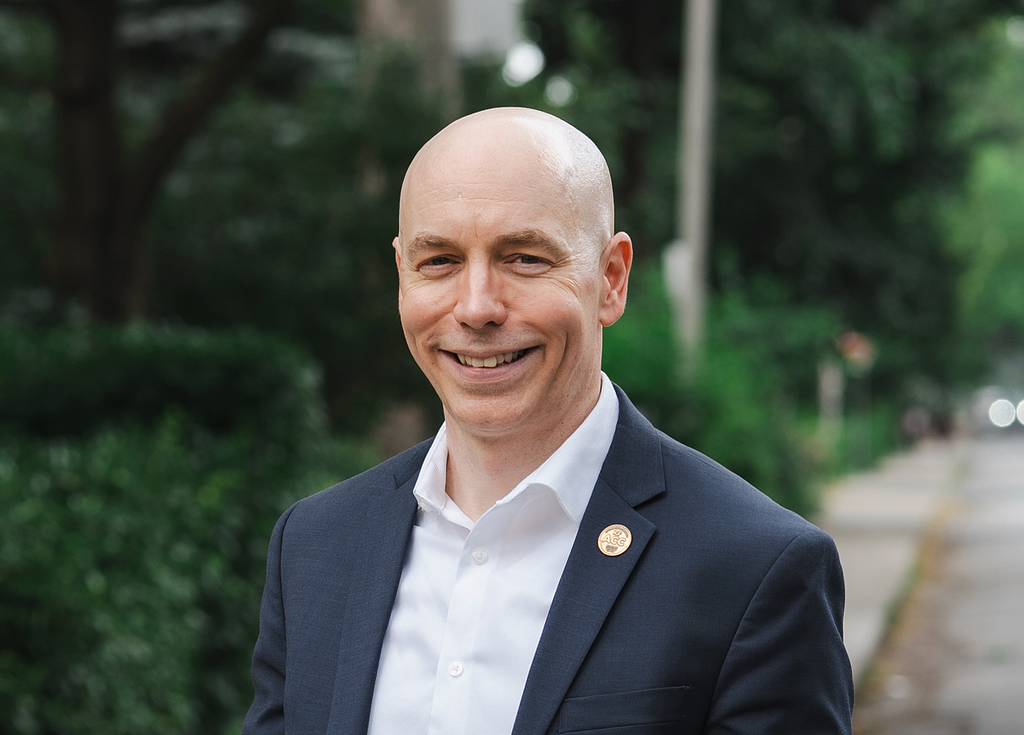
In a world where diversity is often acknowledged but not always celebrated, we are taking a step forward to highlight the importance of inclusivity in building strong, vibrant communities. This series aims to explore the various facets of diversity — be it racial, cultural, gender-based, or within the differently-abled community — and understand how embracing these differences strengthens our social fabric. As part of this series, we had the pleasure of interviewing John Edward McGraw.
John is a Multicultural Workplace Expert, Inclusive Communication Specialist, Human Connection Speaker, and the founder of Hiyaku Coaching. Drawing on 15 years teaching in Japan and Canada, he saw that language training alone cannot bridge cultural divides. He now works with organizations and leaders to navigate cultural gaps, integrate international talent, and build workplaces where inclusive performance can thrive. Through coaching and partnerships with businesses and nonprofit organizations, he helps leaders and professionals collaborate more effectively, break down barriers, and achieve shared success. JohnEdwardMcGraw.com
Thank you so much for joining us in this interview series. Before we dive into our discussion about celebrating diversity, our readers would love to “get to know you” a bit better. Can you share with us the backstory about what brought you to your specific career path?
I’d say my path has been shaped by several influences, starting with my family history.
My parents met in Nigeria while they were teaching at a boys’ academy. My dad was from Saskatchewan in western Canada and my mom was from Ireland. After they got married, they moved to a smaller city in Ontario, where my brother and I were born. The community we grew up in was not so diverse, but many of my parents’ former students came over for work and study opportunities and they would visit us. As a result, we had a fair bit of exposure to Nigerian culture early on in life.
As an adult, I lived and worked in Japan as an English teacher. This was my first time living outside of Canada, and it was the first time I realized Canada has a culture of its own. Many Canadian citizens by birth, particularly Anglophones, believe we don’t have a culture. Multiculturalism is touted as a special part of Canadian society, but I think it’s viewed as other cultures coming from abroad and adding to Canada’s supposed cultural neutrality. We often don’t realize that culture isn’t just language and food; it’s also invisible aspects like values and beliefs that affect how we relate and communicate with each other. Living in Japan made me realize that Canada does in fact have a culture, and it’s one of many rather than some kind of universal default.
After returning from Japan, I shifted from English teaching to intercultural communication coaching, consulting, and training because I realize that language skills alone can’t close cultural gaps. I founded Hiyaku Coaching to help leaders, organizations, and international talent leap across cultural divides. I went with the Japanese word “Hiyaku” because it means great leap forward or progress.
Can you share an interesting or hopeful story where spending time with someone who did not look like you or who was different from you taught you something that has been useful to you?
The best example I have is my wife. She was born and raised in Argentina to Japanese parents. She speaks Japanese and English fluently, but Spanish is her first language and in her heart she’s a Latina. We met shortly after I moved to Japan, and she completely shifted my perspective on culture and intersectionality.
Prior to Japan I had lived for several years in Toronto. It’s a very multicultural city, but my encounters there had been with first-generation immigrants or their children who had grown up in Canadian culture. Connecting with someone like my wife, who didn’t fit that narrow lens, opened my eyes to the complexity of identity.
For example, many people in Canada assume she is “just” Japanese because of her appearance and family name, even after learning about her Argentine background. On the other hand, some Japanese assume one of her parents must have been non-Japanese, because a person with two Japanese citizens as parents who isn’t a Japanese citizen herself doesn’t fit their expectations. Seeing her navigate these situations reminds me of the human tendency to stick to our assumptions.
My wife’s experiences have taught me that identities are layered, and appearances don’t tell the whole story. We have to get to know the whole person. Beyond that, being married to her has been the greatest gift in my life and opened my world in so many ways.
You are a successful leader. Which three character traits do you think were most instrumental to your success? Can you please share a story or example for each?
I would say curiosity, adaptability, and persistence.
Curiosity is the key to cultural awareness. In Japan, I initially judged situations based on my own assumptions, which led to a lot of frustration and missed opportunities. I learned that judgment closed doors, but curiosity opened them. Early in my previous teaching career, I thought students who were quiet in class had nothing to contribute. I later learned they had quite a bit to share, but in staying quiet they were showing respect to me. Once I established a safe space and asked questions that encouraged them to contribute, they opened up quite a bit.
Adaptability allowed me to pivot from English teaching to becoming a multicultural workplace expert and inclusive communication specialist. It’s also helped me adapt to different cultural situations, not by completely giving up my identity but by adjusting my behaviour to fit the expectations in given situations. When you know your core values, you can adapt your behaviour to new contexts without losing yourself.
For example, many cultures in southeast Asia put a great value on group consensus and preserving harmony in meetings. Open disagreement is not looked upon favourably. My preference is to politely but openly discuss points of contention, which partly comes from being raised in Canadian culture. However, in this situation I’d set up a private discussion outside of the main meeting with a key person to express my concerns. I’m still speaking my mind, but I’m doing it in a way that preserves cultural expectations and makes sure my message gets across.
Persistence has kept me on my path of preaching intercultural communication. There were times when it would have been easier to go back to English teaching, but I believe intercultural communication is essential for Canada’s future. I’ve seen opportunity lost because international professionals with valuable experience aren’t seen as a “cultural fit.” Those aren’t just losses for newcomers, they’re losses for businesses and ultimately for Canada. So I’ve persisted despite the challenges. That has brought me to where I am today.
Ok, thank you for that. Let’s now jump to the primary focus of our interview. Can you share a personal story that highlights the impact of diversity and inclusivity in your life or career?
Early on in my teaching career in Japan, I had a student named Kenji. He was a middle-aged businessman preparing for an English exam that could open better job opportunities overseas.
The lesson that day was on multiple-choice strategy: “When in doubt choose ‘C’”. There’s no penalty for guessing so don’t leave anything blank. However, in Japanese culture guessing can feel risky and some test takers would leave questions unanswered to avoid looking foolish. So we drilled “When in doubt choose ‘C’” and I asked Kenji “Do you understand?” He nodded and said “Yes.”
However, when he handed back the practice test, several questions were left blank. I was shocked, and when I asked him why he hadn’t asked for explanations he wouldn’t say anything. I was extremely frustrated and lost my temper with him, ordering him to choose answers. It was not my proudest moment.
Later, I complained about Kenji’s behaviour to a colleague. She told me, “John, he’s Japanese and you’re his teacher. He wouldn’t disrespect to you by saying he didn’t understand. That would imply your instructions were bad.”
That hit me like a bombshell. In that moment I realized that Kenji hadn’t failed the lesson — I had. I had been so tied to my own preconceptions that I hadn’t paid attention to Kenji and his nervousness when he said “yes.”
The worst part of it all was that Kenji never came back to the school. It was a massive failure on my part, but I learned so much from it.
From that point on, I stopped asking “Do you understand?” and started asking “Can you explain the instructions back to me?” That shift changed everything, and I learned that real inclusivity means adapting my approach to meet others halfway.
How do you approach and manage the challenges that arise when working towards creating more inclusive communities?
I start with humility. I don’t have all the answers, even with my experience across different cultures, and that’s OK. If I approach situations with genuine curiosity rather than judgment, I’ll be on the right path.
I also normalize mistakes, mine and others. The only way we can grow is by learning from our errors, and giving grace to make honest mistakes builds psychological safety. When people feel safe, they’re more likely to take risks and contribute.
Culture is an abstract concept, so I use my frameworks SHAPE, LEAP, and SPEAK to make it more observable. SHAPE defines Canadian workplace values, LEAP reminds us to keep an open mindset and SPEAK makes it easier to communicate in an inclusive way.
Finally, whenever I’m facing a new situation, I return to the same question, “What assumptions might be at play here?” I’m human and I’m prone to judging and assuming just like anyone else. Checking in with myself helps me avoid the judgment path and keep an open mind.
What innovative strategies or initiatives have you implemented or observed that effectively promote the importance of diversity and inclusivity?
As I mentioned earlier, I’ve developed three frameworks that I use and share frequently: SHAPE, LEAP, and SPEAK. I’m a big fan of using acronyms to remember key concepts.
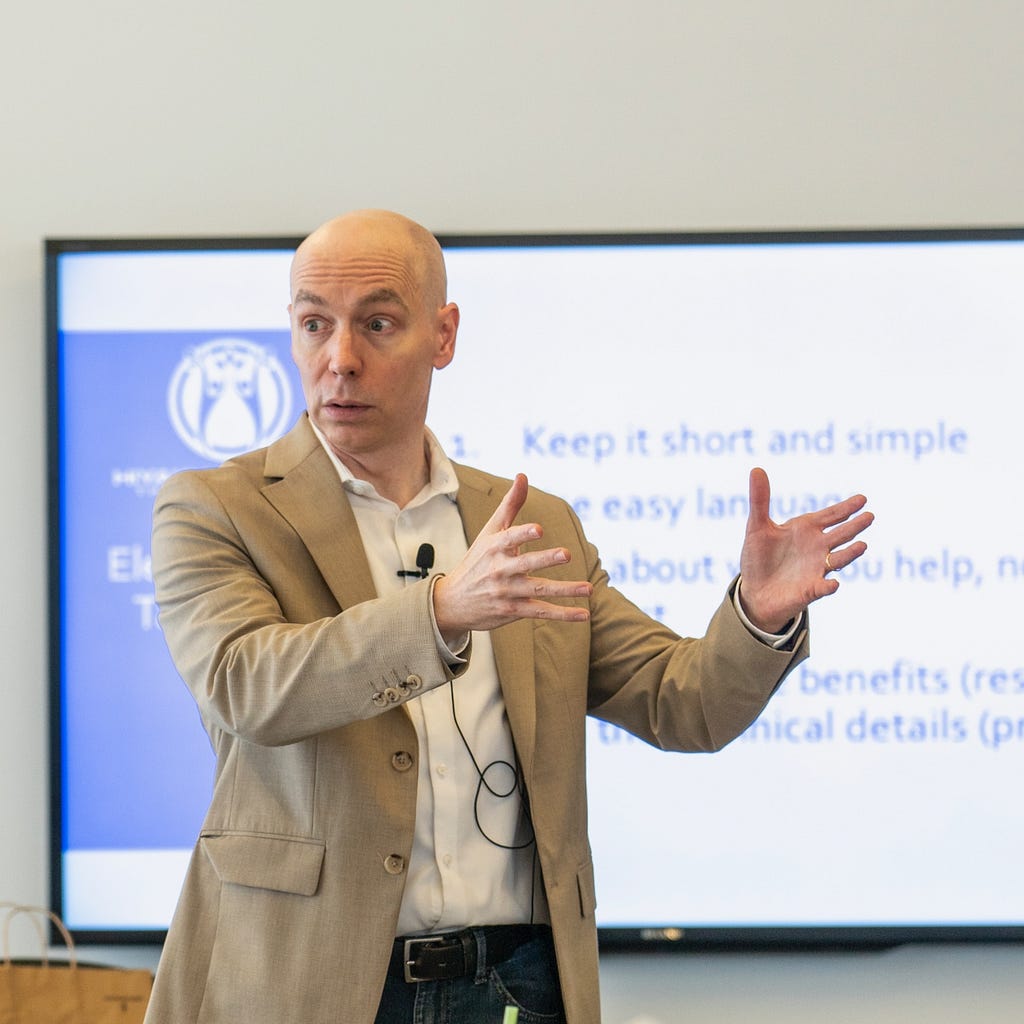
SHAPE brings to light the values that influence perceptions and behaviour in the Canadian workplace. I use the phrase “These are the values that SHAPE the Canadian workplace” to make it easier to remember. SHAPE consists of: Sociability (self-advocacy and openness); Harmony (consensus and avoiding open conflict); Acceptance (multiculturalism and flatter hierarchy); Privacy (separation of professional and personal life); and Efficiency (keeping communication short and simple).
SHAPE helps newcomers to Canada remember concepts such as sharing your accomplishments for advancement (Sociability), understanding less direct feedback such as the “sandwich technique” (Harmony) and using first names rather than titles (Acceptance). SHAPE also helps Canadians explain these values to others and understand when their own perceptions might be influenced by them. For example, just because an employee stays silent about their accomplishments doesn’t mean they have nothing to contribute. They may just come from a culture where modesty is highly valued.
LEAP gives a systematic way to approach unfamiliar situations when someone behaves in a way that doesn’t match our expectations, which can happen frequently when working across cultures. LEAP includes: Let go of assumptions (avoid judging something you don’t understand); Engage with curiosity (ask open questions to understand better); Assess possibilities (check with more than one source); and Perform with insight (act on your new knowledge). It’s a great mindset tool to keep us open and curious rather than judgmental.
SPEAK is an inclusive communications tool with easy steps to remember and apply. The steps in SPEAK are: Simplify (avoid jargon and idioms); Pause and listen (allow time to process); Enunciate and pace your speech; Ask and clarify (ensure your message is landing); and Keep respect at the centre. The last step, keep respect at the centre, is the most important one because it’s easy to get frustrated if your message isn’t getting across. If I had LEAP and SPEAK back when I was teaching Kenji, I would have handled that situation very differently.
In your opinion, what are the key elements that make a community truly inclusive, and how can these be fostered on a larger scale?
To me, the key elements are awareness, curiosity, and safety.
Awareness is recognizing our own culture is one of many instead of a universal “default.” With that awareness alone, we are less likely to judge other cultures as “strange” or even “wrong.” Curiosity is the willingness to learn and ask questions with a genuine desire to learn, not judgement. Safety to share thoughts and make mistakes creates ripe opportunity for diverse thinking and innovation. People are more likely to communicate openly when they aren’t afraid.
To encourage them on a larger scale, leaders have to embody them. When leaders demonstrate awareness, curiosity, and a commitment to safety, the rest of the community will follow.
Based on your experience and research, can you please share “5 Ways We Can Build Inclusive Communities”? If you can, please share a story or an example for each.
1 . Let go of assumptions: There is a reason why it’s the first step in LEAP. Without letting go of our assumptions and recognizing our cultural blind spots, nothing else is possible. I learned it the hard way from Kenji. Once I let go of my cultural assumptions around the student-teacher dynamic, I became a better teacher and a more effective communicator.
2 . Celebrate differences as an asset: In some circles there’s a misconception that you have to choose between diversity or excellence. In fact, when communication is open and respectful, diversity fuels innovation and productivity exponentially. For example, a white paper by Cloverpop that’s been endorsed by a number of experts, including a professor from Harvard Business School, found that diverse teams are 87% better at making business decisions.
Netflix’s global content strategy is another example of embracing different perspectives. 10 years ago, no one would have thought a series from South Korea could become a worldwide phenomenon, but now everyone knows Squid Game. When everyone can share, innovation thrives.
3 . Practice inclusive communication: It’s not about walking on eggshells. It’s about making sure everyone can contribute fully. SPEAK makes it easier to bring it into practice. These small steps make communities both more welcoming and more effective.
4 . Honour identities while encouraging adaptation: Adapting isn’t about abandoning your values. The best approach is to find a “sweet spot” between your comfort zone and the expected behaviour in a different culture.
I had one client from Japan who struggled with self-advocacy. She had to talk about her accomplishments to get opportunities in Canada, but to her it felt like bragging. Together, we reframed her mindset: rather than bragging, she was sharing the benefits her actions had brought to the team and organization. This was crucial for her to share with her supervisors so they could make decisions going forward, so it was in fact respectful for her to talk about herself in that way.
With this new reframing, she could advocate for herself in a Canadian context while staying true to her sense of humility.
5 . Lead by example: The best-intentioned policies are meaningless without leadership buy-in. By practicing what they preach and leading with humility and curiosity, inclusion spreads throughout the community.
How do you measure the impact and success of diversity and inclusion efforts, and what changes have you seen as a result of these initiatives?
I consider three measures: retention, engagement, and mindset shift. Are international hires staying for the long term? Are more voices contributing, and are they offering diverse viewpoints rather than just agreeing with the majority? Are leaders reframing challenges as cultural rather than personal flaws?
One client, the president of a North American branch of a Japanese company, initially thought her Canadian employees were being selfish when they offered pushback on some of her decisions. She considered herself to be very open-minded, but when we dove deeper she realized that her upbringing in Japan was affecting her perceptions. She was placing the Japanese tendency towards collectivism as better than the more individualistic Canadian viewpoint. Once she recognized that one was not “better” than the other, she became more open to her employees’ opinions. This shift improved communication and made a better work environment for everyone.
You are a person of great influence. If you could start a movement that would bring the most amount of good to the most amount of people, what would that be? You never know what your idea can trigger. 🙂
I’d like to start the LEAP movement. If just a few of us can practice LEAP in our daily lives, it will have a ripple effect. When people feel safe from being judged, they share their true thoughts. This leads to better decisions, stronger workplaces, and healthier communities. LEAP helps turn cultural differences into strategic advantages.
How can our readers further follow you online?
Virtually all my social media handles — Instagram, YouTube, Facebook, and my favourite, LinkedIn — are under JohnEdwardMcGraw. You can also visit my website, JohnEdwardMcGraw.com.
Thank you for the time you spent sharing these fantastic insights. We wish you continued success in your great work!
About The Interviewer: Vanessa Ogle is a mom, entrepreneur, inventor, writer, and singer/songwriter. Vanessa’s talent in building world-class leadership teams focused on diversity, a culture of service, and innovation through inclusion allowed her to be one of the most acclaimed Latina CEO’s in the last 30 years. She collaborated with the world’s leading technology and content companies such as Netflix, Amazon, HBO, and Broadcom to bring innovative solutions to travelers and hotels around the world. Vanessa is the lead inventor on 120+ U.S. Patents. Accolades include: FAST 100, Entrepreneur 360 Best Companies, Inc. 500 and then another six times on the Inc. 5000. Vanessa was personally honored with Inc. 100 Female Founder’s Award, Ernst and Young’s Entrepreneur of the Year Award, and Enterprising Women of the Year among others. Vanessa now spends her time sharing stories to inspire and give hope through articles, speaking engagements and music. In her spare time she writes and plays music in the Amazon best selling new band HigherHill, teaches surfing clinics, trains dogs, and cheers on her children.
Please connect with Vanessa here on linkedin and subscribe to her newsletter Unplugged as well as follow her on Substack, Instagram, Facebook, and X and of course on her website VanessaOgle.
Celebrating Diversity: John Edward McGraw Of Hiyaku Coaching On How To Build Inclusive Communities was originally published in Authority Magazine on Medium, where people are continuing the conversation by highlighting and responding to this story.