


Upstanders: How Mike Teichberg of American Jewish Committee Is Standing Up Against Antisemitism, Racism, Bigotry, and Hate
Speak Up — When you see something online or out in the world, call it out. We are living in an era where the comments sections and keyboard warriors weigh in on unimportant news items and virtue signaling stories. They post, but in person, most people don’t speak up.
An upstander is the opposite of a bystander. A bystander is someone who stands by while others are being bullied, maligned, or mistreated. An upstander is someone who stands up to protect and advocate for the victim. We are sadly seeing a surge of hate, both online and in the real world. Many vulnerable minorities feel threatened and under attack. What measures are individuals, communities, and organizations taking to stand up against Antisemitism, Racism, Bigotry, and Hate? In this interview series, we are talking to activists, community leaders, and individuals who are Upstanders against hate, to share what they are doing and to inspire others to do the same. As part of this series, we had the pleasure of interviewing Mike Teichberg.
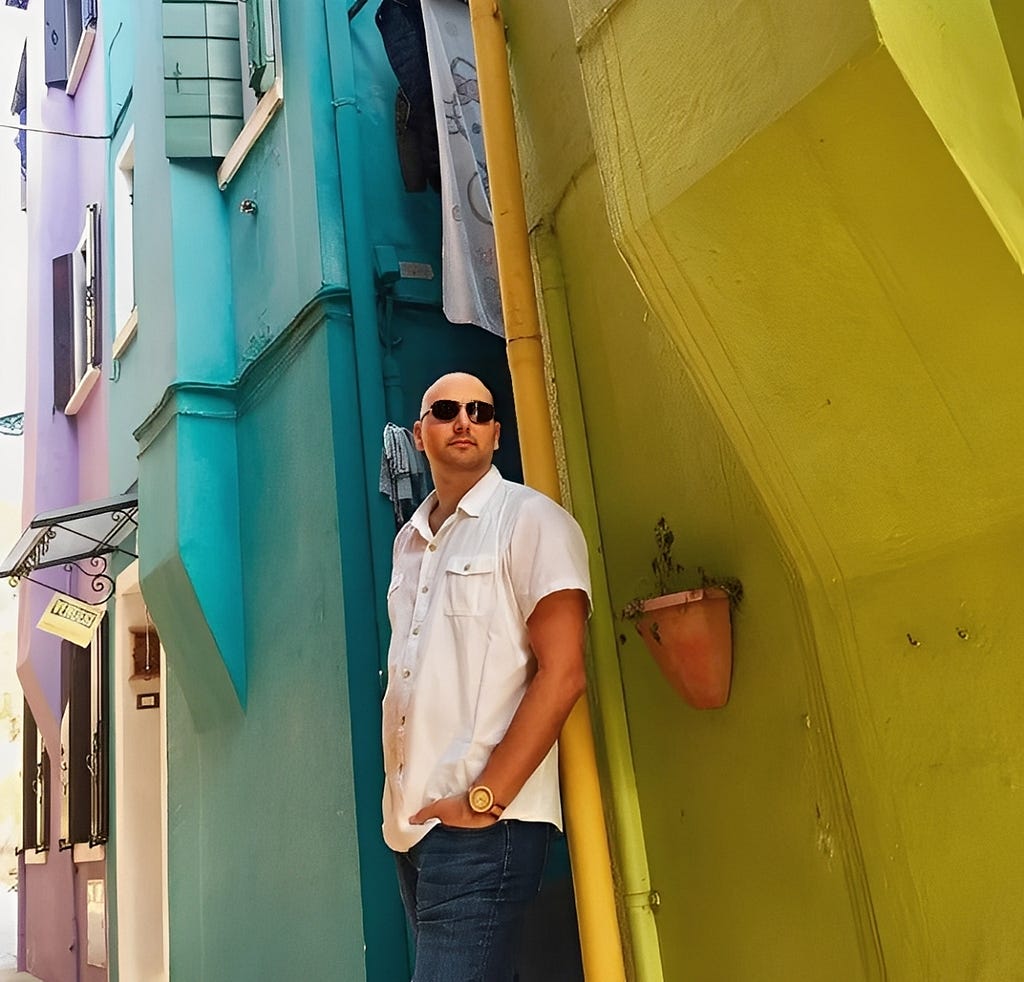
Mike Teichberg was born and raised in Puerto Rico of Cuban and American Jewish roots. An award-winning former head of Human Resources to nonprofits & venture-backed tech startups, with the rise of antisemitism, he decided to switch to a career in Jewish advocacy and philanthropy. He is also an award-winning poet for his 2023 Amazon #1 Best Seller debut, ManuScrita: Poems on Life, Love, and the Nature of Reality. His latest project is an artificial intelligence (AI) collaboration concept album, Covenant of Freedom by Dust & Clay. Since 2014 he has been living on Miami Beach with his wife Rachel and their pets Meatball and Ruby.
Thank you so much for doing this with us! Before we dive in, our readers would love to get to know you a bit better. Can you tell us your “Origin Story”? Can you tell us the story of how you grew up?
Thank you for the opportunity to share. l was the first generation of my family born in Puerto Rico. My father is a New Yorker of Jewish Russian descent, and my mother, a second-generation Cuban Jew, grew up in Puerto Rico. Her grandparents had escaped persecution from Europe and found their way to Cuba on the way to America, and decided to stay. This was the story for most of the members of my Jewish community. My parents met in college and decided to move back to PR to raise their family.
I grew up in this very tight-knit Jewish community and was fortunate to attend a pluralistic K-12 school with kids of all backgrounds and faiths. I attended Hebrew school a few days a week after school to learn about our faith and culture, and it was also a great opportunity to spend time with all the Jewish kids on the island.
Every summer, as was the tradition in our community for decades, we went to a Jewish sleepaway camp in North Carolina. I did a less common thing and had my bar mitzvah in Israel as part of a family bar mitzvah tour, later went on a summer teen tour of Israel where I traveled with thirty other 16-year-olds, and eventually worked as a Jewish camp counselor all four summers in college, where I met my wife. We just celebrated our twentieth anniversary!
Having been a Jewish and Israel advocate my entire young life, I eventually found my career in Human Resources successful yet ultimately unfulfilling. So when the opportunity arose to transition into the Jewish nonprofit sector, I jumped at the opportunity. Motivated by the recent rise in antisemitism, I joined Jewish National Fund, where I was the Director for Miami and Broward for four years. After working in fundraising, I was looking to make an even bigger impact, so I joined American Jewish Committee (AJC), where I now advocate for the Jewish people with leaders across a wide variety of sectors and especially with allies from non-Jewish communities.
Can you share a personal story of how you experienced or encountered antisemitism, racism, bigotry, or hate? How did that experience shape your perception and actions moving forward?
I have personally encountered antisemitism directly on three occasions in my life. In the summer of 1994, at camp in North Carolina, we visited Dollywood theme park in Tennessee as a field trip. We had big stars of David on the back of our camp t-shirts. While waiting in line, I heard a young child close to our age ask his father about our group. I heard him respond, “Them Hebrews son. They gone and killed our lord and savior, Jesus Christ. Don’t talk to them.” We were immediately pulled out of the line by our counselor, who took us over to a picnic table to explain antisemitism to us. I had never heard of anything quite like this as there was no open antisemitism on the island. While I knew we were a minority, I had not been aware of this particular brand of directed hate.
Fast forward to the conflict in Israel in the Fall of 2000, and I saw protests in our capital city of San Juan, outside of City Hall. Protestors carried signs saying ‘Jews are killing Arabs’. Not Israelis. The signs said Jews. This was the first time I also realized there were more Palestinians on the island than us. That is when we started having armed guards and FBI agents outside of the Jewish Community Center around the High Holidays.
In 2004, Mel Gibson’s film The Passion of the Christ was released and went on to become a worldwide phenomenon. Many Catholic churches on the island purchased entire theater showings to give the tickets away. My father did not want to pay to support the movie, but when he was offered free tickets, he felt it was important that we go watch it to see how bad it could be for us as Jews. At our local cinema, the movie was in Aramaic with Spanish subtitles. Within the first minute, I heard a child sitting behind us say to his parents in Spanish, “I don’t understand what they are saying. What’s this movie about?” Their parent told them to be quiet and pay attention, that this was the story of how the Jews killed Jesus. Nothing to understand, just to watch.
Coming to terms that the general public would take this interpretation as a historical depiction concerned me. I remember going to a Catholic mass with one of my best friends while in high school and seeing stars of David throughout the stained glass windows and on the chapel ceiling. A prayer about the Virgin Mary had the same tune as Aveinu Shalom Alechem, a classic Jewish prayer. This made me realize for the first time the interconnectedness of all world religions, and looking back, planted the seed for me to eventually study Philosophy, Comparative Religion, and Judaic studies in college.
Can you describe how you or your organization is helping to stand up against hate?
Since 1906, American Jewish Committee (AJC) has been one of the largest organizations standing up for Israel’s right to exist in peace and security; confronting antisemitism, no matter the source; and upholding the democratic values that unite Jews and our allies. AJC has done this by advancing policy through diplomacy, political advocacy, and engagement with leaders worldwide. They have built coalitions with interfaith and intergroup partners to counter threats to democracy. We train leaders to effectively respond to antisemitism and anti-Zionism, and we educate and empower through strategic communications.
I’m proud to be a part of this work connecting local advocates in my region to these advocacy areas, within the long-established channels, but for me, it wasn’t going to be enough. I needed to do something that would be my own, utilizing my area of expertise and passions, while furthering the agency’s mission.
Upon learning about AJC’s advocacy work being done with social media companies, I immediately asked the question of whether anything was being done about AI to ensure we would have a hand in ensuring it was being built with a consideration for the bias and disinformation around Jewish issues that it was certainly being fed through its training from Internet content. We were not actively doing anything in the space yet, and so I was encouraged to run with it working with our DC office. For over a year and a half, I identified advocacy organizations working on building responsible AI and recruited experts to serve as advisors and speakers at our annual conferences.
For a year following the October 7th attack, I joined a new private sector advocacy team within AJC supporting Jewish employees in corporate America. It was incredibly meaningful to use my HR expertise in advising staff with issues they were experiencing at work, on how to begin employee resource groups (ERGs), and bring antisemitism awareness training to their workplaces.
Having founded one of the premier networking groups in Miami connecting the Israeli and Miami tech ecosystems back in 2021, it was incredibly rewarding through AJC to host speaker programs, co-sponsor Miami’s first ever Israeli expo at eMerge Americas, the city’s largest tech conference of the year, and host a three hour event on foreign investments in Israeli tech, as part of the first Israel Tech Week in Miami earlier this year.
Can you tell us the most interesting story that happened to you since you began your work as an Upstander?
I have met some incredible people and have had the opportunity to produce many innovative programs over the years. If I had to pick one interesting story, it would be the time a delegation of October 7 survivors from Netiv HaAsara were brought to Miami as part of a US fundraising tour raising awareness of the ordeal they experienced when Hamas terrorists paraglided into their moshav or town.
This delegation of twelve family members and their Mayor day in and day out were all reliving the pain, sharing it with audiences. After the program wrapped at the Miami Beach JCC, my Ukrainian-Jewish friend and I overheard the group saying they wanted to visit Little Havana. We offered to take them.
Being able to share with them Cuban culture, food, and music was healing for them and one of the best mitzvahs my job has afforded me. It was such a pleasure to provide this experience that felt like a family gathering celebrating life. There was laughter and dancing, something many of them had not experienced since before the attack had forced them all to leave their homes. Due to its destruction and proximity to the border, it’s been deemed unsafe to return. I’ve hosted gatherings and parties with friends and loved ones since I was in high school. This one night was special, and to this day, I remain in touch with them.
In your opinion, why do you think there has been such a surge of antisemitism, racism, bigotry, & hate, recently?
The surge in antisemitism is cyclical. It is one of the oldest forms of hate that has been around for thousands of years, and as Bari Weiss said in her book How to Fight Anti-Semitism, she calls it a “thought virus,” a “cultural pathogen,” and an “ancient malady” embedded in society’s DNA. She warns that “anti-Zionism is almost always cloaked antisemitism,” and urges non-Jews to understand that “an attack on a minority is an attack on you. Antisemitism is a bellwether. It signals the collapse of truth, democracy, and shared human dignity.”
Social media and disinformation online and in traditional media have brought fringe ideas to the masses. The Internet facilitates people to connect that never could before, allowing antisemitism to bubble up again. Conspiracy theories propagate, and the rift between the haves and have-nots has widened. Dissatisfaction leads to hate as it’s easier to blame others for one’s misfortunes and a life not living up to one’s expectations.
Are there three things the community, society, and politicians can do to help you address the root of the problem you are trying to solve?
Our regional director for AJC Miami and Broward, Brian Siegal, always says, “To get a friend, you have to be a friend.” This mantra applies across the board. In every community, it’s important to be understanding of what Jews are going through and support us now, as we did with the civil rights movement, labor rights, and LGBTQIA+ advocacy.
With politicians, we are very fortunate where I am based in Florida that we have strong support at all levels of government. Despite this, we are seeing challenges to Holocaust education, for example. We are damned to repeat history if it isn’t taught to the next generations. Ensuring all aspects of history is taught in schools will become even more important as disinformation becomes more rampant.
What are your “5 Things Everyone Can Do To Be An Upstander”? If you can, please share a story or an example for each.
1 . Speak Up — When you see something online or out in the world, call it out. We are living in an era where the comments sections and keyboard warriors weigh in on unimportant news items and virtue signaling stories. They post, but in person, most people don’t speak up.
2 . Show Up — Make the time in your personal and professional life to attend community events. Live by the ‘be a friend to get a friend’ mantra. Person-to-person relations will always have a bigger impact than interacting behind screens. Most people don’t know people or interact with other communities outside their own.
3 . Support Online — Use your networks and platforms to spotlight stories from marginalized communities. Retweet, repost, and reference them in your circles. Elevating others ensures that the fight against hate isn’t one-sided.
4 . Volunteer — Join a nonprofit board for a cause near and dear to you. The days of big-dollar donations to sit on boards are loosening. At AJC, community members can serve on advocacy and event committees without being a full board member. No minimum giving required to get involved.
5 . Follow your passions — For me, as a music lover but not an instrumentalist or singer, I had been limited to writing poetry to share my big ideas. With the recent AI chatbot releases, it is now possible to create fully produced music with full vocals and musical arrangements via simple text prompts. I am incredibly proud to share that I will be releasing a concept album later in the Fall on all major streaming platforms.
Covenant of Freedom will be released under the band name Dust & Clay. I wrote and edited the music. My chatbot, Theo, generated the musical composition and provided vocals via Song Maker GPT by aisonggenerator.ai. Born from the writing in my 2023 Amazon #1 best seller debut book ManuScrita: Poems on Life, Love, & the Nature of Reality and new, unpublished material, this concept album blends folk, rock, hip hop, pop, and jazz.
It’s a celebration of creativity, connection, and the Jewish-American experience honoring memory, faith, identity, and the enduring light of our people. Using AI at a time when many fear it, I thought it poetic to use it for its most noble purpose: expanding our creativity and making the seemingly impossible possible.
How do you handle the emotional toll that comes with being an Upstander?
Because my job involves dealing daily with negativity and hatred towards Jews, I disconnect when I am not working. In my personal life, since October 7th, I have become focused on being in nature, developing mindfulness practices, and participating in activities that I love, such as music, food, and culture. Pursuing passions and spending time outside of the Jewish community allows me to be a better person and advocate.
Are you optimistic that we can solve this problem in the United States? Can you please explain what you mean?
I don’t view the issue as something to solve. The mission of advocacy organizations is not to eradicate antisemitism and hate, but rather to combat them. Hate will always be here and will get worse before it gets better again. All we can do is support Jewish people so they can lead safe and secure lives, empower all people with knowledge and pride, and engage non-Jewish allies and build relationships on a person-to-person basis. There is an innate hatred that lives in humanity, a hatred that stems from self-hatred and doubt. As long as there are people subjugated, powerless in their lack of freedom, or susceptible to manipulation, there will be a hatred for the other. All we can do is work to keep it under control by shining a light showing the goodness of the Jewish people. One of the songs on my album, ‘We are the Other’, is expressly about this truth.
What advice would you give to someone who wants to become an Upstander but doesn’t know where to start?
There are currently close to 12,000 Jewish organizations in America and 53 Jewish advocacy organizations, including American Jewish Committee, where I work. Find your passion area and get involved. Ensure you choose at least one Jewish organization in your portfolio of causes to support with your time and financial support.
Can you please give us your favorite “Life Lesson Quote”? Can you share how that was relevant to you in your life?
When I was in Sedona, Arizona, for a men’s mindfulness retreat I helped organize for my friends in 2024, I took many of the teachings from our three-hour canyon hike and wrote a poem that became the song ‘Shields of Lace’ on the album. Our group leader shared a variety of insights that I further extrapolated. Building spiritually and a strong self is like cash flow. It’s not what you earn, it’s what you keep. Where you invest. What you carry. Thoughts become feelings. They enter your bloodstream and live there. Don’t let the dark ones in. They are much harder to fight them then. Shields up. Your strength as men is lace. Designed and woven with function to protect, but with the fragility and beauty of the feminine energy. Don’t believe in vortexes. All of nature is precious. The more natural and less engineered, the closer you are to our Source, the better.
Is there a person in the world, or in the US with whom you would like to have a private breakfast or lunch with, and why? He or she might just see this, especially if we tag them. 🙂
Based on my passion for music and storytelling, I would have to choose my fellow Puerto Rican Lin-Manuel Miranda. The track on the album I mentioned earlier, ‘We are the Other’, is in the style of his hip hop musicals. My second Dust & Clay project I’ll release later in the Fall, will be a Spanish language album, and I think eventually writing a musical play would be of interest to me. I can’t think of anyone better than Miranda who followed his passion, did it his own way outside of the mainstream format, and found success. For these reasons, I would love to chat with him.
How can our readers further follow your work online?
I’m on LinkedIn every day, so reaching out on that platform is the best way to reach me:
Stream the pre-release of the Covenant of Freedom on SoundCloud today: bit.ly/covenant-of-freedom. The album will officially be released on all streaming platforms by late Fall 2025 after the pre-release link.
This was very meaningful, thank you so much. We wish you only continued success in your important work!
Upstanders: How Mike Teichberg of American Jewish Committee Is Standing Up Against Antisemitism… was originally published in Authority Magazine on Medium, where people are continuing the conversation by highlighting and responding to this story.