


Leadership is about motivating others to achieve excellence. I’ve always followed five objectives/goals for people who would work for me. They are in order of importance: Have fun every day. Learn something new every day. Feel that you’re working in a community with others. Ask for help. If you struggle with something for more than 30 minutes, you’re wasting your time — and everyone else’s, and Win. This means that it’s okay to lose or make a mistake as long as you learn from it.
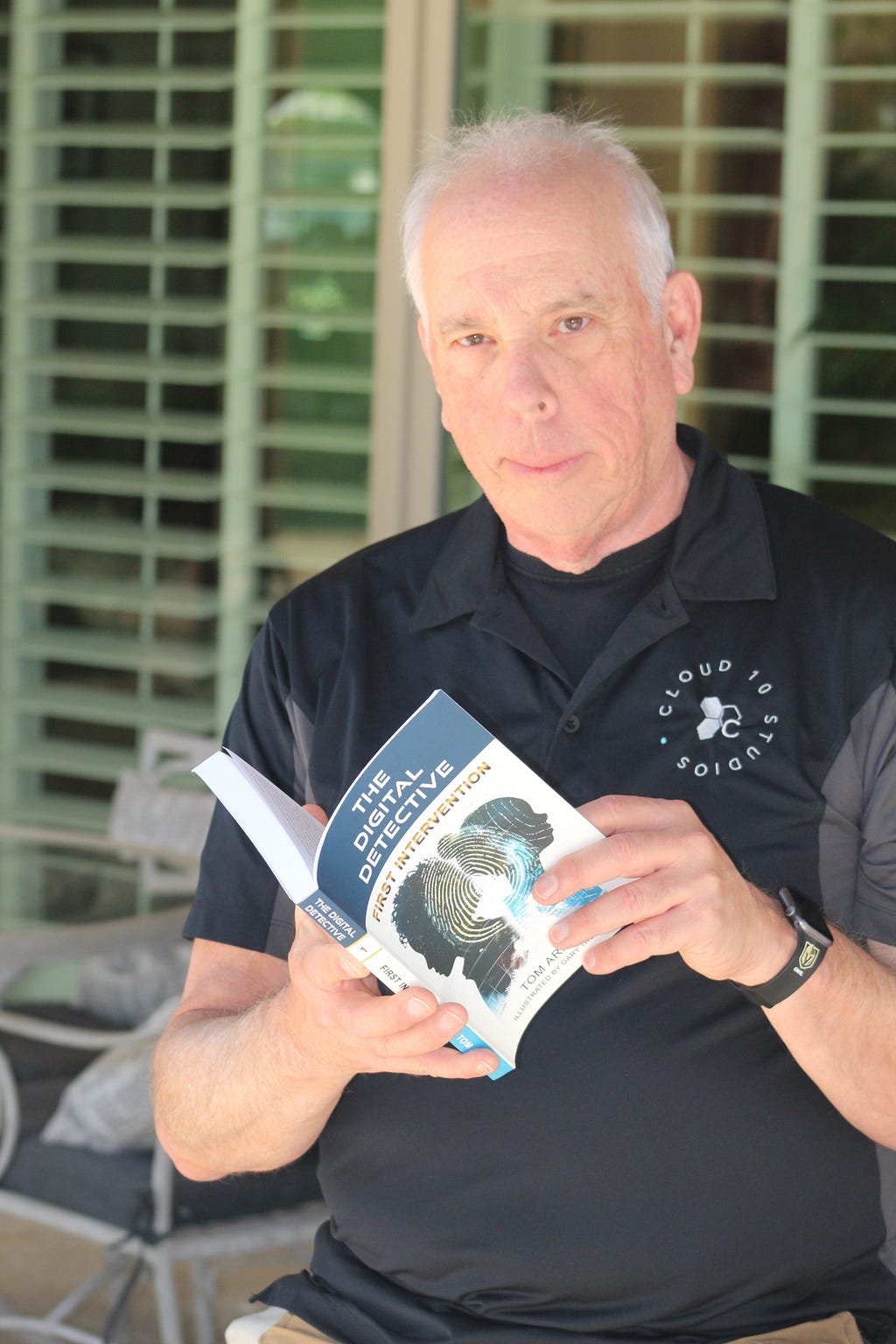
As part of my series about “authors who are making an important social impact”, I had the pleasure of interviewing Tom Arnold.
Tom Arnold (CISSP, ISSMP, CISA, CFS, GCFE-Gold, GNFA, GWEB, GBFA) is a cybersecurity expert, digital forensics investigator, and educator. His novel The Digital Detective: First Intervention was inspired by a real-life cybersecurity scare when Arnold’s grandson was approached by a stranger on Roblox despite parental controls. That moment launched Arnold’s mission to help families and schools recognize hidden online dangers — and to give kids the tools they need to stay safe in the digital world.
Thank you so much for joining us in this interview series! Before we dive into the main focus of our interview, our readers would love to “get to know you” a bit better. Can you tell us a bit about your childhood backstory?
I had what I’d call an uneventful, normal upbringing in Northern California. I remember specifically how my mom would drop me off at a playground while she went grocery shopping and then pick me up when she was ready to head home. This is the way things were, and a lot of other parents watched out for other kids. This wouldn’t happen today and certainly wouldn’t happen while playing an online game.
When you were younger, was there a book that you read that inspired you to take action or changed your life? Can you share a story about that?
I devoured all the stories by Arthur Conan Doyle and the Fantastic 4 comic books. The Conan Doyle stories drove my curiosity about solving puzzles along with the ethics of doing good in comics. Indirectly, this may have impacted my decision to become a law enforcement officer and later in life my study of cybercrime and computer forensics.
It has been said that our mistakes can be our greatest teachers. Can you share a story about the funniest mistake you made when you were first starting? Can you tell us what lesson you learned from that?
On stage at an investor conference with over a hundred people in the audience. Everyone, including me, wore pressed suits, ties, and polished shoes. I was explaining how key systems to protect payment cards could be easily bypassed. The audience was having a really hard time grasping the concepts of anonymity and impact on knowing their customers. At one point, I stepped back from the podium pointing at a slide on the screen emphasizing a point when I fell off the stage. The audience roared. I pulled myself back onto the stage, brushed my suit off, straightened my tie that was over my shoulder, and carried on. Afterward, several people approached me and said it was one of the best briefings they had ever heard — they repeated several of the core concepts demonstrating their understanding.
Aside from a bruised knee and tarnished ego, I learned that a bit of showmanship can facilitate learning.
Can you describe how you aim to make a significant social impact with your book?
The story introduces Jason Palmer, JP to his friends, who is about to start as a high school freshman. He’s more at home coding and debugging devices than navigating social life. Reba, his neighbor, is bold, athletic, and becomes his closest ally. Together, they uncover dangerous crimes: a stolen phone linked to a hacker known as 8Bit, and a shadowy digital marketplace trafficking in stolen data. As the threats shift from physical to digital, JP must rely on every bit of his technical skill to stay one step ahead.
Using these characters, my desire is to introduce parents and kids in a fun way to the very real dangers in the cyber world. Some kids may be enamored by the techniques JP uses to discover and fight crime, while others may learn more about staying safe from current cyber threats.
Can you share with us the most interesting story that you shared in your book?
The chapter “Probing Raid” introduces the use of a network tap to intercept and uncover network communications. As is commonly said, “if data didn’t cross the network, nothing happened.” This chapter illustrates how analyzing network flow and traffic can be used to uncover computer threats and evil intent. This is an area that many real investigators don’t fully understand (much less the kids the story is intended for).
What was the “aha moment” or series of events that made you decide to bring your message to the greater world? Can you share a story about that?
There was one major event involving my 7-year-old grandson. His family is very good with all things cyber given that his dad is a very senior cybersecurity staff member of one of the largest companies and even helps governments protect their data. All parental controls were active on the game that my grandson enjoyed playing. During a session, an avatar appeared on the screen and held up a sign asking my grandson for his name and location. He did not respond to the avatar and went directly to his parents. That moment made me wonder: how many 7-year-old kids could detect and understand what was happening in the game? The concept that on the Internet nobody knows you’re a dog and an anonymous person driving the avatar could do almost anything — and no one would know who they really were! This was a frightening wakeup call and led to the genesis of the Digital Detective.
Without sharing specific names, can you tell us a story about a particular individual who was impacted or helped by your cause?
Clearly, my grandson and several other parents that I’ve shared this and other stories of cyber deception with. A large challenge for parents is how they must educate their kids and open dialogue with their kids about cyber safety. One parent commented that they’d rather talk to their kids about the birds and bees than discuss cybersecurity and safety online.
Are there three things the community/society/politicians can do to help you address the root of the problem you are trying to solve?
- Realize and accept that the Internet and Internet of Things are here to stay no matter how much parents try to shield or ban their children from it.
- There are many forms of cybercrime. Each form is unique beyond the common use of the Internet. Defending starts with recognition of the threats posed by these various forms of cybercrime.
- Cybercrime is far more lucrative than traditional, physical crime.
How do you define “Leadership”? Can you explain what you mean or give an example?
Leadership is about motivating others to achieve excellence. I’ve always followed five objectives/goals for people who would work for me. They are in order of importance:
- Have fun every day.
- Learn something new every day.
- Feel that you’re working in a community with others.
- Ask for help. If you struggle with something for more than 30 minutes, you’re wasting your time — and everyone else’s.
- Win. This means that it’s okay to lose or make a mistake as long as you learn from it.
What are your “5 things I wish someone told me when I first started” and why? Please share a story or example for each.
No matter the career you’re in, you will evolve through five stages:
- Impersonation: You impersonate heroes or mentors or even movie characters
- Hot dog: This is a short phase where you can do no wrong. You are invincible.
- Cynic: This is the longest phase of a person’s career. You question motives, results, and strategies. The social environment has you watching your back and always wondering about other people’s motives.
- Realist: This is near the retirement time when you realize that there is only so much you can achieve and do. Others will treat you as they will, since most of them are in the Cynic phase and a few new colleagues are hot dogs.
- Self-Actualized: There’s nothing more you can do to impact on colleagues or efforts as the end draws near. Take what you can from the journey and be at peace with your legacy.
Can you please give us your favorite “Life Lesson Quote”? Can you share how that was relevant to you in your life?
“On the Internet, nobody knows you’re a dog” is an adage and meme about Internet anonymity by Peter Steiner published July 5, 1993 in the New Yorker magazine.
Around this time, I worked at a large federal agency and was using a new tool for Internet chat on the Internet. Some person approached me on the chat claiming to know me and opened a discussion. After several exchanges, they wanted to meet up. The person’s knowledge of me was only based on bits of information from the chat forum and nothing more. It became apparent that this person didn’t know me, and they could be anyone using a chat identity that was either stolen or fabricated. I know who I am and they were “the dog”.
Much later, I developed a Facebook identity that was established with entirely fake information. I was curious about how this identity might be leveraged over time. I used it to do some browsing and then it sat idle. I’ve never posted to the account or taken action to establish “friends” online. Even today, nearly 20 years later, it’s amazing how many people who claim to be friends with this fake account continue sending me invites, messages, and even spam. The spam comes because the Facebook account database has been compromised several times over the years.
Is there a person in the world, or in the US with whom you would like to have a private breakfast or lunch with, and why? He or she might just see this, especially if we tag them. 🙂
I had the opportunity to have lunch with Steve Jobs. At that time, I wasn’t fully prepared for our conversation and we only discussed people management strategies. I’d love to have lunch with him again to discuss more about business and his visions of future technologies.
How can our readers further follow your work online?
Visit www.idigitaldetective.com and follow me on LinkedIn at Tom Arnold.
This was very meaningful, thank you so much. We wish you only continued success on your great work!
Social Impact Authors: How & Why Author Tom Arnold Is Helping To Change Our World was originally published in Authority Magazine on Medium, where people are continuing the conversation by highlighting and responding to this story.