

…But then we came across a study from the U.S. Surgeon General saying that 50% of American adults admit to being lonely. That completely shocked me. Another country that surprised me was Brazil. When I think of Brazil, I picture parties, dancing, happiness, warmth. But they also suffer deeply from loneliness. The more we looked into it, the more countries we found dealing with the same thing. After a while, you don’t need to keep researching, you just realize it’s everywhere. It doesn’t matter how happy people appear to be, how much money they have, or how successful they are. In fact, sometimes the more you have, the lonelier you become. When people get wealthier, they move to more private areas with bigger houses and more land. Then they put fences around their homes, hire staff, and eventually never need to leave the house. Everything gets brought in or taken out for them. I was driving through Beverly Hills, and from the street, you can’t even see the houses. How do people talk to them? How do they talk to others? They’re completely isolated in smaller and smaller circles. So, sometimes the more we gain, the more we disconnect…
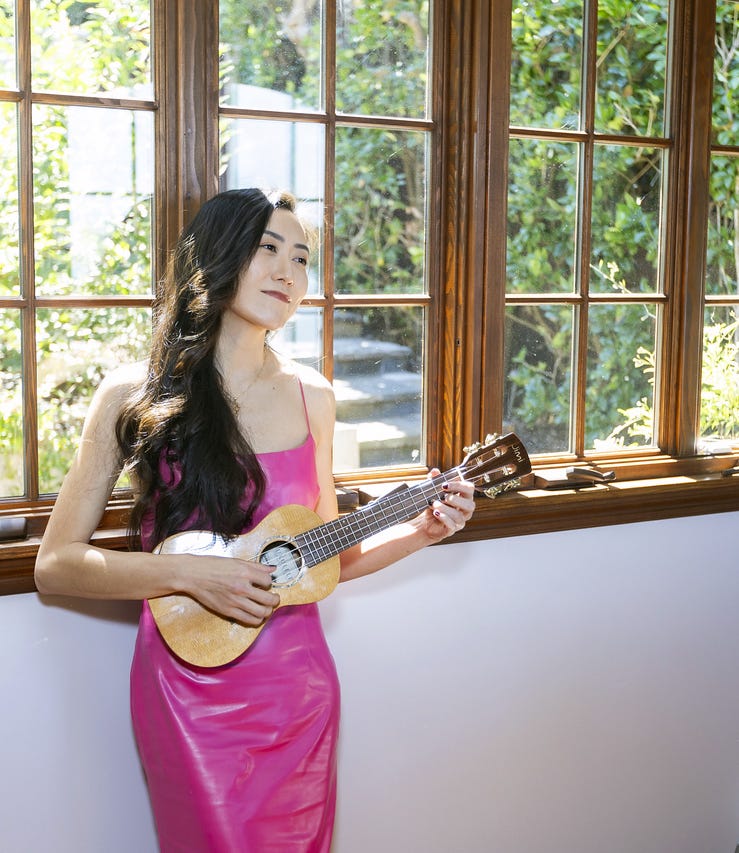
We had the pleasure of talking with Miist. Miist’s path to the Billboard charts didn’t begin with a childhood steeped in music, formal training, or early ambition. It began in Harbin, China, where the winters are harsh and the expectations harsher. Her earliest memories include physical discipline from her father, a university math teacher, and the quiet dislocation of being sent to boarding school at the age of five. Though the decision was framed as an opportunity, for Miist, it marked the beginning of abandonment. Her father left soon after, and the imprint of that separation shaped her for years to come.
Those early experiences formed an emotional blueprint. She became guarded, instinctively pushing people away when relationships got too close. Yet, the same trauma that once isolated her also became the wellspring of her later work. “I’m extremely sensitive to people’s stories and emotions,” she says. “I want to write about them, not just to process my own feelings but to give others hope.”
Her journey took her from China to Canada, where she studied accounting and eventually entered the field. It was a stable, logical life, until a flight home from China left her with severe abdominal pain. A routine ultrasound revealed what Canadian doctors initially misread, a tumor not 1.5 centimeters, but 15. The prognosis in Beijing was bleak: terminal liver cancer with mere months to live. Against medical advice and familial pressure, she insisted on returning to Canada to pursue a different treatment approach. There, a top surgeon agreed with her plan. The surgery was successful. She lost 60% of her liver and her gallbladder, but she survived. “That surgery saved my life,” she says. “I’ve been healthy since.”
Three years later, music entered her life through her husband and stepdaughter. What began as lullabies for the little girl who would later walk her down the aisle turned into an unexpected creative rebirth. During COVID lockdowns, Miist began experimenting with piano chords. When her husband challenged her to write her own music instead of mimicking others, she resisted, for six months. Then, one day, intending to prove him wrong, she wrote three songs. “It was the most incredible experience,” she says. “Emotions started pouring out through melodies.”
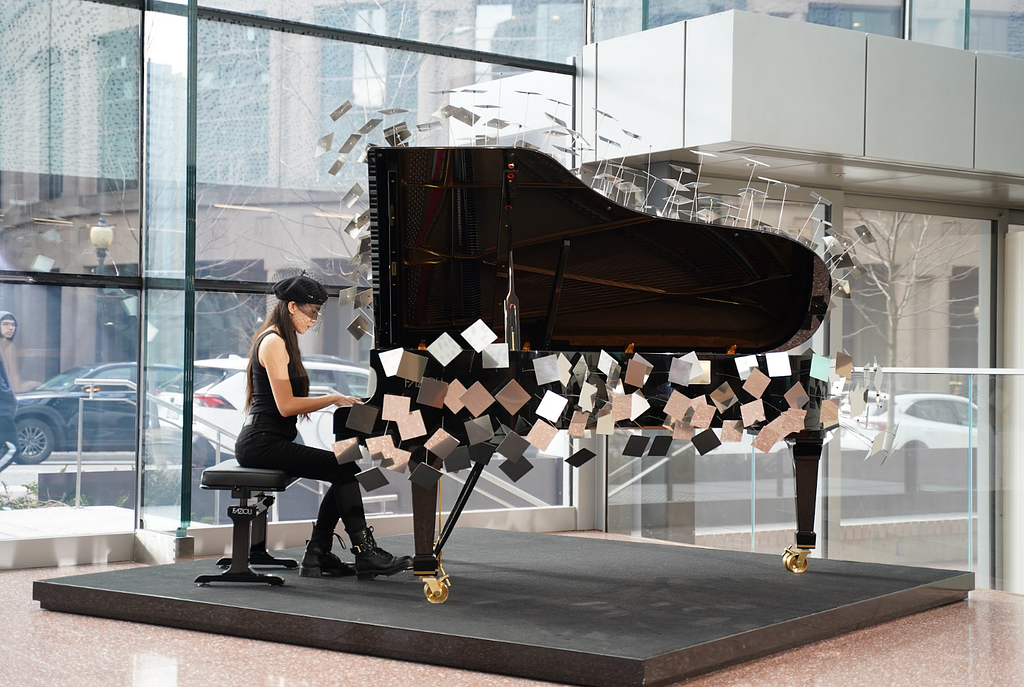
With no formal training, Miist began composing intuitively, arranging for instruments she’d never played, and building songs from raw emotional instinct. “I walk into people’s stories,” she says. “Their emotions become melodies.” Those early songs led to a collaboration with legendary producer Narada Michael Walden, known for his work with Whitney Houston and Aretha Franklin. What was meant to be a short meeting turned into a three-hour jam session. Walden went on to produce her debut album.
Miist quickly found an audience. In 2024, she became the first native Chinese artist to reach the Top 25 on Billboard’s Adult Contemporary chart. The attention brought offers, but she remained focused on purpose rather than profile. “I never stopped to think about being on the charts,” she says. “I just kept writing the songs I wanted to write.”
Her creative focus sharpened around a global crisis not often addressed on pop playlists: loneliness. After hearing the story of a young man in Japan who died alone and remained undiscovered for weeks, she wrote “Could You Lend Me a Smile”, a simple, aching request for connection. That song would eventually be translated into 15 languages and performed by artists across five continents, earning a world record for most original versions of a song released simultaneously. The project featured musicians with more than 60 combined Grammy nominations.
Miist’s efforts to address loneliness didn’t stop at the song. She launched a podcast, Make Me Smile with Miist, which reached #13 on Apple, Spotify, and YouTube in the Mental Health category. Each episode centers on a 15-second action, small, intentional behaviors meant to rebuild human connection. Her foundation now works to distribute “Kindness Kubes” to schools, prompting students to practice these micro-actions together.
Miist, now based in the Bay Area, identifies deeply with her roots in China and her formative years in Canada. “I was subconsciously seeking something, and I found it. Myself. Each place added a detail to my self-portrait.” She speaks most freely in Mandarin, which she calls her “heart language.” Messages, she says, “bypass the brain and go straight to the heart” when delivered in one’s native tongue.
Her self-care practices are simple but hard-won: movement, pause, gratitude, and kind self-talk. Reparenting herself through motherhood has been particularly healing. “I now give myself the care I always needed, through the way I love my daughter.”
She continues to work on new versions of “Could You Lend Me a Smile,” including a multi-language arrangement that integrates traditional instruments from the cultures represented in the project. A new collaboration with Andrea Bocelli producer Mauro Malavasi is also in development.
Despite the acclaim and growing platform, Miist maintains an unshakable focus. “This isn’t just a project,” she says. “It’s a mission, maybe even my life’s work: to help people remember how to connect.”
Yitzi: Miist, it’s a delight and an honor to meet you. Before we dive in deep, our readers would love to learn about your origin story. Can you share a story from your childhood, how you grew up, and the seeds for everything that came later?
Miist: It’s my honor to meet you, thank you. I live in California now, where the weather is pretty much one season all year. But I actually came from a place with four very distinct seasons. We’re especially known for our extremely cold winters. People from all over the world come to my city, Harbin, to see the ice sculptures. That’s where I grew up.
Before I turned five, my dad was my primary caretaker. He was a university math teacher. His way of parenting involved a lot of physical abuse. He’s a good person, but in his generation, that kind of discipline was considered normal. I’m sure what he went through as a child was even worse.
After I turned five, my parents sent me to a boarding school. At the time, it was considered a fancy and beneficial thing to do. But at five years old, I still needed guidance, someone to teach me how to process feelings and handle problems. I had no one to rely on, and to me, it felt like abandonment.
Because my dad no longer had to care for me daily, he drifted away. He eventually left the family and never came back. Looking back, if I could choose, I would still go back to the life I had before five years old, even with the abuse. I would choose that, because at least my dad was there every day. I saw both my parents regularly.
That experience left me with a tendency to push people away. I struggle with forming long-term friendships because I remember the pain of losing someone you love deeply. When friends get too close, I instinctively distance myself.
The abandonment issues caused other problems, and the early abuse led me, subconsciously, to choose partners who were emotionally unavailable or even abusive.
But through all of this, I gained a deep understanding of what others are going through. I’m extremely sensitive to people’s stories and emotions. I want to write about them, not just to process my own feelings and learn from them, but also to give others hope. I believe that when people hear my music, they might find the strength to hold on or simply feel understood.
After university in Harbin, I had a chance to go to Canada for further education. I ended up studying accounting, graduated, and started working as an accountant.
About a year later, on a flight back to Canada from China, I experienced unusual abdominal pain. I was very sick on the plane, which had never happened before. As soon as I landed, I went to my family doctor and got an ultrasound. During the test, the examiner couldn’t find my gallbladder, it was completely obscured by a large tumor. At that point, they didn’t know what it was.
During these image tests, whether ultrasound or MRI, it became routine for one doctor to leave and come back with more, because they were all confused. They had never seen something like that.
There was an odd incident: my family doctor misread the report. He thought the tumor was 1.5 centimeters, not 15. He even drew a small circle on a piece of paper and said, “This is how big the thing on your liver is.”
But my mom was wise. I called her and said, “The doctor found a little thing about this big on my liver.” She immediately told me to return to China, saying, “It doesn’t matter how small it is. We need to check it thoroughly.”
So I had just gotten back, and I left again. We went from hospital to hospital, moving up to better ones, because no one in my family believed what the doctors were saying. They had diagnosed terminal cancer, said it was growing too fast, and that I didn’t have long. But there was disagreement about how long I had, some said a few weeks, some said a few months.
Eventually, in the top tumor hospital in Beijing, one doctor finally agreed to operate. He said, “I want to save your life. I’ll let you skip the line and give you an exemption to have surgery now.”
But I had a different opinion on the treatment. I’d done research, and I knew there was a better option. The doctors didn’t want to do it, and my family was furious. They thought I was giving up on life. I said, “No, I just want better treatment.”
In the end, even though my mom didn’t agree with me, she went back to Canada with me, without health insurance, without knowing if there was a doctor who would help. That brought us so much closer.
Despite the early abandonment, she had actually brought me back home around middle school and stayed with me for a few years before I returned to boarding school. That helped rebuild our bond, but this experience brought us even closer. We’re best friends now.
After we returned to Canada, things began falling into place. I called MSP, the healthcare system, and they reinstated my insurance and even asked how far back I wanted to backdate it to cover earlier costs.
The first doctor I met was the top liver resection specialist in the country. He immediately agreed with my proposed treatment. I had surgery within three months, which is incredibly fast in Canada. That surgery saved my life. I lost 60% of my liver and my gallbladder, but I’ve been healthy since, and I live a high-quality life.
About two or three years later, I met my husband, and eventually, my daughter, because of music. A mutual friend introduced us. He had been introduced to other women before but wasn’t looking for someone just interested in him. He was looking for someone who could be a good mother to his daughter.
We added each other on Instagram. He showed her my posts and asked, “What do you think of this woman?” She was five and a half then. She found two or three short clips of me singing and started crying while listening.
Then he reached out and asked if I could record a few lullabies for her to fall asleep to. I fell in love just watching her. I was happy to do it. Every time she listened, she cried. She eventually asked to meet me.
We finally met at a playground in Canada. That’s where we always go on our dates, playgrounds or restaurants, always the three of us together. One day, she asked, “Can you please be my mom?” She even walked me down the aisle at our wedding. In her eyes, it was a wedding of the three of us.
Right after we got married, COVID hit. During lockdown, I got bored and started watching YouTube videos to learn a few piano chords. My husband stopped me. We argued because he said, “I can see that you have the ability to play by ear and write your own music. Don’t let these videos limit your gift.”
I couldn’t believe him. Everything I knew in life, I’d learned from someone else or from books. That was the safe way. The idea of trying something I hadn’t been taught was terrifying. We argued for six months, but he never gave up on me.
One day I said, “This is enough. We love each other. We don’t argue about anything except this. Let me show you today that I really can’t write music, and then we can stop this argument.” That day, I wrote three songs.
That was the beginning. Emotions started pouring out through melodies. It was the most incredible experience. We co-write every song. I usually write the melody and describe the story I see in each part, then we write the lyrics together.
It’s the best experience I’ve ever had in a romantic relationship. Each song we write bonds us more. My daughter is my biggest fan. She tells everyone, “My mom is on YouTube!”
Then, by accident, my music ended up in the hands of Narada Michael Walden through a real estate agent who passed it along to a musician friend of his. That friend sent it to Narada, and he called me, saying, “I want to meet you.”
I went to the meeting, and he had me sit at the same piano and use the same mic where Aretha Franklin recorded “Respect.” He said, “Sing me something.” I don’t play piano, so I just played a few chords and sang.
After one song, he said, “Sing me another.” Then another. He joined me on piano, then went to the drums. He started adding things to my songs and helping shape them. What I thought would be a 30-minute intro meeting turned into a three-hour jam session. At the end, he said, “Miist, I’d like to produce an album for you.”
He didn’t just produce it, he mentored me. We included some of the songs I sang for him that first day. He also asked for more, so throughout the process, he sent me different kinds of beats to experiment with. I wrote songs to everything he sent, and almost all of them ended up on the album.
Now that I look back, I realize he was intentionally mentoring me. Even now, my husband and I talk about how, of all the musicians we’ve met and everything we’ve learned about songwriting, Narada taught us the most. He’s brilliant. His ability to create hit music, combined with my desire to deliver a meaningful message, has become incredibly powerful. I’ll be forever grateful. We still talk almost every week, he’s like family now.
After that album, we had a bit of success. People ask how it feels to have songs on Billboard charts. I honestly never stopped to think about it. I just kept writing the songs I wanted to write. But it has helped. Now, when I want to work with someone, at least they’ll take my call and listen to what I’m trying to do.
And when they hear the message behind it, they often volunteer to join the project. That showed me that many independent musicians want to use their gift to do good, they’re just waiting for the right opportunity. When I reach out, it feels like I’m offering them something they’ve been waiting for.
That message is “Could You Lend Me a Smile?”, part of the Smile Project, which is about healing the loneliness pandemic in the world. That’s where I am now. Everything we’re doing, the podcast, the foundation, the music, is to spread that message as far and wide as we can.
Yitzi: I’m so happy that you’re healthy and that you turned the corner on that. That story seems very scary.
Miist: It’s exciting for sure. It could be scary at times. Actually, for me, the cancer diagnosis wasn’t as scary as trying to write my own original song for the first time.
Convincing yourself to use your creativity for the first time is like shaking your whole belief system. I was taught that everything you learn, language arts, science, math, someone teaches you one step at a time. Then you build from there and maybe learn more on your own. But everything I know how to do comes from learning. I had never tried to do anything creative.
That’s why, for 34 years, I would have rather become an accountant than even think about doing something like this. I’m sure it’s not like that for everyone. Some people just know they’re going to be musicians from a very young age. I think it depends on your upbringing. If your upbringing encourages creativity, then it’s easy for you to go there. But for me, it was just the opposite.
Yitzi: That’s great. So you probably have some amazing stories from different parts of your career and the places you’ve visited. Can you share one or two stories that stand out most in your mind from your professional life?
Miist: Yeah, one of the very cool things happened a few months ago. We went to Europe, it was supposed to be a family trip. But before that, I wrote the song “Could You Lend Me a Smile?” Then we started talking to media in Europe to try to get support and help the message go further. Because of the response we got, we began adding media stops in Italy and France.
One of the most important stops had to be Bologna. Our media team was based there, and a friend of ours was planning something special for us, though I didn’t know it at the time. So we decided to add Bologna to the itinerary, and we ended up filming the music video for “Could You Lend Me a Smile?” there.
There was one day in particular where, within 24 hours, I had seven interviews, plus the music video shoot and a photo session. It was super busy but a lot of fun. I had so many meaningful conversations with different radio stations, newspapers, and media outlets.
At the end of that day, my friend told me we had to go to this dinner. We walked quite a bit into the city, and the restaurant was in a hidden spot, like one of those places where you feel like you’re digging into the wall to find it. We walked deep into the space, and at the very back, there was a group of people just hanging out, talking, and playing games.
That’s where I met Mauro Malavasi, I think I’m pronouncing that right, the producer and writer behind Andrea Bocelli’s Romanza album. Or is it Romanzo? Sorry, I always mix that up.
Anyway, he’s the one who really helped shape Andrea Bocelli’s career. But when I met him, he was just so warm and welcoming. He knew everyone in the restaurant, from the staff to the neighbors. People kept coming in, hugging him, saying hi, chatting. That really taught me a lot about the culture and why people there don’t feel as lonely. It’s the sense of community and those daily interactions that make such a difference, you just know someone’s always around when you need them.
He invited us to dinner with his family. We talked about the project a little, but mostly we were just getting to know each other. After that meeting, he asked me to write a song with him. It was his way of wanting to support the message.
About a week or two ago, while I was traveling, he sent me a piano track. I wrote a melody for it. We haven’t had a chance to produce it yet, but we’re talking about going into the studio to record it very soon. It’s another song in the same theme, called “Love Will Show Us the Way.”
It’s about how, in this difficult world, we go through a lot, but we shouldn’t give up, because in the end, love is always the answer. That was definitely the highlight of that trip.
Yitzi: You have so much impressive work. Tell us more about the exciting new initiatives and projects you’re working on now.
Miist: Thank you. It all started with the story of a young Japanese man who died alone in his apartment. That story hit me so hard. Every time I hear something that emotional, I have to write a song, otherwise I can’t stop thinking about it. So I wrote a song, and it turned out to be a very emotional one.
After that, my husband and I started researching loneliness more deeply, and we realized how big an issue it really is, especially after the rise of social media and the pandemic. We were literally told not to touch, not to shake hands or hug, to stay six feet apart. And because of the fear surrounding the disease, we took it even further. We not only stayed away from each other, we began to look at each other with fear. We stopped smiling at one another, because we saw each other as a potential source of COVID.
After getting into that habit, it became really difficult to come out of it. There are still people who have locked themselves in their homes. That broke the bond between us and our neighbors, between us and our fellow human beings. We want to remind people just how important human connection is. Losing that connection is one of the main reasons why so many of us are lonely today.
We also found out that many countries are suffering from loneliness. So we wanted to adapt the song into more languages to help reach more people. Since Mandarin is my first language, I know how important it is for people to hear a message in their heart language, not just in English. Even if people understand English, they still have to filter it through the brain before it gets to the heart, and sometimes the message gets lost along the way.
We wanted people to hear the message directly, in the language that speaks to their soul. So we looked into which countries are struggling the most with loneliness and started translating the song into those languages first. As we shared the project with friends, people would say, “Hey, you should call this person,” or “Talk to that producer,” and we started connecting with musicians and producers who had those cultural backgrounds. That led to more referrals, and in the end, we were able to release the song in 15 languages simultaneously.
We actually tried more than that, but some languages were just too difficult to translate. Sometimes the concept didn’t work in a particular culture, or the songwriters were used to writing in a completely different way that made it hard to express the message authentically.
For each language, we wanted to do it right. So we would usually hire three separate adapters who didn’t know about each other’s involvement. That way, they wouldn’t influence one another, and we could compare the results. Then we’d ask independent experts to review the lyrics and tell us, without seeing the original, what story they got from it. That helped us verify whether the translation captured the message we wanted to convey.
We also had to find local artists who could perform the song in a way that felt authentic to their country’s musical style, so nothing would distract from the message.
Once all that was done, the lyrics, the vocals, the music video, we were able to release it. But we’re still working on more languages.
Right now, I’m also working on a special version that combines 12 of those versions in one key. It’s a more global version of the song. I’m incorporating traditional instruments from the cultures represented in those languages, like the pipa and guzheng from China, the Indian sitar, and South African drums. I’m not using any instruments from cultures we don’t already have a language version for, because I really want this to feel true and respectful.
This version is meant to show that we’re all in this together. No matter what language you speak, what accent you have, or where you’re from, we’re all facing this issue, and the only way we’ll ever truly overcome it is if we come together as one human family.
Yitzi: Unbelievable. I love how you call it a global pandemic, because I think some people believe it’s an American problem or a Western problem. But you’re saying it’s a universal problem. Can you explain a bit more about that?
Miist: Yeah. When we started doing the research, what shocked me the most was that I didn’t think it was an American problem at all. To me, Americans, and even Canadians, seem like they’ve got it together. They’re independent, they’re driven. So I didn’t expect loneliness to be an issue.
I thought it was more of an Asian issue, especially in more reserved cultures where we’re not taught to express emotions. We don’t even know how to recognize some of our feelings or name them. It’s just not something we talk about. In that kind of environment, it makes sense that loneliness would become a problem.
But then we came across a study from the U.S. Surgeon General saying that 50% of American adults admit to being lonely. That completely shocked me. Another country that surprised me was Brazil. When I think of Brazil, I picture parties, dancing, happiness, warmth. But they also suffer deeply from loneliness.
The more we looked into it, the more countries we found dealing with the same thing. After a while, you don’t need to keep researching, you just realize it’s everywhere. It doesn’t matter how happy people appear to be, how much money they have, or how successful they are. In fact, sometimes the more you have, the lonelier you become.
When people get wealthier, they move to more private areas with bigger houses and more land. Then they put fences around their homes, hire staff, and eventually never need to leave the house. Everything gets brought in or taken out for them. I was driving through Beverly Hills, and from the street, you can’t even see the houses. How do people talk to them? How do they talk to others? They’re completely isolated in smaller and smaller circles. So, sometimes the more we gain, the more we disconnect.
On the other hand, we read an article about why elderly people are lonely, and one of the reasons was economic. Just to see a friend, they need transportation, then they might need to buy a coffee or a meal. They simply can’t afford it, and that becomes a barrier to socializing.
So there are many different reasons people are lonely, and they vary by region or situation. But at the core, the root issue is the same, we’ve lost connection.
When we started thinking about solutions, we realized there are so many big problems in the world we all want to solve, war, pollution, climate change. We’re aware of them, but they feel overwhelming. We think, “What can I do?” and then we give up.
With loneliness, we wanted to avoid that feeling of helplessness. So we broke the solution down to the smallest possible action. That’s where the idea of a smile came in. Just one second. You don’t even have to give it to someone, just lend it. That’s why the song is called Could You Lend Me a Smile? Not give, just lend it for a second, so I don’t give up.
From there, we expanded the idea to other small actions that can help us relearn how to build human connections. And we realized that every one of these actions is something a three-year-old already knows how to do.
When you look at a playground, little kids play with everyone. They don’t pick and choose who to talk to. That’s learned behavior. We’re taught how to disconnect, how to judge, how to separate. So now we have to unlearn those behaviors and relearn how to connect.
That’s why we started the podcast, sponsored by Pantheon Music Podcast Company. They loved the idea and offered to support it, so they sponsored me to create 48 episodes. Each one focuses on a small action, paired with original music, to help people relearn those basic human behaviors.
I take about 15 seconds in each episode to actually do the action myself and talk about how it made me feel, then I encourage others to do it too.
Eventually, we realized this isn’t just a short-term project. It’s a long-term mission, maybe even my lifetime goal: to help people smile again, to keep the connections we have, or to rebuild the ones we’ve lost.
Because human connection is just as essential as food, water, and sleep. If we don’t eat or sleep, we get sick. And if we lose connection, the same thing happens, emotionally or even physically. We’re wired to need each other.
That’s why we started the World of Smile initiative. We’re giving away the Kindness Cube on a donation basis. It’s just a simple reminder to keep practicing those small, 15-second actions that help us reconnect, little by little.
Yitzi: This is our signature question. You’ve been blessed with a lot of success. You’re using music to make a social impact, to make a difference. Can you share the five things you believe are needed to successfully make an impact through music?
Miist: Five things.
- I would say the first thing is: it needs to be simple. It definitely has to be simple, because people’s attention is so hard to get these days, and even harder to keep. If something is too complicated or difficult, they’re just not going to do it. So to really make an impact, it has to be something people can grasp and connect with quickly.
- The second thing is: be genuine. Whether I’m meeting musicians or just talking to people in my everyday life, I always try to be as genuine as I can. I’m naturally an introvert, so talking to people isn’t something I naturally seek out, but when I do, I want it to be real. That’s the only way to make a true connection. If you’re only showing 50% of your true self to someone, then the best connection you can make is 50%. But if you can show up fully, 100%, then you have the chance to connect on a much deeper level.
- The third thing is: music itself. Music is such a special and powerful tool. It’s the only thing I know of that can change someone’s emotion within seconds. You can be feeling down, and then “September” comes on, and suddenly everyone’s singing and dancing. Or you can be feeling great, then hear a sad song and suddenly you’re pulled into that story and crying along with it. Music has that much emotional power. I want to use that power for good. If I can make someone feel a lonely person’s story, maybe the next time they see a stranger, they’ll respond differently. Maybe they’ll offer kindness or connection. That’s the impact I want to make through music.
- Fourth: be curious. That’s actually one of the 15-second actions I talk about in my podcast. So many of us say, “How are you?” and the other person says, “I’m good, how about you?” But if we’re not genuinely curious, the conversation ends right there. If we’re truly curious, we might ask, “How are you really?” Then just listen. Most of the time, it’s not just “I’m good.” There’s usually something more, something better they’d love to share, or something worse they wish someone would listen to. If we show genuine curiosity, people open up. And when they open up, we have the opportunity to support them.
- And finally, the fifth thing: gratitude. If we can be grateful for even the tiniest things in life, we can feel content no matter where we are or what we have. Gratitude helps us stay grounded and happy. And if I can keep my own happiness and sense of peace through gratitude, then I’m in a much better place to help others. The same goes for everyone. Gratitude strengthens us so we can be there for others, too.
Yitzi: Can you share some of the self-care routines that you use to help your body, mind, and heart to thrive?
Miist: Yes. I’ve talked about my early childhood before, there was physical abuse and abandonment, and that left a lot of trauma and triggers in me.
When I started spending more time with my daughter, I homeschool her, we play together, we’re basically with each other all day, it was like watching a mini version of myself. At first, I didn’t realize that could be a problem. But it ended up bringing back a lot of memories I hadn’t processed.
Those memories would resurface and affect how I reacted. I started acting based on my past instead of the present. I’d blow up over things and ended up hurting the people around me, even though that was the last thing I wanted. That’s when I realized I needed to do some real work on myself.
It wasn’t other people hurting me anymore, it was me hurting myself and others because of unresolved pain. I couldn’t let that keep happening.
So I started reading self-help books. I began to understand why I was reacting the way I was. And most importantly, I learned that it wasn’t because I was a bad person. That realization kept me from giving up. If I had decided I was just a bad person, I wouldn’t have done the work. I would’ve walked away, thinking others would be better off without me.
But it’s not about being bad. It’s about understanding your patterns and learning how to process things in a healthy way. For me, one of the biggest tools has been pausing. Just pausing before reacting. It sounds small, but it’s huge.
If we can pause before we act, we can stop ourselves from doing things we’ll later have to fix. That alone takes a lot of stress off. It’s a simple but powerful form of self-care.
Another thing I try to do, even if it’s just five minutes, is movement. A bit of exercise, or even a skincare routine, really helps. For me, it’s about aligning what I say with what I do. If I tell myself I love my body, I have to show it.
That means feeding myself good food, giving my body exercise, caring for my skin, and even doing little things like self-massage. All of those things signal to my body, I love you. I’m taking care of you.
So for me, it’s really three things:
- Learning to pause before reacting
- Reading and understanding myself through self-help
- Doing small physical acts of care, even if just five minutes a day
But I’ll say this too, it takes time. This kind of change doesn’t happen overnight. We need to set reasonable expectations for ourselves. That’s part of self-care too, being patient and kind with ourselves as we grow.
Yitzi: If you could spread an idea that would bring the most good to the most people, what would that be? I know you already spoke about it, but is there anything you’d want to add? If you could share one more idea that could bring even more good to even more people, what would it be?
Miist: I would say I learned this from personal experience. I don’t know how to say it in a very simple way, but I’ll try to explain. Don’t judge. No matter who you see, there are a lot of assumptions people make based on how someone looks, where they’re from, or what accent they have. But don’t let those ideas get in the way. Don’t judge. See everybody like a blank sheet of paper. Learn about them from what they actually say and what you actually see them do. That way, everyone is equal.
Just like when we see a little kid, we don’t judge what they do or where they’re from, we just see a child. If we could see each other, even as adults, like we see a little baby, whatever they say, we accept it, whatever they do, we accept it, with no judgment, that would bring us closer together.
Yitzi: So beautiful. Miist, how can our readers continue to follow your work? How can they listen to your music? How can they support your movement in any way?
Miist: Thank you. If they’re interested in the music and the podcast, the podcast explains the science, neuroscience, and psychology behind these actions, why we’ve gotten so far from connection on each topic and how we can return to it. Those are available on every podcast platform.
My music is on all the music platforms as well. I’m Miist the Singer on all social media and streaming platforms. My foundation is a 100% nonprofit, no management, no fees. That’s what supports the Smile Message and helps it reach more people.
Right now, we’re raising money to bring Kindness Cubes into every middle school in Marin County. The idea is that teachers can use them during mental health time to support students. Maybe once a week, the class can do one 15-second action together. We’re starting with Marin County middle schools, and then we’ll expand to other schools.
I think helping teenagers is incredibly important because they’re in such a tough stage. My daughter is entering that age too. If they get the help they need now, they’ll grow into healthy adults. If people want to support that, they can go to MiisttheSinger.com/smile or /podcast. Either one will take them to the Smile Project.
Yitzi: Unbelievable. Miist, thank you so much for your time. I wish you continued success, good health, and blessings. I hope we can do this again next year.
Miist: Oh, I would love to, Yitzi.
Music Stars Making A Social Impact: Why & How Miist Is Helping To Change Our World was originally published in Authority Magazine on Medium, where people are continuing the conversation by highlighting and responding to this story.