

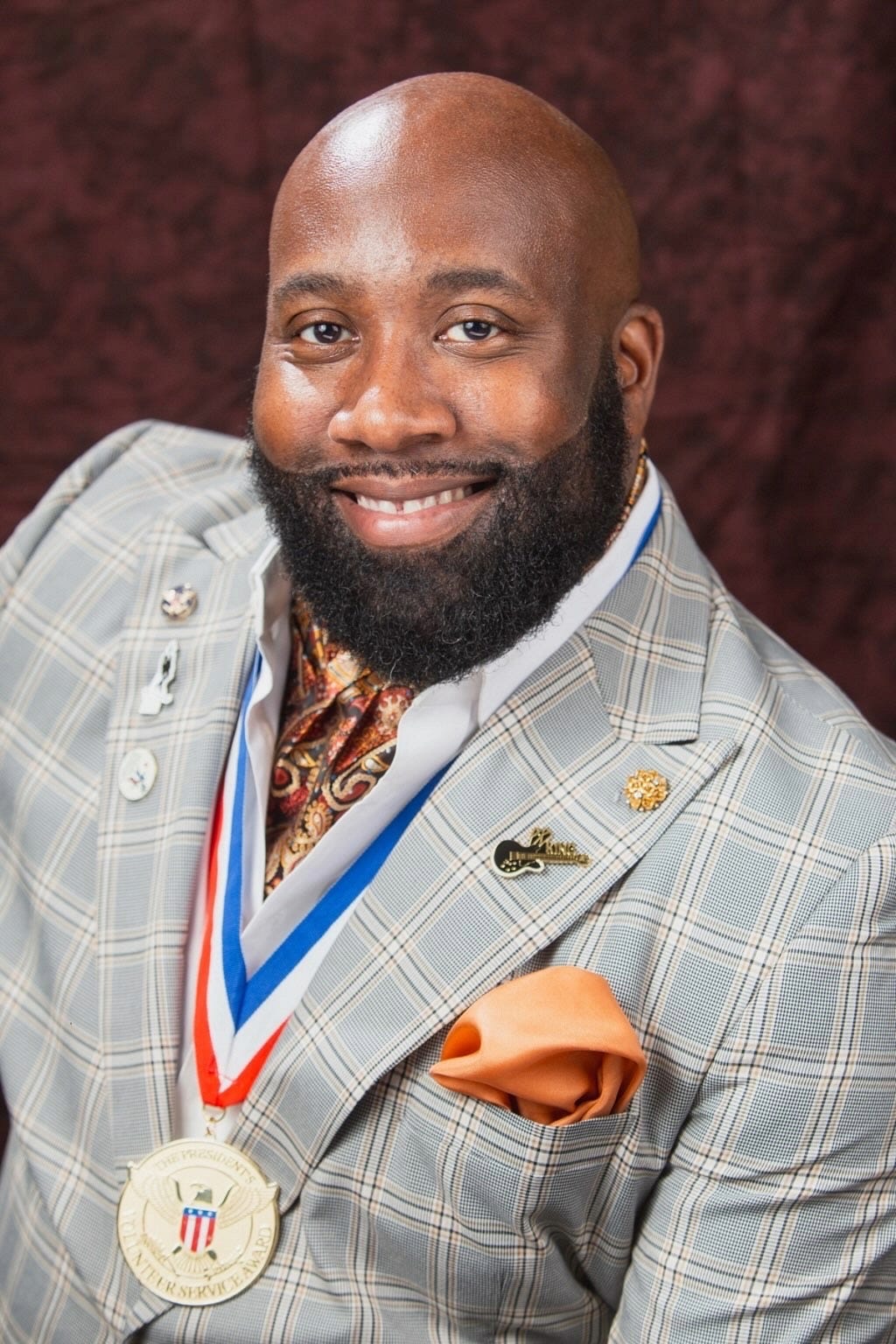

Social Impact Heroes: Why & How Christopher King of The Gentlemen’s Course Is Helping To Change Our World
An Interview With Martita Mestey
“Burnout is real — pace yourself.”
I once tried to run four events in one weekend. By Monday, I was in the ER for dehydration. You can’t pour from an empty cup.
As part of my series about “individuals and organizations making an important social impact”, I had the pleasure of interviewing Christopher King.
Christopher King is a Marine Corps veteran, international businessman, and passionate human rights advocate. He is the founder of The Gentlemen’s Course Inc., a nonprofit that teaches youth etiquette, leadership, and human trafficking prevention. King has received numerous accolades for his work, including the Presidential Lifetime Achievement Award, and currently serves as State President for United for Human Rights Florida.
Thank you so much for joining us in this interview series! Can you tell us a story about what brought you to this specific career path?
Absolutely. After serving in four combat tours with the United States Marine Corps, I returned home with a burning desire to serve in a different capacity — through education and advocacy. Witnessing the vulnerabilities of youth both abroad and in underserved American communities, I felt compelled to equip them not only with life skills, but with the knowledge and awareness to protect themselves from dangers like human trafficking. That desire birthed The Gentlemen’s Course — a platform to instill dignity, leadership, and self-worth in our youth.
Can you share the most interesting story that happened to you since you began leading your company or organization?
One of the most humbling experiences was being invited to speak at a juvenile detention center where I met a young man who had been arrested for robbery. After our session, he asked me for a copy of the etiquette guide and said, “No one ever told me I was worth more than my circumstances.” A year later, he reached out to say he was out, working, and starting a mentorship group for younger kids in his neighborhood. That’s when I realized this wasn’t just a program — it was a movement.
It has been said that our mistakes can be our greatest teachers. Can you share a story about the funniest mistake you made when you were first starting? Can you tell us what lesson you learned from that?
Early on, I planned a large community event and accidentally printed the flyers with the wrong date. I showed up to a park with 500 meals and no crowd. The lesson? Always double-check the details and never be afraid to laugh at yourself. Thankfully, we turned it into a spontaneous food giveaway — so nothing went to waste.
Can you describe how you or your organization is making a significant social impact?
Through The Gentlemen’s Course, we’ve educated thousands of young people across Florida in etiquette, self-respect, and human rights. We partner with school districts, sheriff’s departments, and local businesses to host events, mentorship programs, and awareness campaigns focused on preventing human trafficking and empowering future leaders. We’re changing the narrative of what leadership and dignity look like in our communities — one youth at a time.
Can you tell us a story about a particular individual who was impacted or helped by your cause?
A young girl from one of our trauma care workshops had been a victim of trafficking. She said our training was the first time she felt seen, heard, and believed. With support from our team, she completed her GED, enrolled in a trade school, and is now an advocate herself. Her story reminds me why we do this.
Are there three things the community/society/politicians can do to help you address the root of the problem you are trying to solve?
- Invest in early education on human rights and safety — especially in Title I schools.
- Fund trauma-informed programs that serve at-risk youth and survivors of trafficking.
- Strengthen cross-sector collaboration between law enforcement, schools, and nonprofits so we’re not working in silos.
How do you define “Leadership”? Can you explain what you mean or give an example?
Leadership is showing up when it’s uncomfortable and standing up when it’s unpopular. It’s about service over spotlight. For example, I make it a point to mentor youth directly, not just from the stage. True leadership is in the trenches, not just the titles.
What are your “5 things I wish someone told me when I first started” and why. Please share a story or example for each.
1 . “Burnout is real — pace yourself.”
I once tried to run four events in one weekend. By Monday, I was in the ER for dehydration. You can’t pour from an empty cup.
2 . “Ask for help.”
I used to think doing it alone was a strength. But building coalitions has been the key to our sustainability.
3 . “Your why will evolve — and that’s okay.”
I started with etiquette; now, we’re tackling global human rights. Growth requires flexibility.
4 . “Not everyone will believe in your vision.”
I was told no by 20 venues before one said yes. Stay committed to the purpose, not the applause.
5 . “Document your wins.”
I learned the hard way that storytelling is essential for grants, partnerships, and media. Keep records, testimonials, and data.
You are a person of enormous influence. If you could inspire a movement that would bring the most amount of good to the most amount of people, what would that be? You never know what your idea can trigger. 🙂
I would launch a national movement called “Respect Reimagined” — a grassroots initiative to bring etiquette, empathy, and equity back into our schools, workplaces, and communities. If we teach dignity at every level of society, we’ll create safer, more inclusive spaces for all.
Can you please give us your favorite “Life Lesson Quote”? Can you share how that was relevant to you in your life?
“Service to others is the rent you pay for your room here on Earth.” — Muhammad Ali.
This quote reminds me that my purpose is bigger than me. Everything I do — from mentoring to policymaking — is part of paying that rent.
Is there a person in the world, or in the US with whom you would like to have a private breakfast or lunch with, and why? He or she might just see this, especially if we tag them. 🙂
I’d love to have lunch with Oprah Winfrey, Michelle Obama, Jay Z, or B B King (my grandfather R.I.P.). They have a journey from adversity to impact that is legendary. They have and had they ability to use storytelling to heal and uplift communities aligns with everything I believe in.
How can our readers further follow your work online?
You can follow me on Instagram @therealchristopherking, or visit our website at www.thegentcourse.com . We also share updates on upcoming programs, galas, and community impact projects there.
This was very meaningful, thank you so much. We wish you only continued success in your great work!
Thank you — it was an honor to share my story!
Social Impact Heroes: Why & How Christopher King of The Gentlemen’s Course Is Helping To Change Our… was originally published in Authority Magazine on Medium, where people are continuing the conversation by highlighting and responding to this story.