

…I try to give myself specific times [on social media], like on the weekends, or maybe at night for 30 minutes before bed,” she explains. “But it’s also when I started reading my Bible every morning, because it helped set the tone for the day. It brought truth in before I could even get on social media. Before the lies came in, it was truth first…
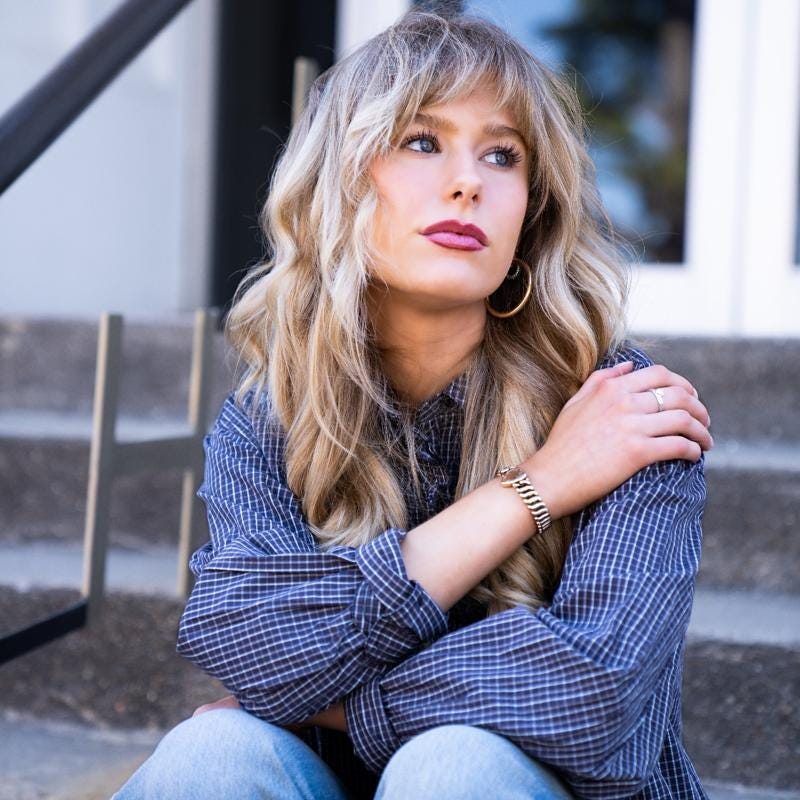
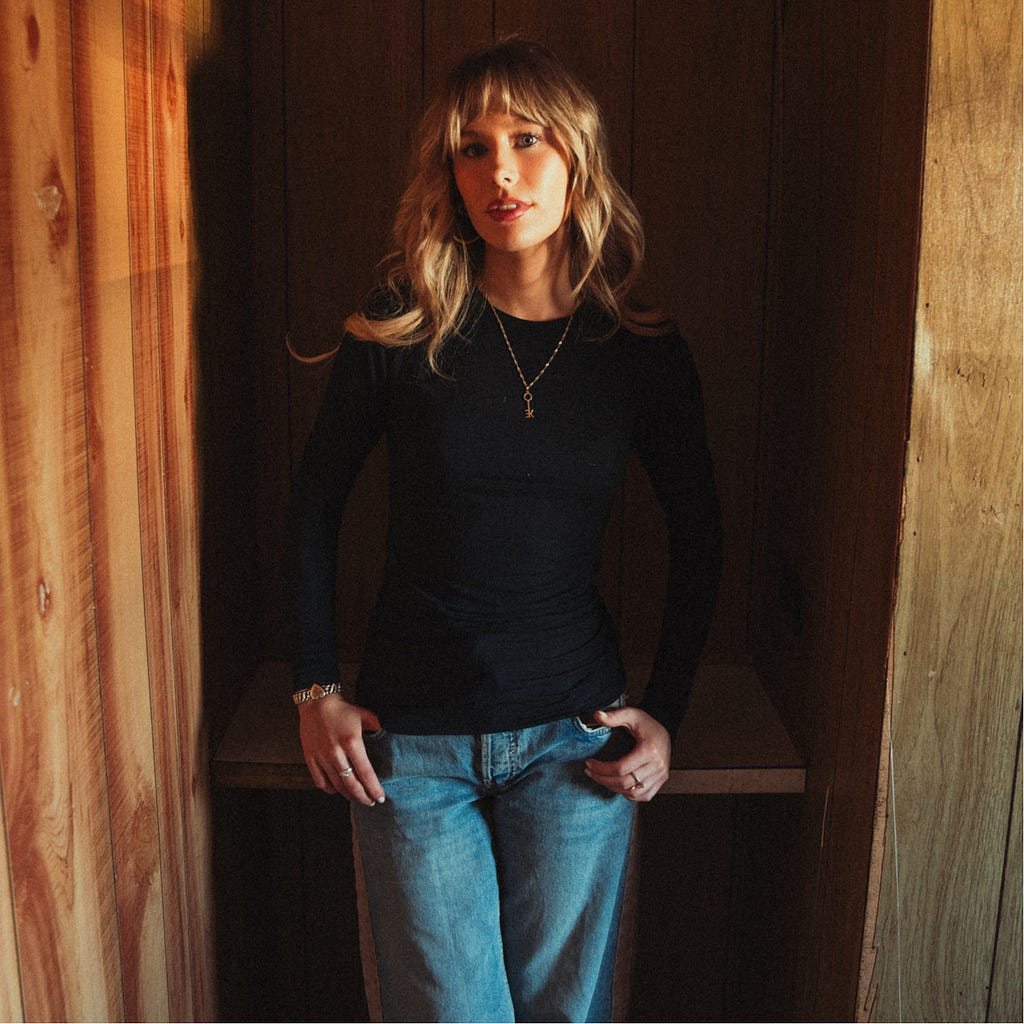
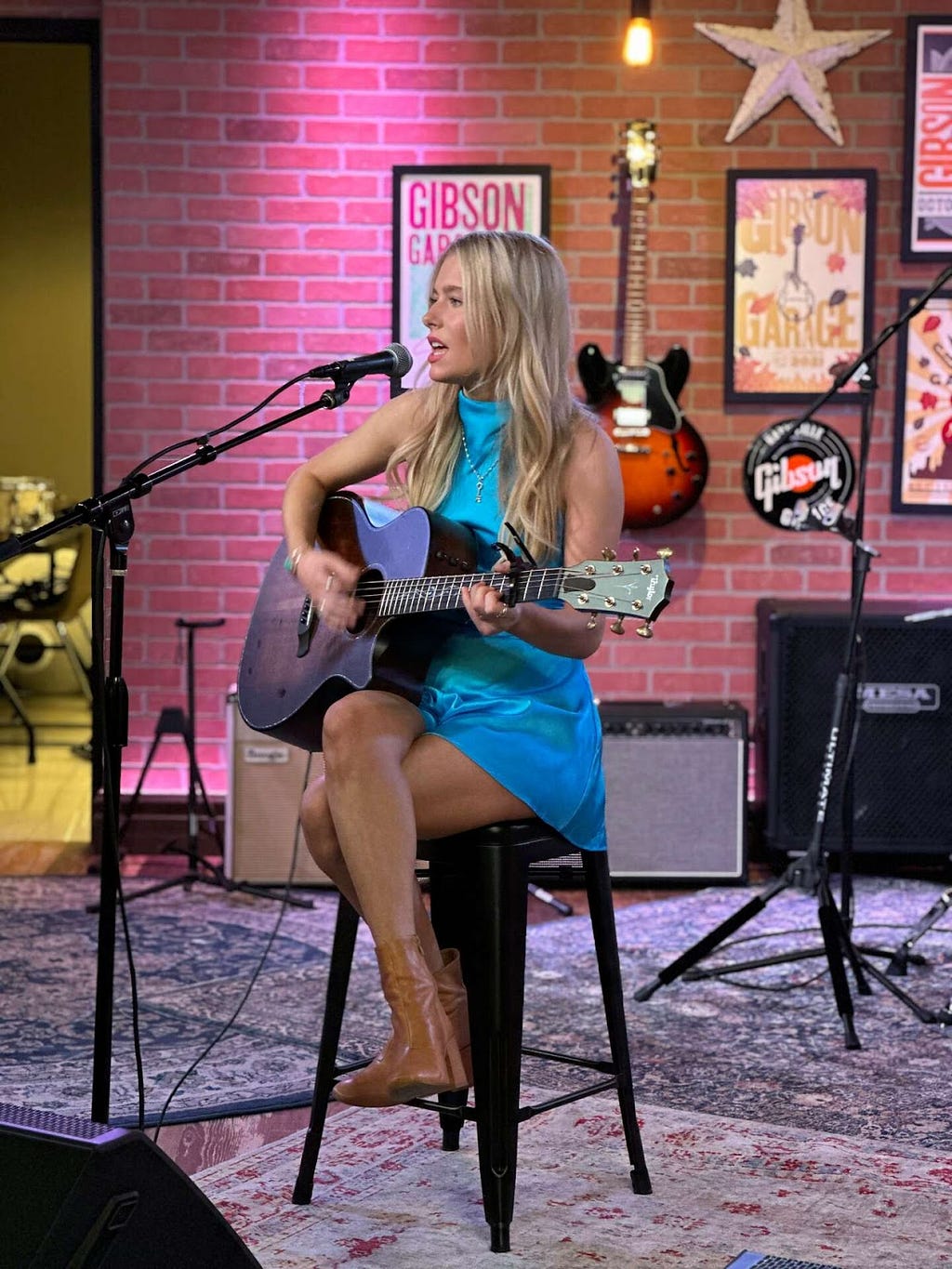
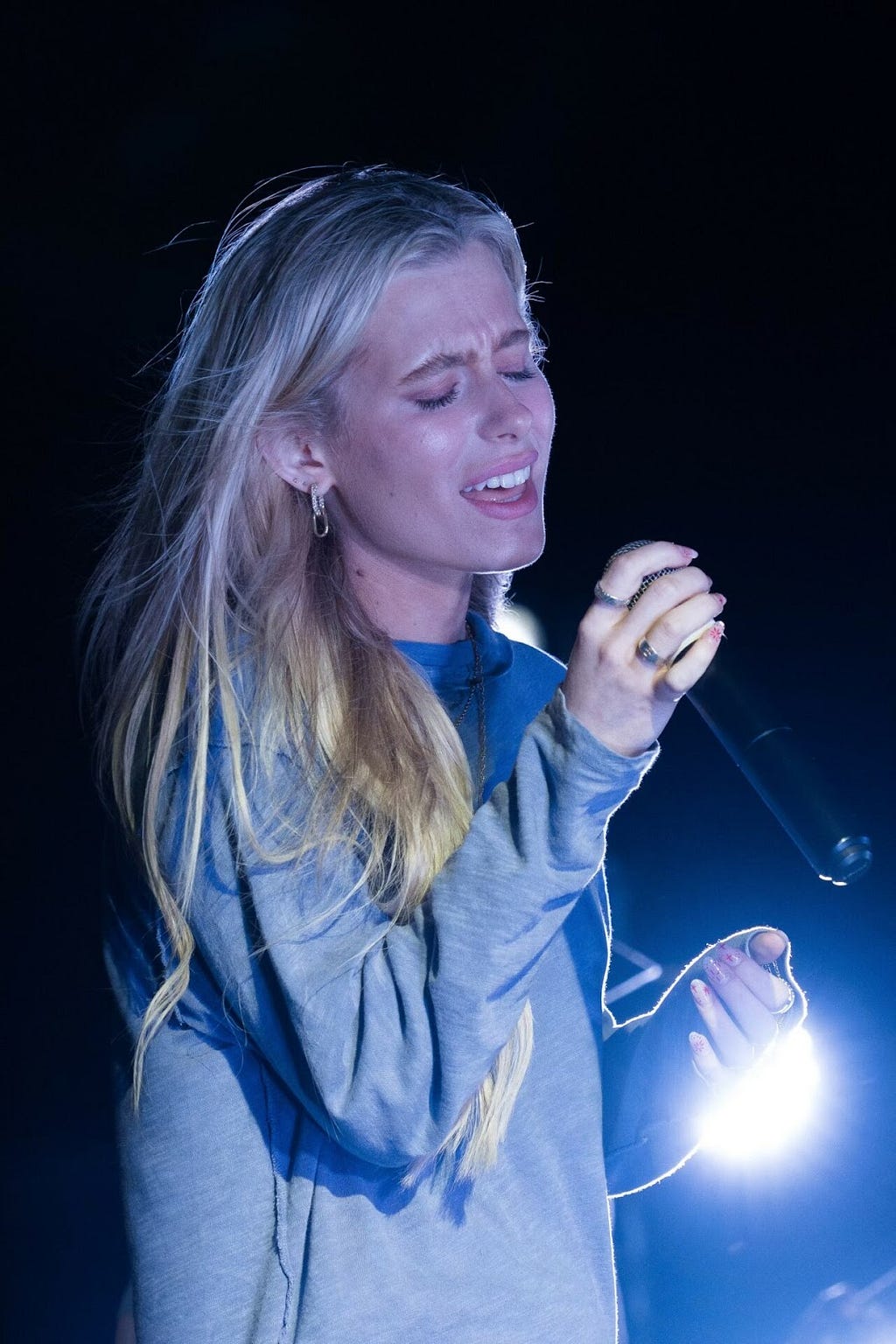
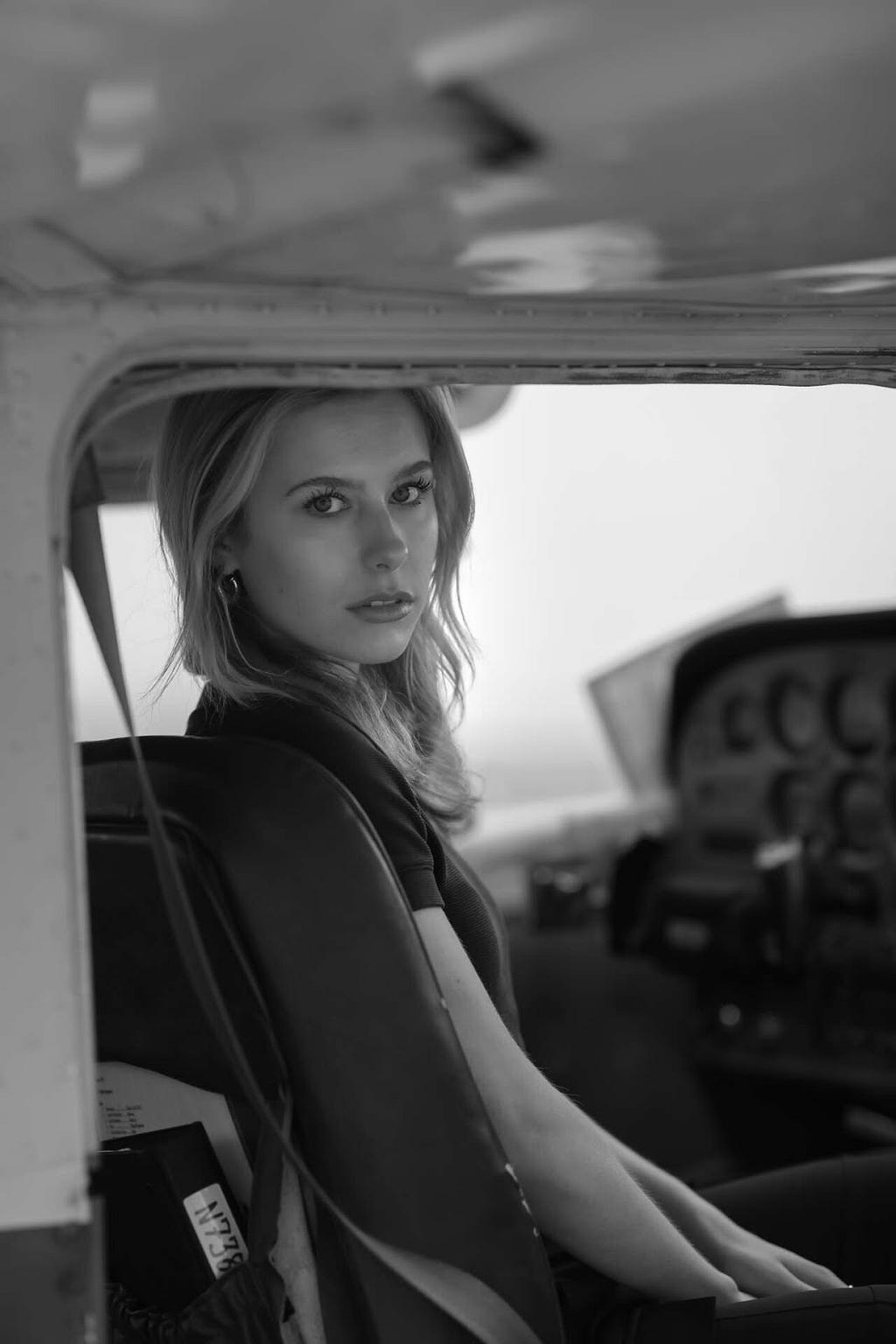
I had the pleasure of talking with Estella Kirk. Estella’s path to the Christian pop world didn’t begin on a stage in Nashville or a viral moment online, it started in McAlester, Oklahoma, inside a small church sanctuary where she first sang as a child. Raised in a tightly knit faith community, Kirk’s earliest musical memories are grounded in worship: leading songs in youth group, singing alongside her grandfather on guitar, and slowly growing into the kind of performer who could carry a congregation.
By age 14, she was already stepping up to lead music in her church’s main service, a turning point that helped define both her voice and her sense of purpose. “That’s really where my love for songwriting and worship music began to grow,” she says. “I think I just realized how deeply music can speak into people’s lives.” Music, for Kirk, was never simply a performance, it was a kind of ministry.
Her formal training began early, and it didn’t come easy. At 12, she joined a girl group, prompting weekly two-hour drives each way for voice and dance lessons. Her parents, recognizing both her talent and determination, supported her through late nights, long drives, and the emotional rollercoaster of early performance life. The experience, though exhausting, taught her early lessons in work ethic, discipline, and resilience. “We’d get home at midnight, and then do it again the next day,” she recalls. “I’m really grateful for that season. It showed me what commitment looks like.”
That ethic followed her to Franklin, Tennessee, where she relocated at 18 to pursue music more seriously. In Nashville’s saturated songwriting scene, Kirk found herself both challenged and inspired. She spent months attending writers’ rounds, getting coffee with strangers, and trying to build community from scratch. “Every time I went out, I met someone new,” she says. “It really changed the trajectory of the next year for me.” While the city was bigger and more competitive than what she’d known, Kirk credits her faith, and the church community she eventually found, for anchoring her through the transition.
Despite her deep ties to worship music, Kirk didn’t immediately enter the industry as a worship leader. Instead, she took a role in her church’s children’s ministry, quietly shifting from stage to classroom. “That’s where I felt the Lord guiding me,” she says. “It’s been one of the most fulfilling parts of my time here.”
Her recent EP, Growing Pains, captures this transitional chapter with honesty and vulnerability. The five-track project, which includes the nostalgic “18” and the emotionally raw “Growing Pains,” explores the tension of spiritual and personal growth, what it means to leave behind a familiar version of yourself and step into something unknown. The themes are universal, but filtered through the particular lens of a young woman navigating faith, change, and early adulthood in a new city.
Much of Kirk’s music begins in a journal. Some songs are born from fragments, lines scribbled during prayer, poems that evolve into melodies during writing sessions. “Sometimes I’ll just bring a few words into the room, and by the end of the session, we’ve created this full story,” she says. Her songwriting process leans heavily on authenticity, often touching on self-image, comparison, and mental health. One of her earlier tracks, “Someone I’m Not,” confronts the destructive cycle of social media-fueled self-doubt. Another song, “All I Know,” draws inspiration from Psalm 23 and the imagery of sitting at a table with God.
Kirk is candid about the emotional toll of comparison, particularly in the age of Instagram and TikTok. “If I could go back, I’d tell myself to stay off social media more often,” she says. “It can be so damaging when you’re constantly measuring yourself against a filtered version of someone else’s life.” To counterbalance that pressure, she starts each morning with Scripture. “Truth first,” she says. “Before the lies come in.”
Among her most formative influences is Stacy Wilbur, a mentor she met while interning at Tim Publishing in Nashville. Wilbert, Kirk says, helped shape not just her music career, but her character. “She taught me so much about work ethic, personal growth, and life in general,” she says.
Now in her early twenties, Kirk finds herself in a moment of both arrival and anticipation. She’s played shows that have resonated deeply, one fan once told her she’d written down the lyrics to a song and taped them to her mirror during a period of depression. Kirk says moments like that remind her why she makes music at all. “Even if I never ‘make it’ by industry standards, the songs are doing what they’re supposed to do, pointing people back to God.”
Looking ahead, she’s hopeful about where her career might lead. A few tours, some larger venues, maybe a consistent worship leadership role down the line. But she holds her plans loosely. “I try to have open hands,” she says. “Wherever the Lord wants to take me, that’s where I want to go.”
As the industry adapts to rapidly emerging technologies like AI-generated songwriting tools, Kirk is cautious but not threatened. “AI can help, but it can’t replace human connection,” she says. “It might write a cool melody, but it can’t replicate the emotion behind a song born from someone’s actual life.”
For Kirk, music remains a vehicle, one grounded in personal faith but meant for broader human connection. “I want people to feel seen in my songs,” she says. “Not because I have the answers, but because I’ve been there too.”
Yitzi: Estella Kirk, it’s a delight to have you with us. Before we dive in deep, our readers would love to learn about your personal origin story. Can you share with us a story about your childhood, how you grew up, and then the seeds of all of that came after that?
Estella: Yes, nice to meet you. I actually grew up in a small town in Oklahoma called McAlester. I was raised in the same church and started getting involved in my youth group, leading worship there. Then, around the age of 14, I began leading worship in what I like to call the “big service.” That’s really where my love for songwriting and worship music began to grow.
My grandpa plays guitar, so we would always play together growing up. That definitely helped spark my love for Christian music. Eventually, I moved to Nashville and started working on music more seriously.
Yitzi: You probably have some incredible stories from different parts of your career or places you’ve visited or toured. Can you share with our readers one or two stories that stand out in your mind from your professional life?
Estella: Oh gosh, yes. The first one that comes to mind is when I was about 12. My parents would take me out of school, and we’d travel two hours for vocal and dance lessons. I was part of a girl group when I was 12, and that experience really stands out because it taught me a lot about dedication. It was a lot of hard work. We’d get back at midnight, and then do it all again the next day. I’d go to school, and then we’d be back on the road.
It was tough on both me and my parents, but they saw how much I loved music and how passionate I was. I’m really grateful for their support through all of it.
Yitzi: It’s been said that sometimes our mistakes can be our greatest teachers. Do you have a story about a funny mistake that you made when you were first starting in music and the lesson that you learned from it?
Estella: There have been so many times where I’ve messed up the lyrics to my own songs, oh goodness, it’s happened a lot. Just last week, actually, I messed up the whole second verse of one of my songs during a show. It happens all the time. I think the key is learning how to recover from those moments, keep going, and even turn it into a funny part of the show.
Yitzi: That’s great. We love hearing stories where somebody who’s a bit further ahead opens up a door or creates an opportunity that changes someone’s career trajectory. Do you have a story where someone did that for you or where you did that for someone else?
Estella: Yeah, I think there have been so many people who’ve helped me along the way and have really been mentors. Someone by the name of Stacy Wilbert has been a huge mentor to me. I interned at a place called Tim Publishing, and I was able to be part of some of the behind-the-scenes work in the Christian music industry.
She taught me so much about work ethic, personal growth, and even life lessons that had nothing to do with music. I’m really grateful for people like her who’ve been there to help.
Yitzi: What’s been the most challenging project or role that you’ve taken on so far?
Estella: The most challenging project has actually been my EP that I’m currently releasing. I have a song called “Growing Pains” coming out tomorrow, and it really reflects on this last season of life, whether that’s going off to college, moving somewhere new, or just dealing with a lot of change that we all experience.
I also have a song called “18” that talks about how much can shift in such a short time. You can be one person at the beginning of the year and feel like a completely different person by the end.
There have been so many challenges, especially moving to a new state and learning how to write about those changes. Figuring out how to take those emotions and turn them into a song in a way that paints a picture people haven’t heard before is something I’m really passionate about.
A lot of my songs come from journaling or writing poems. Sometimes I’ll just bring a couple of lines into a songwriting session, and by the end, we’ve created this full story and painted a beautiful picture. I’m really excited for people to hear the album, and especially the song coming out tomorrow.
Yitzi: Amazing. Tell us more about why we have to buy this new album. Why do we need to listen to it?
Estella: I think it’s really special because it relates to people of all ages. I wrote it for someone like me, someone moving to a new state or starting college, but when I look back at all the songs, I realize how much they connect and how universal the themes are.
If you’re going through any kind of change, I believe this album is for you. There’s a song called “All I Know” based on Psalm 23, and it’s about sitting at a table with the Lord. Each song ties together around the themes of change, letting go, and trusting where God is leading you.
Yitzi: So beautiful. You’re describing a really tumultuous undertaking. You left Oklahoma to go to the music capital of the world. I’m sure it was probably overwhelming. What have you done to make it more manageable? How do you keep from getting overwhelmed and swallowed up by the big city?
Estella: I think the biggest thing for me has been finding a great church community, and just being able to surround myself with people who truly uplift me and walk alongside me. I’ve met so many great people out here. People are so kind, and I’m really thankful for that. I think it comes down to community.
Yitzi: You’re saying you went to a new city, but it didn’t feel entirely new because you had a community of kindred spirits who were Christian and could support you. You weren’t alone. That’s a profound lesson for others, if you move to a new city, you can find a community right away.
Estella: Yes, it’s so important. I remember when I first moved out here, I was trying to go to all the writers’ rounds and get coffee with anyone I could. It really mattered a lot, and it changed the trajectory of the next year for me. I met so many new people. Every time I went out, I met someone new, and I continue to meet new people. It’s just such a cool industry to be in.
Yitzi: Amazing. Are you involved in the worship at your new church in Nashville?
Estella: I’m not. I actually serve in kids’ ministry, which has been really nice. It feels like that’s where the Lord has guided me in that church.
Yitzi: But I’m sure you sing, right? Do you still sing in…?
Estella: Oh yes. But being with the kids has really become where my heart is at church.
Yitzi: So beautiful. I’m inspired to meet someone who’s a fellow believer. Can you explain why you think faith is so important for our country?
Estella: I think it’s important for our relationship with the Lord to be steady, true, honest, and real, because there’s so much darkness in the world. Even just with social media, it’s so easy to get lost in the scroll and start comparing yourself to others. So I think having that relationship with the Lord, and really spending time with Him, especially for me, it’s in the mornings, sets the tone for the day. If everyone had that relationship, the world would be a little bit different. That’s what I hope to bring through my music: the love that the Lord has for us.
Yitzi: It’s so beautiful. You’re saying that you start the day with prayer. You pray every morning?
Estella: Yeah, every morning.
Yitzi: That’s so special. Is that typical in your community?
Estella: I would say in the Christian music industry, I’d like to think that it is.
Yitzi: So beautiful. I think a lot of people just think you go to church on the weekends. But you’re saying it’s every day. That’s so beautiful.
Estella: Yeah, I think it’s important.
Yitzi: You spoke about how trusting in the Lord can help us navigate darkness and difficult times. But how about in terms of making our country a better place? How do you think having a strong faith can improve our collective character and make this a better country?
Estella: I think it improves how we look at other people and how we perceive their views. For instance, if someone doesn’t believe in the same political party you do, I believe that being in the Word and having a relationship with the Lord still unites us, even when our views are different. That creates a connection between people. If that makes sense.
Yitzi: So you’re saying that by believing in the Lord, who is forgiving and able to look past our differences, we’re encouraged to do the same for others. We’re able to find commonality, see the good in people, and look past the differences. Is that it?
Estella: Yeah, because I think if we’re focusing on how He loves us and we’re loving others like that, it will change how we view people.
Yitzi: That’s great. This is the centerpiece of our interview. You’ve been blessed with a lot of success now, and you must have learned so much from your experiences. Can you share five things you’ve learned that would have been so helpful to know when you first started in the music industry?
Estella:
- Yeah. The first one that comes to mind is to not compare yourself to other people. I have countless songs about that. One of them is called “Someone I’m Not.” It’s about looking in the mirror and not liking what you see. If I had known not to compare myself so much and to stay off social media, that would have been really helpful.
- The second thing would be to write songs as much as you can and finish them. You only get better by writing, so I would’ve written and finished more songs.
- The third thing would be: don’t doubt who you are or your authenticity. That’s the most important thing, and it’s actually what makes you stand out. People are going to want to listen to your music more if you’re authentic.
- The fourth thing would be not to be scared of what other people think of you and not to be afraid of failing. I’ve failed so many times, both on stage and off, but every time, I grew from it and got better.
- One more thing. Oh, this is a big one: your work ethic is the most important thing. You can have all the talent in the world, but if your work ethic isn’t strong, then you have almost nothing. I think work ethic outworks talent every day.
Yitzi: It’s great, it’s beautiful. So the first thing you mentioned was not comparing, and you ended by saying to stay off social media. Do you mean that literally? Do you recommend people not look at Instagram?
Estella: Well, I mean to limit yourself with it. I’m on Instagram and TikTok all the time, finding inspiration videos, even cooking videos, and I think it’s a great place. But there’s definitely a point where it can become harmful. For me, it’s more about knowing when I can be on it and when I can’t. I try to give myself specific times, like on the weekends, or maybe at night for 30 minutes before bed.
Yitzi: So the question is, how do you fulfill that first part? It feels almost impossible not to compare yourself when you’re seeing all those glamorous pictures and accomplishments. How do you not compare yourself when we’re constantly bombarded with people showing themselves off?
Estella: Yeah, I definitely did, and that’s why I wrote songs about it. That helped a lot. But it’s also when I started reading my Bible every morning, because it helped set the tone for the day. It brought truth in before I could even get on social media. Before the lies came in, it was truth first.
Yitzi: So you’re saying not only do you pray in the morning, but you also read the Bible every day?
Estella: Yeah. I read my Bible every morning. I try to wake up early and do it.
Yitzi: So beautiful. Truly. I wish more people did that. It’s really amazing.
Estella: Me too.
Yitzi: If you could take all of your songs, all of your melodies, put them into a bucket, blend it all up, what would be the message that comes out of that mixture? What would be the vibe and energy that comes out?
Estella: I think it would be that through every walk of life, the Lord is our peace and our comfort, and He’s right there with us. I also love the verse Isaiah 22:22, which talks about how the Lord will open whatever door He’s supposed to open and close whatever door He’s supposed to close. That’s actually my logo. I think that’s a pretty consistent theme throughout all the music I’ve made, even since I was 14.
Yitzi: It feels like you’re using music as the vehicle to spread your faith.
Estella: Yeah.
Yitzi: Why do you think music has the power to open up hearts, to inspire people, to uplift them? Why music of all art forms? Why do you think it holds that power?
Estella: I think it connects with people differently because we hear the things we’re feeling in a new way. It’s like someone else put into words something we couldn’t quite express ourselves. It also creates that human connection, realizing someone else is going through the same thing you’re going through. That’s what makes it so powerful. It’s art, but it’s also connection and hearing truth in a way we haven’t before.
Yitzi: Where do you see yourself in 20 years from now? Where do you see yourself?
Estella: Twenty years? Oh my goodness, I don’t know. I really don’t know. I like to say that I have open hands with wherever the Lord wants to take me. But honestly, I don’t know.
Yitzi: What do you wish for? What do you want your life to look like in 20 years? What’s happening in your life?
Estella: I would love to have done a few tours, released a lot more music, and played some bigger venues. I’d love to have built more of a fan base so I can keep doing this for a long time, if that makes sense.
Yitzi: It’s great. Do you see yourself as a church leader, like a woman minister?
Estella: I would love to lead worship somewhere consistently. Yeah, definitely.
Yitzi: Can you share some of the self-care routines that help your body, mind, and heart thrive?
Estella: Yeah. The first two things that came to mind are running and cooking. I love to run, it really helps me clear my mind. Going on consistent runs is something that’s really helpful for me. It’s something completely different from music that gives my mind a break. I also love to cook and bake. I’m not very good at it, but I love making sourdough, that’s about the only thing I can do. I like trying new recipes and just experimenting. That’s probably my biggest form of self-care. Other than that, I’m usually doing music or spending time with friends, and honestly, those are the things that fuel my music. It’s not just the music itself, it’s the stories that create the music.
Yitzi: Amazing. Have you ever heard of the new AI tools like Suno and Udio that make songs? I’d love to hear your opinion on it. Basically, you put in a prompt and it makes a song that sounds almost exactly like something you would sing. You could say, “I want to do a Christian worship song,” and it would create one on the spot. I could even show it to you right now. It puts out a song that’s almost indistinguishable from something professionally produced. How does it make you feel? As an artist, how does that make you feel?
Estella: I think it’s a powerful tool, and there’s definitely a way to use it that’s really cool and helpful. It can add something to our toolbox as artists. But I also think there’s a risk of leaning too much on it. It’s about balance, finding how it can help us, but not letting it hinder our growth and learning.
Yitzi: The question really is, do these technologies put worry into the hearts of songwriters and singers? On the surface, it seems like they could replace them. Or do you feel like human creativity can never be replaced, that it’s still at the core and there will always be space for human writers?
Estella: I’m not worried. I think at the end of the day, it can’t be more creative than us. It might be able to write a cool song, but it can’t capture the story, the emotion, the humanness that we crave and connect with. That human connection is something AI just can’t replicate. If it ever could, then I’d be worried, but I don’t think that’s going to happen.
I think it’s such a cool tool, I really do. There are so many things we can learn from it and use. But I also think there’s something really special about writing your own songs and singing your own songs. While it’s a great tool, I don’t think it’s something we should ever lean on too heavily.
Yitzi: We shouldn’t delegate music only to robots, because there’s something about human-made music that nourishes our soul, nourishes our humanity. If we only relied on AI, it would be like only eating junk food instead of whole, nourishing food. Am I saying your thoughts properly?
Estella: Yes, perfectly said.
Yitzi: This is what we call our matchmaker question, and sometimes it works. Is there a person in the world or in the U.S. with whom you’d like to collaborate or have lunch? Because we could tag them on social media and maybe help connect you.
Estella: Yes, I love Lauren Daigle. I think she has a great style and her voice is incredible. So I’d say Lauren Daigle.
Yitzi: This is our final question. Estella, because of your great work and the platform you’ve built, you’re a person of enormous influence. If you could spread an idea or inspire a movement that would bring the most amount of good to the most amount of people, what would that be?
Estella: I think it goes back to authenticity and love, and doing everything you can to show that love in what you do. I would say to pick something you love, work your hardest at it, and show other people the Lord’s love through that.
Yitzi: Amazing. How can our readers continue to follow your work? How can they purchase your music, watch you perform live, or support you in any way?
Estella: You can find me on all social media at @EstellaKirkMusic. I’m also going on a little tour around Oklahoma, Tennessee, and a few other states at the beginning of October.
Yitzi: Amazing. Estella, I wish you continued success, blessings, and good health. Keep inspiring the world, and I hope we can do this again next year.
Estella: Yes, thank you so much.
Estella Kirk Talks Leaving Home, Writing from Prayer, and Why Worship Is Bigger Than the Stage was originally published in Authority Magazine on Medium, where people are continuing the conversation by highlighting and responding to this story.