

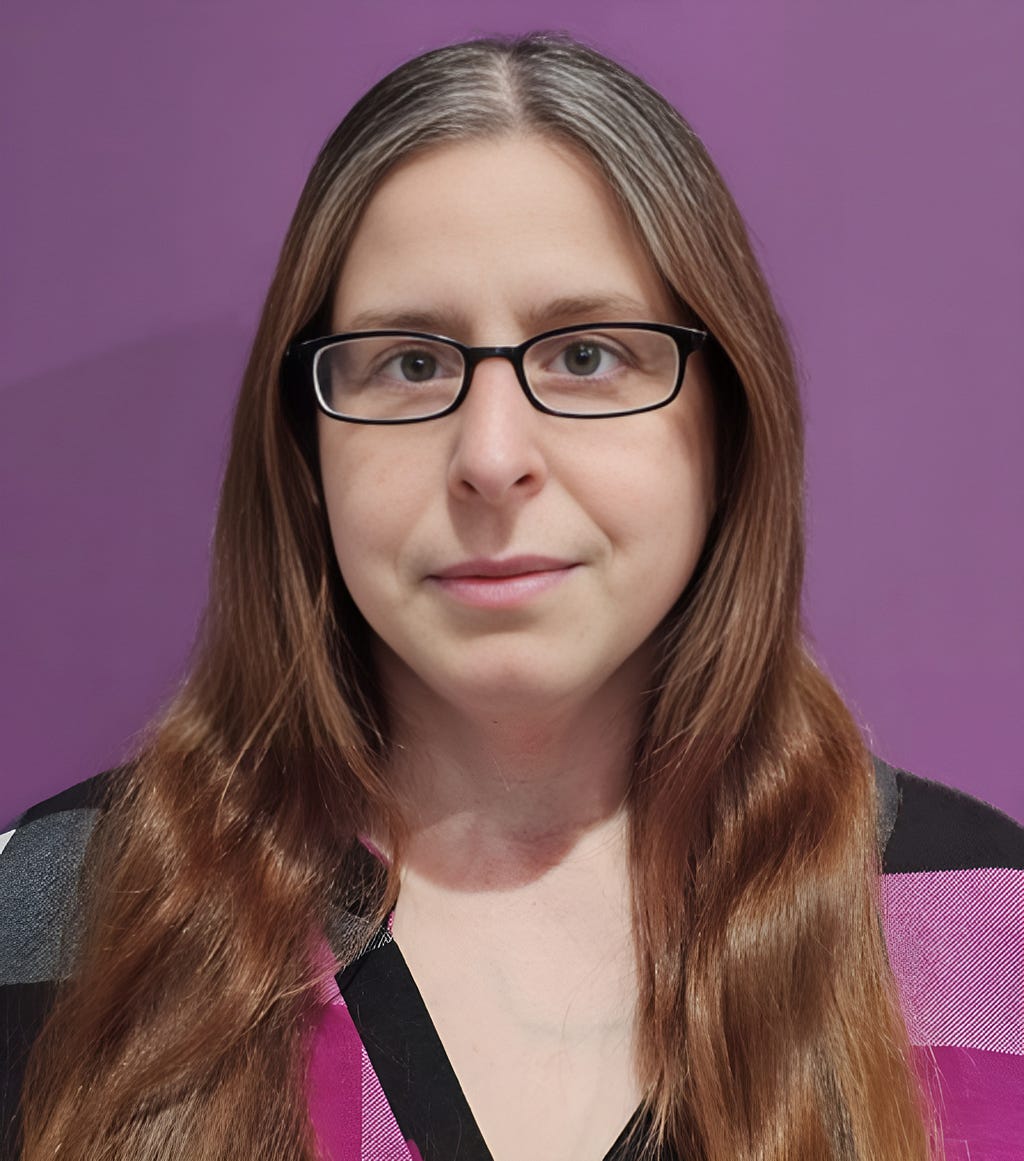

Disability Inclusion In The Workplace: Jennifer Ringler Of ReadHealthy On How Businesses Make Accommodations For Customers and Employees Who Have a Disability
An Interview With Eric Pines
Get Organized. Find a system that helps you track the project, deadlines, and also sets reminders for when each task is due. Find this system early, hone it over the years, and never underestimate the power of being organized. If budget allows, investigate adding a virtual assistant who can help keep you organized. In my very first PR job, I found it challenging to keep track of all the moving parts, and I had a “type A” manager who expected me to know where dozens of projects stood at any given time. It was overwhelming, and I only got better at this over the years through trial and error.
As we all know, over the past several years there has been a great deal of discussion about inclusion and diversity in the workplace. One aspect of inclusion that is not discussed enough, is how businesses can be inclusive of people with disabilities. We know that the Americans With Disabilities Act (ADA) requires businesses to make reasonable accommodations for people with disabilities. What exactly does this look like in practice? What exactly are reasonable accommodations? Aside from what is legally required, what are some best practices that can make a business place feel more welcoming and inclusive of people with disabilities? To address these questions, we are talking to successful business leaders who can share stories and insights from their experience about the “How Businesses Make Accommodations For Customers and Employees Who Are Disabled “.
As a part of this series, we had the pleasure of interviewing Jennifer Ringler.
Jennifer Ringler is founder and CEO of ReadHealthy Communications, a PR and marketing firm serving pharmaceutical and biotech clients. Jennifer has more than 10 years of life sciences marketing and PR agency experience and was previously a journalist in the life sciences industry. She was born with a rare vision disorder, leaving her completely blind in one eye, with limited vision in the other. Jennifer is an outspoken advocate of workplace accessibility.
Thank you so much for joining us in this interview series! Before we dive in, our readers would love to “get to know you” a bit better. Can you tell us a bit about your ‘backstory’ and how you ended up where you are?
After getting an undergraduate degree in writing from William Paterson University in NJ in 2005, I spent a few years as a journalist and editor for publications including Pharmaceutical Executive and Diabetes Focus. I returned to school and earned a Master of Science in Health Communications from Boston University in 2013, which allowed me to transition from journalism into marketing and PR, while staying in the pharma/biotech space. I worked at PR agencies for 10 years before starting my own marketing/PR firm, ReadHealthy Communications.
I was born with optic nerve hypoplasia, a rare disorder that affects the development of the optic nerves and have been completely blind in my left eye since birth. Since I am a member of the disability community, I have had a lot of experience advocating for myself and speaking up about accessibility and accommodations in the workplace.
You are a successful leader. Which three character traits do you think were most instrumental to your success? Can you please share a story or example for each?
I think resilience is a necessary trait for any leader or professional, but it’s especially critical in journalism, PR, and other writing-related careers. As a young journalist, I learned to “bounce back” from criticism and to not take it personally when my editors and managers would edit and redline my writing. It taught me to separate feedback about my work from feedback/commentary on me as a person, and to appreciate that everyone was just working to make the end product as good as possible.
This same concept of letting others’ opinions bounce off me without doing damage is a skill I cultivated from a very young age, since growing up as the only blind person in every room and situation meant that bullying was inevitable. I learned early not to take what other people thought of me to heart, and my parents instilled in me a deep sense of confidence and an ability to speak up for what I believed in and what I needed.
Today, I run my own PR firm, and resilience means I can accept client feedback and manage multiple clients with different work styles, preferences, and personalities without getting ruffled or taking feedback too personally. I can confidently speak up and offer counsel to my clients without hesitation or fear. And my clients appreciate that I can push back, when necessary, offer advice grounded in experience, and speak about their company and the great work they’re doing with confidence.
Beyond resilience, I think a strong sense of organization and attention to detail and the ability to approach any project with thoughtfulness — listening, thinking, and planning before acting — have been instrumental to my success.
Can you share a story about one of your greatest work-related struggles? Can you share what you did to overcome it?
Honestly, no one “greatest work-related struggle” comes to mind. I’ve had good days and bad days, but I guess I am fortunate that in a 20-year career, no one event stands out as a major struggle.
I did have one job that was truly a toxic environment led by a verbally and emotionally abusive leader, and what I chose to do was leave that situation and find a different job with an environment that was better for me. My only regret was not leaving the job sooner. My takeaway from this experience is to respect and love yourself, set boundaries, and not to stand for people treating you badly — in your work or personal life.
What are some of the most interesting or exciting projects you are working on now?
I truly love the work I’m doing, and the clients I’m working for. Being in pharma/biotech PR means that I get to work with exciting companies who are developing medications, diagnostic tools, and other technology that can potentially change the face of medicine and save lives.
One of the clients I’m working with right now is developing therapies to help restore the efficacy of old antibiotics that no longer work to fight off bacteria. Another is developing an affordable, home-based diagnostic test for flu and strep throat. And another helps oncology researchers get the specimens they need to develop new cancer diagnostics.
I look forward to seeing where each of my clients will be in the future, and how medical research and treatments will have advanced. I have the privilege of telling the stories of companies that are making a huge difference in the world, and I learn something new every day. What could be better than that?
Fantastic. Let’s now shift to our discussion about inclusion. Can you tell our readers a bit about your experience working with initiatives to promote Diversity and Inclusion? Can you share a story with us?
I am part of the visually impaired community, so working to improve DE&I in my workplaces has always meant self-advocacy. For example, I would ask colleagues to send presentations in advance of meetings so that I could see them better or change the font size to follow along. I would also ask for 1:1 training on new software programs because I couldn’t see well enough in group trainings where someone was sharing their screen. For the most part, this meant making others aware of the accommodations I needed, which by extension made them aware of ways they could be doing things more accessibly.
One opportunity to educate people about DE&I that stands out to me was when I had a pharmaceutical client who was developing gene therapies for people with degenerative vision disorders. The CEO was working on answers to some interview questions for a Q&A that was going to be published in a trade magazine. In an effort to convey the hope and promise that their therapy, which was in clinical trials at the time, would offer to the visually impaired community, he wrote, “Imagine being told by a doctor that there was nothing they could do about your vision loss, that you should get your affairs in order, and that you’d never be able to enjoy your career or time with your loved ones again.”
This language affected me deeply and personally, and I had the opportunity to use this as a “teachable moment.” I was able to “come out” to the CEO and the VP of Communications as a member of the visually impaired community and share that while I understood that they wanted to show how their medication conveyed hope for patients, the language they had chosen was deeply problematic and would offend and alienate their target patient population. I explained that blind and visually impaired people do not need to “get our affairs in order,” we are not dying, and we are perfectly capable of living full, happy, content lives and enjoying careers and families while also being visually impaired. I was able to help them walk the fine line of conveying the hope their product offered without insinuating that the lives of the disabled are miserable and hopeless.
This firsthand experience with the disabled community, and the ability to speak to and about patient populations with empathy and respect, is a superpower I have that I can share with my clients. I can also ensure their communications are compelling yet empathetic and that their target audiences feel seen and heard in an authentic way.
This may be obvious to you, but it will be helpful to spell this out. Can you articulate to our readers a few reasons why it is so important for a business or organization to have an inclusive work culture?
Businesses should consider the needs and abilities of both staff members and the populations they work with. It’s important because everyone comes to the workplace from a different background — different thoughts, perspectives, education, upbringing, religion, values, abilities, and so on. To get the most out of your employees and allow them to fully bring the breadth and depth of their experience to work with them — and to truly benefit from that diversity through the new ideas and creativity it will bring — the “status quo” should not be built around the idea that white, straight, cisgender, able-bodied, neurotypical people are the baseline.
The Americans with Disabilities Act (ADA) requires businesses to make reasonable accommodations for people with disabilities. For the benefit of our readers, can you help explain what this looks like in practice? What exactly are reasonable accommodations? Can you please share a few examples?
Reasonable accommodations are changes that allow the person with the disability to perform the functions of their job and perform optimally, bringing their best work to the table. It’s critically important to ask the person with the disability what accommodations they need, as everyone — even those who may seem like they have the “same” disability — needs and prefers something different.
One person with a visual impairment may prefer a touch-screen laptop or monitor so they can touch to zoom in on documents, while another might prefer text-to-voice software that reads text to them aloud. Some may need to work in low lighting to avoid glare, while yet another may need to work in a brightly lit room.
Employers should make it clear that they welcome people with all levels of ability and that accommodations are available, and they should never dictate what the “blanket” accommodations they offer are.
Aside from what is legally required, what are some best practices that can make a business place feel more welcoming and inclusive of people with disabilities? If you can, please share a few examples.
There’s no one blanket answer here. Best practices will be very different for people who use wheelchairs, those who are visually impaired, hard of hearing, neurodivergent, etc. I can only speak for myself as a visually impaired person — not for all people with disabilities or even for all visually impaired people.
Some things that help me include:
- People sending documents before virtual meetings so that I can zoom in on my end, since my touch-screen feature on my laptop does not allow me to zoom in on content that another person is sharing on screen from their end. It can be quite embarrassing to have to ask in a meeting full of people, “Can you zoom in on that please? A little more? A little more, please?”
- People sending documents before in-person meetings so that I can print them out to hold them closer to my face to read them, change the font size before I print them out, etc.
- Better signage — clearly marked offices that have large signs marking key areas like the restroom, kitchen, break room, conference room, etc.
- Remote work policies — More than 70% of adults with disabilities are unemployed in the U.S. There are a lot of reasons for this, but one reason is the lack of reliable public transportation. I have had to turn down jobs I wanted and was qualified for, and I also have had to quit jobs I loved because I simply did not have a reliable way to get there and back on time every day. Trains and busses do not go nearly as many places as they need to, using ride-share services every day can be very expensive, and even getting to the nearest train station or bus stop can be impossible for someone who does not have a driver’s license and cannot see well, walk, etc. The COVID-19 pandemic highlighted that a large majority of people can do their office jobs from home without business suffering. I find the insistence on “return to work” to be ableist, elitist, and completely unnecessary in most cases.
Can you share a few examples of ideas that were implemented at your workplace to help promote disability inclusion? Can you share with us how the work culture was impacted as a result?
Some of the best DE&I efforts I’ve seen include all-gender or single-stall bathrooms, work-from-anywhere policies, and new-employee surveys that gave me the opportunity to describe how I work and learn best and what I need to be successful.
Unfortunately, DE&I in regards to disability inclusion is often an uphill battle. I’ve had workplaces where I’ve had to constantly remind people to send materials before presentations, continually ask the design team to use larger fonts in company presentations, and so on. Being a person with a disability can sometimes feel like a daily battle to fight, and it shouldn’t be that way.
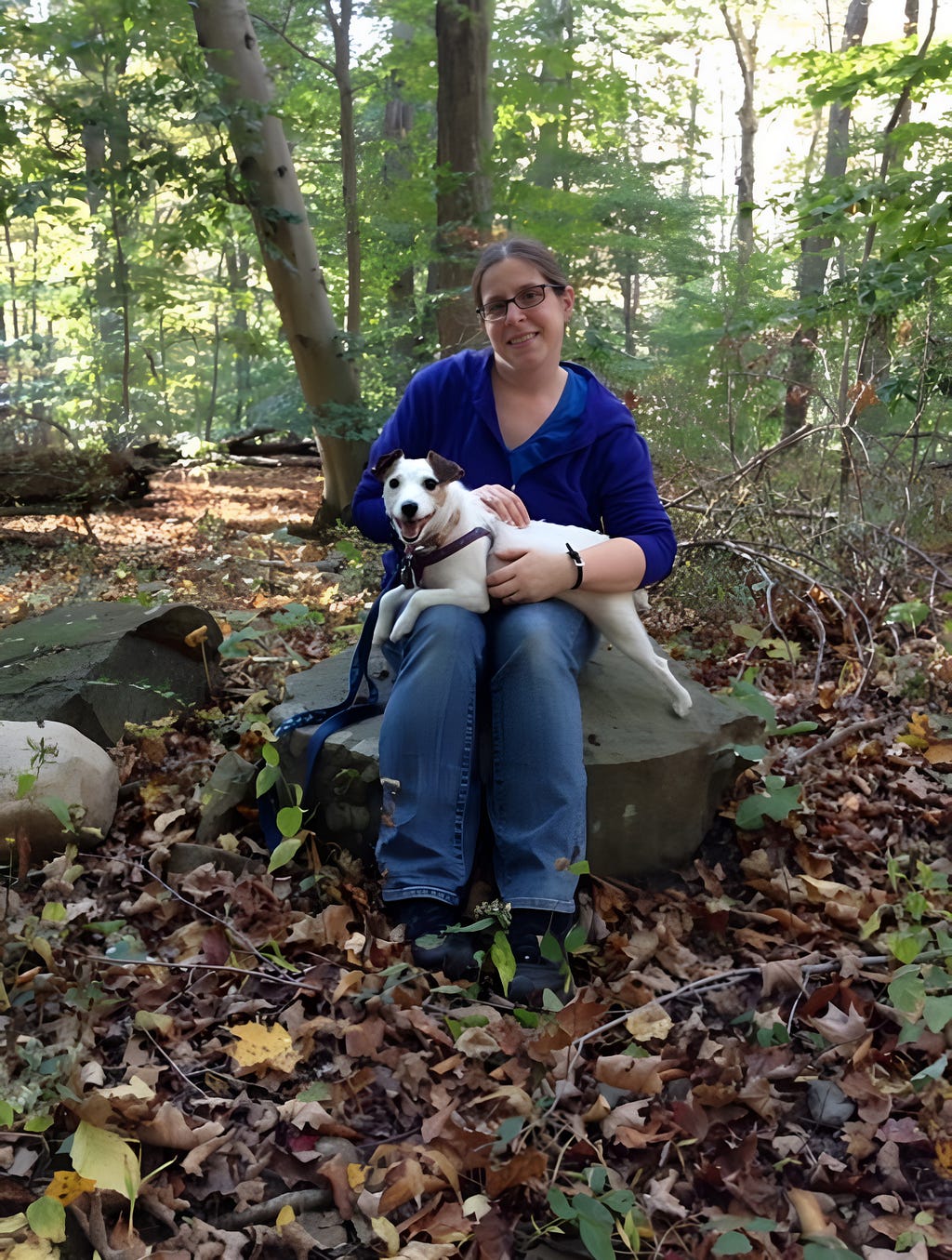
What are your “5 Things I Wish Someone Told Me When I First Started My Career”?
1. Get Organized. Find a system that helps you track the project, deadlines, and also sets reminders for when each task is due. Find this system early, hone it over the years, and never underestimate the power of being organized. If budget allows, investigate adding a virtual assistant who can help keep you organized. In my very first PR job, I found it challenging to keep track of all the moving parts, and I had a “type A” manager who expected me to know where dozens of projects stood at any given time. It was overwhelming, and I only got better at this over the years through trial and error.
2. Research Your Craft. Read the trade magazines, Harvard Business Review articles, and college textbooks that are relevant or align with your industry. Take free online courses, and don’t stop learning. No matter how many years you have been working, you can always learn something new, and you can always be better at it. I regularly read pharma and biotech trade publications and newsletters and see stories and ideas that inspire ideas I can bring to my clients or branding and marketing tricks I can use in my own business. And taking some advanced PowerPoint courses through LinkedIn Learning gave me a ton of new skills that I use to wow my clients with top-notch presentations.
3. Ask for Help. If you don’t know how to do something, or you want a second opinion, or you’re new at something, ask your colleagues, boss, or the executive assistant. Ask anyone! I’ve found that people are more willing to help others than you may realize, and the people around you have a wealth of knowledge that you may not have been exposed to. I once was selected for a job over other candidates because my manager said she liked that I stopped and asked for help in the middle of my layout/design assessment when I didn’t know how to do something. She said it really stood out to her that I was willing to ask for help.
4. Work Together. You won’t gel with everyone. There will be colleagues and bosses whose personality and/or work style just won’t match yours, and you won’t enjoy working with them. As long as you remain professional and focus on creating the best product or doing the best job possible, you don’t have to like everybody. I can think of two instances where I had frank, vulnerable conversations with colleagues who had very different opinions and working styles from mine. We made the tough decision to speak openly about how we could improve our working relationship and be better listeners and partners, and both the relationships and the end product for our clients were better as a result.
5. Be Authentic. Bring your whole self to work, and make sure you’re giving other people space to do the same. If you’re a parent, or a caregiver, or you’ve got an elderly pet at home who needs a lot of your attention, or if you have a disability, or you’re sick, or just having a bad day, it’s OK. We’re all human, and it’s unrealistic to expect your personal life (and that of your colleagues) won’t impact how you show up every day. Give others and yourself some grace. Some of my most treasured work memories involve moments when managers or others understood when I was struggling and allowed me extra time and space to get back into the work mindset, and I’m very conscious of doing the same for my employees. I recently had an employee who lives with a neurological disability thank me for my understanding and express gratitude that they didn’t have to “mask” or cover up their needs or unique learning style around me, and it felt really special to be able to give someone else that peace of mind.
Can you please give us your favorite “Life Lesson Quote”? Can you share a story about how that was relevant in your own life?
I try to live by Immanual Kant’s categorical imperative: “Act according to the maxim that you would wish all other rational people to follow, as if it were a universal law.” In simple terms, this means you should only do something or behave a certain way if you feel that it would be a good thing if all people were to do that thing or behave that way.
This serves as a great moral compass — “If everyone did this, or behaved this way, or made this choice, would that be OK? Would it hurt anyone? Would the world be a better place for it?”
I use this as a guide for how I treat colleagues and employees, how I behave towards waitstaff and retail workers, and the daily choices I make — from not littering to not saying hurtful things to others. I’m not perfect, but I try to follow this “rule” often.
You are a person of enormous influence. If you could inspire a movement that would bring the most amount of good to the most amount of people, what would that be? You never know what your idea can trigger. 🙂
I’d love to inspire a movement where every person in the world did ONE nice thing for ONE person, every day. It could be a small thing, like helping someone carry groceries or telling them you like their hat, or a big thing, like donating to a charity or buying food or clothing for someone who can’t afford it. Whatever is within your means, you can try to make one person’s life a tiny bit better every single day. Imagine what the butterfly effect of something like that would be.
How can our readers further follow your work online?
Anyone is welcome to connect with me on LinkedIn at https://www.linkedin.com/in/jennifer-ringler-ms-538a9a13/ or visit my website at https://www.readhealthy.net/. I’d love to hear from you!
This was very inspiring. Thank you so much for the time you spent with this. We wish you continued success and good health!
Thank you for making time for this interview. You are an amazing host.
About the Interviewer: Eric L. Pines is a nationally recognized federal employment lawyer, mediator, and attorney business coach. He represents federal employees and acts as in-house counsel for over fifty thousand federal employees through his work as a federal employee labor union representative. A formal federal employee himself, Mr. Pines began his federal employment law career as in-house counsel for AFGE Local 1923 which is in Social Security Administration’s headquarters and is the largest federal union local in the world. He presently serves as AFGE 1923’s Chief Counsel as well as in-house counsel for all FEMA bargaining unit employees and numerous Department of Defense and Veteran Affairs unions.
While he and his firm specialize in representing federal employees from all federal agencies and in reference to virtually all federal employee matters, his firm has placed special attention on representing Veteran Affairs doctors and nurses hired under the authority of Title. He and his firm have a particular passion in representing disabled federal employees with their requests for medical and religious reasonable accommodations when those accommodations are warranted under the Rehabilitation Act of 1973 (ADA). He also represents them with their requests for Federal Employee Disability Retirement (OPM) when an accommodation would not be possible.
Mr. Pines has also served as a mediator for numerous federal agencies including serving a year as the Library of Congress’ in-house EEO Mediator. He has also served as an expert witness in federal court for federal employee matters. He has also worked as an EEO technical writer drafting hundreds of Final Agency Decisions for the federal sector.
Mr. Pines’ firm is headquartered in Houston, Texas and has offices in Baltimore, Maryland and Atlanta, Georgia. His first passion is his wife and five children. He plays classical and rock guitar and enjoys playing ice hockey, running, and biking. Please visit his websites at www.pinesfederal.com and www.toughinjurylawyers.com. He can also be reached at eric@pinesfederal.com.
Disability Inclusion In The Workplace: Jennifer Ringler Of ReadHealthy On How Businesses Make… was originally published in Authority Magazine on Medium, where people are continuing the conversation by highlighting and responding to this story.