

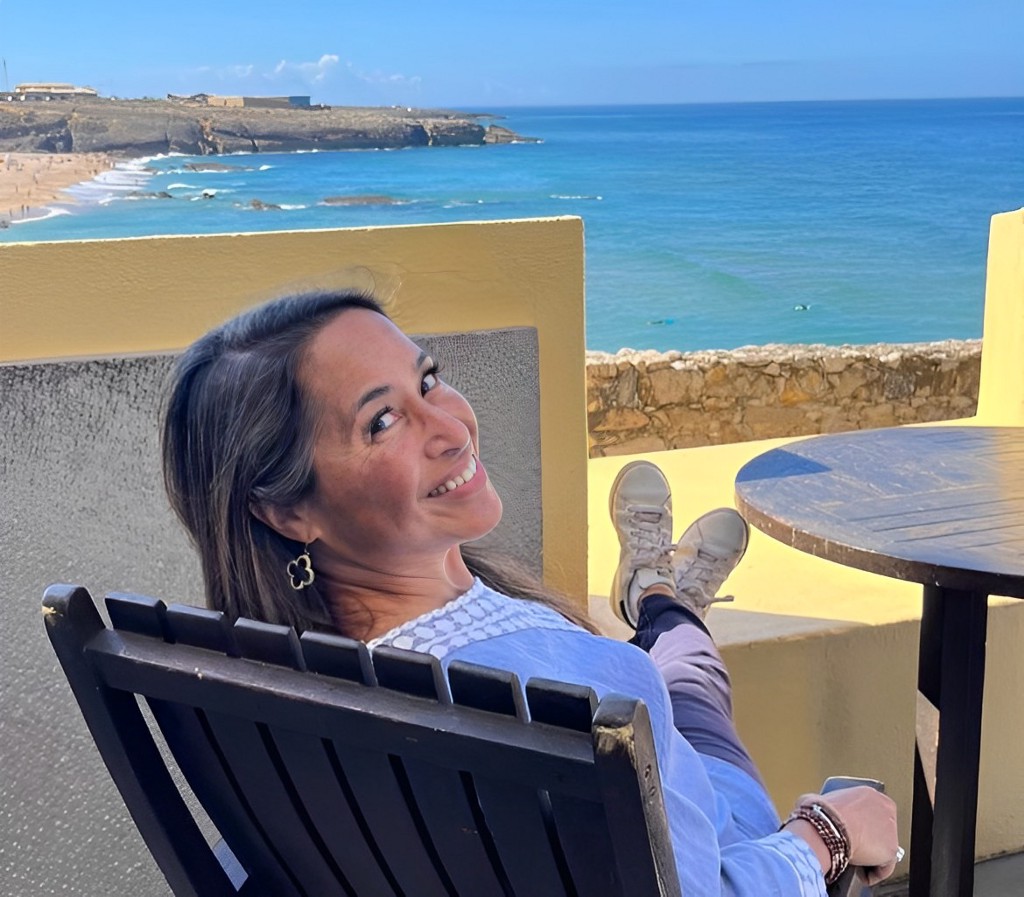

Travel and Personal Growth: Maria Leonard Olsen On Why & How Traveling Can Help Us Become Better Human Beings
An interview with Maria Angelova
Be mindful of your carbon footprint. We all can make do with fewer material things. Watch what you use and try to leave each place your visit slightly better, or at least leave only footprints.
Thankfully, the world is open for travel once again. Traveling can broaden our horizons and make space for people to become more open-minded. How can travel give us the opportunity for personal growth? What are some ways that travel can help us become better human beings? As a part of our series about “How Traveling Can Help Us Become Better Human Beings,” I had the pleasure of interviewing Maria Leonard Olsen.
Maria Leonard Olsen is an attorney, author, TEDx speaker, podcaster, journalist and mentor to women in recovery from alcoholism and drug addiction. She currently is working as a digital nomad in Latin America. Learn more about her work at www.MariaLeonardOlsen.com.
Thank you so much for joining us in this interview series! Before we dive into the main focus of our interview, our readers would love to “get to know you” a bit better. Can you tell us a bit about your childhood backstory?
My mother is an immigrant from the Philippines and my father is American. I grew up biracial in a very white community outside of Washington, D.C. I took my first multi-country backpacking trip while in college and I was hooked on travel. After I took the bar exam, I backpacked around Asia for a few months. It really changed my perspective on the world. I finally felt as if I belonged, as a citizen of the world.
What or who inspired you to pursue your career? We’d love to hear the story.
My mother wanted me to be a doctor or a lawyer, an aspiration common among immigrants. I become queasy when I see blood, so she gave up on that dream of hers. I went to law school straight out of college because I did not know what I wanted to do. I am a good litigator, but my passion really is writing.
None of us can achieve success without some help along the way. Was there a particular person who you feel gave you the most help or encouragement to be who you are today? Can you share a story about that?
My maternal grandmother is the strongest woman I have known. She came to the U.S. to help take care of us, leaving everything behind. She told a story about giving birth to my mother during World War II. Hours after delivering her baby into the world, she was forced to evacuate because the hospital was being bombed by the Japanese. She got to the island, saw that the food supply was scarce, and directed her husband to gather all of the coconuts. When the food ran out, she sold the coconuts at a great profit and left the island better off than when she arrived!
She reinforced in me self-reliance and resourcefulness. She was humble, yet proud. She took jobs far beneath her education and training when she came to the U.S. I learned these things from her and miss her a great deal. Her legacy lives on in me, my mother and my children who also loved her dearly.
It has been said that sometimes our mistakes can be our greatest teachers. Can you share the funniest or most interesting mistake that occurred to you in the course of your career? What lesson or take away did you learn from that?
I probably should not have gone straight to law school from college. I did not know what I wanted to do with my life at that point and could have benefitted from a gap year. But being a lawyer trained me well and has opened many doors for me.
I suppose I learned that it is ok not to know what one wants to do next. Careers can be varied over the course of a lifetime and usually are in our current culture. I put a lot of unnecessary pressure on myself to succeed by other people’s standards, while not being aware of my own values and standards when I was young. I was a chronic people-pleaser. Now I know how to discern what I want, as opposed to doing things just to please others.
Can you share your favorite “Life Lesson Quote”? Why does that resonate with you so much?
From Viktor Frankl’s book, Man’s Search for Meaning, he says that everything can be taken from you but one thing — your choice of attitude in any situation. This is absolutely true. When life throws us difficult things, we can decide how we will face them. I think of Frankl’s experience in a concentration camp and how he remained strong, and helped so many others in the camp. This inspires me to look for the good in all things.
What are some of the most interesting or exciting projects you are working on now? How do you think that might help people?
I am writing a book on the unintended consequences of consumer DNA testing. Many people take these tests today and are unaware of the potential ramifications regarding privacy, law enforcement, insurance, employment and more. I was blindsided by my test results and wish to help others be more prepared. I briefly touched on this topic during my TEDx Talk at City University of New York.
OK, thank you for all of that. Let’s now shift to the core focus of our interview. In this interview series we’d like to discuss travel and personal growth. Let’s dive deeper into these together. Based on your research or personal experience, why do you think travel can lead to personal growth? Can you share a story?
After I got divorced, I moved to a remote village in the Himalayas to volunteer for a few months. It changed my life. It became an exercise in cultivating gratitude. Instead of dwelling on all that I had lost, I began focusing on all that I have. Just by virtue of being an American, I have access to health care, for example. When I in the U.S., I have access to clean water. The people I lived with in Nepal did not have those luxuries. There is so much poverty in the world and we in developed nations often take so much for granted. I no longer do that.
A recent survey from Psychology Today showed that over 80% of participants found that travel helped them with problem solving or decision making. Why do you think this is true for so many people?
I think that removing oneself from one’s familiar environment enables us to see things in different ways. And travel often gives us a new perspective on our own lives, as we can look through a different lens. We also generally travel with fewer things. Simplicity often breeds creativity and clear thinking.
Do you think travel enhance our mindfulness, optimism, or sense of gratitude? How? Can you please explain with an example or story?
When we travel, we see how little people really need to be happy. We give ourselves time to relish food, nature and beauty in a way we usually do not do in our day to day lives.
I recently spent time in Antigua, Guatemala, where I experienced so much joy on the part of people who really had few material goods. They seemed more connected to their natural surroundings. They usually lived in intergenerational homes with the elderly. This experience made me feel more gratitude for the richness of human existence and helped me to slow down and savor.
Surely not everyone who travels automatically becomes an exemplar of human decency. What are a few reasons why some people completely miss out on the growth opportunities that travel can offer?
There is a big difference between travel and tourism, in my opinion. Tourists frequently only want to see the highlights. Travelers usually want to experience the culture of the place they visit.
I like to wander the streets when I visit a new place. I talk to the locals and get their suggestions on foods to try and things to see. I try to learn some of the language. I want to know what is unique about a place I visit. I immerse myself in the local culture. And I try to give back. I think travel is the one thing you pay for that makes you richer.
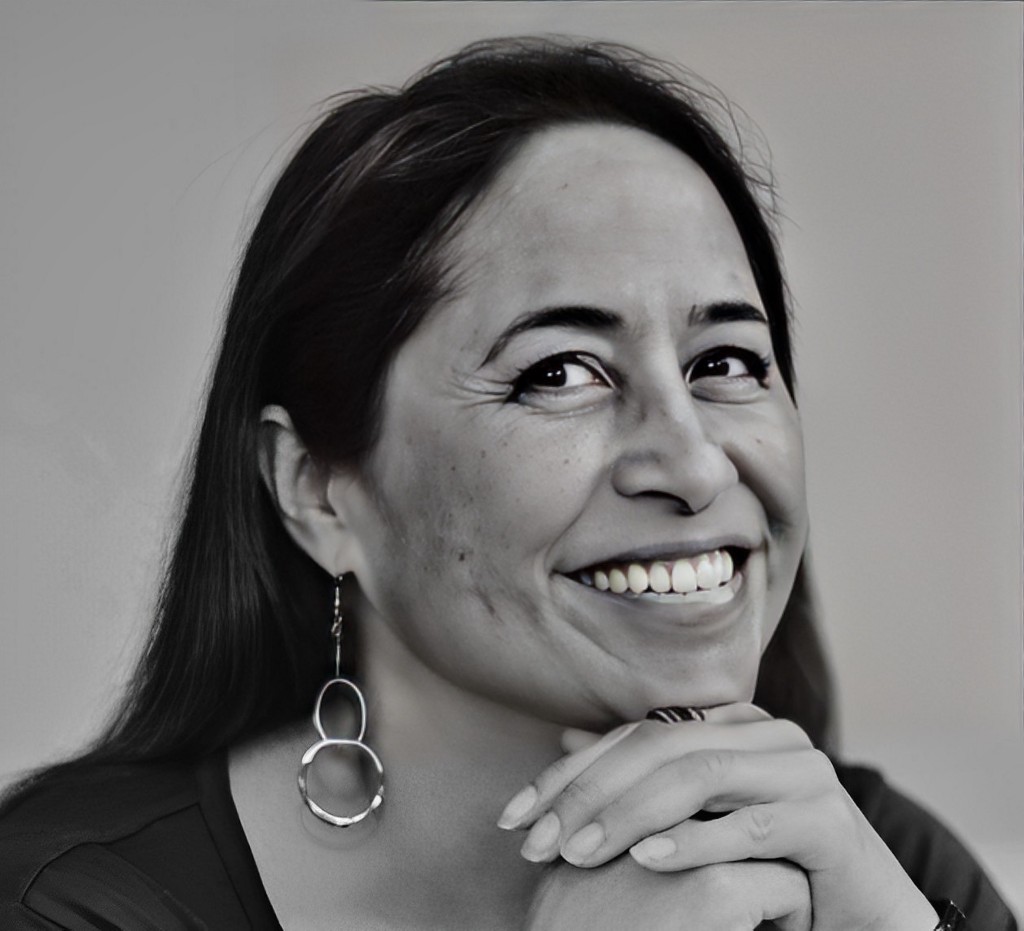
Thank you for that. Now for our main question; What are your “5 Habits You Should Develop In Order Make Travel Into An Opportunity For Personal Growth?”
- Get to know the local culture. Every person and experience has the capacity to teach us something if we are open to the lesson. Open your mind. Try to see things from a local’s perspective.
I visited a shaman’s home in Guatemala. I could not understand anything she said, but she shared her food, her warmth and offerings she made to the universe on my behalf. It was moving to be in her presence. She exuded a spiritual sense that was palpable.
2. Give something back to the community you visit. We are so fortunate to have resources in the U.S. Small gifts can go a long way in a developing nation.
When I visited Tanzania, I brought a package of pencils with me to share with the local children and distributed them as I encountered the kids on the streets. I learned that sometimes not having a pencil prevented a child from going to school. Their smiles were unforgettable.
3. Be mindful of your carbon footprint. We all can make do with fewer material things. Watch what you use and try to leave each place your visit slightly better, or at least leave only footprints.
When I went on a trek in the Himalayas, I was so dismayed by the litter I saw along the way. There was a display in Katmandu of the vast amount of garbage volunteers carried down the mountains. It was so sad.
I also noticed that, in Nepal, paper napkins were a luxury and paper towels were nonexistent. It made me mostly use recycled paper goods when I returned and reusable towels and cloth napkins instead.
4. Try to experience the arts abroad. Music, art and dance can be universal languages. They also often tell important stories.
In Medellin, Colombia, I visited Comuna 13, formerly one of the most dangerous neighborhoods in the world. After the drug cartels were dismantled or left Comuna 13, street art blossomed. The murals were gorgeous and joyful. They transformed the community into one of hope for the future.
5. Try to live in another country. Post-pandemic, many more employers became open to having their employees work remotely.
I took several trips with Remote Year, a group that provides travelers with offices, apartments and a local community. It has been life changing. They really help you learn the essence of the place you visit and get you involved in the community and off of the beaten path. Service is a component of the trips. And some of my peak experiences occurred with this group, like paragliding in the Andes mountains. The cost is comparable to a month at an Airbnb in a major American city.
From your experience, does travel have a negative impact on personal growth too? Is there a downside to travel?
If you are running away from your problems, travel can have a negative impact on personal growth. One should strive to run towards something, as opposed to away from something. Face your issues first and then travel with a clear and open mind.
We are very blessed that some of the biggest names in Business, VC funding, Sports, and Entertainment read this column. Is there a person in the world, or in the US, whom you would love to have a private breakfast or lunch with, and why? He or she might just see this, especially if we both tag them 🙂
I hope to meet Oprah someday. She came from a humble childhood, faced difficulties, became successful and gives back.
How can our readers further follow your work online?
Please go to my website, www.MariaLeonardOlsen.com, and follow me on Instagram and twitter @FiftyAfter50, and on Facebook and LinkedIn at Maria Leonard Olsen. Please check out my podcast, “Becoming Your Best Version,” on Apple podcasts, Spotify or wherever you get your podcasts. And please hit the like button on my TEDx Talk, “Using Life’s Challenges as a Force for Good.” This will help to raise it in the visibility algorithm and I think it can help a lot of people not feel so alone. Thanks!
This was very inspiring. Thank you so much for the time you spent on this. We wish you only continued success.
About The Interviewer: Maria Angelova, MBA is a disruptor, author, motivational speaker, body-mind expert, Pilates teacher and founder and CEO of Rebellious Intl. As a disruptor, Maria is on a mission to change the face of the wellness industry by shifting the self-care mindset for consumers and providers alike. As a mind-body coach, Maria’s superpower is alignment which helps clients create a strong body and a calm mind so they can live a life of freedom, happiness and fulfillment. Prior to founding Rebellious Intl, Maria was a Finance Director and a professional with 17+ years of progressive corporate experience in the Telecommunications, Finance, and Insurance industries. Born in Bulgaria, Maria moved to the United States in 1992. She graduated summa cum laude from both Georgia State University (MBA, Finance) and the University of Georgia (BBA, Finance). Maria’s favorite job is being a mom. Maria enjoys learning, coaching, creating authentic connections, working out, Latin dancing, traveling, and spending time with her tribe. To contact Maria, email her at angelova@rebellious-intl.com. To schedule a free consultation, click here.
Travel and Personal Growth: Maria Leonard Olsen On Why & How Traveling Can Help Us Become Better… was originally published in Authority Magazine on Medium, where people are continuing the conversation by highlighting and responding to this story.