

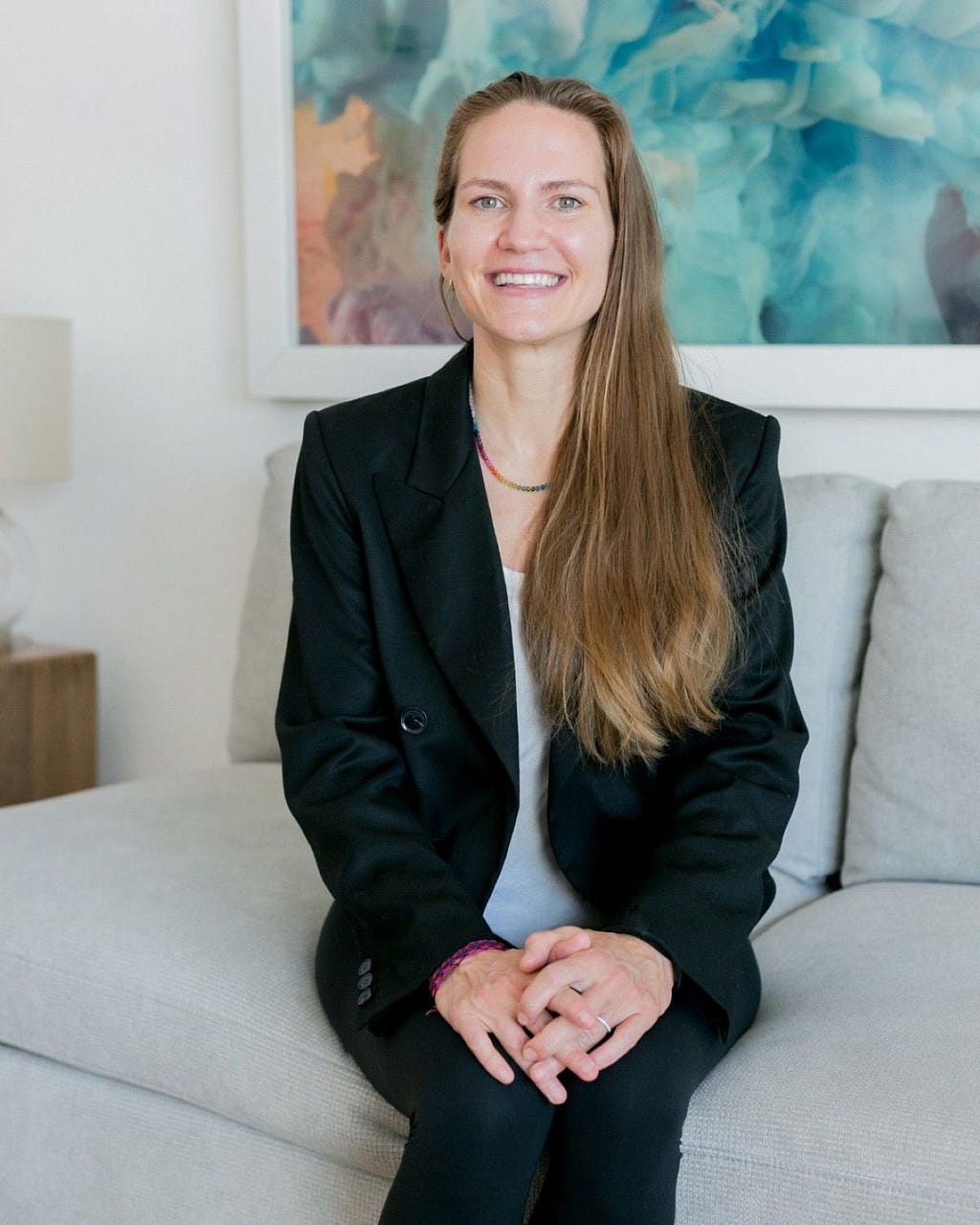

Talia Eisenberg Of Beond Ibogaine On How To Achieve Great Success After Recovering From An Addiction
Tell someone. Shame shrivels in the light. Saying it out loud to a trusted person can be the first step toward healing.
Remember you are not broken. Addiction is often a response to unmet needs or unhealed pain. It does not define who you are.
Know you’re not alone. Countless others are silently struggling too. You’re part of a much larger story, and help is available.
See the bigger picture. What feels like your greatest pain may one day become your greatest purpose. You just can’t see it yet.
Don’t wait for rock bottom. If you’re unhappy or disconnected, that alone is reason enough to seek change. You deserve more than survival — you deserve joy.
When people are trapped in a severe addiction, it can feel like there is no way out and there is no hope for a better future. This is of course not true. Millions of people are in recovery from an addiction and they go on to lead successful, fulfilling and inspiring lives.
Authority Magazine started a new series about women who were able to achieve great success after recovering from an addiction. The premise of the series is to offer hope and inspiration to people who feel trapped in similar circumstances. As a part of this series we had the pleasure to interview Talia Eisenberg.
Talia Eisenberg is the co-founder of Beond, a pioneering ibogaine-assisted treatment center in Cancún, Mexico, dedicated to transforming the landscape of mental wellness through medically supervised psychedelic care. A former art gallery owner whose personal recovery from opioid addiction inspired her mission, Talia blends lived experience, entrepreneurial vision, and an MBA in sustainability to guide Beond’s evolution into a destination for healing, optimization, and personal renewal. She also leads Beond’s Changemaker Program, welcoming creators, executives, and wellness leaders to experience ibogaine as a catalyst for clarity, purpose, and longevity.
Thank you so much for doing this with us! Before we dig in, our readers would like to get to know you a bit more. Can you tell us a bit about your childhood “backstory”?
I grew up in Omaha, Nebraska, and never quite felt like I fit in. Our family was Jewish in a mostly conservative, Christian town, and we were a little eccentric. My mother was a therapist, and my grandmother was a Holocaust survivor who owned an art gallery, so I was surrounded by big ideas and deep emotion from the start. Even as a child, I was unusually reflective. At a very young age, I can remember looking in the mirror staring deeply into my own eyes and wondering about the universe and consciousness. That kind of existential awareness made it hard to connect with other kids.
Travel became a lifeline for me. Experiencing different cultures opened my mind, but each time I came home, I felt more disconnected. Eventually, I moved to New York City as a teenager. It was exciting but also overwhelming. Looking back, my early years were defined by a mix of curiosity, loneliness and a longing for connection — feelings that would later shape my struggles and my search for healing.
Do you feel comfortable sharing with our readers how you were initially introduced to your addiction? What drew you to the addiction you had?
It started with something as ordinary as a dental procedure. I was prescribed an opioid, and for the first time in my life, I felt peace in my body. That moment changed everything. I remember thinking, “I could do this every day for the rest of my life.”
I felt everything so deeply, and suddenly I found a chemical escape from the discomfort I had carried for years. It was the perfect storm — a way to quiet the noise, numb the pain and feel a sense of ease I had never known.
As you know, addictions are often an attempt to mask an underlying problem. In your experience, what do you think you were really masking or running from in the first place? Can you explain?
At the core, I was running from a deep sense of self-hatred and fear of life itself. I felt an overwhelming need to control everything because the unknown terrified me. Underneath that control was a belief that I was unworthy or unlovable.
Everything began to shift when I was introduced to ibogaine. This remarkable, naturally occurring compound helped me see that those beliefs — the self-loathing, the fear and the feelings of inadequacy — were distortions I had been carrying for years. That realization cracked something open in me.
Ibogaine isn’t just another psychedelic; it’s a potential game-changer in the treatment of opioid use disorder. Unlike traditional approaches that often require ongoing maintenance and leave individuals physically dependent, ibogaine can interrupt that cycle entirely. Research shows that a single dose can significantly reduce, or even eliminate, withdrawal symptoms, giving people the chance to begin healing without being locked in the daily battle of dependency and craving. For me, it provided the clarity and space to finally begin rebuilding from within.
That experience is what ultimately led me to co-found Beond, an ibogaine treatment center in Cancún Mexico. Since launching in 2021, we’ve conducted 6,000+ medically supervised ibogaine treatments with outcomes that surpass conventional approaches to addiction, trauma and even personal optimization.
At Beond, we work with this very medicine to help people interrupt addiction, reframe trauma, and reconnect with a sense of purpose. Our approach blends medical excellence with integrative coaching and a deeply respectful acknowledgment of ibogaine’s spiritual power.
Can you share what the lowest point in your addiction and life was?
For me, the lowest point was living in New York City and being completely unable to experience it. I was surrounded by fashion, art and culture, and yet my entire day revolved around whether I had enough drugs to keep from getting sick. I missed out on the freedom and fun of my late teens and early twenties because of that, and I grieve it deeply.
Was there a tipping point that made you decide that you needed to change? Can you please share the story?
Yes. The moment came during my ibogaine experience. I saw with absolute clarity that I was poisoning myself with the harmful substances. I also saw my grandmother who had already passed, who had survived Auschwitz, and I knew I had to live in a way that honored her suffering and resilience. Ibogaine gave me a glimpse of what healing could look like. It wasn’t overnight, but it was a true beginning.
Can you tell us the story about how you were able to overcome your addiction?
Prior to my ibogaine treatment, I entered some of the top rehab programs in the country and found that they were not helpful for me. After my ibogaine experience, I moved to Boulder, Colorado to start rebuilding my life. I vowed to never pick up an opiate or alcohol again. It wasn’t just about getting sober — it was about rebuilding from the inside out.
I worked with a psychedelic integration therapist from the early MAPS trials, joined a twelve-step program, practiced yoga and spent time in the Amazon doing dieta with ayahuasca. Along the way, I also had to face my eating disorder and anxiety.
Ibogaine is how I got and remained sober, and I’m proud to say I’ve never touched a harmful substance since. Through therapy, twelve-step programs, and other plant medicine work through the years I learned how to forgive myself and others and to heal the shame I felt about myself as well as start to chart a path forward for meaningful work in my life. Beond was ultimately created to offer what I wish had existed back then: a place where safety, dignity, science and soul could truly coexist.
How did you reconcile within yourself and to others the pain that addiction caused to you and them? Can you please share a story about that?
Through my twelve-step work, I made amends to family members, former partners and others I had hurt. Taking responsibility and speaking those words directly helped me reconnect with humanity and with myself. It was a step toward forgiveness, both of others and of myself.
When you stopped your addiction, what did you do to fill in all the newfound time you had?
One of the first things I did was launch an early vape company with a lounge in SoHo. On the surface, it was a place to help people quit smoking, but it quickly became much more — a space for healing conversations, where art, wellness and psychedelic medicine intersected.
That’s also where I met my husband, Tom, who is the Co-Founder of Beond. That chapter gave me a way to reintegrate into society while still living in alignment with my values.
What positive habits have you incorporated into your life, post addiction, to keep you on the right path?
Mindfulness is at the center of my life. I’ve learned to pause and really examine my thoughts instead of reacting to them, and practices like Byron Katie’s “The Work” and daily gratitude help me stay grounded. At Beond, we begin each morning with a gratitude circle, which creates a shared sense of connection and intention.
I also prioritize the basics: eating organic and gluten-free, getting good sleep, exercising daily, and protecting my energy by avoiding people or environments that drain me.
Can you tell us a story about the success that you achieved after you began your recovery?
For me, success starts with my family. I have a one-year-old daughter, a seven-year-old son, and three wonderful stepsons. I’ve built a marriage with my husband where we’re honest, supportive and always growing together.
Professionally, co-founding Beond has been a dream realized. But beyond the milestones, the greatest success is living in integrity — becoming a woman my younger self would be proud of.
What character traits have you transferred from your addiction to your current achievements? Please share both the positive and negative.
The same qualities that once fueled my addiction have transformed into strengths. My obsessiveness became persistence. My self-hatred evolved into self-compassion. My need for control shifted into mindfulness, acceptance and faith.
And most importantly, my lived experience, the very thing that once felt like a burden, has become a source of connection and inspiration for others. That’s the real alchemy of healing.
Can you share five pieces of advice that you would give to a person who is struggling with some sort of addiction but is ashamed to speak about it or get help?
- Tell someone. Shame shrivels in the light. Saying it out loud to a trusted person can be the first step toward healing.
- Remember you are not broken. Addiction is often a response to unmet needs or unhealed pain. It does not define who you are.
- Know you’re not alone. Countless others are silently struggling too. You’re part of a much larger story, and help is available.
- See the bigger picture. What feels like your greatest pain may one day become your greatest purpose. You just can’t see it yet.
- Don’t wait for rock bottom. If you’re unhappy or disconnected, that alone is reason enough to seek change. You deserve more than survival — you deserve joy.
And if you’re looking for a safe place to begin that journey, Beond is here. Our mission is not only to help people end addiction, but also to uncover the life that’s waiting on the other side.
We are very blessed that some very prominent names in Business, VC funding, Sports, and Entertainment read this column. Is there a person in the world, or in the US with whom you would love to have a private breakfast or lunch, and why? He or she might just see this if we tag them.
I would choose Amma, the “Hugging Saint,” who has embraced over 40 million people around the world. Her presence carries a profound blend of spiritual practice, nervous system regulation and unconditional love. For those open to it, she transmits something that feels like divine energy. I would love the chance to simply connect with her and learn how she embodies that level of compassion and peace.
How can our readers further follow your work online?
They can visit the Beond website at www.beondibogaine.com or follow us on Instagram. We also have a podcast, called Ibogaine Uncovered.
Thank you for these fantastic insights. We greatly appreciate the time you spent on this.
Talia Eisenberg Of Beond Ibogaine On How To Achieve Great Success After Recovering From An… was originally published in Authority Magazine on Medium, where people are continuing the conversation by highlighting and responding to this story.