


Not to burn bridges. You never know who you’re going to eventually work with again, work for, or work above, especially in this industry. It’s a small world and things often come full circle, so learning to turn the other cheek and not let your emotions get the best of you or your situation is so important.
As a part of my series about “Big Ideas That Might Change the World in The Next Few Years” I had the pleasure of interviewing Justin Chase.
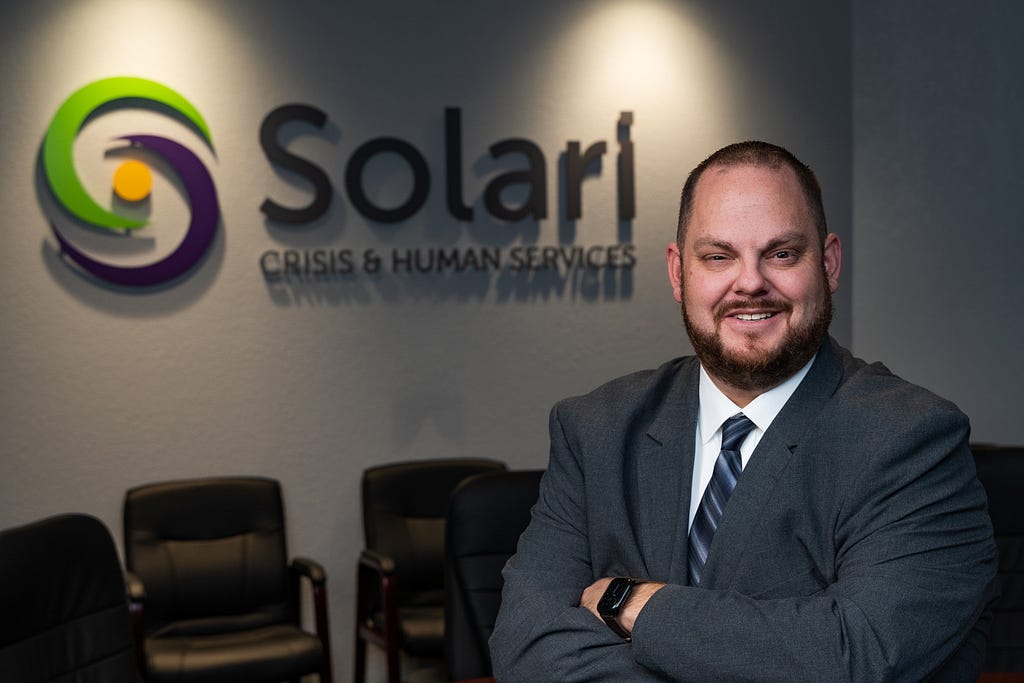
Justin Chase is the president and CEO of Solari Crisis and Human Services. Justin is a nationally recognized subject matter expert in crisis systems, recovery-oriented systems of care, peer integration, non-profit organizational leadership and development. His expertise also includes developing sustainable, effective, and efficient healthcare programs and systems. He has served as a behavioral health administrator, executive, network/program developer, direct practitioner and project manager within the public behavioral health and child welfare system for more than 15 years. Justin earned Bachelor of Science and Master of Science degrees in Social Work from Arizona State University and holds a Certificate in Nonprofit Management from Duke University. Justin is a Licensed Master Social Worker in the State of Arizona, Certified Professional in Healthcare Quality, Certified Six Sigma Green Belt, Certified Peer Support Specialist in the State of Arizona, Certified Crisis Interventionist by the American Academy of Experts in Traumatic Stress and a Fellow with the National Center for Crisis Management and the American College of Healthcare Executives. Justin also serves on the International Council for Helplines Board of Directors.
Thank you so much for doing this with us! Before we dig in, our readers would like to get to know you a bit. Can you please tell us a story about what brought you to this specific career path?
I knew from a very young age that I wanted to help people and impact their lives in a positive way. Right out of high school, I was given a full ride scholarship to Arizona State University for Music Therapy. This allowed me to pursue my desired career in helping people, specifically children, with the therapy of music. However, as I grew in this career, I realized that because of how expensive music therapy is, it was geared toward a very specific clientele.
I wanted to work with people who were struggling financially, having a hard time fitting in, and were in dire need of help. That’s when I made the decision to give up my full-ride scholarship for music therapy and switch to social work. I worked as an investigator for Child Protective Services for a while, as well as in behavioral health at a sober living home teaching individuals basic living skills.
During my time in social work, I realized there was a major gap in administration in the industry. I then decided to finish my education with a focus on administration, giving me the opportunity to help the helpers. I think there’s something to be said about finding joy in helping those who are helping those in need and providing support behind the scenes.
Can you please share with us the most interesting story that happened to you since you began your career?
In my current role as CEO of Solari Crisis & Human Services, I’ve had the blessing of getting to see and hear about so many life-changing events for people who are struggling. One day I was sitting at my desk, which overlooked the reception area of our building. I saw an older gentleman walk into our lobby and, with tears in his eyes, he handed a letter to the receptionist and then turned around and walked out.
The receptionist then walked into my office and handed me the letter, which was addressed to an employee who was no longer employed with us. I decided to open the letter and saw that it read “Today is the one-year anniversary of the day my daughter committed suicide.” I began to prepare myself for what this letter could contain, and that it likely could be a letter of disappointment and anger. As I continued to read, the man began to explain his daughter’s story, and how she struggled with suicidal thoughts her whole life, was in and out of crisis, dealt with being homeless, and had several mental health issues. Three years ago, she was ready to take her own life but after a 20-minute phone call with our crisis line, she went on to live for another two years. The man explained how thankful he was for those two years he had with his daughter after that phone call, and how they were the best two years he had ever had with her.
The special thing about this job is that you never know what happens after you get off the phone, and sometimes you don’t get to see the reward. It takes a very strong person to do what we do at Solari, and it can be very difficult at times. However, situations like that will happen and you get the blessing of hearing about how you’ve impacted people, which makes it all worth it.
Which principles or philosophies have guided your life? Your career?
I have three main principles I strive to always live by, and make sure I am constantly focused on those principles. The first one is becoming a leader by focusing on the impact you’re making. I always set out to make an impact, which eventually led me to my leadership position now. However, my focus should always be on the impact I’m making on the people I’m helping. Secondly, if you’re the smartest person in the room, then you’re in the wrong room. I think it’s so important to not have all the ideas, and to allow other people to have opinions, to explore everyone’s ideas, and make sure each individual feels valued. And lastly, if you’re not continuously growing your skills, you’ll become irrelevant. This is a lesson I had to learn because you get comfortable just maintaining your skills. The bar is continuously being raised and we need to continuously strive for improvement.
Ok thank you for that. Let’s now move to the main focus of our interview. Can you tell us about your “Big Idea That Might Change the World”?
I think if I could change anything about the world, it would be normalizing the narrative around mental health, suicide and substance abuse. I think we should focus on the stigma behind these common issues, and help people become comfortable and familiar with the idea of all these.
How do you think this will change the world?
The stigma and shame behind dealing with mental health, suicide, and substance abuse runs so deep across the world. Normalizing these behaviors will make it easier for people to seek help when it’s needed, will increase public awareness, and will hopefully increase the willingness for it to be funded properly. I believe that mental health should be funded just the same as any other health care, because it’s equally as important.
Keeping “Black Mirror” and the “Law of Unintended Consequences” in mind, can you see any potential drawbacks about this idea that people should think more deeply about?
I believe that if we raise awareness and increase the number of people who are seeking help with these behaviors, but the capacity and funding does not increase, then we’ve created a very dire situation. A situation like this could really negatively impact the trust between us and the communities we’re trying to serve — creating an even bigger and more difficult problem to solve.
Was there a “tipping point” that led you to this idea? Can you tell us that story?
Yes, there was a very significant tipping point in my life that led me to understand and feel the heaviness of this issue. A few years ago, I was working with a group called “LifeLine International,” serving on their board of directors. It was with that organization that I learned suicide is considered a crime in more than 40 countries. People who attempt, consider, or are caught seeking help from suicide can then be prosecuted and sentenced to prison. There was a situation in a country (outside the United States) where a man attempted suicide and was thrown in prison. Furthermore, they released all the details of the scene, related photos and all his information were then made public. This creates a stigma of shame, making it impossible for people to seek help. This narrative is a worldwide issue, even if the United States isn’t at this dire point anymore.
What do you need to lead this idea to widespread adoption?
I think the two main things we need to do as mankind are understand the part that we play in this widespread issue and understand that it’s not an unachievable goal. We, as individuals, all play a part in addressing this help-seeking behavior and need to be aware of the role we play in changing the stigma. Many times, people shy away from helping raise awareness because they think it’s an unchangeable problem; however, mankind needs to realize that this is not only achievable, but it could change the world we live in all together.
What are your “5 Things I Wish Someone Told Me Before I Started” and why.
One of the first things I was taught was that it’s all about relationships, which is true. However, I wish someone would have told me the important value of relationships, in every aspect of your life. Personal relationships, professional relationships, and relationships that may seem insignificant. Going out of your way to say “hi” and thank the janitor, and those who make your job possible, should be number one on your priority list.
The next thing is not to burn bridges. You never know who you’re going to eventually work with again, work for, or work above, especially in this industry. It’s a small world and things often come full circle, so learning to turn the other cheek and not let your emotions get the best of you or your situation is so important.
Peter Drunker says, “Culture eats strategy for breakfast.” This quote has allowed me to realize that if you tell your staff what to do, they will do the bare minimum every time. However, if you empower your staff to contribute to the ideas and help build the why behind the what, they’ll contribute 110%. This generation wants meaningful contributions and meaningful work, which means you must be intentional about collaborating with them.
Lastly, “It’s amazing what you can accomplish if you don’t care who gets the credit,” which is a quote by former U.S. president Harry Truman. Everyone has pride because it’s in our human nature. We need to strive to work in a way that isn’t concerned about who gets the credit for what (either good or bad) and focus on doing work that is intentional and genuine with the goal of doing the best you can despite what others think.
Can you share with our readers what you think are the most important “success habits” or “success mindsets”?
I have two main influencers and role models that I look up to, Steve Jobs and Richard Branson. These two individuals are polar opposites, but I think taking the strengths of each of them combined would make a brilliant leader. They have taught me several successful mindsets and habits I’ve tried to incorporate into my leadership style.
First, the concept of hiring smart people, not so you can tell them what to do, but so they can tell you what to do has impacted me and the way I value the opinions and ideas of my staff.
Secondly, taking care of your staff, so that they can take care of your customers is critical for any business. If you feel encouraged, empowered, and taken care of by your leadership, that will directly reflect how you treat and communicate with customers. You can’t bypass your staff in order to get customer satisfaction.
Lastly, it’s important to train and build your staff into leaders; train them so well that they can leave. Encourage them to grow and invest in their careers but create an environment that they don’t want to leave!
Thank you so much for joining us. This was very inspirational.
Solari Crisis and Human Services: Justin Chase’s Big Idea That Might Change The World was originally published in Authority Magazine on Medium, where people are continuing the conversation by highlighting and responding to this story.