


The lesson was that leadership is not proving that you can do everything. It is building a team, clear systems, and shared ownership so that the work does not depend on one person being the bottleneck.
As a part of this series, we had the pleasure to interview Melanie Askew Clark.
Dr. Melanie Askew Clark is the Founder and CEO of Élan Academy Charter School, a tuition-free public charter school serving PreK through eighth-grade students in New Orleans. A lifelong educator and school leader, she founded Élan to expand access to high-quality education and create opportunities for students and families across the city. Dr. Clark earned her Doctor of Education in Leadership and Learning in Organizations from Vanderbilt University’s Peabody College and is a Pahara Fellow.
Thank you so much for joining us in this interview series! Can you tell us a story about what brought you to this specific career path?
My path into education is deeply personal. When I was young, my father died. My mother used the Social Security survivor benefits we received after his death to put me in a college-preparatory private school. That decision changed the trajectory of my life. I went from an educational environment with limited expectations and exposure to one where college was assumed, excellence was normalized, and adults actively helped students see a future beyond what they could immediately see for themselves.
I then attended Vanderbilt University, and after being bit by the education bug, I quit my HR position at Target and became a teacher through Teach For America. I learned quickly that the difference between children is not ability; it is access…access to rigorous academics, excellent educators, strong relationships, and the belief that they belong in every room opportunity can open.
That is why I founded Élan Academy in New Orleans.. Families should not have to pay private-school tuition, move across town, or experience a tragedy in order for their children to receive an education that is intellectually rich, joyful, and affirming. At Élan, we offer a tuition-free, knowledge-rich classical education beginning in PK4, with Latin starting in kindergarten, great books, leadership development, and individualized support. Our work is about access without lowered expectations.
Can you share the most interesting story that happened to you since you began leading your company or organization?
The most meaningful story is not bound by one moment. It is truly watching Élan grow from an idea rooted in conversations with New Orleans families into a school community entering its tenth school year.
Before opening, I visited and studied more than 40 high-performing charter schools across the country. We were determined to build something excellent, but also distinctly ours: a school that honored the brilliance, resilience, and aspirations of the families already rooted in the tenacious city of New Orleans..
Since opening in 2017, we have navigated COVID, flooding, building moves, and all the unpredictable challenges that come with leading a young school. Yet families stayed with us, staff kept showing up for scholars, and children kept growing. The most powerful moments are when a family tells us, “My child loves coming to school now,” or when I see scholars who began with us as little ones standing confidently in middle school, discussing literature, leading peers, and imagining their futures. That is when I am reminded that schools are not simply buildings or test scores. They are promises communities make to children.
It has been said that our mistakes can be our greatest teachers. Can you share a story about the funniest mistake you made when you were first starting? Can you tell us what lesson you learned from that?
When I first started leading Élan, I had the very founder-like belief that if I could just work hard enough, I could personally hold every detail in my head. I would leave meetings with pages of notes, follow up on every issue myself, and wonder why I was exhausted before lunch. I laugh at it now because I was trying to build an institution while operating like a very determined one-woman task force.
The lesson was that leadership is not proving that you can do everything. It is building a team, clear systems, and shared ownership so that the work does not depend on one person being the bottleneck. Over time, I have learned to delegate with clarity, trust talented people, and focus my energy on the decisions only I can make. That shift has made me a better leader and has made Élan stronger.
Can you describe how you or your organization is making a significant social impact?
Élan Academy is working to interrupt a pattern that too many families know well: a child’s ZIP code, family income, or access to private tuition can determine the quality and rigor of their education.
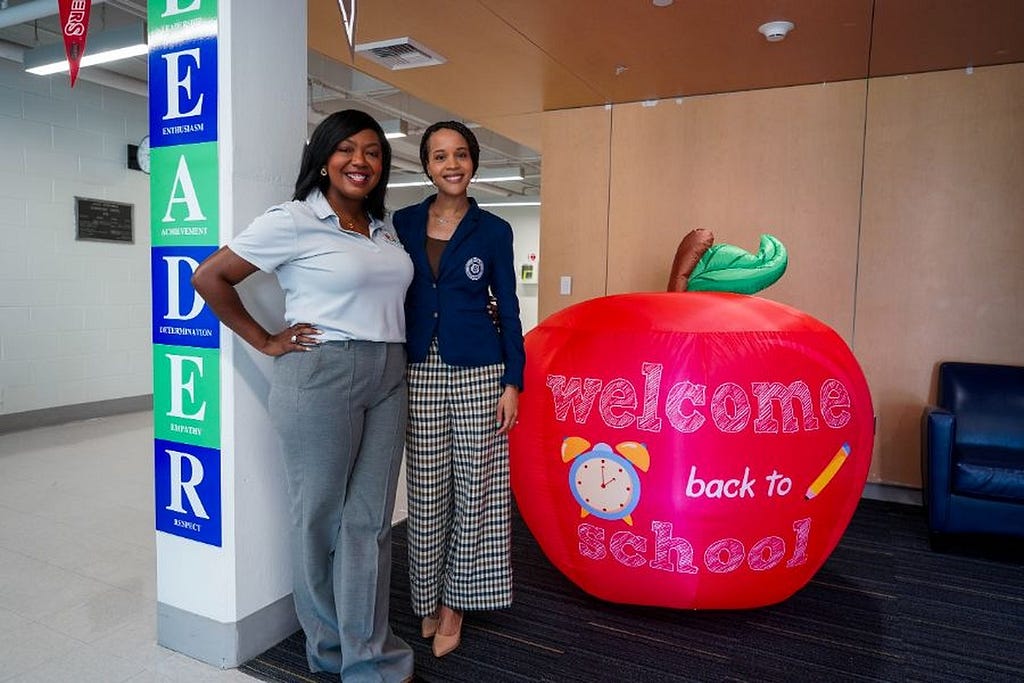
We serve scholars on New Orleans’ Westbank through a tuition-free PK4–8 public charter school that combines academic ambition with care. Our scholars encounter Latin beginning in kindergarten, rich literature, writing, history, the arts, and the habits of leadership. We pair those high expectations with small-group support, intervention, family partnership, and a school culture grounded in our LEADER values: Leadership, Empathy, Achievement, Determination, Enthusiasm, and Respect. We are a Leader In Me School, meaning we teach the 7 Habits of Highly Effective Leaders by Covey. When founding the school, the majority of community members mentioned a need for building leaders in our community. It is a part of our graduate profile.
Social impact goes beyond helping children pass a test. It is about ensuring that children who have historically been underestimated have access to the same knowledge, opportunities, and confidence often reserved for those with more resources. In 2026, Élan’s ELA Mastery and Advanced rate increased from 29% to 33%, and 59% of scholars met their ELA growth goal. Those are encouraging signs, but our larger measure is whether our scholars leave us prepared to thrive in high school, college, and lives of purpose. The majority of our scholars come to us 3 or more grade levels behind. We grow children academically. It takes time and a village to get our scholars to grade level and beyond but this is the work that we do here. We do not lower the bar for our expectations.
Can you tell us a story about a particular individual who was impacted or helped by your cause?
To protect family privacy, I will share a composite story that reflects many Élan families.
A parent came to Élan looking for more than a school assignment. She wanted a place where her child would be known, challenged, and safe to grow. Her child had the curiosity and personality that every adult noticed, but had not always received the consistent academic support or confidence-building needed to see that potential translate into success.
Over time, through close family communication, targeted small-group support, and teachers who refused to lower the bar, that scholar began to change. The child who had once hesitated to raise a hand began volunteering to read, sharing ideas in class, and taking pride in completing challenging work. The parent’s language changed too. Instead of asking whether her child could keep up, she began talking about the high school options and future opportunities she could now imagine.
That is the impact that stays with me. We are not “saving” children; they already possess enormous promise. Our responsibility is to build the conditions that allow that promise to be seen, developed, and sustained.
Are there three things the community, society, and politicians can do to help address the root of the problem you are trying to solve?
- Fund public education based on what children actually need. Equity is not giving every school the same amount; it is ensuring schools have the resources to provide strong teaching, special education services, multilingual-learner support, mental-health care, enrichment, and safe facilities. Our per pupil funding in Louisiana has not increased in over a decade yet the cost to educate scholars has increased tremendously.
- Invest in educators and school leaders. Great schools are built by great people. We need stronger teacher pipelines, meaningful compensation, practical training, and leadership development that helps talented educators stay in the communities they serve.
- Hold high expectations while removing barriers to opportunity. Children deserve rigorous, knowledge-rich instruction regardless of ZIP code. Our community needs strong infrastructure to raise children in environments that are conducive to enriched learning experiences and safety. Policymakers and communities should support accountability, but also invest in the conditions that make success possible: early literacy, transportation, family supports, after-school opportunities, quality facilities, and access to the arts, athletics, and technology.
What are your “5 things I wish someone told me when I first started” and why?
1. Progress over Perfection. When I started I went so hard as a leader. I wanted everything to be perfect because to me, that was what that vision was….this perfect school in which so much was on the line that everything had to be perfect. In that space, I failed to celebrate our small wins and truly make my team feel celebrated. In my later years of leadership, I found the joy in the wins large and small and make sure that our team and scholars feel their impact.
2. Keeping your head down and doing the work in a silo is not enough. When you are building something from the ground up, it is easy to believe that if you just work harder, stay later, and personally carry every detail, the vision will succeed. I operated that way for a long time because Élan was deeply personal to me, and I felt responsible for protecting what we were creating. But vision alone does not build an institution. Vision may start the work, but talent, trust, and shared ownership are what sustain it. I had to learn that my job was not to be the only person capable of carrying the vision. My job was to find talented people, trust them enough to lead, and create the conditions for them to take real ownership of the work. An organization cannot grow beyond the capacity of the person at its center. Élan became stronger when the vision stopped belonging only to me and became something our entire team could see themselves in, contribute to, and carry forward.
3. Listen closely to the people closest to the work. Families, teachers, scholars, and operations staff will often show you both the problem and the solution before a report ever does.
4. Data is a tool for responsibility, not a substitute for humanity. You must know your outcomes and be honest about them, but every number represents a child with a story, strengths, and needs.
5. The higher you rise, the less people see the person behind the position. I wish someone had told me that leadership can sometimes feel dehumanizing. As a founder and CEO, people often see the title, the authority, or the decision before they see the human being making it. They may assume that criticism does not hurt you, that difficult decisions come easily, or that because you are responsible for caring for everyone else, you do not need anyone to care for you. There have been moments when I was carrying the weight of decisions affecting hundreds of children, families, and employees while still being a wife, a mother, and a person with feelings of my own. Yet leadership often requires you to absorb everyone else’s emotions without always having room to express yours. I have learned that being a strong leader does not mean becoming emotionless. It means feeling deeply while still making the decision the mission requires.
Can you please give us your favorite “Life Lesson Quote”? Can you share how that was relevant to you in your life?
One of my favorite life-lesson quotes comes from Dr. Donna Ford, my former Vanderbilt Professor: “The less people know about you, the more they make up.”
That has stayed with me because, for a long time, I believed that if I kept my head down and did good work, the work would speak for itself. But the truth is that when people do not know your story, your intentions, or the context behind your decisions, they often fill in the gaps themselves.
Leadership taught me that silence does not always protect you. Sometimes it simply leaves room for someone else to write your story. That does not mean you have to explain every decision or give everyone access to every part of your life. It means you must be intentional about communicating who you are, what you value, and why you do the work.
As a founder, I have learned that it is not enough for people to see what Élan does. I also have a responsibility to help them understand the heart, history, and purpose behind it.
Is there a person in the world, or in the US with whom you would like to have a private breakfast or lunch, and why?
This is such a tough question to answer. There are so many leaders I admire and would love to learn from the Obamas, my Soros Kamala Harris, Mellody Hobson, Oprah Winfrey…who has her own school… but I would choose David Steward, founder and chairman of World Wide Technology. The St. Louis connection makes his story especially meaningful to me, but I am even more inspired by what he has built. He took a vision and grew it into one of the largest Black-owned businesses in the country while remaining grounded in faith, values, and service.
As a fellow founder, I would want to ask him how he protected the heart of his vision as the organization grew. Élan is entering its tenth year, and I am thinking deeply about how a founder turns something deeply personal into an institution that can thrive for generations.
I would also want to discuss how schools and businesses can work together to expose Black children to technology, innovation, and entrepreneurship much earlier. I do not want our scholars to grow up seeing themselves only as users of technology. I want them to see themselves as its creators, owners, and leaders. That conversation could help me think differently about Élan’s next decade and about the partnerships required to prepare our scholars for opportunities that may not even exist yet, especially with the future of artificial intelligence.
You are a person of enormous influence. If you could inspire a movement that would bring the most amount of good to the most amount of people, what would that be?
I would inspire a movement around the idea that every child deserves access to an excellent education,one that develops both intellect and identity, without requiring families to purchase that opportunity. The movement is already in motion, we just need more support to bring the vision to fruition.
I want us to move beyond the false choice between rigor and love, between high expectations and individualized support, or between academic achievement and joy. Children deserve all of it. They deserve schools that teach them to read deeply, think critically, communicate powerfully, care for others, and see themselves as leaders.
If communities, policymakers, philanthropists, and families united around that belief, we could make educational excellence a public expectation rather than a private privilege.
How can our readers further follow your work online?
Readers can follow Élan Academy on Instagram at @elanacademynola and learn more about our work at www.elanacademy.org. They can also connect with me on LinkedIn by searching Dr. Melanie Askew Clark.
Thank you for sharing these insights!
Social Impact Heroes: How Melanie Askew Clark Of Élan Academy Is Helping To Change Our World was originally published in Authority Magazine on Medium, where people are continuing the conversation by highlighting and responding to this story.