

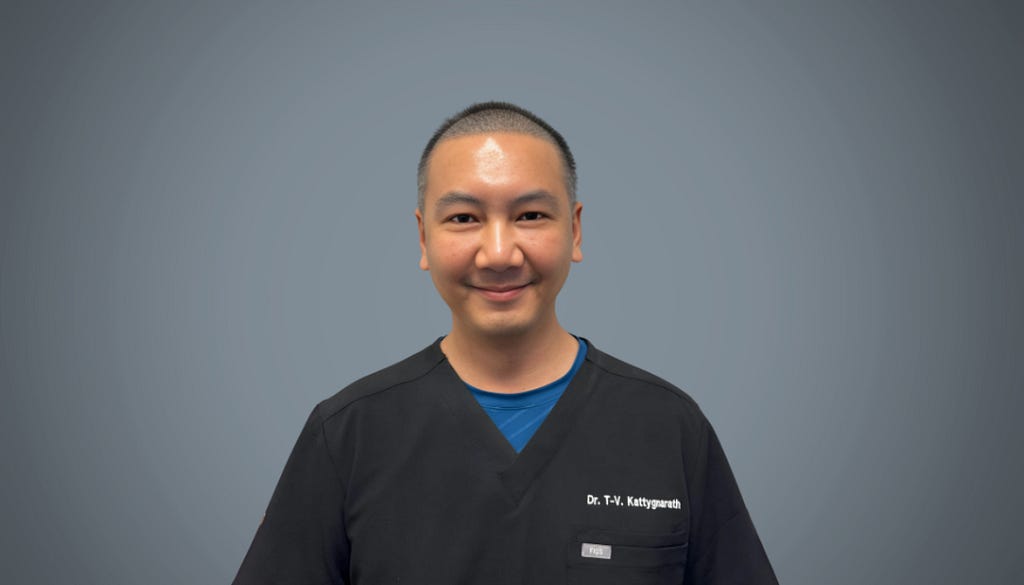

Social Impact Heroes: How Dr. Tiao-Virirak Kattygnarath Of CARE Fertility Clinic Is Helping To Change Our World
An Interview With Martita Mestey
To me, leadership means taking responsibility, setting an example, and helping others improve. In my role as a supervisor, I try to guide doctors who may be struggling, without judgment. It’s not about being the boss, it’s about making sure patients are safe and care is ethical.
As part of my series about “individuals and organizations making an important social impact”, I had the pleasure of interviewing Dr. Tiao-Virirak Kattygnarath.
Dr. Tiao Kattygnarath is tackling one of America’s most pressing and costly health challenges, infertility. With nearly 1 in 6 couples in the U.S. facing fertility struggles, and IVF costs averaging over $15,000 per cycle with no guaranteed outcome, he believes access, innovation, and equity in reproductive care are critical to the country’s long-term demographic and economic vitality.
As a globally trained fertility expert and Fellow of the American College of Obstetrics and Gynecology, Dr. Kattygnarath brings over 20 years of experience in advanced reproductive medicine. His work spans four countries, including top posts in Canada and the U.S., where he’s helping lead a new era of personalized, compassionate, and scientifically rigorous fertility care. From his early years as a refugee to publishing one of the field’s definitive handbooks, his mission is clear, to help more families grow, more lives thrive, and more people access the future they deserve.
Thank you so much for joining us in this interview series! Can you tell us a story about what brought you to this specific career path?
I’ve always been interested in science and medicine, but what really brought me to fertility was my personal values and my experiences during med school. I spent time as a Buddhist monk when I was younger, which really shaped the way I see people and suffering. Later, during my training in France, I saw how deeply infertility affected people, and I thought this was a field where I could use both my technical skills and my empathy. I was also very much interested in the science of how life was created.
It has been said that our mistakes can be our greatest teachers. Can you share a story about the funniest mistake you made when you were first starting? Can you tell us what lesson you learned from that?
Early in my career, I was very focused on the technical and scientific part: test results, hormone levels, embryo quality. I had one patient where everything looked good on paper, but she left the clinic because she didn’t feel emotionally supported. It was a wake-up call for me. I realized that even if you’re doing everything right medically, if you don’t connect with the patient on a human level, you’re missing something important. Since then, I’ve tried to always keep that in mind.
Can you describe how you or your organization is making a significant social impact?
I try to make fertility care more accessible and respectful of different backgrounds. I work in multiple languages, including Thai and French. This helps me support a wider range of patients. I also teach and supervise other doctors, and I’m involved with professional colleges in Quebec and Ontario to help make sure high standards are followed. I wrote The Handbook of Assisted Reproductive Technology and Infertility to help other professionals understand and apply evidence-based techniques.
Can you tell us a story about a particular individual who was impacted or helped by your cause?
I remember a woman in her early 40s who had been turned away by other clinics. She came to see me as kind of a last hope. We reviewed her case, made some adjustments to her treatment, and ended up getting a good embryo after PGT-A. She got pregnant on the second transfer. What stuck with me was that she said the reason she stayed was because we took her seriously and didn’t write her off. That kind of trust means a lot to me.
Are there three things the community/society/politicians can do to help you address the root of the problem you are trying to solve?
(1) Improve public funding for fertility treatments so it’s not only for people who can afford it. (2) Add fertility education into public health, especially for younger people who might delay family planning. (3) Make sure that people go through medical treatments like chemotherapy, to get access to fertility preservation without jumping through too many hoops.
How do you define “Leadership”? Can you explain what you mean or give an example?
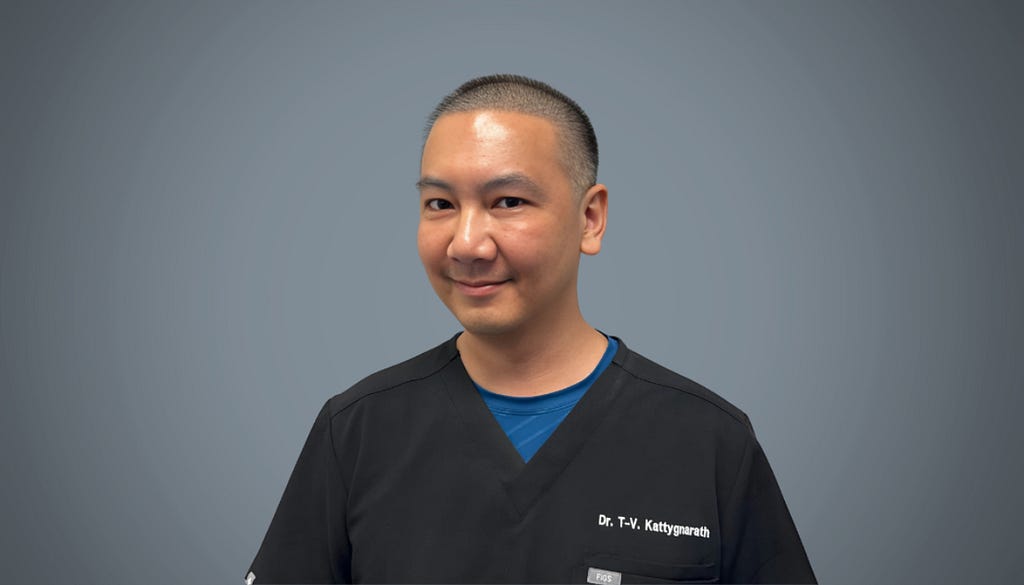
To me, leadership means taking responsibility, setting an example, and helping others improve. In my role as a supervisor, I try to guide doctors who may be struggling, without judgment. It’s not about being the boss, it’s about making sure patients are safe and care is ethical.
What are your “5 things I wish someone told me when I first started” and why. Please share a story or example for each.
1. Don’t underestimate the emotional side of fertility care. I learned that the hard way. It’s not just about the science.
2. Protocols are not one-size-fits-all. You must adapt everything to the patient. There’s no universal formula.
3. The embryology lab is just as important as the clinic. Collaborate with your embryologists. Their work is critical to success.
4. Document everything well. It protects you and helps with continuity of care.
5. Take care of yourself. You can’t keep giving if you’re running on empty. It took me years to learn this.
You are a person of enormous influence. If you could inspire a movement that would bring the most amount of good to the most amount of people, what would that be? You never know what your idea can trigger. 🙂
I’d like to see fertility preservation become a standard public health topic, the same way contraception is. A lot of people only find out about the limits of fertility when it’s too late. If we could normalize things like egg freezing early on, more people could plan better.
Can you please give us your favorite “Life Lesson Quote”? Can you share how that was relevant to you in your life?
“Compassion without competence is sentiment. Competence without compassion is machinery.”
This has always stayed with me. In medicine, you need both. If you’re only technical, patients won’t feel supported. But compassion without skill doesn’t help either. I try to balance both in everything I do.
Is there a person in the world, or in the US with whom you would like to have a private breakfast or lunch with, and why? He or she might just see this, especially if we tag them. 🙂
Sam Altman from OpenAI. I’d want to discuss how AI could be responsibly applied in medicine, especially in embryo selection, image analysis, and improving IVF outcomes without replacing the human touch.
How can our readers further follow your work online?
They can visit my website at www.carefertility.ca and read the blogposts, and also keep an eye out for updates related to my book The Handbook of Assisted Reproductive Technology and Infertility. I’m also working on 2 other books.
This was very meaningful, thank you so much. We wish you only continued success in your great work!
Social Impact Heroes: How Dr Tiao-Virirak Kattygnarath Of CARE Fertility Clinic Is Helping To Chang was originally published in Authority Magazine on Medium, where people are continuing the conversation by highlighting and responding to this story.