

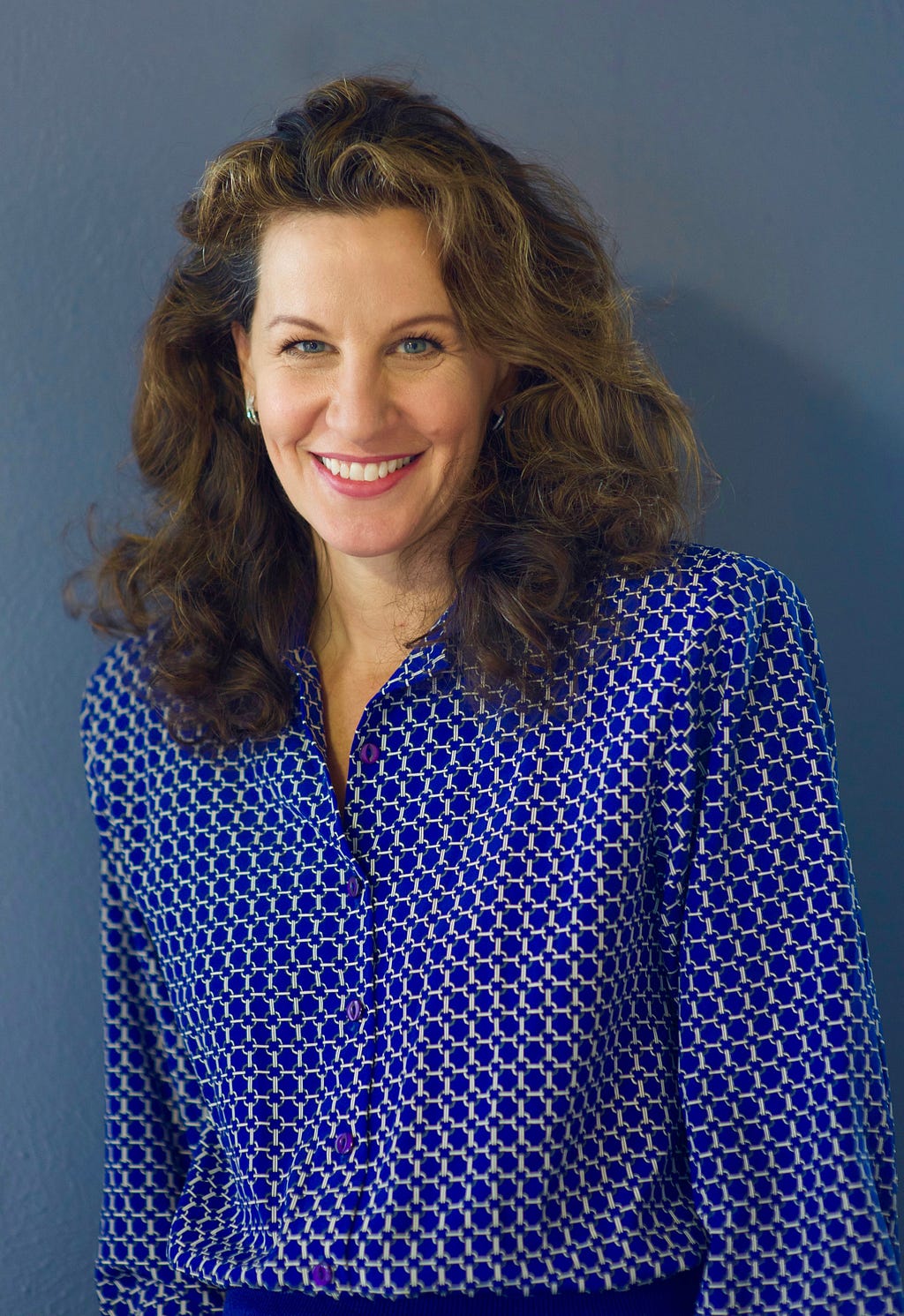

An Interview With Martita Mestey
Don’t try to fix the river — build the bridge. One of the most powerful metaphors I’ve learned and what I previously shared, it’s about the “river” vs. the “bridge.” Many nonprofits focus on rescuing people in crisis — they’re doing river work. But to truly prevent harm, we have to go upstream and build systems that stop people from falling in altogether. That’s what we’re doing now — working toward a world where families have the support they need to stay together. Lesson: The bridge is harder to build — but it’s where sustainable change lives.
As part of my series about “individuals and organizations making an important social impact”, I had the pleasure of interviewing Caroline Boudreaux.
Caroline Boudreaux is a visionary social entrepreneur and the Founder of Miracle Foundation, a leading nonprofit dedicated to empowering orphaned and vulnerable children worldwide. Since its inception in 2000, Miracle Foundation has transformed thousands of lives by shifting the global child welfare paradigm from institution-based care to ensuring a family for every child.
Caroline’s journey began on Mother’s Day 2000, when a life-changing visit to an orphanage in India opened her eyes to the harsh realities faced by children without families. Moved by their resilience and potential, she made it her mission to ensure a family for every child in our lifetime. Originally from Lake Charles, Louisiana, Caroline earned her B.S. in Psychology from Louisiana State University before launching a successful career in media advertising. However, she found a deeper calling in philanthropy, dedicating her life to advocating for data-driven solutions, systemic child welfare reform, and the power of business principles in social impact.
Thank you so much for joining us in this interview series! Before we dive into the main focus of our interview, our readers would love to “get to know you” a bit better. Can you tell us a bit about your childhood backstory?
I grew up in Lake Charles, Louisiana, in a home full of love, faith, and laughter. My family was deeply rooted in Cajun and Catholic traditions, and community was everything. I was incredibly lucky — my parents and grandparents believed in helping others and taught me from an early age that service isn’t something you do once in a while, it’s a way of life. My father was a pharmacist and had a policy there that if you couldn’t pay for your medicine, you didn’t have to. My mother, a social worker for the State of Louisiana, dedicated her life to placing children in foster care into adoptive homes. Her compassion and commitment to children planted the seed for the work I do today.
When you were younger, was there a book that you read that inspired you to take action or changed your life? Can you share a story about that?
Honestly, not that I can remember. While I learned generosity as a child, somehow I found myself chasing money as an adult. In fact, I remember a very specific moment later in life that still humbles me to this day. I was working in media at the time and attended a fundraiser focused on world hunger. As part of the experience, each attendee pulled a number that determined what kind of meal they’d receive — representing global inequality. A small percentage received a steak and lobster meal, while others got rice and beans or even less. I pulled the steak and lobster. And I hate to admit this, Madeline, but my first reaction was, “Thank goodness, I got the good meal.” I didn’t even stop to think about the deeper meaning of the exercise or the people who were hungry. I wasn’t hungry — so it wasn’t on my radar. That’s hard to say out loud, but it’s the truth.
It wasn’t until I went to India and saw the reality of poverty up close that it changed everything. And I admire the people who can do this work without ever having that firsthand experience. But for me, it took going there and witnessing it myself.
What was the “aha moment” or series of events that made you decide to bring your message to the greater world? Can you share a story about that?
The moment that changed everything for me was learning that 80% of children living in orphanages have a living parent — someone who could care for them if given the right support. That single statistic turned everything I thought I knew upside down.
We had been working so hard to improve conditions within orphanages — better food, better education, better health outcomes. But when I realized that most of those children weren’t actually orphans, I had to ask: What are we really doing here?
That was the “aha moment.” We weren’t meant to make orphanages better — we were meant to make them unnecessary.
From that point on, our mission pivoted toward family reunification and strengthening. We stopped focusing solely on institutional care and began asking deeper questions: What would it take to keep families together? How do we prevent separation in the first place?
It was a bold shift — but it was the only one that made sense. Once you see the root of the problem, you can’t unsee it. And that truth is what I felt compelled to bring to the greater world.
Without sharing specific names, can you tell us a story about a particular individual who was impacted or helped by your cause?
I’ll say this — thousands of families have already used ThriveWell to prevent separation and facilitate reunification. We’re seeing change, and it’s real.
Are there three things the community/society/politicians can do to help you address the root of the problem you are trying to solve?
1. Shift funding upstream — invest before removal happens. Right now, most funding only becomes available after a child has been removed from their family. That means we’re paying to repair damage that could’ve been prevented. We need to change the flow of money so it reaches families earlier — before a crisis leads to separation. Even a small amount of support at the right time can keep families together and prevent lifelong trauma.
2. Support and equip frontline social workers. Social workers are the ones boots on the ground. They make the critical decisions about whether to keep a family intact or place a child elsewhere. But they’re overwhelmed, underpaid, and buried in paperwork. We must pour resources into supporting them — better tools, better training, better pay — so they can focus on what matters: keeping children safe and families whole.
3. Reframe how we define “family.” Too often, if a child can’t stay with their biological parents, we default to placing them with strangers. But families come in many forms — grandparents, aunts, cousins, godparents, or even a neighbor. The community can help by embracing kinship care, creating pathways for extended networks to step in, and reducing stigma around asking for help.
Ultimately, I want people to think about the bridge — not just the river. So many nonprofits are doing essential work in crisis response, but if we truly want sustainable change, we have to address the why behind the crisis — and that takes collective commitment, courage, and systems-level thinking.
How do you define “Leadership”? Can you explain what you mean or give an example?
Leadership isn’t about you — it’s about the people who believe in the mission. There’s this video I love: it starts with a guy dancing alone in a park, looking kind of foolish. But then another person joins in, and another, and suddenly a crowd forms. The point is, the first person may look like a fool, but it’s the first few followers who really create the movement. To this day, many of those early supporters of Miracle Foundation are still involved — and still donating. That’s the power of shared purpose.

What are your “5 things I wish someone told me when I first started” and why? Please share a story or example for each.
1. The root cause isn’t always where you think it is.
When I started Miracle Foundation, I thought the goal was to make orphanages better — improve food, education, and healthcare for children in institutions. But years in, we discovered that 80% of kids in orphanages have a living parent. That completely shifted our understanding and our strategy. The real problem wasn’t orphanages — it was family separation. Lesson: Always stay open to learning more. The real solution may live underneath your assumptions.
2. You can’t do it all — build a team that’s better than you.
In the early days, I wore every hat — founder, fundraiser, operator, spokesperson. But I quickly realized that scaling meaningful impact would only be possible if I surrounded myself with people who were smarter than me in their areas. Leslie, our current CEO, came in with a skillset and clarity that elevated our mission. Our board members, advisors, and partners helped me step back and lead strategically. Lesson: Don’t be the hero — build the team that can carry the vision farther than you could alone.
3. Data and heart must go hand in hand.
To truly influence systems — governments, funders, policymakers — you need evidence. We built a measurable framework to track child well-being across five core domains, and it changed everything. It helped us scale, attract support, and prove that what we were doing worked.
Lesson: Empathy is powerful, but data makes it actionable.
4. Don’t underestimate the frontline. Bet on the social worker.
We spent two years listening before launching our U.S. foster care efforts. And one of the biggest takeaways was that social workers — not institutions, not foster families, not juduciary — are the linchpin. They’re overworked, underpaid, and blamed for systemic failures they didn’t create.
Once we began designing tools for them — like our ThriveWell app — everything started to click. Lesson: Real change comes when you support the people closest to the problem.
5. Don’t try to fix the river — build the bridge. One of the most powerful metaphors I’ve learned and what I previously shared, it’s about the “river” vs. the “bridge.” Many nonprofits focus on rescuing people in crisis — they’re doing river work. But to truly prevent harm, we have to go upstream and build systems that stop people from falling in altogether. That’s what we’re doing now — working toward a world where families have the support they need to stay together. Lesson: The bridge is harder to build — but it’s where sustainable change lives.
Can you please give us your favorite “Life Lesson Quote”? Can you share how that was relevant to you in your life?
I don’t know that I have a single favorite quote, but one phrase that’s guided me — especially in the hard moments — is: “You’ve got this.”
It may sound simple, but it’s powerful. If I could go back and tell my younger self one thing, it would be exactly that: You’ve got this.
Founding Miracle Foundation, shifting from orphanage care to family-based solutions, and working to reform deeply flawed systems hasn’t been easy. There were moments filled with doubt, pushback, and discomfort. But in those moments, I had to remind myself that with effort, listening, and integrity — we could do it. That belief carried me through.
So maybe my version of a life lesson quote is just that quiet voice that says: Yes, we can. Keep going.
Is there a person in the world, or in the US with whom you would like to have a private breakfast or lunch with, and why? He or she might just see this, especially if we tag them. 🙂
I would love to have breakfast with Melinda French Gates. She’s someone who has used her resources, voice, and influence to create real change — especially for women and children around the world. I admire her commitment to addressing systemic issues and her ability to navigate both philanthropy and impact with depth and humility.
I’d want to talk to her about how we can shift global and national child welfare systems toward prevention, and how we might work together to get upstream — before children ever enter institutions or the foster care system. I think she would get it, and her support or insight could amplify the kind of transformation we’re fighting for.
So Melinda, if you’re reading this — coffee’s on me 🙂
This was very meaningful, thank you so much. We wish you only continued success in your great work!
Social Impact Heroes: How Caroline Boudreaux of Miracle Foundation Is Helping To Change Our World was originally published in Authority Magazine on Medium, where people are continuing the conversation by highlighting and responding to this story.