

The most successful work strikes a balance between visionary thinking and realistic implementation. That’s a philosophy I try to bring to every project and every partnership.
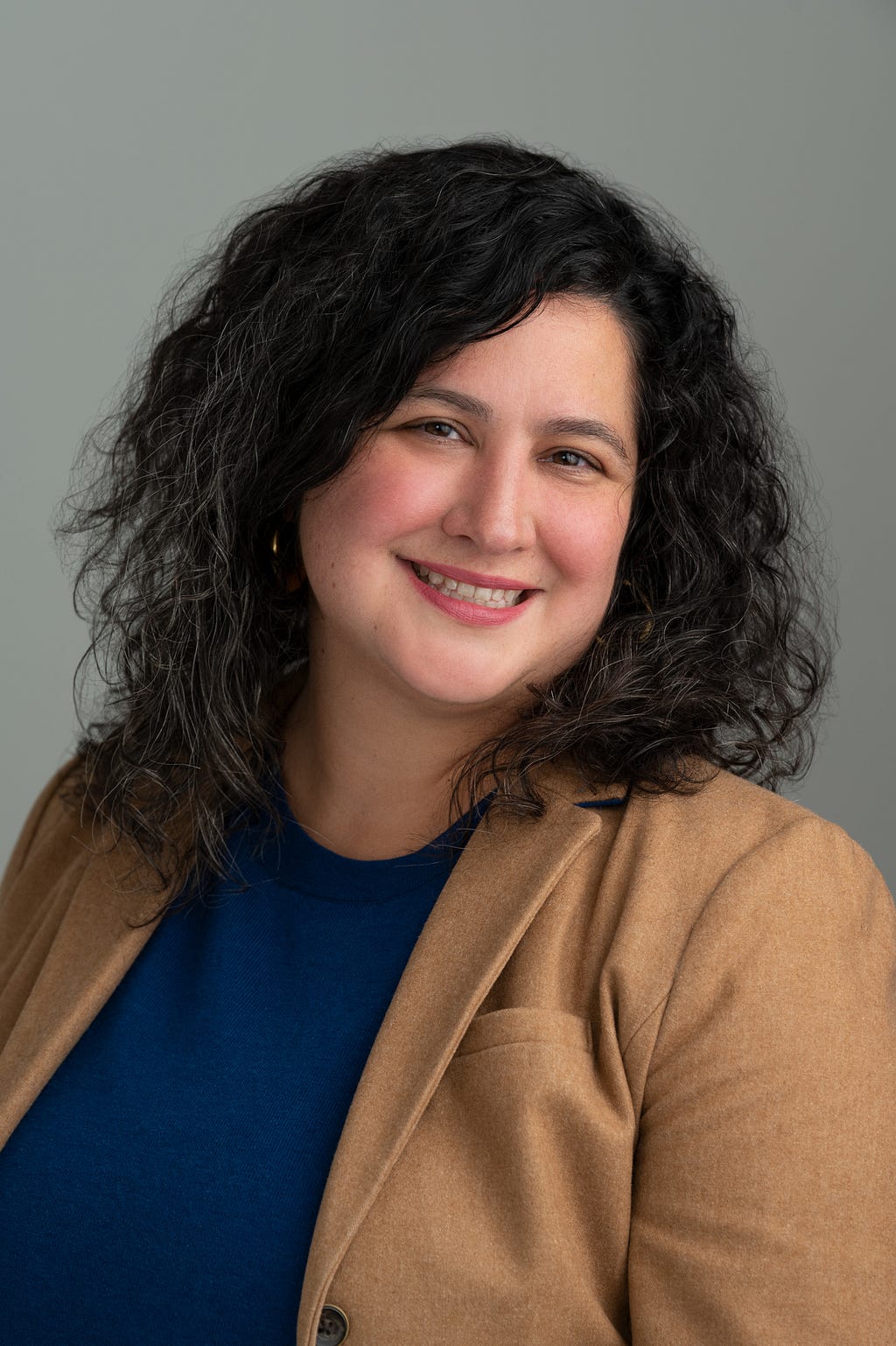
As part of my series about “individuals and organizations making an important social impact”, I had the pleasure of interviewing Allison Quigney.
Allison Quigney is an organizational strategy expert who has spent more than two decades helping government agencies, nonprofits, philanthropic institutions, and workforce providers strengthen their operations and better serve their communities. As a Principal at Public Works Partners, she leads the firm’s Organizational Health practice and has advised more than 100 mission-driven organizations on strategic planning, organizational assessment, program evaluation, and performance improvement. A graduate of Coro New York’s Leadership New York program and a New York Nonprofit Media “40 Under 40” honoree, Allison also serves on the Board of Directors of The Brave House, a Brooklyn-based nonprofit supporting young immigrant women.
Thank you so much for joining us in this interview series! Before we dive into the main focus of our interview, our readers would love to “get to know you” a bit better. Can you tell us a bit about your childhood backstory?
Great to be here! I grew up in Bethlehem, Pennsylvania, a small city with a rich industrial history and a strong sense of place. My mother was a public school teacher, and my entire family is from the area, so community was something I experienced from a very young age.
Growing up, I also became fascinated by places that felt completely different from my hometown. I was especially curious about big cities — how millions of people who don’t know one another somehow create functioning, vibrant communities. That curiosity led me to New York University, where I studied Metropolitan Studies and began asking questions that still drive my work today: How do communities form? What makes cities work? And how can public institutions better support the people they serve?
Today, I’m a principal of Public Works Partners’ Organizational Health practice, helping non-profits and mission-driven organizations achieve their goals. I love helping people and organizations create real, transformative change–and lead in a company whose mission is truly to make the world better.
When you were younger, was there a book that you read that inspired you to take action or changed your life? Can you share a story about that?
I loved The Westing Game when I was a kid, which is essentially a big mystery game à la the Knives Out movies. To say it changed my life may be taking it too far, but it did help instill a curiosity in me and the desire to learn — things that have been core to my approach in life and in my career.
Can you describe how you aim to make a significant social impact in your career?
I’ve always believed that local government and nonprofit organizations have an extraordinary ability to improve people’s daily lives. My career has focused on helping those mission-driven organizations solve complex problems, strengthen their operations, and better serve their communities.
Whether we’re helping a nonprofit develop a strategic plan, evaluating a workforce development initiative, or improving government processes, the goal is ultimately the same: helping organizations become more effective so they can create greater impact for the people who rely on them.
One of the things I love most about this work is that we don’t simply help organizations imagine ambitious futures — we help them build realistic pathways to achieve them. Strategy only matters if it can be implemented.
It has been said that sometimes our mistakes can be our greatest teachers. Do you have a story about a humorous mistake that you made when you were first starting and the lesson you learned from that?
When I was 16 years old, I failed my first driver’s test because I couldn’t parallel park, and it was the first time I didn’t achieve something I really wanted–I was devastated! I went back a week later, passed the test, and was still able to drive during the first week of school, which was my goal. It was definitely a “if at first you don’t succeed, try again” moment, but — more importantly — one about perspective. I had put a lot of pressure on myself to get my license, and once I failed and then realized life would go on, it was much easier to succeed the second time.
None of us can be successful without some help along the way. Did you have mentors or cheerleaders who helped you to succeed? Can you tell us a story about their influence?
I was lucky to have great parents who encouraged me to believe in myself. I’m an only child, so when I was growing up, we would have dinner together and talk about our days, and that created an environment where I heard my parents talk about their day-to-day lives in a pretty casual way. My mom has started telling me these stories about moments when I– as a kid– advocated for myself in these little ways, such as convincing my ballet teacher to move me to a more advanced class with all my friends or telling my parents I was ready to stay home after school by myself. I think that ties back to those family dinners. I learned that you could stand up for yourself, and it wouldn’t always work out, but sometimes it would. And it’s always worth trying.
Are there three things the community, society, or politicians can do to help you address the root of the problem you are trying to solve?
- Continue investing in the nonprofit organizations that provide essential services within our communities. These organizations often operate with limited resources while addressing increasingly complex challenges.
- Recognize that many of today’s issues — from childcare to workforce participation to immigration — are deeply interconnected. Solving them requires collaboration rather than treating each issue in isolation.
- Support long-term planning. Organizations need the time and resources to think strategically about their futures rather than constantly reacting to immediate challenges. Sustainable change rarely happens overnight.
How would you articulate how a business can become more profitable by being more sustainable and more environmentally conscious? Can you share a story or example?
While my area of expertise is organizational health, I think any business can really benefit from divorcing itself from the idea that bigger is always better. On a personal level, being environmentally conscious is about making thoughtful choices, for example, things like the water bottle you buy once, and how you use your air conditioner, that may cost more at first blush but eventually end up being economically advantageous, and I suspect businesses can do similar calculations.

What are your “5 things I wish someone told me when I first started” and why? Please share a story or example for each.
1. People are not thinking nearly as much about you as you are. When I realized that walking down the street at some point in my 20s, it immediately decreased my anxiety.
2. Communication is key. Essentially, people don’t like surprises or being left out, so you have to think about who will care about what you’re doing and why, and share information with that in mind. This gets wrapped up into change management in our projects, but it’s true in personal situations too.
3. You spend a lot of time at work, so it’s really important to like the people you’re spending that time with. I’ve been lucky to work at a place with people who are both smart and nice, and it has helped my work-life balance and overall satisfaction immensely.
4. We work in teams for a reason. Everything you do doesn’t have to be perfect. Knowing what you don’t know and how to ask for help is an important skill.
5. Being authentic to yourself is super important. I’m not a good leader or teammate if I’m questioning myself all the time. I need to be comfortable with what I’m doing to be effective. That’s been my experience, and I’m convinced that’s true for others as well.
If you could tell other young people one thing about why they should consider making a positive impact on our environment or society, like you, what would you tell them?
I would encourage them to think about what they can do with others–and for others: Figure out what you want to impact, then think about what’s good at and how those strengths can contribute. You don’t have to solve every problem yourself. Find people and organizations whose skills and expertise complement your own, and work together.
Positive change doesn’t always happen through grand gestures. Often, it’s the result of thoughtful people bringing different strengths to the table and working collaboratively to solve practical problems, one step at a time.
Can you please give us your favorite “Life Lesson Quote”? Can you share how that was relevant to you in your life?
I don’t necessarily have a favorite quote, but one principle has guided me throughout my career: balance ambition with feasibility.
At Public Works Partners, we often develop strategies to help organizations move forward. I’ve learned that if a plan is only ambitious, it may never be implemented. If it’s only practical, it may never create meaningful change. The most successful work strikes a balance between visionary thinking and realistic implementation. That’s a philosophy I try to bring to every project and every partnership.
How can our readers follow you online?
We would love to stay connected with readers online! Learn more about Public Works Partners by visiting our website (https://publicworkspartners.com/) and following the firm’s work on LinkedIn (https://www.linkedin.com/company/public-works-partners/) and Instagram (https://www.instagram.com/wearepublicwrks).
Thank you so much for the time you spent sharing these insights! We wish you continued success and we are certain your work will continue to impact many.
Social Impact Heroes: How Allison Quigney Of Public Works Partners Is Helping To Change Our World was originally published in Authority Magazine on Medium, where people are continuing the conversation by highlighting and responding to this story.