


The space was filled with big smiles, the sound of children giggling, and families enjoying themselves together again. After such a long period of uncertainty and isolation, seeing The Armory filled with movement, generosity, and excitement was profound.
As part of my series about “individuals and organizations making an important social impact”, I had the pleasure of interviewing Alberto Aquino.
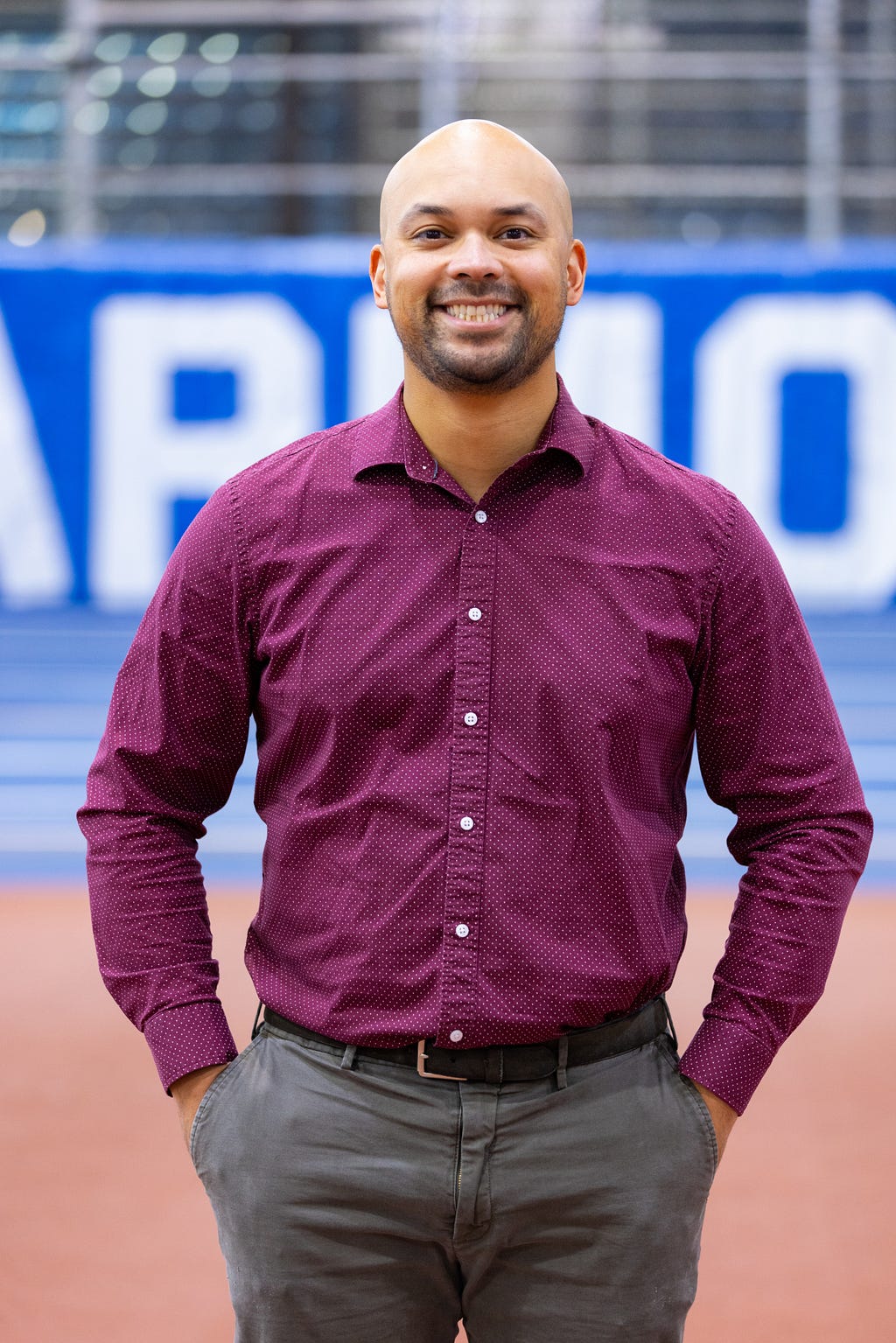
Alberto Aquino is the Director of Youth Programming at The Armory Foundation in New York City, where he designs and leads educational and athletic programs that serve hundreds of young people each year. His work focuses on creating environments where children build confidence, curiosity, resilience, and a lifelong love of learning through meaningful experiences both inside and outside the classroom. He believes that great education begins with relationships and that every child deserves opportunities that inspire them to discover what they’re capable of.
Thank you so much for joining us in this interview series! Can you tell us a story about what brought you to this specific career path?
I studied political science in college because I was interested in how government, policy, and social change could improve people’s lives. During that time, I became convinced that education is one of the most powerful tools a society has to build a better future. Education can expand economic opportunity, improve health outcomes, strengthen families, and give people greater power to participate in their communities.
That belief led me to apply to Teach For America, an organization that sends young teachers to high needs communities around the country. I was accepted and began my career as a fifth-grade teacher in Clarksdale, Mississippi. I arrived ambitious and excited to change the world. What I quickly learned was that meaningful change is much more complicated than delivering one great lesson or even spending one school year with a child.
I was not a great teacher during my first year. I made plenty of mistakes, but those mistakes made me more committed. Each year, I try to become the educator I felt my first students deserved. The children in that classroom taught me that young people need consistency, opportunity, encouragement, and adults who are willing to keep showing up for them.
That first classroom set the direction for my life. Today, my work is centered on education and youth development because I want young people to have the support and experiences they need to grow.
Can you share the most interesting story that happened to you since you began leading your organization?
One of my most meaningful experiences as a program leader grew out of one of the most difficult periods our community had faced. During COVID, families were searching for moments of joy and connection. I remember people opening their windows each evening and banging pots and pans to thank first responders. Even while physically separated, people wanted to feel connected to something larger.
As The Armory prepared to welcome families back into our space, we recognized that we had a special opportunity to help rebuild that sense of community. Halloween was approaching, and many parents were uncomfortable having their children knock on strangers’ doors. We decided to host a large Halloween celebration where families could safely come together again.
Children arrived in costume, and our sponsors helped provide candy, games, sneakers, jackets, books, and teddy bears. The space was filled with big smiles, the sound of children giggling, and families enjoying themselves together again. After such a long period of uncertainty and isolation, seeing The Armory filled with movement, generosity, and excitement was profound.
That event changed how I understood our role in the community. We certainly provide athletic and academic programs, but our impact extends beyond those services. We also create moments that bring people together and give children and families something meaningful to anticipate. The Halloween celebration showed us that The Armory could be a source of belonging, relief, and joy when our community needed it most.
It has been said that our mistakes can be our greatest teachers. Can you share a story about the funniest mistake you made when you were first starting? What lesson did you learn from it?
When I look back, my biggest mistake was believing that becoming a good teacher meant adopting a strict, almost militant teaching style that was not natural to me.
During my first year, I observed experienced teachers who maintained highly structured classrooms. They might elevate their voices to regain attention or use a more serious and authoritative presence with their students. Those approaches worked for them, so I tried to imitate them. The problem was that it did not feel natural to me. I struggled to connect with my students.
Eventually, I gave myself permission to be more authentic. I laughed and played with my students, shared my love of comics and Pokemon, and allowed them to see more of my personality and vulnerability. I still provided structure and maintained high expectations, but I stopped believing that seriousness was the only way to lead a classroom.
That was when I began forming stronger relationships with my students. I learned that if I wanted children to believe education could be joyful, I had to model that joy myself. When my enthusiasm was genuine, they reflected it back. My students did not need me to imitate someone else. They needed me to become the best and most authentic version of myself.
Can you describe how you or your organization is making a significant social impact?
The Armory is known as the fastest track in the world because so many records have been broken here. But our mission extends far beyond competitive track & field. We are committed to keeping everyone on track, and we are proud to serve people of all ages and abilities throughout our community.
High school and college athletes train here, adults pursue their fitness goals, and hundreds of senior citizens exercise and build meaningful connections. During New York’s cold and difficult winters, our indoor track provides a safe, reliable place where people can remain active. The Armory is a year-round home for movement.
Our free youth programs give thousands of children access to high-quality coaching, exercise, and experiences that help them recognize their potential. Children learn the foundations of athletics while developing confidence, friendships, and a positive relationship with movement that can remain with them throughout their lives.
Through Armory College Prep, we provide rigorous academic support and personalized college counseling that help students gain admission to right-fit institutions with strong financial aid packages. Since 2016, 100 percent of our graduating seniors have been accepted to four-year colleges.
Whether someone is taking their first lap, preparing for college, competing at the highest level, or staying active later in life, The Armory provides the space, support, and community they need to move forward.
Can you tell us a story about a particular individual who was impacted or helped by your cause?
I often think about a young man who joined Armory College Prep while attending a rough high school where many students faced significant barriers to graduating and attending college. He was athletic, outgoing, and full of life, but the path to reaching his potential was not always clear.
Through The Armory, he received academic support, attended college visits, and gained access to experiences that expanded what he believed was possible. He embraced every opportunity we placed in front of him and eventually attended a highly selective four-year college at no cost. Today, he is thriving professionally and building a successful life.
His story reminds me that talent exists everywhere, but access to opportunity does not. We cannot control every influence a young person encounters, but we can consistently provide positive alternatives, guidance, and people who believe in them. When young people have access to meaningful opportunities and people who support them, it can change the direction of their lives.
Are there three things the community, society, or politicians can do to help you address the root of the problem you are trying to solve?
- Teach children to love reading, not just pass reading tests. Learning how to read is essential, but it is not the same as becoming a reader. We should help children experience literature as an art form that can bring joy, knowledge, comfort, and a sense of discovery throughout their lives. When schools are under constant pressure to prepare students for high-stakes tests, reading instruction can become centered on short passages and test questions. I would like education leaders to reduce some of that pressure and give teachers more freedom to explore complete books with their students. Children should also have choices. We should give them opportunities to browse, experiment, and discover the books they naturally gravitate toward. A child might fall in love with fantasy, history, graphic novels, mysteries, poetry, or stories that reflect their own experiences. The book that captures one child’s imagination may not work for another. Our goal should not be limited to teaching children how to understand words on a page. We should help them discover that reading can become a lifelong source of happiness, learning, satisfaction, and connection.
- Delay children’s access to smartphones and social media. We need to stop treating smartphones and social media as an inevitable part of childhood. Jonathan Haidt’s The Anxious Generation brings together an extensive body of research and data about how the shift from a play-based childhood to a phone-based childhood is affecting young people. Too many children are paying the price through shorter attention, disrupted sleep, increased anxiety, and fewer meaningful connections with the people around them. I believe families should be encouraged to wait until children are at least 16 before giving them unrestricted access to smartphones and social media. One practical approach is for parents within the same school or grade to make a shared commitment to delay access together. When families act collectively, no single child feels left out and no individual parent has to withstand that pressure alone. This is not something we can wait for someone else to solve. Families and communities must work together.
- Give young people a meaningful civic education. Young people should understand how the government and systems of power affect their everyday lives. They should know what their elected officials do, what rights they have, and how voting, advocacy, organizing, and public participation can create change. Schools and elected leaders should give young people more opportunities to engage directly with government and community decision-making. Civic participation should not suddenly begin at 18. We should help children develop the knowledge and confidence to see themselves as active members of their communities long before they are old enough to vote.
How do you define leadership? Can you explain what you mean or give an example?
I define leadership as building a team that is invested in a shared goal and creating an environment where everyone can contribute meaningfully.
When I first started organizing events, I tried to do everything myself. I designed the graphics, made the posters, carried the boxes, set up the easels, and planned every detail. By the end of the event, I was exhausted. If anything went wrong, I took it heavily because the entire event felt like my responsibility alone.
Eventually, I learned that doing everything myself was not leadership. It robbed other people of the opportunity to contribute meaningfully and implied that I did not trust anyone else to get the work done. Real leadership begins with accepting that you cannot accomplish everything alone. It requires developing a clear vision, communicating it in a way that brings people together, recognizing what each person can contribute, and trusting the team with real responsibility. When people help build something, they feel ownership of the outcome, and when the team succeeds, everyone shares in that success.

What are the five things you wish someone had told you when you first started, and why? Please share a story or example for each.
1. Parents are not on the sidelines. They are essential partners. Early in my career, I focused almost entirely on the child in front of me. Now that I am a parent sending my own daughters to school and after-school programs, I understand how much parents also need communication, guidance, and a sense of connection. Parents should know what their children are learning, who is teaching them, and what they can look forward to. When parents become excited about a program, they reinforce that excitement at home. They encourage attendance, help children through difficult moments, and become partners in their success. I wish I had understood earlier that serving a child well also means thoughtfully including the adults who care for that child.
2. Delegation is one of a leader’s most important responsibilities. I used to believe that the best way to make sure something was done correctly was to do it myself. Over time, I learned that this limits both the leader and the organization. People want to contribute. They want responsibility and a meaningful role. A leader must do the difficult work of letting go, while also providing the training, direction, and support people need to succeed. The more I have trusted and developed others, the more our programs have been able to accomplish.
3. Young people need to feel that they belong. I wish someone had told me how important it is for young people to feel that they truly belong in a space. At The Armory, that feeling can come from seeing themselves in a video playing on the track, having a coach design an activity around their interests, receiving a water bottle with their name on it, or finding their photograph displayed beside a trophy from a robotics competition. These moments tell children and their families that they are seen, valued, and celebrated. The program is not simply a place they attend. It is a community they are part of. When young people feel that sense of belonging, they become more present, more involved, and more invested in everything we work to accomplish together.
4. Good work cannot grow if it remains in the dark. In the nonprofit world, good intentions and strong programming are not always enough. People need to see and understand the work. I wish I had learned earlier to take better photographs, plan bigger celebrations, invite more observers, and consistently share what was happening. This would have helped more families, supporters, and potential partners understand the impact they can become part of. Generosity often makes growth possible, but people cannot support work they do not know exists. Telling the story of the work is part of doing the work responsibly.
5. If you stay long enough, the rewards are beyond measure. Educators often say goodbye to young people without ever learning what happened next. I have now been fortunate enough to see former students return as adults. They tell me that The Armory helped them recognize their college opportunities, discover a love of track & field, build lasting relationships, or imagine something greater for themselves. Now, when I interact with a child, it is difficult not to imagine the person they may become. That perspective changes how I communicate with them and how I plan opportunities for them. I no longer see only the child standing in front of me. I also see the future adult who may one day return and tell us what that experience meant. I wish I understood this earlier, but there is no way to fully describe the feeling of watching a young child grow into an adult.
Can you please give us your favorite “Life Lesson Quote”? Can you share how that has been relevant to you in your life?
My favorite life lesson quote comes from Frederick Douglass: “If there is no struggle, there is no progress.”
I return to this quote because struggle is often where learning and growth occur. When you are learning to ride a bicycle, you may fall. A toddler does not learn to walk without stumbling. Even introducing solid foods to a young child can involve gagging, coughing, and some terrifying moments for the parents. These experiences can be uncomfortable, but they are also part of development.
Douglass’s words remind me to expect the struggle, work through it, and help the people around me understand that difficulty is not the opposite of progress.
Is there a person in the world, or in the United States, with whom you would like to have a private breakfast or lunch, and why?
I would like to have lunch with Elon Musk.
He possesses a level of wealth and influence that creates the potential to address problems on an enormous scale.
I imagine that reaching that level can make it difficult to experience the world from every perspective. I would like to share what I have learned from working directly with children and families in communities where a relatively modest investment can change the direction of someone’s life.
Sometimes the most transformative solutions are not the most technologically complex. Funding a youth program, giving a child access to books, providing a safe place to exercise, supporting college preparation, or introducing a young person to an opportunity they never knew existed can produce effects that continue for generations.
If you could inspire a movement that would bring the greatest amount of good to the greatest number of people, what would that be?
If I could inspire a movement, it would be a movement to help every child become a reader.
I would love to put every kind of story into the hands of young people, from novels such as Harry Potter, Percy Jackson, Matilda, and The Diary of Anne Frank to Spider-Man comics and One Piece manga. These stories invite children into worlds filled with friendship, courage, responsibility, sacrifice, and the determination to keep going when things become difficult.
If we want to build a kinder and more thoughtful society, we should begin by investing in children and giving them access to stories that expand their understanding of what it means to be human.
Children will inherit the world we leave behind. Reading can help prepare them not only to navigate that world, but also to care enough to improve it.
How can our readers further follow your work online?
Readers can follow me on LinkedIn, where I share updates about my professional work at The Armory. https://www.linkedin.com/in/aquinoalberto/
They can also follow the work of The Armory Foundation through our website at armory.nyc and social media channels (@armorynyc on X and Instagram).
Thank you for these fantastic insights. We wish you continued success and impact!
Social Impact Heroes: How Alberto Aquino Of The Armory Foundation Is Helping To Change Our World was originally published in Authority Magazine on Medium, where people are continuing the conversation by highlighting and responding to this story.