


“You’ll learn so much about yourself in the process. Let it…” I thought I was pretty secure in who I was, but this project taught me a lot about myself. Let’s just say there was a whole journey of self-acceptance that came with it.
As part of my series about “authors who are making an important social impact”, I had the pleasure of interviewing Ash Kolodner.
Ash Kolodner is author of Gayface and a multi-disciplinary artist who received their BFA in commercial photography at Brooks Institute in Santa Barbara, CA and later earned a master’s degree from Pratt Institute in Brooklyn. Born and raised in Washington D.C., their work spans various media, including photography, painting, sculpture and installation.
Thank you so much for joining us in this interview series! Before we dive into the main focus of our interview, our readers would love to “get to know you” a bit better. Can you tell us a bit about your childhood backstory?
I was adopted at birth and raised in Washington D.C. Early on, it was clear I had several learning disabilities. School was really difficult for me. I didn’t learn to read or do math until I was 11 or 12. Most of my time was spent making art, playing sports, or visiting specialists trying to figure out how my brain worked — or didn’t. My parents said that I was always into art and creativity. Around age two — my family likes telling this story — I was sitting with a bowl of vanilla ice cream and a pile of drawings I’d just made. My mom left the room for no more than a minute or two, but in that time I managed to not only cover the backs of all my drawings with ice cream and stick them to the wall, I’d also managed to use my ice cream to “paint” on the wall. My first gallery show — my mom calls it. Equal parts horror and humor.
It was in the fifth grade that I fell in love with photography. My mom let me borrow her camera and I picked it up pretty quickly. My dad was also really into Irving Penn and Richard Avedon’s portraits, and I remember spending time looking through his photo book. Art, in every form, quickly became a healing outlet for me…it’s still how I process, grow and tell stories. I came out as gay at 13 (I’d later transition to identify as transgender) and at the time, there weren’t a lot of queer role models around, especially in my personal and family life, so it was hard to trust that I was okay. Being gay, it was easy to feel like an outsider until I found my “chosen family” towards the end of high school.
When you were younger, was there a book that you read that inspired you to take action or changed your life? Can you share a story about that?
The Giver. I listened to it on cassette in high school (reading was hard because of my dyslexia) and was completely engrossed by it. It made me realize that not everything is what it seems — but also that the way we see the world and its truth is formed from within us, rather than outside-in. I loved the power that stories and memory, black and white and color, played in the book. It showed me how the mundane can be magical, and how new experiences can shift your entire perspective.
It has been said that our mistakes can be our greatest teachers. Can you share a story about the funniest mistake you made when you were first starting? Can you tell us what lesson you learned from that?
When I first got into photography, I was shooting on film (this was pre-digital). I did a very vulnerable shoot with someone, spending hours getting to know them and vice versa so that they could feel comfortable in front of the lens, only to later discover that the last 36 shots didn’t exist because I never actually loaded the film into my camera. I was mortified! I had to ask them to reshoot, which was really embarrassing. Thankfully, they were understanding. The experience taught me to always double-check the film. Now, I always make sure to double check a CF card too.
Can you describe how you aim to make a significant social impact with your book?
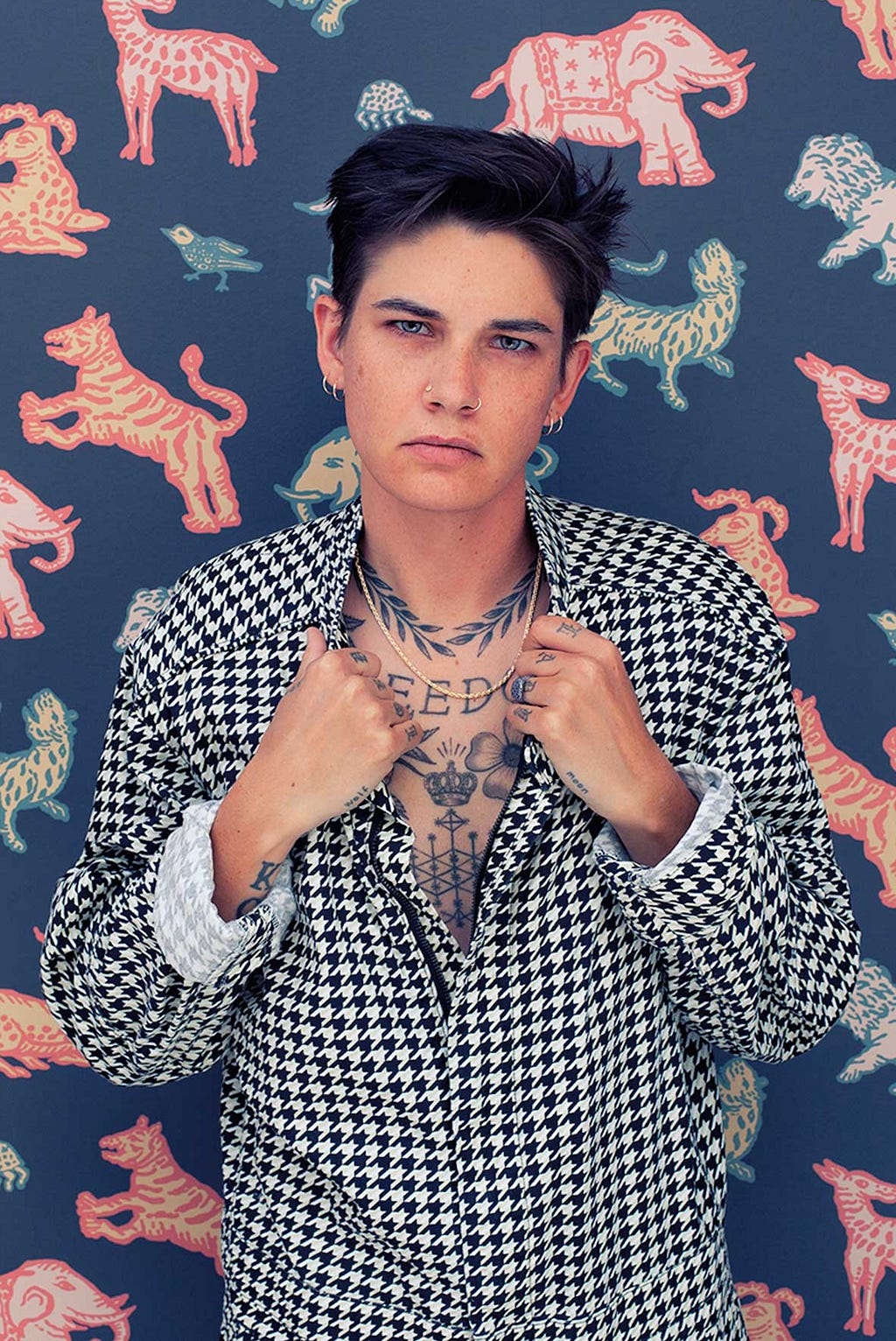
I’m hoping my book, Gayface, will do a couple of things — to act as both a mirror and megaphone for the community. First, I want it to show there’s no such thing as a “gayface.” The queer community is diverse, layered and beautiful in ways that defy stereotype. I want people to see themselves, a loved one, or someone they care about in this book..to humanize the LGBTQ+ community in service of helping people feel see, understood and honored in their full complexity. Second, at a time when there are more legislative attacks on LGBTQ+ rights than ever before, I want this book to serve as both a record of our existence and a celebration of our resilience. Through portraiture, it invites reflection and challenges stereotypes, hopefully fostering empathy at a moment when visibility and solidarity are critical. I also created an LGBTQ+ coat of arms — a familial insignia that acts as a kind of alternative to the rainbow flag — and included a full glossary of terms to make the book both accessible and educational.
Can you share with us the most interesting story that you shared in your book?
The book isn’t about me — it’s about the people in it. The stories are visual (some are verbal as well). Each portrait holds its own vulnerability, strength and truth. The most interesting part is the courage and presence of the individuals on every page. That said, I shot in multiple cities and countless types of environments when shooting the portraits. One of the locations I shot was literally inside an NYC nightclub. I set up a pop-up studio like at 10pm on the mezzanine looking out onto the dance floor.
What was the “aha moment” or series of events that made you decide to bring your message to the greater world? Can you share a story about that?
The idea for the Gayface series struck me during what seemed like an ordinary moment — soaking in the bathtub nearly a decade ago. As I submerged, I felt the vulnerability of being my true self, and as I surfaced, the stark contrast of external exposure hit me. This juxtaposition inspired two quick sketches: a figure with eyes closed and one with eyes open. That simple act became the seed of a project to capture the LGBTQ community’s vibrant, multifaceted spirit. As the concept evolved, it became more than just an exploration — it turned into an act of connection. Witnessing how the portraits fostered bonds and a sense of belonging within the community solidified this as more than art; it was a shared experience of pride and identity.
Without sharing specific names, can you tell us a story about a particular individual who was impacted or helped by your cause?
There are so many. Some people used this book as a way of coming out to their family, others ended up finding a new community during the shoots themselves, a couple of individuals even found long-term relationships through it!
Are there three things the community/society/politicians can do to help you address the root of the problem you are trying to solve?
First, we need stronger laws that actively protect the LGBTQ+ community — our rights, our safety, and our dignity. Second, public education needs to include accurate, inclusive information about queer identities and experiences. And third, on a human level, we need more curiosity, compassion, and genuine willingness to understand one another. Real change starts when people are open to both learning and unlearning. Most importantly, my wish is that people simply start worrying more about themselves and less about who other people love.
How do you define “Leadership”? Can you explain what you mean or give an example?
Leadership is seeing the big picture and the fine print at the same time. It’s knowing when to act and when to step back. Leadership takes people skills, logistical thinking, empathy, compassion, and passion. A good leader teaches in a way that invites people to want to learn, not forces them to.
What are your “5 things I wish someone told me when I first started” and why? Please share a story or example for each.
- “This project will take on a life of its own — it moves for the people.” When I started this project, it was just a personal passion I was working on out of my apartment in Greenpoint, Brooklyn. At first, I was the one asking people if I could photograph them — but then word started spreading. Soon, people were reaching out to me, wanting to be part of it, wanting to be photographed. That’s when I knew it was becoming something bigger
- “There will be so many emails, logistics, and travel — you’ve got to stay organized.” As the project started to take on a life of its own, the emails began flooding in — and I wasn’t ready for that, especially while working full-time at Milk Studios in New York. Between the travel, the scheduling, the shooting, the editing and the turnaround times, it was a lot to juggle while still trying to hold down a job.
- “You cannot do it alone. Ask for help.” I usually take on personal projects by myself, but with how quickly it was moving right from the start, I began getting really anxious. It took me a minute to realize that I couldn’t do it all myself — and I wish I’d asked for help sooner. That’s something I really learned: don’t be afraid to ask. Some people will say no, but others will say yes — and those are the ones who are just as excited about what you’re creating
- “You’re going to meet incredible humans across the U.S. and world — your life will change, too.” I wasn’t expecting — or prepared — to be flown across the country to photograph people from the community, but it was incredible. Meeting people through this project, hearing their stories, making new friends, and still staying in touch with many of them… it’s been such a gift. Everyone was so kind and open, and being able to explore each town with locals made it even more special. Every place I photographed had its own energy — a mix of strength, power, love, fear, anger, and pain. It was moving to witness and it not only changed me, it changed my entire network of humans. I have friends still today who I met through this project.
- “You’ll learn so much about yourself in the process. Let it…” I thought I was pretty secure in who I was, but this project taught me a lot about myself. Let’s just say there was a whole journey of self-acceptance that came with it.
Can you please give us your favorite “Life Lesson Quote”? Can you share how that was relevant to you in your life?
“Fail better.” Every time you fall, you learn something new. You can’t fail if you don’t try. So keep trying. How you get back up says more than the fall.
Is there a person in the world, or in the U.S. with whom you would like to have a private breakfast or lunch with, and why? He or she might just see this, especially if we tag them. 🙂
Ah, only one? That is an incredibly tough question. There are so many artists (of all forms), and activists it would be beyond amazing to get to chat to, but I guess if I had to ask to meet with just one, it would be Kara Walker. Somehow her art manages to be both disarming and confrontational at the same time…she manages to create spaces that push people to confront difficult subjects and uncomfortable realities — realities that don’t give easy ways out for the viewers — and yet she does so in a way that makes you want to stay and challenge yourself, rather than defend or run.
How can our readers further follow your work online?
Through my IG @ashkolodner and @gayface1stclass, my websites www.gayface.com and www.ashkolodner.com
This was very meaningful, thank you so much. We wish you only continued success on your great work!
Thank you for the opportunity!
Social Impact Authors: How & Why Author Ash Kolodner Is Helping To Change Our World was originally published in Authority Magazine on Medium, where people are continuing the conversation by highlighting and responding to this story.