

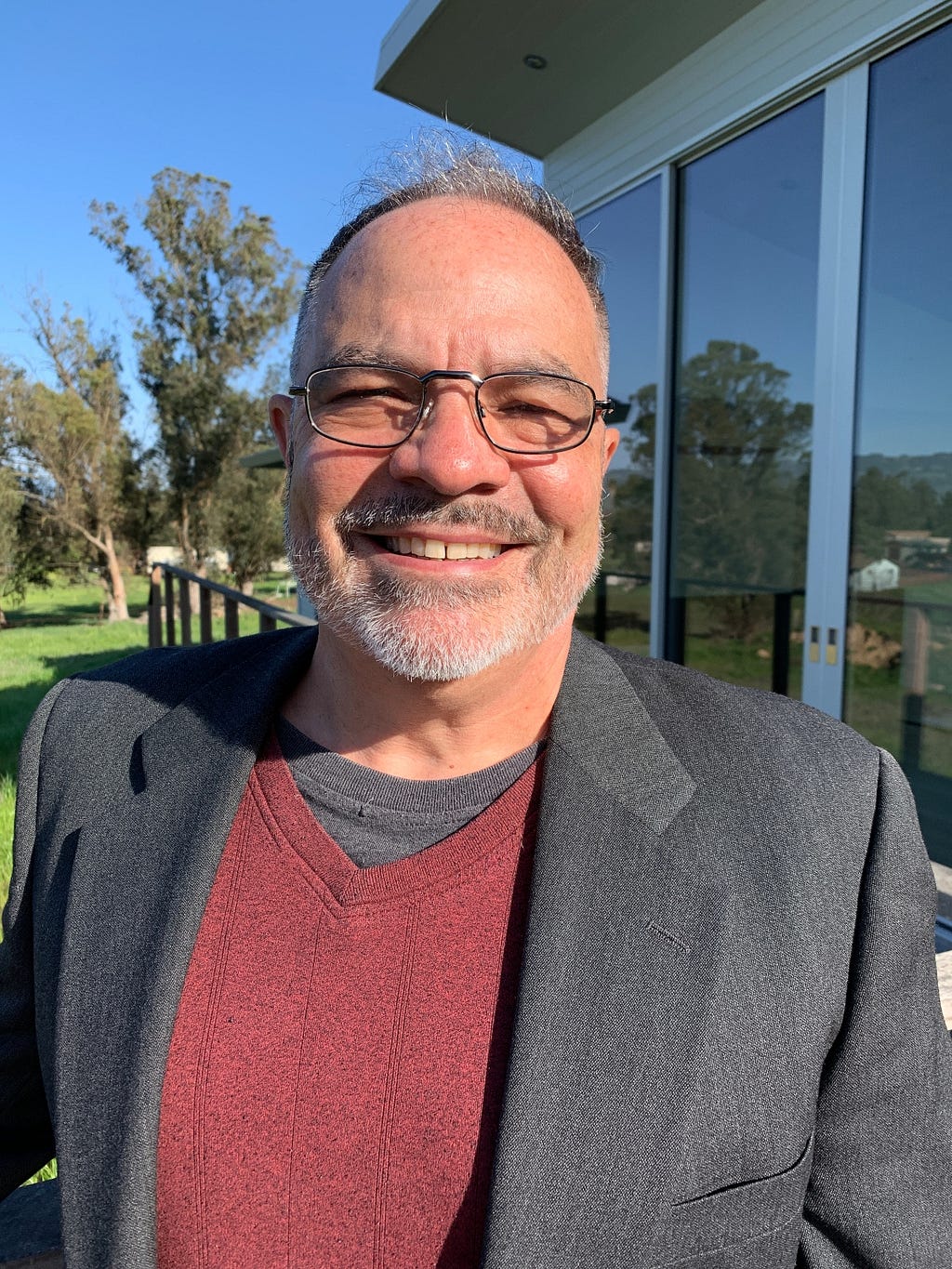

Putting The United Back Into The United States: Author Carlos D. Torres On The 5 Things That Each Of Us Can Do To Help Unite Our Polarized Society
An Interview With Jake Frankel
When we speak to each other, about divisive issues, including the top twenty most pressing socioeconomic and sociopolitical issues, it is best to express ourselves and query others on concerns. So much of what we are concerned about in the United States and the individual level by and large are widely shared concerns.
As part of our series about 5 Things That Each Of Us Can Do To Help Unite Our Polarized Society, I had the pleasure of interviewing Carlos D. Torres, PhD.
Carlos is a writer, seeker, and academic whose anthropological research is driven by big questions in the sweeping tale of human societal communication and transformation. His book On This, We Agree! On This, We Agree!: The Basis for US Consensus and How We Can Solve Urgent Problems Today published in October, 2024, was written to help to unite Americans. By analyzing polling data and sociopolitical research, Carlos suggests Americans can start to erode structural polarization in the U.S. by first acknowledging where we already agree on some of the most divisive issues of our day. Our divisiveness in the U.S. should start with educating our perceptions of one another.
Thank you so much for joining us in this interview series! Before we dive into the main focus of our interview, our readers would love to “get to know you” a bit better. Can you tell us a bit about your childhood backstory?
As with many other citizens of the US, I was fortunate to have experienced both adversity and plentitude growing up which no doubt shaped by views and educational trajectory later in life. I began life in an upper middle-class family in Marin County, California, before being plunged into impoverishment with the sudden death of my father when I was seven years old. My family moved to the borderlands of Texas/Mexico in El Paso. There my mixed identity, being both Latino and white, helped me begin to understand the generosity of spirit which can inhabit people of all income levels. But it also introduced me to the legacy of low expectations that comes with the prejudice of those with different backgrounds.
What or who inspired you to pursue your career? We’d love to hear the story.
We don’t speak enough in the U.S. about the value of failure. Failure can be a learning process, a point of refocus in our lives. I returned to college in my late 30s after trying out a number of jobs and careers and asked myself “What do these leftover college credit add up to?” And the answer was “sciences, humanities, and history — let’s call it cultural anthropology then.” I think growing up straddling distinctly different backgrounds — being both rich then poor, part of a blue-collar and white-collar family, and being an American with a mixed ancestry — fostered in me a curiosity for knowing the “other side” of the story, I was drawn to Chiapas, Mexico, to conduct research for my Ph.D. because there had been a rebellion there in 1994 against the modern economic system, and I needed to know why. I was also drawn to Chiapas because the Maya there by the early 2000s had created small media production centers and I was curious to know what Maya media producers were saying, what messages and stories were they focused on.
What are some of the most interesting or exciting projects you are working on now? How do you think that might help people?
This semester, I am reviewing the history of social science theory with my students and it is helping us reimagine the importance of social interconnectedness and the journey toward understanding the role of society in shaping the individual. This review of theory is sowing the seeds for a new book on the nature and attributes of culture as it has been imagined historically. We are all taking notes for ways to understand our performative, polarized, and distracted society today.
None of us can achieve success without some help along the way. Was there a particular person who you feel gave you the most help or encouragement to be who you are today? Can you share a story about that?
I had a teacher in middle school named Dr. William Scott who was a science teacher who taught me that asking good questions is where to start for finding good answers. He was one of the few teachers I had who validated my insane curiosity, and encouraged me to keep reading books that challenged my young mind — even when they brought more uncertainty than certainty.
Can you share the funniest or most interesting mistake that occurred to you in the course of your career? What lesson or take away did you learn from that?
For an anthropologist, it is always humbling to try and generalize a person by a first impression, then to see how your generalizations fall apart as you interview or get to know your informant. Academics for the most part have to find an ironic sense of joy in being wrong because so often truth is stranger than fiction, more surprising, and often more interesting; the details more suggestive than the generalization.
Is there a particular book that made a significant impact on you? Can you share a story or explain why it resonated with you so much?
There have been so many great books published in the last few years that speak to polarization in our modern society today, but certainly the book The Dawn of Everything: A New History of Humanity published in 2023 “excavated” many of the questions my students and I are grappling with today. The book synthesizes archaeological research and debates on socioeconomic equality from the dawn of humanity showcasing how human societies have negotiated political representation and resource distribution creatively for many thousands of years. The book readdresses the very question of why inequality is significant, that social and economic inequality don’t necessarily have to follow with advanced societies. As some current economists have suggested, like Joseph Stiglitz, economic inequality is a policy choice not an inevitable attribute of rich societies.
Can you share your favorite “Life Lesson Quote”? Why does that resonate with you so much? Do you have a story about how that was relevant in your life or your work?
I think all too often about Abraham Lincoln’s quote: “In this age, in this country, public sentiment is everything. With it, nothing can fail; against it, nothing can succeed. Whoever molds public sentiment goes deeper than he who enacts statutes, or pronounces judicial decisions.” For me, his quote emphasizes a new reality in the U.S. public sphere. The amount of disinformation requires more civic engagement and communication from those who have quietly gone about their work with the expectation that rational debate and policies will simply prevail. Democracy is now more dependent on the active and direct engagement with disinformation by scientists and academics as rationality itself comes under assault and toxic societal claims go untested or not held to the historical scrutiny they deserve.
Scientists have depended too long on logos, or fact-based arguments, now researchers have to confront dangerous pseudo-science and toxic prejudices with a more diverse rhetorical toolkit that includes ethical and even emotional arguments because the stakes of risen, and researchers have to be more diligent and passionate about answering the “whys” and “how so” of what they do, the evidence behind their rationale, and the direct consequences of alternative and dangerous pseudo-science. It is a shame that too often “coolness” in scientific or social science communication is perceived as detachment. Researchers are passionate about their work, but also understandingly wary about giving equal weight to ridiculous claims. This will have to change, researchers will need to upgrade their rhetorical and persuasive strategies to meet the new hyperreal normal.
How do you define “Leadership”? Can you explain what you mean or give an example?
There are many examples of politicians now and historically that have worked across the political divide to bring about real change in our society, Republican and Democrat. I think of one U.S. Senator James Lankford (R) of Oklahoma who helped draft a comprehensive immigration bill with bipartisan input early in 2024 that was never brought up for a vote by the Republican-led US House. It would have solved much of the current and extreme unilateral anti-immigrant actions in the US we are seeing now. So many of those who have worked all of their lives to build consensus, politicians trying to work across the aisle, or NGO directors working for peace and the betterment of humanity, I want to hear their voices more often in the public sphere. Americans by and large are exhausted with polarization and yet the Great Dividers continue to get center stage in our media because of their potential for attention and audience share. But more Americans have become aware of the strategy of polarization, and are turning off and turning away from the divisive spew.
Ok, thank you for all that. Now let’s move to the main focus of our interview. The polarization in our country has become so extreme that families have been torn apart. Erstwhile close friends have not spoken to each other because of strong partisan differences. This is likely a huge topic, but briefly, can you share your view on how this evolved to the boiling point that it’s at now?
I think that polarization and division, and the scapegoating of distinct groups in society, have always been used by powerful and insecure individuals put into leadership roles to consolidate their own influence on others, subverting democratic institutions where and whenever they are able. When academics, particularly historians, begin to see the step-by-step processes that go into creating authoritarian regimes coming home to the U.S., to a country founded to great extent to prevent dictatorial rule, we are triggered.
Many starting points for our polarization have been suggested, including the development of our two-party system right at the beginning of our country’s founding, to the inability to compromise, to the over-empowerment of powerful minorities — and lessons from the American Civil War are ever-present in the analysis of America’s divisions. In my book I suggest sowing division and doubt are political strategies and old new strategies at that. What ordinary Americans were crying out for in the runup to the last election were debates on political policies, “What is the plan?” I heard so often in interviews with ordinary folks standing outside of political primary elections. Americans heard too much about vague claims and soundbites, then counter-soundbites followed up by strategizing for power.
Mitt Romney has suggested the trouble on the American Right is that when the policies are scrutinized for what they ultimately produce, they are very unpopular — and this leads to talking around policy, or glossing over the fine print. The abundance of our information in our U.S. information stream doesn’t contribute much to clarity either. What our American town halls have revealed is that Americans are not so polarized as confused. They don’t know what the plan is, the end goal, and we all need answers — a year ago, ten years ago, and now.
Rather than following the lead of the U.S. populace who are asking where policies are going to take them, U.S. news media all too often take the bait of distraction. Where they should be hyper-focused on the top ten issues of concern of the U.S. populace, and constantly drilling our policy makers on plans, policies, and referencing historical outcomes, ordinary Americans remain confused and gas-lighted. I don’t see a polarized nation, except between the far Right and very far Left. I see a nation that is deeply frustrated with the lack of clarity, unable to the get simple answers for what the overall plan is, what exactly policies and unilateral executive actions are supposed to produce. Basic questions that ordinary Americans answer for themselves every day in everyday activities, our national politicians through media conduits seems unable to answer and Americans see the prospects for their and their children’s American dreams withering. Polarization and distraction are the strategies, focus and clarity, and lots of it, are the answers.
I have no pretensions about bridging the divide between politicians, or between partisan media outlets. But I’d love to discuss the divide that is occurring between families, co-workers, and friends. Do you feel comfortable sharing a story from your experience about how family or friends have become a bit alienated because of the partisan atmosphere?
As a teenager, I would often drive with my step-father to construction sites in the wee hours of the morning, and I always found it funny that he would rail against immigrants — he owned a construction crane business. But when we arrived on site, he was very friendly with immigrant laborers and workers, and he knew many of them personally — we can deride people in the abstract, but it’s harder to hate them when we come to know them.
Like many Americans, friends and family members in my orbit are being affected by polarization in the nation, and people are affected along a continuum of sensitivities. But for me the only thing worse than speaking about political frustrations and polices is not being able to vent those frustrations, which is why I wish more diverse perspectives and common experiences were represented in mainstream media. Ordinary Americans need to see that the media cares about them, even it is by proxy. The trouble with having political conversations between neighbors and even family is that Americans by and large are only willing to have those conversations with some guarantee of civility. I have students who are feeling particularly marginalized in the divisive political climate we now inhabit. For many, politics has become increasingly personal and even hurtful. The abstraction and generalization of individuals like “trans” or “immigrants” or even “Evangelical Christians” dehumanizes people.
I have done a lot of social fieldwork among the Maya of Mexico and Central America, and when a US Government sponsored passenger jet expulsing immigrants from Guatemala took off a few months ago, I was particularly affected. I know the modern Maya of Guatemala to be hard working and humble people, willing to take the jobs Americans won’t do. So it was and is particularly harsh to hear them portrayed as criminals. I feel psychologically sickened by this rhetoric.
In your opinion, what can be done to bridge the divide that has occurred in families? Can you please share a story or example?
Listen to each other, and ask questions in the form of concern. “What is your concern about immigration?” We are much more receptive to listening when we address another’s concerns or aspirations. So much of divisiveness in our country masks real anxieties of ordinary Americans. We need to get to the heart of the matter.
How about the workplace, what can be done to bridge the partisan divide that has fractured relationships there? Can you please share a story or example?
It is much easier for people to convey how they feel when you first talk about what gives them a sense of joy, children or pets — get a conversation started by talking about commonalities and similarities. When we start with what we share, differences between us become situated along a continuum rather than by silos of ideology. Hobbies, passions, and interests — breaks down barriers first and differences are easier to manage and more relatable.
I think one of the causes of our divide comes from the fact that many of us see a political affiliation as the primary way to self-identify. But of course, there are many other ways to self-identify. What do you think can be done to address this?
Our founding fathers beginning with George Washington in his Farewell Address warned of factionalization caused by political parties. Just a little bit of historical knowledge of American history can enlighten anyone about how different the parties have transformed ideologically through time; the labels have changed but our groupism or tribalism remains. We should also keep in mind, however, that some polls put the number of those who identify as Independents at almost 40% of the population, and my book documents places where supermajorities of Americans agree on fundamental issues.
To start a political conversation, rather than use party affiliation or politicians, start with bread-and-butter issues that most can relate to. It is safer ground because, as my book points out, Americans mostly share the same concerns. We want our sons and daughters to have bright futures. We should address our concerns and aspirations for the future then walk back to how to plot how we get there through policy. Politics should be the art of this debate. Our political sphere is sickened through the lack of this debate and the resolutions that should follow, not by politics as Aristotle defined it, but by straw man arguments and the blame game — the strategies of distraction.
Rather than try to convince others of our ideology, the best approach is to keep politics civil and not to interrogate beliefs. If someone wants to tell you about their political views it is best to civilly ask where they got their information, or where they heard their views, and gently probe for sources and allow them to address how they came to believe what they do. In this process, people will normally come to face within themselves what they believe politically, to see themselves in the third person. Holding up an impartial mirror can raise productive interior doubt and open up a small space for growth and transformation.
Much ink has been spilled about how social media companies and partisan media companies continue to make money off creating a split in our society. Sadly the cat is out of the bag and at least in the near term there is no turning back. Social media and partisan media have a vested interest in maintaining the divide, but as individuals none of us benefit by continuing this conflict. What can we do moving forward to not let social media divide us?
Americans on the Left and on the Right mistrust each other’s media, but there is a surprising amount of overall awareness of media bias in the American populace at large, that news media caters and conforms to a media audience’s ideology in the US. Some communications researchers have stressed the importance of media or information literacy in deconstructing misinformation and disinformation. As my students have pointed out, the other problems is that there is just too much information, and political propagandists know how to “flood the zone.” That is where consensus comes in. We need to make sure that all points of view and evidence are presented, but we should also verify where the consensus is and give current accord its proper weight — which is one of the reasons I wrote On This, We Agree! Debating whether climate change is REALLY exacerbated by human-made inputs with the weight of scientific consensus is a strategy of distraction more than a search for real answers, and we should recognize that. The real debate centers around what we are going to do about climate change when other factors like energy prices are also of great concern to many Americans. This is much more substantive debate. But even as I write, other countries around the world have become energy independent on their own renewable energy systems.
Ironically, most other countries don’t view social media as dangerous or producing polarization, because so much media posted on social media we don’t talk about, the good, the valid and the credible. You can imagine you’re a citizen of another country with authoritarian rule where you are fed state-sponsored propaganda all day long, social media actually presents the potential for a freer society with more liberalized debate. Social media seems to be pathologized as the leading culprit for disinformation, but I think the potential for social media for productive dialogue remains largely untapped, and I hope we can mobilize virtual town halls and media formatted like Ted Talks to continue to aid more than hurt societal understanding. Flood back the zone with truth and evidence.
What can we do moving forward to not let partisan media pundits divide us?
As my book suggest, we need to mainstream media to get back to focusing on the major concerns of Americans and focus time each and every day on the those concerns rather than chasing click bate and arresting one liners like a bewildered herd. Mainstream media spends far too much time on the symptoms of discord, violence, and anxiety, and seldom on the causes or solutions which are abundantly available in our university scholarship and in our global public sphere. Comparable problems and the solutions for those problems and issues are being addressed and acted upon in small locales in the U.S., and in other countries around the world, solutions costing pennies on our dime in the U.S. If pundits are not talking real solutions, then we need to turn them off, switch channels. The U.S. public is waking up to the fact that it’s not enough to feel validated by pundits, we need actionable solutions. Refocus, recenter.
Can you please share your “5 Steps That Each Of Us Can Take To Proactively Help Unite Our Country”. Kindly share a story or example for each.
1 . When we speak to each other, about divisive issues, including the top twenty most pressing socioeconomic and sociopolitical issues, it is best to express ourselves and query others on concerns. So much of what we are concerned about in the United States and the individual level by and large are widely shared concerns.
2 . Come out of your social media silo if your level of anger or frustration feels unhealthy, and help your own family members and relations take a walk from political media. Talk them through their sense of isolation where and when possible. Take political media polarization on a walk, figuratively and literally, if at all possible. Exercise and activity brings positivity.
3 . Quickly turn the television off when divisive people speak, keep the television on when those trying to unite the country share their views. Let our mainstream media through audience ratings services like Nielsen Media Research know Americans would rather tune in for constructive conversations over partisan sound bites.
4 . Read my book On This, We Agree! On This, We Agree!: The Basis for US Consensus and How We Can Solve Urgent Problems Today and learn something about our national concerns through polling data and social research. I would love to listen to your thoughts and solutions. My final point in the book is to find a way and a means for Americans to have more scheduled national town halls with revolving panels and views, and program direct input from Americans both virtually and in-person. Americans desperately need to be part of the national conversation, and we need to hear stories from those people being overly objectified in soundbites and hate speech. Prejudice is based in fear and ignorance, let’s hear from one another across the country.
5 . I tell my students, the single most empowering activism that one person can engage in is to encourage others to vote when elections role by. If voting participation were anywhere near the voter turnouts in countries like Uruguay (90%) Sweden (84%), Botswana (81%), or Australia (90%), the issues that politicians focus on would immediately be recentered toward a fuller demographic and populist concerns that include those groups underrepresented, including the 18–29 year-olds. We must keep asking the politicians to explain their plan, articulate the specifics. Challenge then challenge them some more to explain how their outcomes benefit the great majority of Americans.
Simply put, is there anything else we can do to ‘just be nicer to each other’?
Listen to their concerns, and there are many right now. We have to remember, as one of your questions suggests, that more and more political media represented in much of our podcasts, news media and social media is dependent not only on adding gasoline to societal rifting, but keeping polarization alive and constant to attract new audiences. We don’t have to play this game.
We are going through a rough period now. Are you optimistic that this issue can eventually be resolved? Can you explain?
It is so hard for those who studied the American Civil War to not believe that some unresolvable issues can only be solved with bloodshed, and the journey toward to the democratic majoritarian republic that is the United States is bathed in the blood of countless millions historically. But I also know that by and large there is a large majority of Americans who seek peaceful coexistence with each other and agree on fundamental issues. We need to keep reminding each other there we do have accord, that we value diversity cast in the broadest sense of the word, and that we desire mostly the same things in life. Our debates shouldn’t be about why what we specifically value is best for America, but around those issues we agree on right now, to move what we can forward now. We need more people in the public sphere to just simply start with the phrase, “I agree with that,” or “I agree with many of those points,” or “I see your point.” We have simply lost the value in agreeing to agree on anything. One we agree on basic points, substantive discussions begin. I’ll be more optimistic, like many Americans, when I hear those simple words come out of the mouths of our leadership and pundits.
If you could tell young people one thing about why they should consider making a positive impact on our society, like you, what would you tell them?
Cast your vote on election day, help others cast their vote on election day, take ownership of your future, you can change the political outlook in America every two years on November 4th. You can make November 5 the start of a whole new world. Please, also look deeply into the policies of your potential candidates of choice. If you don’t hear much of anything, there is no “there, there,” chances are your political choice may be just an empty suit. Engage early in the primaries.
Is there a person in the world, or in the US, with whom you would like to have a private breakfast or lunch, and why? He or she might just see this, especially if we tag them. 🙂
I would like to talk to Bill Maher. My view is that we should only be taken seriously if we can first laugh at ourselves and have our premises challenged as well. Maher has a good venue for this.
How can our readers follow you online?
Follow me on Bluesky social @anthrohombre.bsky.social. I am an academic at a public institution, so I am not hiding anywhere. Let’s talk.
This was very meaningful, and thank you so much for the time you spent on this interview. We wish you only continued success on your great work!
Putting The United Back Into The United States: Author Carlos D Torres On The 5 Things That Each Of was originally published in Authority Magazine on Medium, where people are continuing the conversation by highlighting and responding to this story.