


John von Seggern Of Futureproof Music School On Innovative Approaches That Are Transforming Education
An interview with Eden Gold
Your students are the heroes of their own story; your school is just the guide.
Being clear is more effective than trying to be clever.
Strive to define success through the real-world impact you have on students’ lives, not abstract numbers.
Consistent weekly habits lead to bigger results than chasing huge, distant goals.
Simplicity can scale, while overcomplexity often fails.
The landscape of education is undergoing a profound transformation, propelled by technological advancements, pedagogical innovations, and a deepened understanding of learning diversities. Traditional classrooms are evolving, and new modes of teaching and learning are emerging to better prepare students for the complexities of the modern world. This series will take a look at the groundbreaking work being done across the globe to redefine education. As a part of this interview series, we had the pleasure to interview John von Seggern.
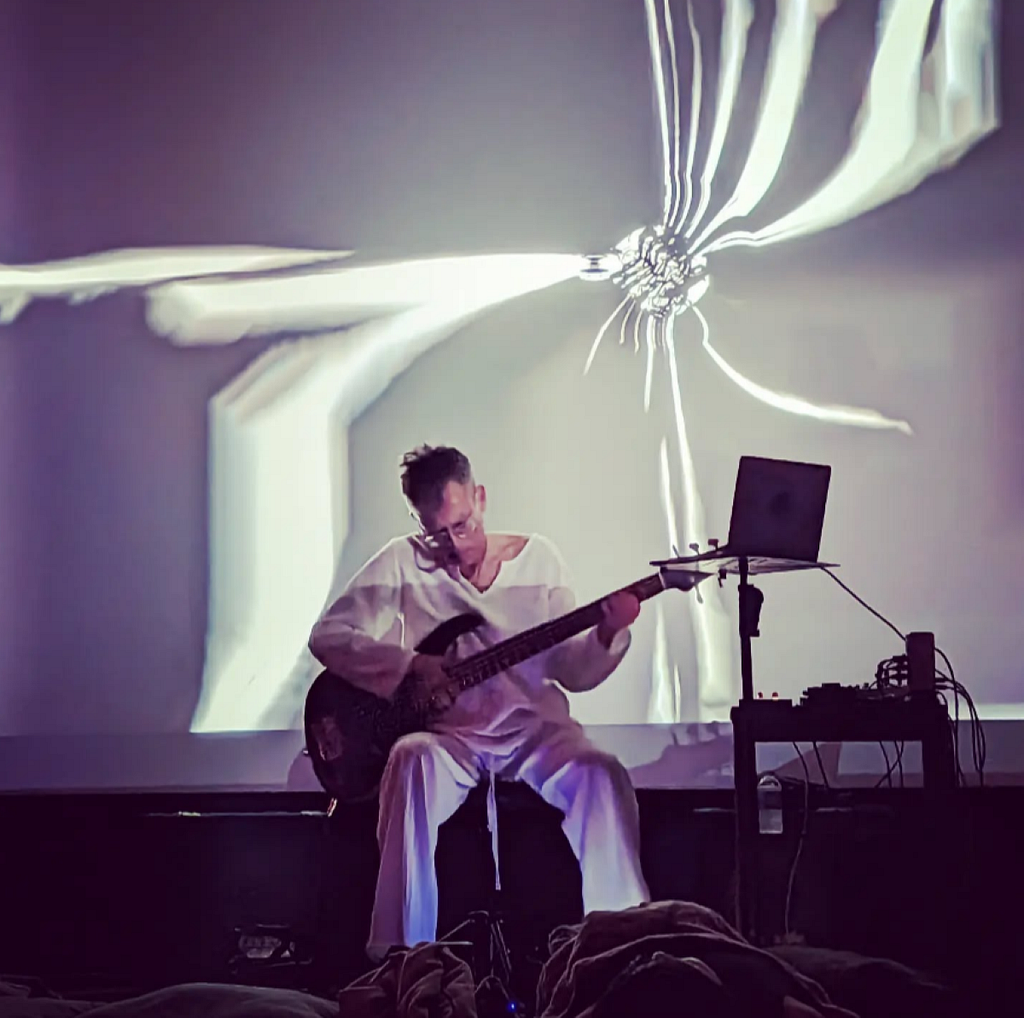
John von Seggern stands at the intersection of music education innovation and hands-on industry experience, making him uniquely qualified to lead Futureproof Music School’s revolutionary approach to music education. As a veteran educator and accomplished musician with over three decades of experience, von Seggern brings a rare combination of pedagogical expertise and real-world musical prowess to his role as founder and CEO.
His vision for music education was shaped by years of observing the limitations of traditional teaching methods while working as the online education director at noted electronic music production schools Dubspot and Icon Collective, and in his work as a professional musician.
Thank you so much for doing this with us! Our readers would love to “get to know you” a bit better. Can you share the “backstory” behind what brought you to this particular career path?
My career has been a series of unexpected twists and turns, common for anyone who manages to maintain a career in a creative field for long enough I think!
I started as a jazz musician in Japan, became a touring pop musician playing arena shows across the world, and then switched to electronic music as one of the first computer DJs.
After getting a Master’s degree in Ethnomusicology, from UC Riverside, on the cultural impact of digital music, I worked at Native Instruments for a while before finding my passion in online music education.
This path has taught me that the future of music is always in motion, and education needs to be just as agile.
Can you briefly share with our readers why you are an authority in the education field?
I have been designing online learning experiences for about 15 years, always with a focus on adopting technology that actually helps students learn better. My expertise lies in seeing what’s next and building the educational systems that prepare students for the future of the industry.
I was an early champion for using Zoom in music education, which was a game-changer for us because it enables users to easily share music and audio in meetings. I also redesigned our entire program at Icon Collective around a self-paced, gamified structure. Using AI is just the latest tool in the kit for helping students learn better.
Can you identify some areas of the US education system that are going really great?
I’m most excited about the experiments I see using AI tutoring as a supplement to traditional in-person teaching. I think this has the potential to bring personalized learning to far more students including many who could never have afforded in-person tutoring from a human teacher.
What’s particularly promising is how these AI tutors can provide immediate, patient feedback 24/7, allowing students to work at their own pace without judgment. Early data from districts using AI-supplemented instruction shows the achievement gap narrowing, with underserved students benefiting the most from having access to what amounts to a personal tutor in their pocket. The technology isn’t replacing teachers but amplifying their impact. Teachers report spending less time on repetitive instruction and more time building meaningful connections with students who need extra support. This is the kind of change we’d like to see from AI, freeing human teachers to give their attention to the most high-impact areas.
Can you identify the key areas of the US education system that should be prioritized for improvement? Can you explain why those are so critical?
The most critical area for improvement in our field is making education relevant to actual 21st Century music careers. There is a massive disconnect between what many schools teach and the skills students need. Traditional music programs are still focused on classical theory while the industry runs on digital audio production and (increasingly) AI.
Please tell us all about the innovative educational approaches that you are using. What is the specific problem that you aim to solve, and how have you addressed it?
Our approach aims to solve music education’s biggest problem: traditional schools can’t keep up with the speed of technology. We tackle this by combining our proprietary AI tutor with human mentorship, creating personalized learning paths that adapt to each student’s goals. Our curriculum is updated monthly to include the latest tools and techniques. Our goal is to teach students how to thrive in an AI-augmented creative future.
In what ways do you think your approach might shape the future of education? What evidence supports this?
We believe that AI in education is here to amplify human expertise, not replace it. The AI provides a personalized roadmap and helps with basic skill acquisition, and our instructors focus on what truly matters: creative vision, artistic taste, and career building.
How do you measure the impact of your innovative educational practices on students’ learning and well-being?
Internally, our platform uses AI analytics to track students’ technical progress in real-time as they work through the system, showing students their skills as they level up, like in a video game. To protect student well-being, the system also flags engagement patterns that might signal burnout, allowing our human mentors to step in with personalized support.
Ultimately though, we measure success by career outcomes and cultural impact; Spotify streams and label deals.
What challenges have you faced in implementing your educational innovations, and how have you overcome them?
Our biggest challenge has been building a cutting-edge learning platform from scratch as a bootstrapped startup. We overcame this by focusing our resources on what directly impacts learning and using existing infrastructure like the LearnWorlds LMS to build on.
The other major challenge is that the music industry evolves faster than traditional education can handle. We solve this by building our curriculum in a modular way, allowing us to swap lessons and update content as new tools and techniques emerge.
Keeping in mind the “Law of Unintended Consequences” can you see any potential drawbacks of this innovation that people should think more deeply about?
The biggest potential drawback of AI in education is that it can create dependency instead of true competence. If a student only relies on AI for quick answers, they never develop the intuition that comes from struggle and experimentation. We’re addressing this by relying on a project-based approach where the students must create and complete real-world projects from start to finish.
Our curriculum pushes students to use AI as a collaborative partner, not a crutch — they have to make creative decisions, solve problems when things go wrong, and develop their own artistic voice.
In our field there is also a risk of creative conformity: when everyone uses AI tools trained on the same data, music could start to sound the same. We teach students to use AI as a collaborator that encourages exploration, not as a shortcut that stifles originality.
What are your “5 Things I Wish I Knew When I First Started”?
- Your students are the heroes of their own story; your school is just the guide.
- Being clear is more effective than trying to be clever.
- Strive to define success through the real-world impact you have on students’ lives, not abstract numbers.
- Consistent weekly habits lead to bigger results than chasing huge, distant goals.
- Simplicity can scale, while overcomplexity often fails.
Can you please give us your favorite “Life Lesson Quote”? Can you share how that was relevant to you in your life?
My favorite quote is, “Do not fear mistakes. There are none,” from Miles Davis.
It’s been the guiding principle in my creative life, because often mistakes and unexpected surprises are the way to new creative discoveries and directions.
Miles understood that in music, an apparent “mistake” can become a moment of genius if you lean into it with confidence.
We actually designed our AI tutor to embrace this idea; it encourages creative exploration rather than flagging errors, giving students the freedom to develop their unique voice.
How can our readers further follow your work online?
Visit our website at futureproofmusicschool.com to learn about the school, or follow us on YouTube at https://www.youtube.com/@FutureproofMusicSchool . I’ve recently started a new video podcast series “AI and the Future of Music” where we’ll be discussing some of the new issues that are arising, you can find the episodes on our channel feed.
Thank you so much for these insights! This was so inspiring!
John von Seggern Of Futureproof Music School On Innovative Approaches That Are Transforming… was originally published in Authority Magazine on Medium, where people are continuing the conversation by highlighting and responding to this story.