

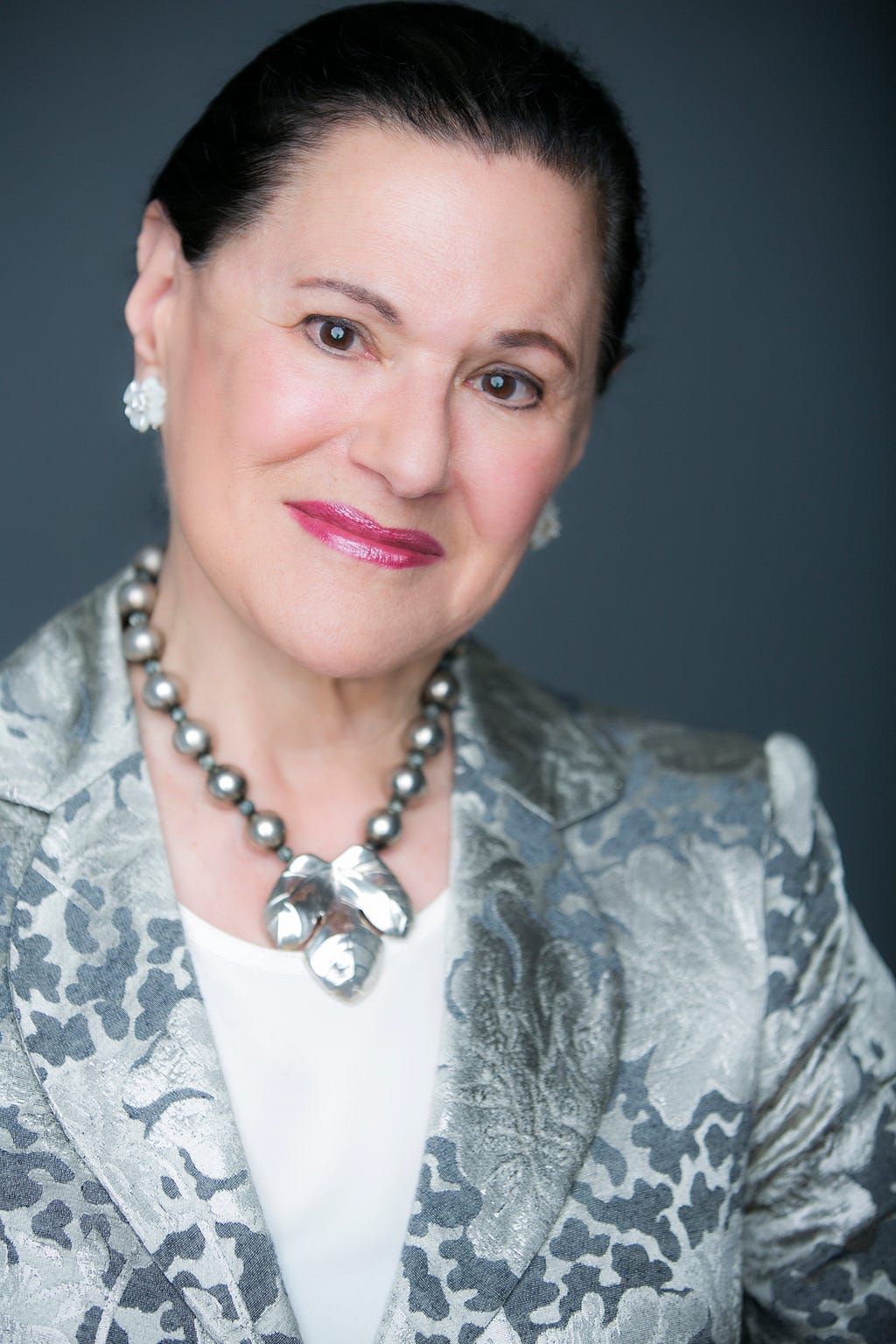

Impactful Communication: Marcy Syms of the Sy Syms Foundation On 5 Essential Techniques for Becoming an Effective Communicator
An Interview With Athalia Monae
Listen more than you speak — you might save a failing deal just by staying silent long enough for the other side to reveal what they truly wanted.
In an age dominated by digital communication, the power of articulate and effective verbal communication cannot be understated. Whether it’s delivering a keynote address, leading a team meeting, or engaging in a one-on-one conversation, impactful speaking can open doors, inspire change, and create lasting impressions. But what truly sets apart an effective communicator? What techniques and nuances elevate a speech from mundane to memorable? As part of this series, we had the pleasure of interviewing Marcy Syms.
Marcy Syms is a social entrepreneur and an independent director for public and private companies. She is the founding trustee and President of the Sy Syms Foundation, which supports programs in education, scientific research, societal justice, and the arts. Since its inception, the Sy Syms Foundation has awarded over $60 million dollars in grants. For over a decade, Marcy Syms was CEO of Syms Corp, which operated in 16 states selling designer and brand name apparel and housewares to “Educated Consumers.” Marcy has been an agent of change, a pioneer, and a provocateur who is always “changing the conversation.” She is active in support of gender justice as a Founding Advisory Board member of the ERA Project at Columbia Law School and the past Chair of the ERA Coalition/Fund for Women’s Equality (which secured the 38th State ratification of the ERA Amendment). Marcy also serves on several not for profit boards including the ERA Project at Columbia Law School, CUNY’s Macaulay Honors School, and the Sy Syms School of Business at Yeshiva University, Leadership Council Tanenbaum and Advisory Board, and Have Art Will Travel. Since 2015, she has been on the board of National Public Radio and is a past Overseer of Boston University. Marcy is a 2022 fellow of the Harvard Advanced Leadership Initiative (ALI), bringing her executive leadership experience from retail and serving on the Women’s Politics and Policy Board at the Harvard Kennedy School. Marcy was recently featured in Leaders Magazine (additional press can be found here).
Thank you so much for joining us in this interview series. Before we dive into our discussion about communication, our readers would love to “get to know you” a bit better. Can you share with us the backstory about what brought you to your specific career path?
I grew up in a retail family — my father founded Syms Corp, the first truly off-price retailer in America. I was very involved in Syms and eventually took over as CEO, so I learned business fundamentals at the dinner table and stepped into leadership with both a legacy and a vision to evolve it.
Can you share the most interesting story that happened to you since you started your career?
When we were opening one of our early stores in New Jersey, after being solely Manhattan-based, my dad Sy and I were told the morning of the opening that we didn’t have all the right permits. We would have to delay the opening, But we had hundreds of people in the parking lot wanting to get into the shuttered store. Rather than just send them home, we both picked a car hood and used it as a desk to hand write $10 off coupons for use when the store actually opened. This was a measure of respect for their time and prospective loyalty. I don’t know exactly what percentage of these people used those coupons and became loyal customers, but I know it was a lot.
You are a successful business leader. Which three character traits do you think were most instrumental to your success? Can you please share a story or example for each?
- Integrity: always upholding our value that “An educated consumer is our best customer.”
- Empathy: knowing when an employee (coworker / educator) needed support rather than discipline.
- Curiosity: I never stopped asking questions, especially of those closest to the work.
Ok, thank you for that. Let’s now jump to the primary focus of our interview. Let’s begin with a basic definition so that we are all on the same page. How would you define an “Effective Communicator?” What are the characteristics of an effective communicator?
An effective communicator connects — clearly, authentically, and in a way that leaves the other person feeling seen and understood.
How can one tailor their communication style to different audiences or situations?
You have to understand what matters to your audience, then meet them in that space, whether that means simplifying your message or shifting your tone.
Can you provide an example of a time when you had to adapt your communication style to reach a particular audience successfully?
Make sure your language doesn’t include buzzwords that require explanation. Always try to make eye contact and engage the faces of those with whom you’re speaking. Ensure you are connecting!
How do you handle difficult or sensitive conversations while maintaining open communication?
I ground the conversation in shared values, stay calm, and ask questions that invite dialogue instead of defensiveness. Humor is a great way to break the ice, and I’ve often used it. Caution: it is tricky. It requires doing your homework to ensure what you find funny is also funny to your audience.
In your experience, how does storytelling play a role in impactful speaking? Why do you think stories are effective in communication?
Stories stick — they humanize complex ideas and create emotional connection, which is where influence truly begins. To make a lasting point, it helps to be able to weave it into a bigger story.
Here is the main question of our interview. What are your “5 Essential Techniques for Becoming an Effective Communicator”? If you can, please share a story or an example for each.
- Listen more than you speak — you might save a failing deal just by staying silent long enough for the other side to reveal what they truly wanted.
- Clarify, don’t assume — misunderstandings often come from skipped steps; I ask, “Can I reflect back what I heard?” to keep things clear.
- Match your message to your medium — in crisis situations, I’d never rely on email; I’d walk the floor or pick up the phone.
- Stay emotionally aware — people respond to how you make them feel; I’ve learned to check my own tone before I speak.
- Be concise and purposeful — I believe in editing your words like you would a business plan, so cut the fluff and keep the impact.
How do you integrate non-verbal cues into your communication?
Non-verbal signals often speak louder than words; you can defuse a tense boardroom by simply relaxing your posture and smiling.
How has digital communication changed the way you convey your messages? Are there any specific challenges or advantages you’ve encountered?
It’s made clarity and tone even more critical; without body language, words carry more weight and misreadings are easier.
Public speaking is a common fear. What techniques or strategies do you recommend to manage and overcome stage fright?
Know your material cold, rehearse in front of real people, and shift your focus from yourself to the audience’s needs.
What additional resources do you recommend for individuals looking to improve communication skills?
Toastmasters is a fantastic, low-stakes environment to grow.
You are a person of great influence. If you could start a movement that would bring the most amount of good to the most amount of people, what would that be? You never know what your idea can trigger. 🙂
I’d start a “Respect First” movement to embed dignity and listening skills into every workplace interaction, from hiring, evaluations, and exit interviews.
How can our readers follow you online?
You can learn more about me on marcysyms.com.
Thank you for the time you spent sharing these fantastic insights. We wish you only continued success in your great work!
Impactful Communication: Marcy Syms of the Sy Syms Foundation On 5 Essential Techniques for… was originally published in Authority Magazine on Medium, where people are continuing the conversation by highlighting and responding to this story.