

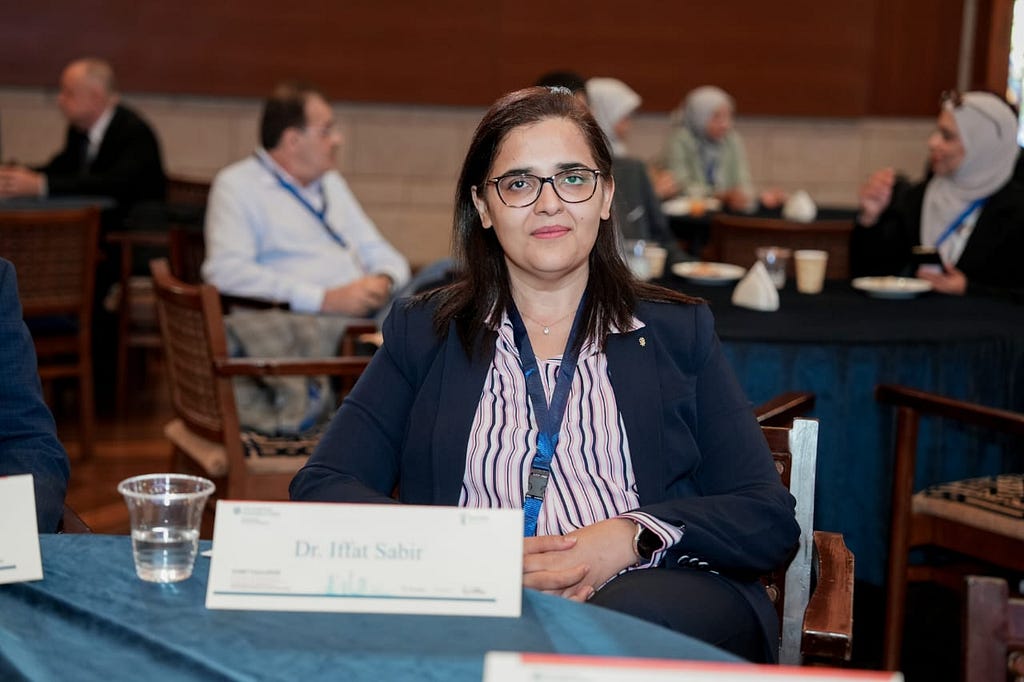

How Dr Iffat Sabir Chaudhry Of Al Ain University United Arab Emirates Is Helping to Promote Sustainability and Climate Justice
Change starts small, but consistency matters.
Over time, I have learnt that small steps create rippling effects. For example, the basic Carbon Educator Certificate eventually inspired other faculty members to adopt similar initiatives, leading to sustainability being embedded across our curricula.
According to the University of Colorado, “Those who are most affected and have the fewest resources to adapt to climate change are also the least responsible for the greenhouse gas emissions — both globally and within the United States.” Promoting climate justice is an incredibly important environmental responsibility that is slowly becoming more and more recognized. In this interview series, we are talking to leaders who are helping to promote sustainability and climate justice. As part of this series, we had the pleasure of interviewing Dr Iffat Sabir Chaudhry.
Dr. Iffat S. Chaudhry is an Associate Professor of Organizational Behavior and Human Resource Management and the Deputy Dean of the College of Business at Al Ain University (AAU), Abu Dhabi. She is an advocate for equity, inclusion, and sustainability. As a Certified Carbon Literate Educator and a Certified Diversity, Equity, and Inclusion (DEI) Global Manager, she integrates environmental responsibility and social equity into her teaching, leadership, and community engagement. Her work emphasizes the transformative power of empathy, equity, and responsible education in shaping future leaders. Known for her combination of impactful leadership, compassion-driven scholarship, and service-oriented professionalism, Dr. Chaudhry is committed to advancing climate-conscious practices, empowering youth, and strengthening institutions’ responsiveness to global sustainability challenges.
Thank you so much for doing this with us! Before we dig in, our readers would like to get to know you a bit. Can you tell us a bit about how you grew up?
Being the middle child in an immigrant South Asian family, I was raised in the United Arab Emirates by my widowed mother, a resilient woman, who shaped my understanding of perseverance, empathy, and responsibility. Growing up across multiple countries gave me a global perspective from an early age. It taught me to appreciate cultural diversity and to understand, firsthand, how inequities can shape people’s opportunities. As a first-generation college student, I worked my way through higher education and eventually earned my PhD in Management in 2014. My life experiences deeply influenced my commitment to equity and inclusion. Since 2010, I have been teaching and serving in academic leadership, driven by a vision of creating learning environments where every student, regardless of background or ability, feels seen, supported, and empowered to succeed.
Everyone has a cataclysmic moment or marker in their life which propels them to take certain actions, a “why”. What is your why?
My “why” is not tied to a single transformational moment. It is the result of many lived experiences that shaped my values over time. The core principles that guide me today towards service, empathy, justice, and empowering the underserved grew out of my own journey.
As a teenager navigating life with limited support, I learned what it means to carry burdens quietly. That experience built my instinct to extend empathy without judgment.
My commitment to service comes from a deep sense of gratitude; as an immigrant child who often felt like an outsider, the community gave me opportunities that I was determined to repay.
My dedication to women’s empowerment began at home. Seeing how financial vulnerability can silence a woman taught me to advocate for women’s agency, voice, and economic empowerment.
My dedication to sustainability, justice, and equity feels like both a responsibility and a privilege. Having lived across cultures and belonging to many identities -by birth, upbringing, educational journeys, marriage, community, and profession- I learned to see myself as a global citizen. My “why” is simple: to use my experiences and privileges to make systems accessible, voices stronger, and futures more sustainable.
You are currently leading an organization that is making a difference for our planet. Can you tell us a bit about what you and your organization are trying to change?
At the College of Business at AAU, our mission is clear ‘to develop responsible business leaders.’ I am fortunate to be part of the leadership team that champions this mission every day. We believe that education is where values are formed and where young people first learn what it means to contribute positively to society and the planet. Our undergraduate business program, along with our co-curricular and extra-curricular experiences, is aligned with the United Nations Sustainable Development Goals. Students don’t just study sustainability; they practice it, live it, and lead through it.
To further strengthen our impact, we established the Women Leadership Forum, an initiative dedicated to empowering the next generation of female leaders through training, entrepreneurship development, and mentorship from industry experts. We also house a dynamic Innovation and Entrepreneurship Center, which supports student entrepreneurs from idea to incubation, helping them grow ventures rooted in innovation and social impact.
With these resources -sustainability-aligned curricula, a robust entrepreneurship ecosystem, and dedicated platforms for women’s advancement- we are shaping a workforce and entrepreneurial community that understands its responsibility to people, planet, and progress.
Can you share the most interesting story that happened to you since you began leading your company or organization?
One of the most inspiring aspects of serving as Deputy Dean is witnessing the creativity, resilience, and commitment of our students and faculty unfold in real time. There have been many moments where I felt a particular initiative might be too ambitious or challenging to execute and just when I begin to question its feasibility, someone from my team steps forward, takes ownership, and elevates the idea far beyond what I imagined. Watching others embody the values I deeply believe in is incredibly rewarding. It is both humbling and energizing to see students thinking boldly and faculty pushing boundaries with such conviction. Those moments remind me that leadership is not about leading alone; it is about creating a culture where others feel empowered to lead with you.
None of us can be successful without some help along the way. Did you have mentors or cheerleaders who helped you to succeed? Can you tell us a story about their influence?
Absolutely! My mentors and supportive leaders have been central to my journey. In higher education, top-level support is truly a strategic asset, and I am deeply grateful for the encouragement I’ve received. Our University President and Vice Presidents have consistently provided the resources, trust, and space needed to innovate and lead with impact. Their belief in our work to enhance teaching, empower students, support faculty, and serve the community has been invaluable.
I am also fortunate to have a great Deanship Team, which is receptive to new ideas and fully supportive of fresh initiatives. This kind of leadership not only strengthens your resolve but also emboldens you to take thoughtful risks. If I summarize it in one line: I have always been trusted, given room to experiment, allowed to make mistakes, and supported to grow stronger each time.
Beyond formal leadership, I am blessed to have personal cheerleaders across various colleges and units, among friends, and family members. It is heartening to know that your work is seen, valued, and appreciated, even when not always verbalized. This quiet but steady encouragement keeps me grounded and motivated to continue striving for excellence.
Thank you for that. Let’s now move to the central part of our discussion. Let’s start with a basic definition of terms so that everyone is on the same page. What does climate justice mean to you? How do we operationalize it?
To me, climate justice means ensuring that the burdens of our actions towards the environment today are shared fairly. As an educationist, it is about addressing inequality, protecting vulnerable populations, and ensuring that every person has the right to a safe, healthy, and sustainable future.
As I mentioned earlier, as a higher education institution, we have a significant role to play in educating our youth about the implications of our decisions today for the generations yet to come. Through our programs, at the College of Business, we educate our students on why being environmentally, economically, and socially sustainable is the right thing to do. Our advocacy is building their capacity as sustainable leaders of the future, with appropriate tools for ethical governance. Our community and academic engagements beyond the classrooms help them to learn being part of the community, and how to go beyond self-service.
In the UAE, the community and society are integral partners in the mission of every educational institution. We walk alongside each other as we shape the next generation of responsible, future-ready youth. In many ways, the community is already doing exactly what we hope for, by being actively present, engaged, and collaborative. Their participation in our National Day celebrations, graduation ceremonies, environmental awareness activities, industry events, and other signature initiatives reflects a shared commitment to nurturing our students’ growth. Many also serve on our Industry Advisory Board, guiding us in aligning our academic offerings with market needs and supporting students’ transition into the workforce.
Our national leadership also plays a pivotal role. In the UAE, we follow leaders, and their vision has always provided a strong foundation for sustainability and social responsibility. A powerful example is the 2023 announcement by President His Highness Sheikh Mohamed bin Zayed Al Nahyan declaring it the “Year of Sustainability.” The initiatives, activities, and national conversations that emerged from this initiative inspired an entire country to adopt sustainable practices rooted in our cultural values and the legacy of the late Sheikh Zayed bin Sultan Al Nahyan. It mobilized everyone who calls the UAE home to take collective action toward a resilient and prosperous future. I am also proud to share that it was the year of sustainability when our College of Business became a signatory to the Principles for Responsible Management Education (PRME), reinforcing our commitment to global sustainability, responsible leadership, and ethical education.
In the current year, the focus remained on “community,” further highlighting the importance of collective belonging and shared responsibility. These visionary initiatives, coupled with the UAE’s global leadership in sustainable development, create an environment where our educational mission thrives.
How would you articulate how a business can become more profitable by being more sustainable and more environmentally conscious? Can you share a story or example?
In the higher education sector, the ultimate “bottom line” is preparing a future-ready workforce and nurturing entrepreneurs. Our approach is inherently sustainable because, alongside equipping students with knowledge and skills, we instill an environmentally conscious and socially responsible mindset. This ensures that when they take decisions tomorrow (as industry leaders, business owners, or members of their communities), they do so with a sense of responsibility toward people, the planet, and prosperity.
A concrete example of AAU championing sustainability is reflected in the Times Higher Education Impact Rankings, which evaluate universities’ commitment to the 17 United Nations Sustainable Development Goals. Al Ain University ranked among the Top 100 universities globally, with standout positions in Goal 4: Quality Education (12th), Goal 5: Gender Equality (21st), and Goal 8: Decent Work and Economic Growth (49th). This recognition underscores how fostering sustainability and social responsibility within education can create measurable impact, producing leaders who drive ethical, profitable, and environmentally conscious practices in business and society.
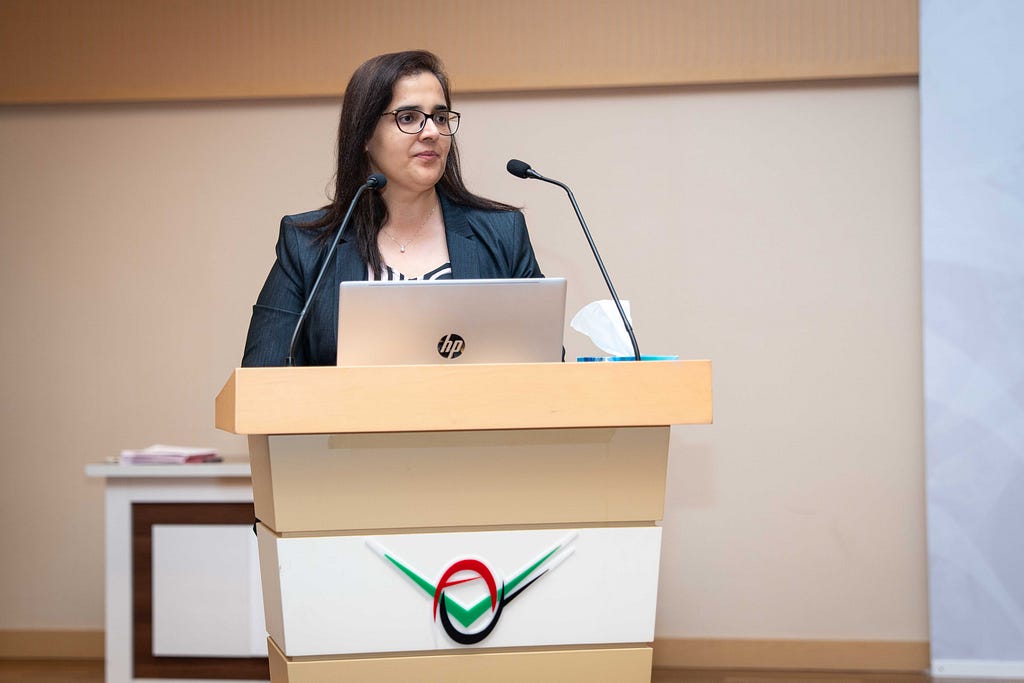
What are your “5 things I wish someone told me when I first started promoting sustainability and climate justice” and why? Please share a story or example for each.
1 . Change starts small, but consistency matters.
Over time, I have learnt that small steps create rippling effects. For example, the basic Carbon Educator Certificate eventually inspired other faculty members to adopt similar initiatives, leading to sustainability being embedded across our curricula.
2. Resilience is Key — Setbacks are part of the deal
I quickly learned that setbacks are part of promoting sustainability initiatives, as results are not immediate and sometimes even difficult to quantify.
3. Collaborative Growth is the Most powerful
I wish someone had told me early on that these causes cannot be championed alone. Building alliances of students, faculty, industry, and community creates momentum that one person cannot achieve.
4. All that is required for now is the First Step
Sometimes just one step is all that is needed to move towards cultural change and improve the acceptability of new ideas and initiatives. So please don’t be disheartened and keep going when things don’t turn out to be huge or as we expected.
5 . Pace Yourself
I still have not been able to learn and implement this approach. But I will eventually!
Is there a person in the world, or in the US with whom you would like to have a private breakfast or lunch with, and why? He or she might just see this, especially if we tag them. 🙂
Very interesting 😊
It took me a while to choose just two, as my list is quite long.
From the United Arab Emirates, I would love to have breakfast with Her Excellency Sheikha Bodour Al Qasimi, Chairperson of the Board of Trustees and President of the American University of Sharjah. Her leadership in education and sustainable development demonstrates how academia, culture, and social impact can go hand in hand. Her global engagement as a UNESCO Goodwill Ambassador for Education and Book Culture, coupled with her deep involvement in the local community, exemplifies resilience, vision, and a belief in the transformative power of education and culture -values I am deeply passionate about. Learning firsthand from her journey, especially how she navigated and overcame stereotypes of women in leadership, would be an incredible gift.
From the United States, I would love to meet Michelle Obama, who is my ultimate “Shero.” Her campaign -Let Girls Learn- ensuring girls worldwide have access to education, is very inspiring. This mission resonates deeply with me, particularly because I have long aspired to support girls’ education in my father’s native village but have struggled with limited resources and societal barriers. Learning from her how to effectively overcome such challenges and create lasting impact would be invaluable. Michelle Obama truly embodies what it means to lead with empathy, courage, and vision.
How can our readers continue to follow your work online?
You can easily follow my work online through the following platforms:
- LinkedIn: https://www.linkedin.com/in/sarwary/
- Professional Profile (Al Ain University): https://business.aau.ac.ae/en/business/academic-staff/staff/iffat.sabir
- Google Scholar (for my research publications): https://scholar.google.com/citations?user=2ohepA4AAAAJ&hl=en
I regularly share updates about my research, teaching initiatives, sustainability projects, and women empowerment activities across these platforms, so feel free to connect and stay in touch!
This was very meaningful, thank you so much. We wish you only continued success on your great work!
How Dr Iffat Sabir Chaudhry Of Al Ain University United Arab Emirates Is Helping to Promote… was originally published in Authority Magazine on Medium, where people are continuing the conversation by highlighting and responding to this story.