

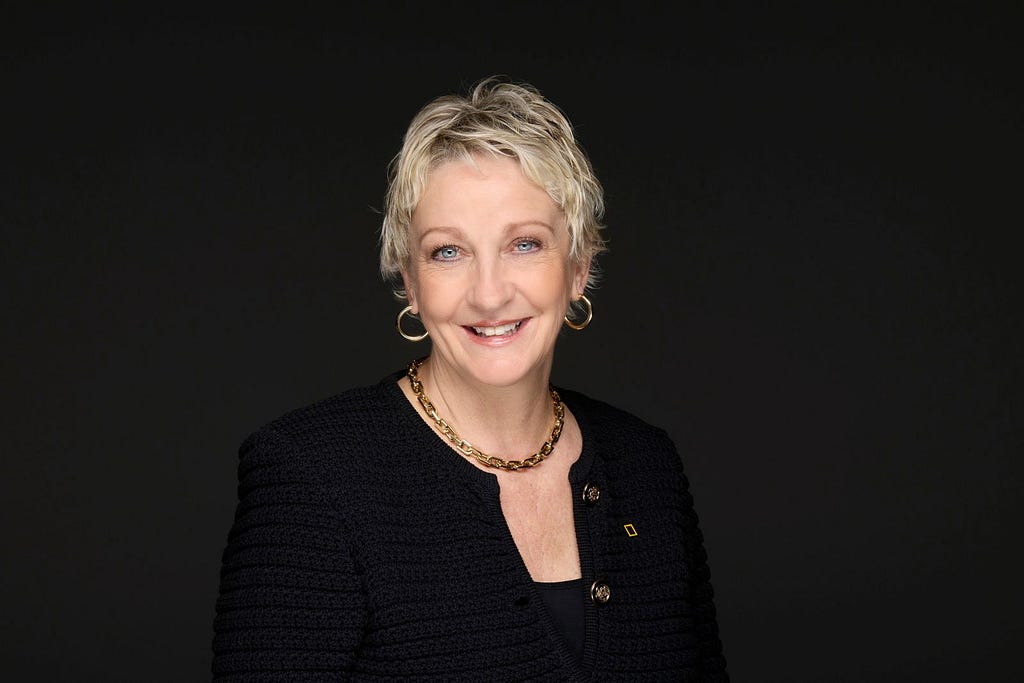
High Impact Philanthropy: Jill Tiefenthaler of National Geographic Society On How To Leave A Lasting Legacy With A Successful & Effective Nonprofit Organization
Leadership was about so much more than solving day-to-day problems: it was about strengthening systems and creating environments where others could thrive.
For someone who wants to set aside money to establish a Philanthropic Foundation or Fund, what does it take to make sure your resources are being impactful and truly effective? In this interview series, called “How To Create Philanthropy That Leaves a Lasting Legacy” we are visiting with founders and leaders of Philanthropic Foundations, Charitable Organizations, and Non-Profit Organizations, to talk about the steps they took to create sustainable success.
As a part of this series, I had the pleasure of interviewing Jill Tiefenthaler.
Jill Tiefenthaler is the Chief Executive Officer of the National Geographic Society, a global nonprofit that uses the power of science, exploration, education, and storytelling to illuminate and protect the wonder of our world. Jill leads a global community of National Geographic Explorers who are advancing significant, positive change for nature and people across all seven continents. An economist by training, she previously led and taught at premier liberal arts institutions, including Colgate University, Wake Forest University, and, most recently, as the President of Colorado College. Jill earned her master’s and PhD in economics from Duke University.
Thank you so much for joining us in this interview series! Thank you for making time to visit with us about a ‘top of mind’ topic. Our readers would like to get to know you a bit better. Can you please tell us about one or two life experiences that most shaped who you are today?
I grew up on a farm in Iowa. It was a great childhood with lots of love and support, but I was eager to see the world. Fewer than half of the people in my high school class went to college, and almost none went out of state. I convinced my parents to let me go all the way to Indiana to attend St. Mary’s College, a small liberal arts college for women. That choice changed my life. It was there that I was immersed in the life of the mind and fell in love with economics, which sparked a lifelong commitment to learning. I went on to Duke University to pursue my master’s and doctorate in economics, which also turned out to be an important choice because it’s where I met my husband, who was also pursuing a PhD in economics.
Another defining moment came early in my academic career at Colgate University. As a newly tenured professor of economics, I was unexpectedly asked by the Provost to be the Department Chair. I loved my teaching and research and seriously considered saying “no,” but the Provost had a wonderful gift for getting people to say “yes.” I’m glad I did because, in that role, I discovered I liked administration. I quickly learned that leadership was about so much more than solving day-to-day problems: it was about strengthening systems and creating environments where others could thrive. That decision set me on a lifelong journey of continually stepping outside my comfort zone — one that ultimately led me to become CEO of one of the world’s most iconic organizations: the National Geographic Society.
You are a successful leader. Which three character traits do you think were most instrumental to your success? We would love to hear a few stories or examples.
While there are many traits that contribute to success, the three that continually shape my leadership are decisiveness, authenticity, and optimism.
Decisiveness was something I learned early, shaped in large part by my father and the trust he placed in me. As a teenager, he once left me in charge of our family farm. While he was away, I had to make the difficult decision to let go of an employee. I still remember how heavy that responsibility felt. But it also taught me something I’ve carried ever since: leaders have to make many decisions, and sometimes they will be difficult or unpopular. But not making a decision is, in itself, a decision. Leadership requires the courage to act thoughtfully and, when necessary, firmly.
Authenticity is foundational to my leadership. In academia and now at the National Geographic Society, my leadership depends on being part of a community and building trust. This comes by showing up for others in ways that are genuine, consistent, and grounded in shared purpose. I believe in the servant leadership philosophy, which is not about standing above, but strengthening from within. Rather than being the cheerleader at the top of the pyramid, I see myself at the base — lifting others so they can go further. The more I lift others, the more our staff, Explorers, and broader community can grow and lead in their own right.
Finally, I am an eternal optimist. I believe decisions are beginnings, not endpoints. That’s why I often embrace a “pilot and pivot” approach. It’s having the courage to test new things, learn quickly, and adjust with intention. Throughout my career, I’ve been part of projects that didn’t go as planned. We all have! In those moments, optimism helps teams stay engaged and focused on what’s possible. Key to this mindset is also assuming good intent. When we trust that our community is acting in service of our mission, we create an environment that’s adaptive and resilient. For me, optimism is about recognizing that setbacks are part of the path to growth and forward momentum.
What’s the most interesting discovery you’ve made since you started leading your organization?
Our extraordinary National Geographic Explorers deserve all the credit for groundbreaking discoveries! They are the intrepid scientists, conservationists, educators, and storytellers we support who are uncovering species new to academic science, developing algorithms to understand how to communicate with sperm whales (yes, really), creating ways to mitigate satellite pollution in space, revealing new insights into the origins of humanity, and so much more. It’s incredible to see their work in action.
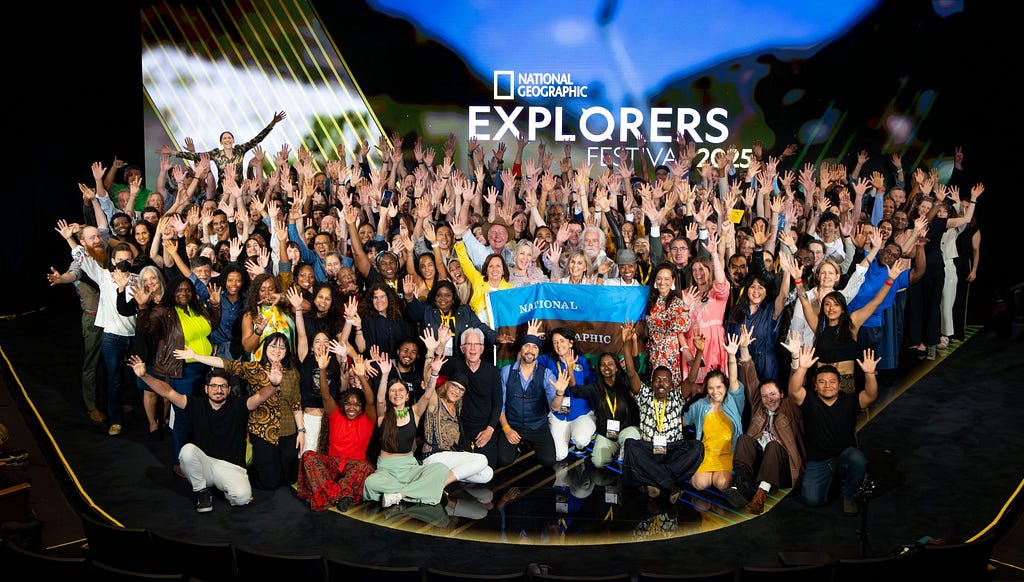
Having spent much of my career in higher education, I never thought I would engage with a more fascinating, talented group of people. So my big discovery is this National Geographic community of brilliant people who are all about action! Our Explorers are the heart and soul of our work, waking up every day with a passion to make the world a better place — and they’re constantly teaching me new things. On any given day, I could be learning about what it takes to protect pink river dolphins in the Amazon, advancing satellite tools that track deforestation in real time, or designing experiments that test bees’ intelligence and problem-solving skills. I often feel like I’m getting a whole new PhD in all things National Geographic and the world. To be surrounded by individuals with so much purpose, grit, and curiosity has been one of the greatest, most rewarding, and humbling experiences of my professional life.
Can you please tell our readers more about how you or your organization intends to make a significant social impact?
Our mission at the National Geographic Society is to use the power of science, exploration, education, and storytelling to illuminate and protect the wonder of our world. Audacious, isn’t it? How do we do it? First, by supporting Explorers who are leading scientific research and conservation programs with measurable and outsized impact. Science and exploration are our foundation, but of equal importance is our belief that when people understand our world and feel emotionally connected to it, they’ll take action to protect it. So, we also support storytellers and educators who inform, spark curiosity, and connect us across places, species, and time. At their best, storytelling and education lead to protection by informing and inspiring people to care and act on behalf of nature and people.
What makes you feel passionate about this cause more than any other?
As an economist, I’ve always believed in the power of data to make a case. But during my time as CEO of the National Geographic Society, I’ve come to appreciate something else: when it comes to bringing urgent issues into focus and inspiring action, it’s not data that resonates most deeply — it’s awe.
National Geographic Explorer and photographer David Doubilet explains this well. He said, “If you want to protect nature, you first have to love it. And if you want to love it, you first have to understand it. And if you want to understand it, you first have to see it.”
That ethos — seeing, understanding, and protecting — always inspires me. It has guided the Society since 1888, fueling thousands of Explorer-led expeditions and driving us to continually find new ways to amplify their discoveries. From early lectures and the magazine, to television specials, global channels, and education programs, we’ve constantly evolved and innovated in our storytelling. Today, we are one of the most followed brands on social media, and our partnership with Disney brings these stories into homes around the world.
The next evolution of that journey is the National Geographic Museum of Exploration. In the heart of Washington, D.C., the Museum will offer a new way to experience the work of our Explorers through immersive, hands-on, and technology-forward storytelling. More than a museum, it is an invitation into the curiosity that sparks discovery, the resolve that sustains it, and the shared responsibility we all hold in shaping the future. If you’re in the area, I hope you’ll join us when it opens on June 26, 2026.
Without naming names, could you share a story about an individual who benefitted from your initiatives?
Our experience supporting National Geographic Explorers makes it clear that supporting one talented person can change the world. For many Explorers, a Society grant is more than funding, it’s proof that someone believes in their idea and their work — no matter how novel or unconventional. And that first grant, amplified through training, leadership opportunities, storytelling platforms, and a global community of Explorers, often becomes the spark that sets their career in motion.
The core of our work is amplifying Explorers, so I’m going to bend the rules and name a few names!
Explorer and science photographer Anand Varma is a brilliant example. Back in 2010, we first funded a photography project of his in Patagonia, and we continued to support his work, which led to breakthrough, high-speed imaging of hummingbirds and launched a decade of iconic storytelling. This journey culminated in the creation of WonderLab, his Berkeley studio dedicated to revealing the invisible natural world. Today, Anand has come full circle, mentoring a new generation of Explorers.
Another powerful example is Explorer in Residence Enric Sala, who leads Pristine Seas. Fifteen years ago, Enric left a career as a marine biologist in academia because, as he has said, he felt he was “writing the obituary of the ocean.” With the support of a Society grant, he shifted his focus from studying oceanic decline to actively helping protect what remained of the world’s last wild places. Today, Enric leads the Society’s biggest program, Pristine Seas, a multidisciplinary team of scientists, filmmakers, and policy experts who work alongside local leaders and communities to establish Marine Protected Areas (MPAs). To date, they have helped create 30 MPAs, safeguarding 6.9 million square kilometers of ocean, more than twice the size of India.
And Krithi Karanth, a scientist and conservationist, focuses on promoting peaceful coexistence between people and wildlife. She received the Society’s 10,000th grant in 2011, and today leads the Centre for Wildlife Studies, which includes a Society-funded education program called Wild Shaale, created in collaboration with another Explorer, Gabby Salazar. They’ve developed an innovative, hands-on curriculum that helps young people in Western Ghats, India — a biodiversity hotspot — understand local wildlife and learn how to live alongside it. Today, Wild Shaale’s curriculum has reached more than 1,600 schools and 72,000 children.
We all want to help and to live a life of purpose. What are three actions anyone could take to help address the root cause of the problem you’re trying to solve?
One of my favorite quotes comes from one of National Geographic’s legends: Explorer and oceanographer Sylvia Earle. She said, “Hold up a mirror and ask yourself what you are capable of doing, and what you really care about. Then take the initiative — don’t wait for someone else to ask you to act.”
At the Society, we believe that achieving our mission hinges on all of us working together. To guide us, we embrace an Explorer Mindset: the approaches and skills that drive National Geographic Explorers to pursue answers to the world’s big questions, think critically and creatively, and identify lasting solutions to today’s global challenges. Here are three traits I often return to:
- Stay curious! Lifelong learning is invaluable, so seek out perspectives that are different from your own. Approach familiar challenges with fresh eyes and the transformative power of a new vantage point.
- Innovate. Be open to testing new approaches, rethinking long-held assumptions, and trying ideas that haven’t been attempted. And you don’t need to go far. Start right where you are, in your own community, and see the impact you can have.
- Take time for mentorship. Recognize that discovery matters most when it is shared. Actively lift others by passing along knowledge, tools, and opportunities so the next generation can go even further.
Based on your experience, what are the “5 Things You Need To Create A Successful & Effective Nonprofit That Leaves A Lasting Legacy?”
When I was beginning my leadership journey, I asked a board member I admired what a leader must do to ensure organizational success. He didn’t hesitate: “Create the vision, communicate the vision, find the money to implement the vision.”
I asked: “Is that it?” He smiled and said it was plenty! I’ve followed those words of wisdom ever since and, along the way, added a fourth key to success.
1. Set the vision
Start with a deep understanding of your organization’s mission and translate it into an inspiring future state. Then create a clear, actionable strategy to get you there. One of the tools I’ve used throughout my career is starting with a listening tour, meeting with hundreds of people from the community.
2. Communicate the vision
Communicate the vision, both internally and externally. Within your organization, clearly draw the connection between your staff’s day-to-day work and the organization’s larger vision and goals. When people understand why their work matters, they lean in. Similarly, when your other key constituencies — donors, supporters, and partners — have a clear picture of your vision and the strategy that will bring it to life, it draws them in, building trust and belief in the future of your organization.
3. Find the resources to realize the vision
Be honest about what it will take to bring it to life, and go out and get it. Be willing to rethink priorities and reallocate resources to match what matters most.
4. Build the team to deliver the vision
A strategy is only as strong as the people executing it. This means getting the right talent in the right seats, but it also means investing in the people you already have through development, mobility, and a culture of collaboration.
How has the pandemic changed your definition of success?
Success is often defined by what’s checked off the list: milestones met, projects delivered, tasks completed. When the world shifted, I took the opportunity to reflect, recalibrate, and importantly, recenter my perspective. The work we do is inextricably linked to the people around us. As leaders, we have a responsibility to create and cultivate a work culture that sees people as humans with complex lives, who are doing their best amid countless, and often unseen, challenges. We should always remember that people cannot grow and flourish without grace, which the pandemic absolutely required.
Leadership success is not just about what we deliver; it’s about how we show up for one another while delivering it. It’s about the quality of community you build along the way. That, to me, is one of the most lasting lessons of the pandemic.
How do you get inspired after an inevitable setback?
Setbacks happen, but I take continual inspiration from seeing how our Explorers respond to them.
They face challenges constantly: camera traps failing, supplies getting lost, animals interrupting, plans going awry — often in some of the most remote places on Earth. And yet, they don’t treat setbacks as endpoints, but as part of discovery itself.
I’ve always believed in the importance of “piloting and pivoting” if things go wrong, but our Explorers continually show that advancements and discoveries aren’t possible without setbacks and pivots.
When I feel discouraged, I return to that mindset and to that community. Their resilience, curiosity, and deep sense of purpose remind me that progress is rarely linear. And their optimism in the face of uncertainty often becomes my own fuel to keep going.
We are very blessed that very prominent leaders read this column. Is there a person in the world who you would like to talk to, to share the idea behind your non-profit? He, she, or they might just see this, especially if we tag them. 🙂
After giving this some thought, the one thing I want people everywhere — not just a single individual — to take away is that the work of the National Geographic Society is so much bigger and broader than the media.
National Geographic has a very rich legacy of media. We’re deeply proud of the magazine, the channels, the books, and the incredible community we’ve built across our social platforms, all of which have helped us become one of the most trusted brands in the world. But many people don’t realize that our mission work is foundational to everything we do. From our very first day, the National Geographic Society has focused on advancing knowledge and exploration for the good of people and nature.
Today, we are a global nonprofit organization supporting a community of extraordinary Explorers who are working every day to better understand, protect, and sustain our world. And when people see their work and really understand the wonder of our world, it changes how they think, care, and act. That’s the opportunity in front of us: to reach more people, to spark more curiosity, and to help more individuals see themselves as part of this shared story.
You’re doing important work. How can our readers follow your progress online?
You can keep up with the National Geographic Society in a number of ways:
- Check out our website at NatGeo.org.
- Visit the National Geographic Museum of Exploration, opening in Washington, D.C., on June 26.
- Follow the Society on Instagram, Facebook, and LinkedIn.
- Follow the National Geographic Museum of Exploration on Instagram, Facebook, and Threads.
- You can also follow me on LinkedIn.
- Consider donating to the Society. 100% of all donations directly support our Explorer-led programs and mission work.
Thank you for a meaningful conversation. We wish you continued success with your mission.
High Impact Philanthropy: Jill Tiefenthaler of National Geographic Society On How To Leave A… was originally published in Authority Magazine on Medium, where people are continuing the conversation by highlighting and responding to this story.