

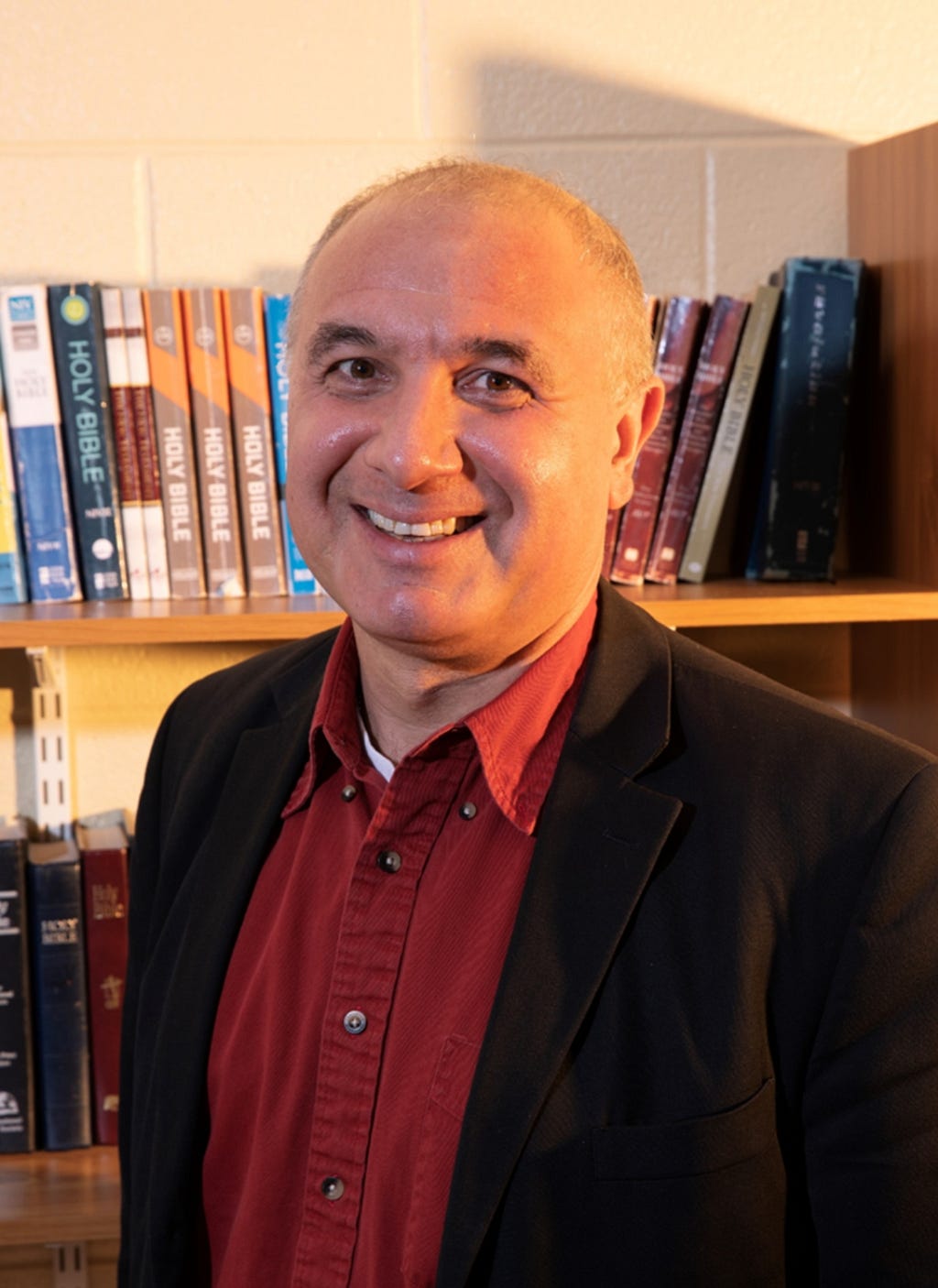

Heroes Of The Homeless Crisis: How Rich Schaus Is Helping To Support Some Of The Most Vulnerable People In Our Communities
It will be difficult
It won’t work like you think
Who your enemies are will surprise you
It is ok to take time off and when you are on vacation you don’t have to stop and talk to every homeless person.
Take care of you
As a part of our series about “Heroes Of The Homeless Crisis” I had the pleasure of interviewing Rich Schaus.
Rich Schaus was born and raised just east of St. Louis Missouri. He has a BA in Missions and Bible from Central Bible College. A BA in Rescue Missions from City Vision College and a Master of Leadership degree from Northeastern State University. He has been married to Cara Schaus for over 27 years. He has three children and four grandchildren.
Rich is a former United States Army Field Artillery Captain, a distinguished Toastmaster, and the author of Hero Quest. He has just over 23 years of experience working with those in poverty.
The key Bible verse that shapes his thinking is Micah 6:8
Micah 6:8 He has shown you oh man what is good. To act justly, to love mercy and to walk humbly with your God.
Thank you so much for joining us! Our readers would love to ‘get to know you’ a bit better. Can you tell us a bit about your personal background, and how you grew up?
I was raised in Granite City, Illinois, the proud son of a crane operator, himself the grandson of a German immigrant, who forged a life of dignity and grit for our family amid the roaring steel mills of our town. My father’s hands bore the marks of honest labor, and his quiet strength laid the foundation for everything I would one day become.
As a boy, I attended St. Elizabeth’s Catholic School, where I briefly imagined a future in the priesthood. That dream faded by second grade, but the seeds of faith were planted deep. I learned the stories of Scripture and, more importantly, the enduring truth that character and virtue matter.
My teenage years, however, took a darker turn. I spiraled into a season of rebellion; selfish, angry, addicted, and hostile to anything that even hinted of Christianity. Yet even in my defiance, God never let go. He loved me when I couldn’t stand the sight of Him. And in time, I surrendered. I laid down my rebellion and gave Him everything.
Knowing I needed structure, I enlisted in the Army. Knowing I needed spiritual formation, I enrolled in Bible college. Those years shaped me deeply. But when my military service ended, I found myself struggling to provide for my family. In what I thought was a misstep, I accidentally applied for a job at a women’s homeless shelter.
It turned out to be divine providence.
There, I discovered something profound: God loves the poor. And if He loves them, then I must too. That realization changed the trajectory of my life. For over two decades now, I’ve devoted myself to walking alongside the marginalized, helping them not just survive, but flourish.
Is there a particular story or incident that inspired you to get involved in your work helping people who are homeless?
As part of the hiring process at the women’s shelter where I got my start, I was asked to shadow an evening shift. That night, I sat down for dinner with a homeless family; a mother battling addiction and her young son who had never known his father. The room was filled with women carrying deep wounds, many inflicted by the very people who were supposed to protect them.
In that moment, something shifted in me.
I had entered the process thinking I was smart enough to fix people. But as I listened, observed, and simply shared a meal, I realized I wasn’t there to fix anyone. I was there to learn. And learn I did. I discovered that these women, and later the men I would serve, had more to teach me about resilience, grace, and the human spirit than I could ever offer them.
God used that dining room as a classroom. He began sanding down my rough edges, healing old wounds I didn’t even know I carried. I came to see that I wasn’t all that different from the people I was serving. We were all broken in our own ways, all in need of love, not just solutions.
And that’s when I understood something that would shape the rest of my ministry: Programs don’t heal people. Love does.
Homelessness has been a problem for a long time in the United States. But it seems that it has gotten a lot worse over the past five years, particularly in the large cities, such as Los Angeles, New York, Seattle, and San Francisco. Can you explain to our readers what brought us to this place? Where did this crisis come from?
I realize my perspective may not be popular, but it comes from years on the front lines.
We’ve built entire systems around what we call “evidence-based programs” like Housing First. And yes, the data shows these programs succeed at getting people into housing. But what the data doesn’t show is just as important: years later, we’re still paying their rent. There’s no real incentive for growth, for healing, for flourishing. If someone else is covering your bills indefinitely, it’s easy to say and do whatever it takes to keep that going. And many do; because the system rewards it.
The truth is, some agencies quietly understand this. But because their funding is tied to how many people are enrolled, attending meetings, or filling beds, they have a vested interest in keeping people dependent. They don’t walk people toward freedom; they keep them sick.
Big Pharma plays a role too. The same industry that helped fuel the opioid crisis now profits from its so-called solution: Suboxone. Agencies are told it’s the cure, and they’re paid to keep clients on it indefinitely. But any program that becomes a life sentence should raise serious red flags.
Worse still, some agencies actively resist any organization that prioritizes the actual well-being of the client. I’ve seen it firsthand; referrals withheld unless there’s a financial kickback. In some places, profit matters more than people getting well.
Even our jail and prison systems aren’t immune. Some local jails release inmates just after midnight; not for mercy, but to ensure they get paid for a full day. One recovery program gets paid for the entire month if a client stays just ten days. And wouldn’t you know it; many clients mysteriously get expelled on day ten. That allows the agency to cycle through three clients per bed each month. Triple the profit.
This isn’t just a broken system. It’s a profitable one. And that’s the problem.
We’ve created what I call the Poverty Industrial Complex, a network of well-funded institutions that benefit more from people staying stuck than from people getting free.
But I believe there’s a better way. One rooted not in programs, but in love. Not in dependency, but in dignity. Not in profit, but in people. One that is focused on outcomes not outputs.
A question that many people who are not familiar with the intricacies of this problem ask is, “Why don’t homeless people just move to a city that has cheaper housing?” How do you answer this question?
Where would that be? Affordable housing is scarce everywhere.
But the more common question I hear is, “Why don’t they just get a job?” And the truth is; most of the people I work with can get a job. That’s not the issue.
The deeper challenge is that many haven’t yet developed the virtues needed to keep a job long enough to rise above minimum wage. Things like reliability, resilience, humility, and self-control; these aren’t just workplace skills, they’re life skills. And for those who’ve grown up in instability, trauma, or addiction, those virtues aren’t always modeled or taught.
Helping someone flourish isn’t just about employment, it’s about transformation. And that takes time, love, and a community committed to walking the journey with them.
If someone passes a homeless person on the street, what is the best way to help them?
My answer is simple, start with a conversation. Ask them what they like to eat, then buy them that food or drink. But don’t stop there. Sit down with them. Share a moment. Listen to their story. Get to know them as a person, not a problem.
I understand that time is limited. We all have schedules, responsibilities, and places to be. But even if you can’t stop, look them in the eye. Let them see kindness and dignity in your gaze. A little love in your eyes can go a long way.
Above all, don’t just give them stuff. What they need most isn’t more things; it’s connection, healing, and hope. And as a Christian, I believe what they truly need is Jesus.
What is the best way to respond if a homeless person asks for money for rent or gas?
See the above answer for most people. They may ask for a meal; but I offer them a place to stay, three meals a day, guidance counseling, and above all, friendship. Not just a handout, but a hand up. A path forward.
Some people say that’s not compassionate. That it’s too much, too soon, they are not ready, or too hard.
But I say this: my offer beats their offer every day of the week and twice on Tuesday. Because what I’m offering isn’t just temporary relief; it’s the beginning of restoration.
Can you describe to our readers how your work is making an impact battling this crisis?
I’m beating the drum for common sense.
How are handouts ever going to get people off the streets? What people experiencing homelessness truly need isn’t more stuff; they need relationships, encouragement, and a path to healing.
Too often, well-meaning professionals subtly send the message that the people I serve have no value, that they have nothing to offer our community. I passionately disagree.
They have so much to give, we just need to help them sift through the muck to uncover the truth.
It reminds me of the story of the Golden Buddha. In a village in Thailand, there once stood a massive statue of the Buddha made entirely of gold. When invaders approached, the villagers, unable to move the statue, covered it with mud and clay to protect it. The enemy passed by, seeing only a worthless, ugly figure.
Years later, the villagers returned; but the true nature of the statue had been forgotten. One day, as they tried to move it, a crack revealed the gleam of gold beneath the surface. What had been hidden for a generation was rediscovered: a treasure had been there all along.
That’s how I see the people we serve. They are golden underneath the grime of trauma, addiction, and poverty. Our job is not to pity them or pacify them; it’s to help them peel back the layers and rediscover their worth.
How has the COVID-19 pandemic affected the homeless crisis, and the homeless community? Also how has it affected your ability to help people?
We lost a golden opportunity to help people get truly healthy.
The pandemic should have been a wake-up call, a moment to encourage people to give up unhealthy habits, to reflect on the brevity of life, and to start living with purpose and intention.
Instead, we handed out temporary relief and, in many cases, encouraged passivity. We defended destructive behaviors and failed to speak hard truths: that certain lifestyles increase the risk of illness and dependency, not just on the healthcare system, but on society as a whole.
A crisis reveals the soul of a society. And in that moment, our society chose comfort over character, the moment over the mission. What a loss.
Can you share something about your work that makes you most proud? Is there a particular story or incident that you found most uplifting?
This is heartbreaking work. I love these men and women deeply. And it’s devastating to watch them be lied to and led down paths that destroy them, often with the encouragement of Big Food, Big Pharma, and the Poverty Industrial Complex. But what I’m most proud of is this: I haven’t stopped loving them. For over two decades, I’ve refused to give up. I keep showing up. I keep believing in them. Because no matter how dark the lies, truth and love still have the power to heal.
Without sharing real names, can you share a story with our readers about a particular individual who was impacted or helped by your work?
I once received a call from a mother asking if I could pick up her son from jail. (Quick tip: if you ever do this, ask for a photo. I got lucky that day, but I could’ve easily picked up someone else, and not everyone coming out of jail is a safe person.)
She shared a bit of his story. He had been a successful electrician, doing well in life. On the very day he was promoted to an incredible new job, he came home to find that his father had taken his own life. He had been rehearsing how he would share the good news with his dad and in a moment, that joy turned to devastation. He spiraled.
Addiction followed. Then arrests. Prison time. Stealing. Living in abandoned houses. His life unraveled.
Still, I agreed to pick him up and bring him to GRMOK. He only stayed at the shelter for a couple of weeks, but during that time, he completed our full Forging Past the Felony course even while living in an apartment. We stayed in touch off and on over the years.
Eventually, he inherited his mother’s house after she passed. He was reinstated with the electricians’ union. And last year, he called me with incredible news: after years of sobriety and hard work, he was offered the very job he lost all those years ago.
That’s redemption. That’s why we do what we do.
Can you share three things that the community and society can do to help you address the root of this crisis? Can you give some examples?
- See and treat these men and women as adults. Do not try to parent them.
- Walk with them.
- Listen to their story.
If you had the power to influence legislation, which three laws would you like to see introduced that might help you in your work?
- Incentivize Long-Term Impact
Many agencies, like jails, are funded based on “heads in beds.” What if we shifted that model? Instead of rewarding occupancy, we could offer a small base rate and then increase funding based on outcomes, for example, if individuals released from custody avoid negative interactions with law enforcement for six months. This would encourage facilities to invest in real rehabilitation, offering meaningful training, education, and support that prepares people for life beyond incarceration. The same for all agencies that report they want to help the poor and homeless. - End the Practice of Relocating Homeless Individuals Without Support
It should be illegal to send a homeless person to another community without verifying that a real, stable home awaits them. Simply relocating someone without a plan is not compassion, it’s displacement. We must ensure that every move is made with dignity, accountability, and a clear path to stability. - Require Responsibility for Encampment Cleanup
Agencies and individuals who distribute handouts to homeless encampments should be required to contribute to cleanup efforts. Compassion must be paired with responsibility. If we’re going to serve people in these spaces, we must also care for the environment and community around them.
I know that this is not easy work. What keeps you going?
It is a calling. I continue to train myself to be antifragile.
Do you have hope that one day this great social challenge can be solved completely?
Yes but only if we choose people over comfort.

What are your “5 things I wish someone told me when I first started” and why.
- It will be difficult
- It won’t work like you think
- Who your enemies are will surprise you
- It is ok to take time off and when you are on vacation you don’t have to stop and talk to every homeless person.
- Take care of you
You are a person of enormous influence. If you could inspire a movement that would bring the most amount of good to the most amount of people, what would that be? You never know what your idea can trigger. 🙂
I would love to lead a movement to wipe out the poverty industrial complex.
Can you please give us your favorite “Life Lesson Quote”? Can you share how that was relevant to you in your life?
“It is not the critic who counts: not the man who points out how the strong man stumbles or where the doer of deeds could have done better. The credit belongs to the man who is actually in the arena, whose face is marred by dust and sweat and blood, who strives valiantly, who errs and comes up short again and again, because there is no effort without error or shortcoming, but who knows the great enthusiasms, the great devotions, who spends himself in a worthy cause; who, at the best, knows, in the end, the triumph of high achievement, and who, at the worst, if he fails, at least he fails while daring greatly, so that his place shall never be with those cold and timid souls who knew neither victory nor defeat.”
— Theodore Roosevelt
Is there a person in the world, or in the US whom you would love to have a private breakfast or lunch with, and why? He or she might just see this, especially if we tag them. 🙂
George W Bush and/or JD Vance
How can our readers follow you online?
https://grmok1931.substack.com/p/made-for-more-just-send-them-away
Linked In https://www.linkedin.com/in/rich-schaus-57316251/
This was very meaningful, thank you so much!
Heroes Of The Homeless Crisis: How Rich Schaus Is Helping To Support Some Of The Most Vulnerable… was originally published in Authority Magazine on Medium, where people are continuing the conversation by highlighting and responding to this story.