

Heroes Of The Homeless Crisis: How Keith McHenry Of Food Not Bombs Is Helping To Support Some Of The Most Vulnerable People In Our Communities
The desecration of those sacred lands compelled me at 16 to dedicate my life to building a world that respected the dignity of the land and its people.
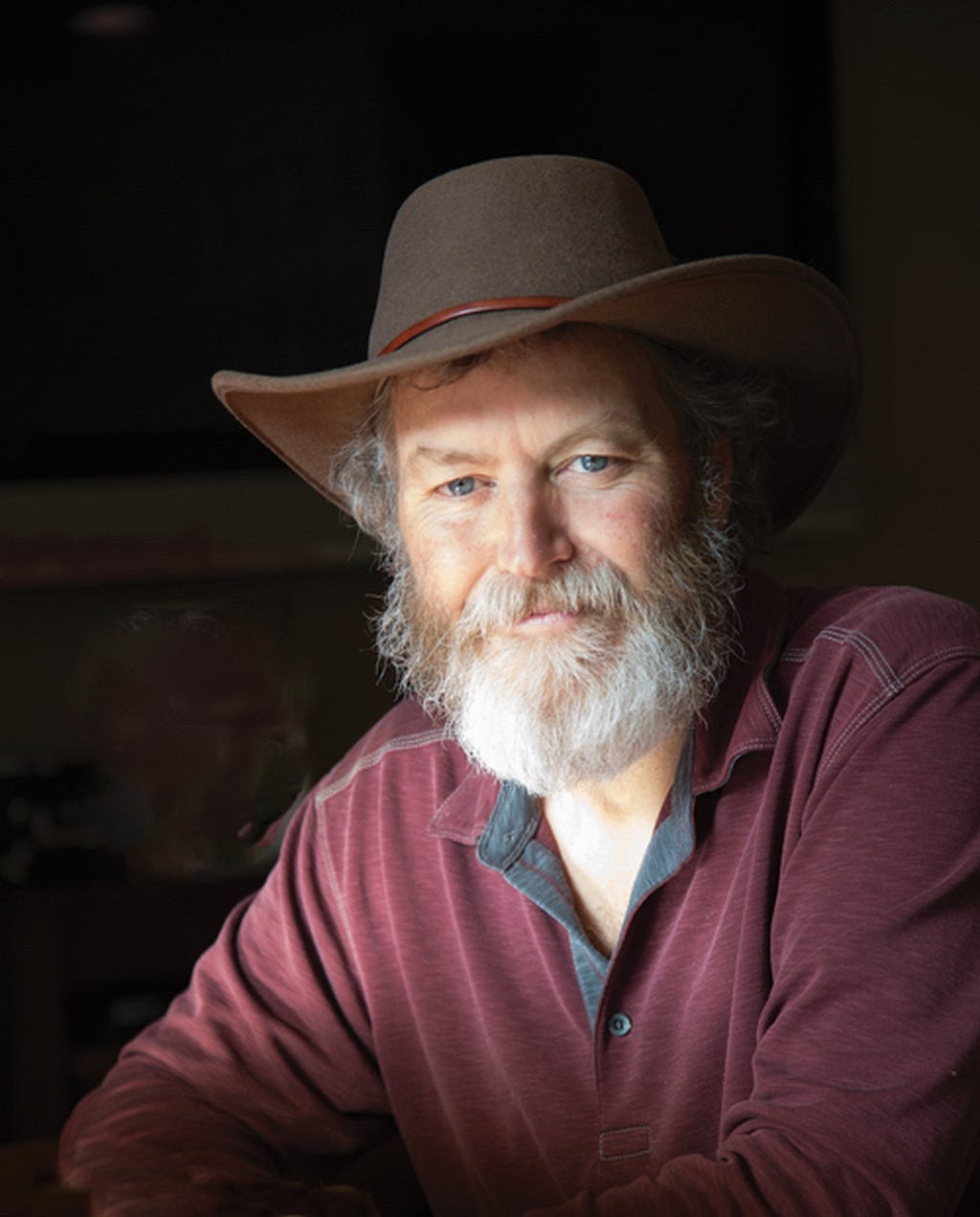
As a part of our series about “Heroes Of The Homeless Crisis” I had the pleasure of interviewing Keith McHenry.
Artist and author Keith McHenry help start Food Not Bombs in 1980 with seven of his friends. He has recovered, cooked and shared food with the hungry via Food Not Bombs for over 45 years. Keith wrote and illustrated “Hungry for Peace: How you can help end poverty and war with Food Not Bombs,” “The Anarchist Cookbook,” and most recently his memoir “Soup Street.” He has traveled all over the world speaking at colleges, books stores and community centers andwhen traveling he helps share meals with local volunteers in one of the over 1,000 Food Not Bombs groups in 70 countries.
Thank you so much for joining us in this interview series! Our readers would love to ‘get to know you’ a bit better. Can you tell us a bit about your personal background, and how you grew up?
I was blessed to be the son of a naturalist and spent my childhood living in some of America’s most iconic National Parks like Yosemite, the Grand Canyon, Big Bend, and Shenandoah. When I wasn’t attending school, I was running free in the wilderness playing with my friends.
The first person in my family who set foot in the Americas was James McHenry, who arrived in Philadelphia in 1773. He was recruited by Dr Benjimin Rush of the Sons of Liberty to set up a field hospital for the Battle of Bunker Hill. He met George Washington when he came to visit the injured and they became friends. Dr James McHenry was on Washington’s staff during the American revolution. He participated in the Continental Congress, signed the US Constitution for Maryland, and was Secretary of War under Washington and Adams.
I was fortunate to have visited the Hopi land before it was scared by power lines, the flooding of Lake Powell, and the strip mining of Black Mountain, witnessing the Snake Dances and traditions that survived thousands of years. The desecration of those sacred lands compelled me at 16 to dedicate my life to building a world that respected the dignity of the land and its people.
My mother’s father was in military intelligence and taught me about the US political system and the covert manipulation that dominates much of society. I watched him argue over the phone with General Curtis LeMay and Secretary of Defense Robert McNamara that the US should drop a nuclear bomb on Hanoi to send a message to the Communists, that there wasn’t anything America wouldn’t do to defend corporate power. He directed the most deadly bombing campaign in history, Operation Meeting House, firebombing Tokyo. He passed when I was a freshman in High School and his lessons shaped my perspective and influenced me to start the global movement Food Not Bombs.
Is there a particular story or incident that inspired you to get involved in your work helping people who are homeless?
I studied painting and sculpture at Boston University and attended classes with Howard Zinn, the author of a People’s History of the United States. His lectures inspired me to join the anti-nuclear movement. The arrest of my friend Brian Feigenbaum during the May 24, 1980 Occupation Attempt of the Seabrook Nuclear Power Station caused his friends to scramble to raise his bail. One better-off friend put up the entire amount and on our return to Boston we agreed to hold bake sales to raise money to pay him back. It was not an effective way to raise funds,, so we started a moving company Smooth Move. One family was tossing out a poster that said “It will be a great day when our schools get all the money they need and the Air Force has to hold a bake sale to buy a bomber”.
This sparked the idea to buy military uniforms at the Army Navy surplus store, mount the poster on cardboard to lean against our card table of baked goods, and invite pedestrians at Harvard Square to help us “buy our bomber.” While we didn’t raise much more money, we discovered that the humor worked to have people speak with us about opposing nuclear power, Reagan’s expansion of the nuclear arms race with the Soviet Union, and the US wars in Central America.
I had an early morning job trimming and setting out organic produce at Bread and Circus Natural Grocery in Cambridge. Each morning, before I headed off to school, I would haul several cases worth of wilted and bruised produce out to the dumpster. One morning someone asked if he could have some of the discarded food. He smiled ear to ear at his good fortune when I told him he could take as much as he wished. He could only use a grocery bag of my trash, but that opened my eyes to the fact I could share it with people in need.
Instead of trashing my mornings haul, I started taking it to public housing behind MIT on Portland Avenue. As I was unloading my crates, one of the mothers helping out noted that that new seven story building across the street was a nuclear weapons laboratory. With families seeking discarded produce in the shadow of the nuclear warfare industry made it obvious that our projects name would be “Food Not Bombs,” a message if repeated could inspire people to push for this change in priority.
We found that the bake sale street theater worked well, so when we launched a campaign to pressure the Bank of Boston to divest from the nuclear industry we planned to prepare a huge pot of soup and asked our friends to dress up as Depression era hobos to form a soup line outside the bank’s stock holders meeting. We failed to recruit enough to make a line, so I went to the Pine Street Inn shelter around midnight and invited the 20 or so men to join our protest.
When we pulled up outside the Federal Reserve Building the men were already waiting. The image of a soup line shocked pedestrians. One businessman commented that he was stunned that Reagan had only been President for one month and there were already soup kitchens on America’s streets. The men from the Pine Street Inn shared that they had no place to eat and asked if we would start providing meals every day.
That evening, while washing up from the meal, we decided that we would give two weeks notice at our jobs to spend our days providing food to the community.
My manager at Bread and Circus agreed to let me continue recovering the discarded produce. We would recover bake goods and produce in the mornings, distribute most of it to people at public housing projects around the Boston area, closing each day sharing hot meals at Harvard Square with music and theater.
Homelessness has been a problem for a long time in the United States. But it seems that it has gotten a lot worse over the past five years, particularly in the large cities, such as Los Angeles, New York, Seattle, and San Francisco. Can you explain to our readers what brought us to this place? Where did this crisis come from?
At the core of this increase is that the rents are increasing while wages are not keeping pace. The largest transfer of wealth in US history started with the closing of small businesses in response to Covid restrictions, while big box stores remained open and relief money flooded into the already wealthy. Many investment firms and hedge funds needed to park their money in solid assets buying rental properties. This new class of landlords often raised rents at rates too fast for tenants to meet, forcing them to seek more affordable housing that often forces families to move to motels, live with relatives or move into vehicles. Their money can run out before they secure a new place to rent. In addition, many Americans lost their jobs during the lockdown when their employers were forced to close their businesses.
Many of those who are homeless aged out of foster care into a stressed economy. With the cost of housing high and wages low, it can be difficult for someone who suddenly finds themselves homeless to secure an apartment. They have no rental history or FICA score. If they worked at all as a child their employment history is short, adding to the difficulty to have a stable income. Living outside can often introduce you to the drug market and people willing to help you get started in business by fronting you with merchandise. — aterrible trap that can make it difficult to get off the streets.
On another front, the failure of the healthcare system can cause many to end up on the streets. During the past five years, vulture capitalist have been buying up hospitals and medical practices, demanding higher returns on their investments, forcing people to spend all their savings. Many people I meet tell of being too ill to return to work, so along with medical bills they also don’t have an income. This can contribute to some people seeking pain medicine on the streets once they can no longer get their prescription filled. Access to effective addiction treatment is often out of reach. People suffering mental health crisis also find it difficult to get help and often the only aid is psych-meds. But without housing, maintaining the prescribed dose can be difficult. Many people don’t do well on those strong drugs and discard them. Others lose them to the garbage trucks along with their IDs and important documents during encampment sweeps.
A question that many people who are not familiar with the intricacies of this problem ask is, “Why don’t homeless people just move to a city that has cheaper housing?” How do you answer this question?
Your best hope of becoming housed is to rely on your community of friends and family. Moving to a city where you don’t know anyone, even if the rents are a little less expensive is unlikely to result in you finding housing. People often tell me they traveled to another city believing the rents would be lower, only to discover this was not the case. The cost of relocating is often beyond a homeless person’s ability to afford, even if the city provides you with a free bus ticket out of town.
If someone passes a homeless person on the street, what is the best way to help them?
First ask them how they are doing. Offer them a few dollars. You might see if they would like you to buy them a sandwich or maybe they need clean socks or a blanket. If you are in a hurry, a kind word can mean the world to people often treated with disrespect from other pedestrians.
What is the best way to respond if a homeless person asks for money for rent or gas?
If you can give them a little money, please help. Sometimes I just don’t have any small bills, so I let them know I can’t help them at the moment but that if I see them in the future, I will be happy to help. The most important thing is to wish them well and show that you care. Don’t worry about what they will spend your donation on and don’t fall for the myth that homeless people are getting rich from panhandling.
Can you describe to our readers how your work is making an impact battling this crisis?
Food Not Bombs is making an impact in many ways. Most directly, we provide a dignified environment and a healthy meal to tens of thousands of people in over 1000 cities in over 70 countries. Many of our volunteers are homeless and their participation helping others and the relationships they cultivate can often lead to employment or housing.
Our work also brings housed and unhoused people together. This is encouraging for the homeless to be seen as an equal.
Our persistence and visibility is also building recognition that we need to change our country’s priorities. A growing number of people have been introduced to our message of food and not bombs. This is really important these days as America spends billions on wars while so many are struggling to survive. New Food Not Bombs groups are starting every month and the new volunteers get direct experience with the crisis and our principles. City attempts to stop our meals have provided us an opportunity to educate the community about the struggle of those living outside and the misdirected priorities of the government. We are about solidarity and not charity. There are over 1,000 groups in 70 countries all directly involved in their homeless communities’ wellbeing.
How has the COVID-19 pandemic affected the homeless crisis, and the homeless community? Also how has it affected your ability to help people?
Our Food Not Bombs groups responded in a variety of ways during the lockdown. Since many of the indoor meal programs had to shut down or reduced their help to a bag lunch, we had to take up the slack. Some groups traveled around their town handing out hot meals in to-go containers. Others maintained their regular service. But a number of groups stopped all together. My chapter shared hot meals, had a warm water hand washing station, and gave out survival gear every day for three years while the other programs were closed.
I only met two homeless people who contracted covid and both of them had stayed in a shelter. It seemed that living outside may have reduced their chances of becoming ill. At first, the city of Santa Cruz set up chain-link fences in parking lots with a portable toilet and 12 pup tents that they called a triage cage. The mayor asked me to use the trust the homeless have in me to lure them into these inhumane camps. I suggested the city use the millions of dollars the state was promising to rent rooms at the empty hotels and that I would not use my good name to endorse their cages. They failed to get people to cooperate with their plan. When they refused, I rented rooms, I visited the hotels and booked 180 beds. When we distributed our hotel vouchers, the crowd was desperate and ignored the six foot rule authorities had initiated; the Chief of Police charged me with violating the covid regulations. I ran out of money after four days, but it seems to have helped embarrass the city into renting several hotels.
On one of the first days of the lockdown, one of our volunteers happened upon two men who were discussing breaking out a restaurant window so they could get something to eat, but she pointed out that we had a free meal at the end of the street. They thanked her and joined us for lunch. We had concerts during every holiday and provided the annual community-wide Thanksgiving and Christmas dinners. It was an amazing time.
Can you share something about your work that makes you most proud? Is there a particular story or incident that you found most uplifting?
It was a cold rainy evening during the first week of the Covid crisis and I was handing out free hotel vouchers. I handed out the last one, yet there was still a small line hoping to be the fortunate ones. I let them know I had run out of rooms. A young frail woman, Linda, bundled in a soaked sagging sweater could see I was disappointed at not being able to help. “Keith don’t worry you did your best, we love you,” she said and gave me a big hug. While it was heartbreaking, I also realized we are family, and that I have the respect of our homeless neighbors as an equal.
Without sharing real names, can you share a story with our readers about a particular individual who was impacted or helped by your work?
During the crack crisis in the 90’s, I would do what I could to help people get into rehab. In San Francisco you were required to call the center every week for three months to show that you were serious. You can imagine how impossible that is for someone living on the streets living in the chaos of crack. Cell phones were not a thing but there was a payphone near our meal at the entrance to Golden Gate Park. Every Monday, when Little Bit came to eat, I would remind her that she needed to make her weekly call. We would walk over to the payphone together. I popped in the quarter, dialed the number, and handed her the receiver. Week after week we made the pilgrimage to the payphone and finally she had made the distance. She was beaming when she climbed into the passenger side of my old pickup and we drove off to the intake office.
Six months later, Little Bit returned to the Monday meal, dressed in a beautiful dress, eyes bright with a big smile. “I did it, I’m clean Keith. I am finally free.”
Can you share three things that the community and society can do to help you address the root of this crisis? Can you give some examples?
My first suggestion is to take action to end the dehumanization of the homeless. You can volunteer with your local Food Not Bombs chapter or other mutual aid groups and build relationships with your unhoused neighbors. This is a great way to connect with the homeless community and learn about the struggle to survive on the streets.
A second is to press local leaders to increase the minimum wage and seek funding to help small businesses meet the wage increase.
My third suggestion is to work to ban hedge funds and institutions from buying rental housing as investment properties.
If you had the power to influence legislation, which three laws would you like to see introduced that might help you in your work?
I would implement a law to ban companies from buying rental properties as investments and require homeowners to face fines if their property is not occupied. I would restrict the number of Airbnbs that one person or company could own or require those renting out an Airbnb, to live at the property. , I would end the criminalization of the homeless and set aside safe areas for encampments with portable toilets, showers, and dumpsters while people wait for more stable accommodations. No more tickets for those who are not able to afford housing. End fines and abolish the garnishing of wages by collections agencies for past camping and other policies directed at the homeless. I would legislate policies that require at least 50% of funding for non-profit homeless programs and shelters be directed to the homeless themselves as food, rental assistance, recovery programs, education, vehicle registration and maintenance, survival gear, or other forms of material support. The remaining 50% could go to pay staff, insurance, facility rental, and other administrative requirements. This is a common suggestion among the homeless community who watch millions flow into local nonprofits as those same organizations reduce their services. I also hear from case managers that the system is frustrating, since they often cannot offer the help their clients deserve.
I know that this is not easy work. What keeps you going?
The first thing that keeps me going is I love the people I work with and those who come to eat with Food Not Bombs. I also enjoy the challenge of trying to build a society where no one is forced to live in the streets or seek food at a soup kitchen.
I believe my having experienced the pristine beauty of the Hopi lands and their rituals like the Snake dances as they had been practiced for thousands of years before the corporations desecrated those sacred lands has given me an inner strength.
I have been blessed to create my own path, combining my skills as an artist, graphic designer and author with my love of people and a joy of cooking.
Do you have hope that one day this great social challenge can be solved completely?
Yes, I think the human spirt will rise to the occasion and the people who are pushing an agenda of dehumanization of the homeless and economic policies that are driving so many Americans into poverty will not be able to sustain their cruelty.
Homelessness is touching more families every day, and millions are starting to realize they could also become homeless. This may take decades, but it will happen. Our Food Not Bombs volunteers are seeing a hopeful trend. In the past, people who dropped off clothing and food donations were quick to leave, but now they are staying around long enough to let us know how much they appreciate our work.
What are your “5 things I wish someone told me when I first started” and why. Please share a story or example for each.
1. Lift with your legs
One thing I wish had been stressed was to be more careful about lifting heavy loads and to lift with my legs. While I joke that the key to success in social change is being effective at loading and unloading vehicles, there is a truth to this advice.
2. Prepare for demonization
It might have been helpful to know that the homeless would be demonized and would need more support than just a meal. I wish I would have known that we would need to spend our time at city council meetings trying to stop laws that made it illegal to be homeless, and work to raise money to buy tents and sleeping bags to replace those trashed during sweeps.
3. Expect state opposition
It would have been nice to know that you could spend your entire life recovering food, cooking and sharing meals, but I doubt I would have done anything different had I known. No one mentioned that the authorities would deploy riot police to stop our meals, jail our volunteers, and send informants to disrupt our work sabotaging our program by things like misplacing our vehicles or initiating arguments between volunteers.
4. Beware of manipulation
I wish I had been warned about the FBIs use of “honey traps,” and the disruption that would come with starting relationships with the attractive women the government sends my way, intentionally diverting my attention or insisting I discontinue helping the homeless so I focus only on them. Thankfully, that will never happen ever again, as my girlfriend shares my passion for helping the homeless and working for peace.
5. You must be the solution
It would have been helpful to know that the government was unlikely to provide resources to help people overcome addiction or mental health issues. My brother and his wife were homeless on Cape Cod and suburban Washington DC for 25 years. I struggled to help them, but other than being emotionally supportive, I had no idea of how to provide a solution.
You are a person of enormous influence. If you could inspire a movement that would bring the most amount of good to the most amount of people, what would that be? You never know what your idea can trigger. 🙂
One aspect of my work with Food Not Bombs is to inspire people to realize they have the power to create their own solutions and projects and do not need to wait for someone to give them permission. This not only helps the individual to discover their agency, it has lead to billions of bellies being filled and provided hope to people who might otherwise feel hopeless.
Can you please give us your favorite “Life Lesson Quote”? Can you share how that was relevant to you in your life?
“If you tell the truth, you don’t have to remember anything.” ― Mark Twain.
This life lesson is helpful when you are hauled into court for the crimes of sharing food and protesting war.
Is there a person in the world, or in the US whom you would love to have a private breakfast or lunch with, and why? He or she might just see this, especially if we tag them. 🙂
I would love to have a private breakfast or lunch with journalist Whitney Webb. She understands how difficult it is to transform society for the better in the face of the complex system of dark money and covert disruption. It would be fun to share notes and discuss solutions.
How can our readers follow you online?
I have a Substack keithmchenry.substack.com People can also visit foodnotbombs.net My email is keith@foodnotbombs.net
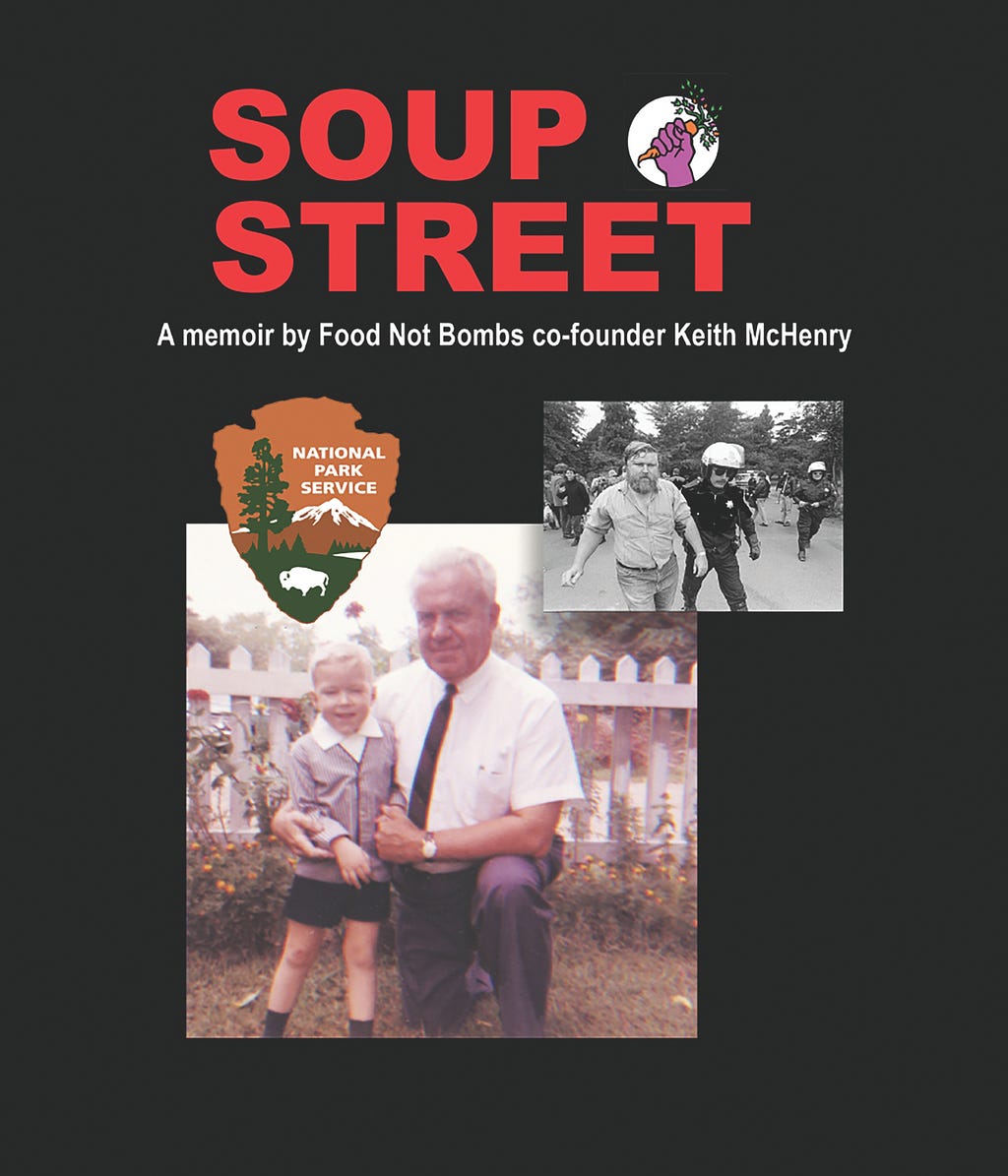
To buy a copy of my newest book order it here:
SOUP STREET — A memoir by Food Not Bombs co-founder Keith McHenry https://foodnotbombs.net/soup_street.html
This was very meaningful, thank you so much!
Heroes Of The Homeless Crisis: How Keith McHenry Of Food Not Bombs Is Helping To Support Some Of… was originally published in Authority Magazine on Medium, where people are continuing the conversation by highlighting and responding to this story.