

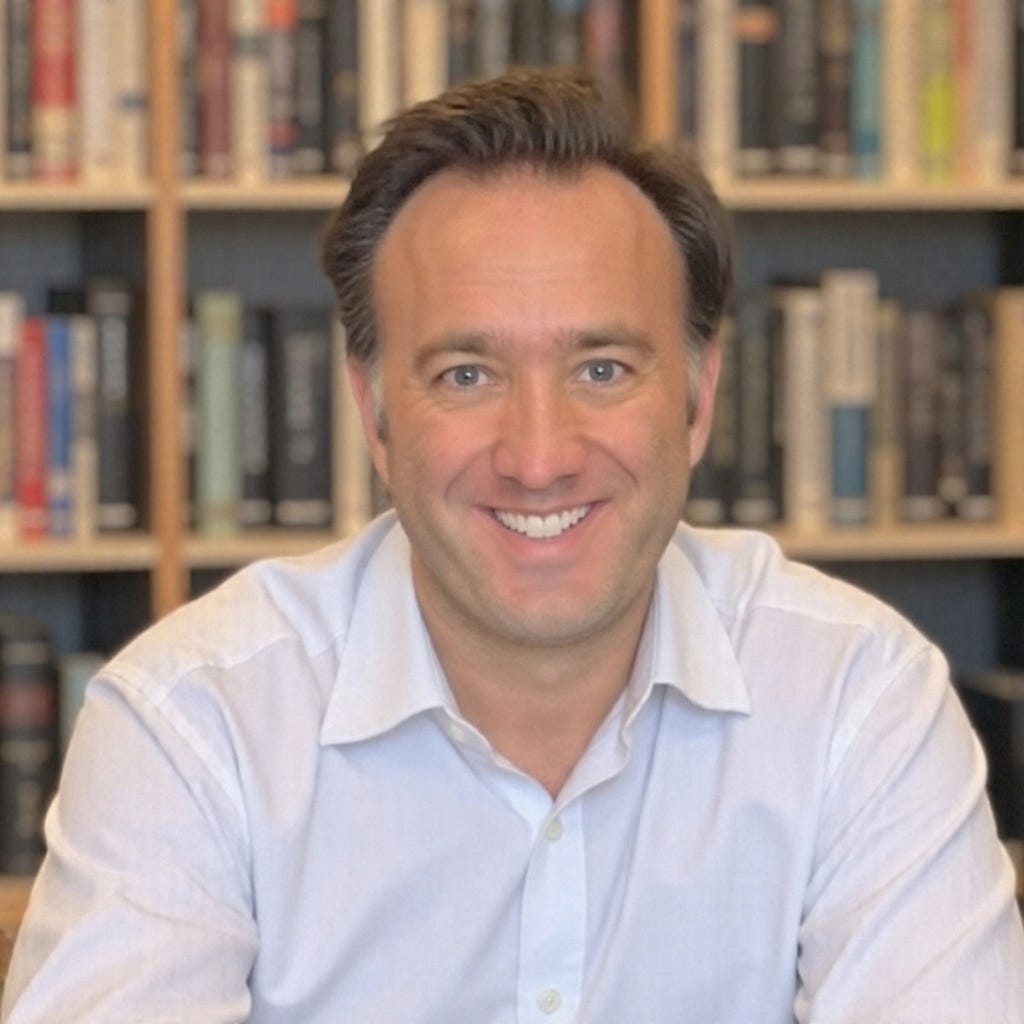

Education Revolution: Jeffrey Mills of Genuine Foods on Innovative Approaches That Are Transforming Education
An interview with Dr. Bharat Sangani
Participation is our primary metric. When participation goes up, it means students are regaining trust. We also partner with schools to look at test scores, attendance and behavioral indicators. The patterns are consistent: better food and greater access to school meals lead to better outcomes.
The landscape of education is undergoing a profound transformation, propelled by technological advancements, pedagogical innovations, and a deepened understanding of learning diversities. Traditional classrooms are evolving, and new modes of teaching and learning are emerging to better prepare students for the complexities of the modern world. This series will take a look at the groundbreaking work being done across the globe to redefine education. As a part of this interview series, we had the pleasure to interview Jeffrey Mills, a leader working at the intersection of food, equity and education.
Jeffrey Mills is the Founder and CEO of Genuine Foods, a purpose-driven food service management company serving schools and institutions across the United States. A former New York City restaurateur, he later led the transformation of the Washington, DC Public Schools food program, demonstrating the connection between nutrition, student well-being, and academic outcomes. His work is rooted in the belief that food is foundational infrastructure for learning.
Thank you so much for doing this with us! Our readers would love to “get to know you” a bit better. Can you share the “backstory” behind what brought you to this particular career path?
I’ve worked my entire life. I started in restaurants when I was twelve, worked my way through Boston College opening restaurants and eventually moved to New York City, where I opened a fine-dining restaurant of my own. After years of running a place that was essentially built for the rich and famous, I started to feel empty inside. I took time to reflect on what I really wanted my work to mean.
Around that time, a friend of a friend was consulting at DC Public Schools on their food service point-of-sale system and asked me to join the team. They told me very clearly that I would have nothing to do with food quality. But the first day I walked into a school, I had one of the biggest revelations of my life.
I was standing in a school with roughly 2,000 students. About 80% qualified for free or reduced meals. There was a 40-minute lunch period and a single point of sale. At best, 20% of those kids could actually eat. The quality of the food was unacceptable. I had a flashback to my own childhood, relying on school meals, and I started thinking: if these kids can’t eat at home and they can’t eat at school, how are they supposed to be fueled and ready to learn?
It didn’t matter what teaching strategies were in place. If kids aren’t nourished, they can’t learn. And feeding them sugar and ultra-processed food only makes it worse. That moment changed everything for me.
Can you share the most interesting story that happened to you since you started your career? Can you tell us what lesson you learned from that?
When I first arrived at DC Public Schools and explained that we were going to move toward real food, many administrators told me it wouldn’t work. They believed kids wouldn’t eat salads or freshly cooked meals. My response was simple: kids don’t reject real food; they reject bad food. If you serve iceberg lettuce, of course, no one eats it.
As we transitioned menus over that first year, we also tracked data. We looked at meal participation by homeroom and compared it to standardized test scores. What we found was undeniable: every homeroom that saw an increase in participation also saw gains in test scores at the school level.
We also saw absences go down, nurse visits decline and behavioral issues improve. When students eat whole, real foods instead of highly processed, high-sugar meals, they have better attention and emotional regulation. The lesson was clear: nutrition isn’t a “nice to have,” it’s a force multiplier in education.
Can you briefly share with our readers why you are an authority in the education field?
At DC Public Schools, I worked across 123 school sites serving more than 50,000 students. When I arrived, the district had one of the worst food programs in the country. The food was almost entirely highly processed and microwave based.
We transformed the food program from the ground up. We trained frontline staff to cook from scratch, implemented what became the largest breakfast program and the largest supper program in the country, and dramatically expanded access. Over 80% of students qualified for free or reduced meals, yet when I arrived, there was minimal breakfast participation, and lunch participation hovered around 50%. There was no supper program at all.
Beyond immediate academic and behavioral improvements, we addressed something foundational: taste development. When children grow up on high-salt, high-sugar processed food, those habits follow them for life. When they experience the taste of real food at a young age, they develop a palate that supports lifelong health.
Can you identify some areas of the US education system that are going really great?
One encouraging shift I’m seeing is schools reinvesting in real kitchens and scratch cooking. For years, districts moved toward heat-and-serve models in the name of efficiency. Seeing schools reverse that trend and commit to real food is a meaningful step in the right direction.
Can you identify the key areas of the US education system that should be prioritized for improvement? Can you explain why those are so critical?
Time. Many schools operate with 20- or 25-minute lunch periods. On paper, that sounds fine, but in practice, it’s impossible. Put 400 kids into a cafeteria with limited points of sale, and many won’t eat at all. Others may get three minutes to eat.
For schools serving high numbers of free and reduced-meal students, this is an equity issue. If students don’t have time to eat, they won’t be nourished, and learning suffers.
Please tell us all about the innovative educational approaches that you are using. What is the specific problem that you aim to solve, and how have you addressed it?
Our innovation is simple but intentional: getting high-quality, real food to students in a way that actually works. We don’t flip menus overnight. We make small changes, build trust, and evolve tastes.
If kids are used to nuggets, we introduce chicken thighs and drumsticks. We do culturally relevant menus and events. Over time, students learn what real food tastes like, and participation increases. The problem isn’t just food quality, it’s trust.
In what ways do you think your approach might shape the future of education? What evidence supports this?
We’ve already seen the impact. When students are fueled, they perform better. Test scores go up. Absences go down. Kids who had little reason to come to school start showing up because they’re being cared for.
People talk about curriculum and technology endlessly, but we rarely talk about the conditions students need to learn. Food is one of the most overlooked pieces of the educational infrastructure.
When schools invest in food intentionally, they’re not just improving meals, they’re strengthening the learning environment itself. Consistent access to real, nourishing food supports focus, behavior and attendance in ways no single program or tool can achieve on its own.
How do you measure the impact of your innovative educational practices on students’ learning and well-being?
Participation is our primary metric. When participation goes up, it means students are regaining trust. We also partner with schools to look at test scores, attendance and behavioral indicators. The patterns are consistent: better food and greater access to school meals lead to better outcomes.
What challenges have you faced in implementing your educational innovations, and how have you overcome them?
Alignment and patience. Change takes time. We also work in food deserts, where teachers often can’t leave campus — when food improves, teachers and students eat together, which shifts school culture.
Another challenge is perception. Low participation is often blamed on preferences when it’s really about access. You can’t feed a full school with a short lunch window and expect success.
Keeping in mind the “Law of Unintended Consequences” can you see any potential drawbacks of this innovation that people should think more deeply about?
Scratch cooking raises expectations and requires real support for staff. Without investment in training and systems, burnout is a risk. On a lighter note, the smell of real food can be distracting, but often it builds excitement and community.
What are your “5 Things I Wish I Knew When I First Started”?
- It wouldn’t be obvious to everyone that better food leads to better outcomes.
- Not everyone agrees on what “good food” is.
- Geography matters — some regions are far more open to change than others.
- Access matters just as much as quality.
- Culture shifts happen through consistency, not grand gestures.
Can you please give us your favorite “Life Lesson Quote”? Can you share how that was relevant to you in your life?
Care shows up in the details.
That belief is what led us to create Genuine Moments, and our hospitality and service culture framework. Early on, I realized that good intentions aren’t enough; care has to be operationalized. It has to show up in how people are greeted, how food is described, whether someone notices a student struggling, or whether a team member takes an extra moment to make someone feel seen.
In schools especially, those moments matter. When students experience consistency, warmth, and dignity around food, trust builds. And when trust is present, participation increases, behavior improves, and learning follows. Genuine Moments is our way of making sure care isn’t accidental; it’s practiced, trained, and lived every day.
We are blessed that some of the biggest names in Business, VC funding, Sports, and Entertainment read this column. Is there a person in the world, or in the US, with whom you would love to have a private breakfast or lunch, and why? He or she might just see this if we tag them 🙂
There’s a major investor now based in Florida who has committed significant capital to public education initiatives after moving from New York. I’d love to have a conversation with him about directing more of that investment toward modern kitchens and food programs that measurably support learning.
How can our readers further follow your work online?
Follow me on LinkedIn and check out Genuine Foods’ website.
Thank you so much for these insights! This was so inspiring!
About The Interviewer: Dr. Bharat Sangani is a cardiologist and entrepreneur with over 35 years of experience, practicing in Gulfport, Mississippi, and Dallas, Texas. Board-certified in Internal Medicine and Cardiology, he specializes in diagnosing, treating, and preventing cardiovascular diseases, including heart disease and hypertension. In 1999, Dr. Sangani founded Encore Enterprises, a national real estate investment firm. Under his leadership, the company has executed transactions exceeding $2 billion, with a portfolio spanning residential, retail, hotel, and office developments. Known for his emphasis on integrity and fairness, Dr. Sangani has built Encore into a major player in the commercial real estate sector. Blending his medical and business expertise, Dr. Sangani created the Life is a Business mentorship program. The initiative offers guidance on achieving balance in health, wealth, and relationships, helping participants align personal and professional goals. Now based in Dallas, Texas, Dr. Sangani continues to practice cardiology while leading Encore Enterprises and mentoring others. His career reflects a unique blend of medical expertise, entrepreneurial spirit, and dedication to helping others thrive.
Education Revolution: Jeffrey Mills of Genuine Foods on Innovative Approaches That Are Transforming… was originally published in Authority Magazine on Medium, where people are continuing the conversation by highlighting and responding to this story.