

EdTech: David Foster Of Caveon On How Their Technology Will Make An Important Positive Impact On Education
Real impact begins by questioning the foundation, not just the interface.
In recent years, Big Tech has gotten a bad rep. But of course, many tech companies are doing important work making monumental positive changes to society, health, and the environment. To highlight these, we started a new interview series about “Technology Making An Important Positive Social Impact”. We are interviewing leaders of tech companies who are creating or have created a tech product that is helping to make a positive change in people’s lives or the environment. In this particular installment, we are talking to leaders of Education Technology companies, who share how their tech is helping to improve our educational system.
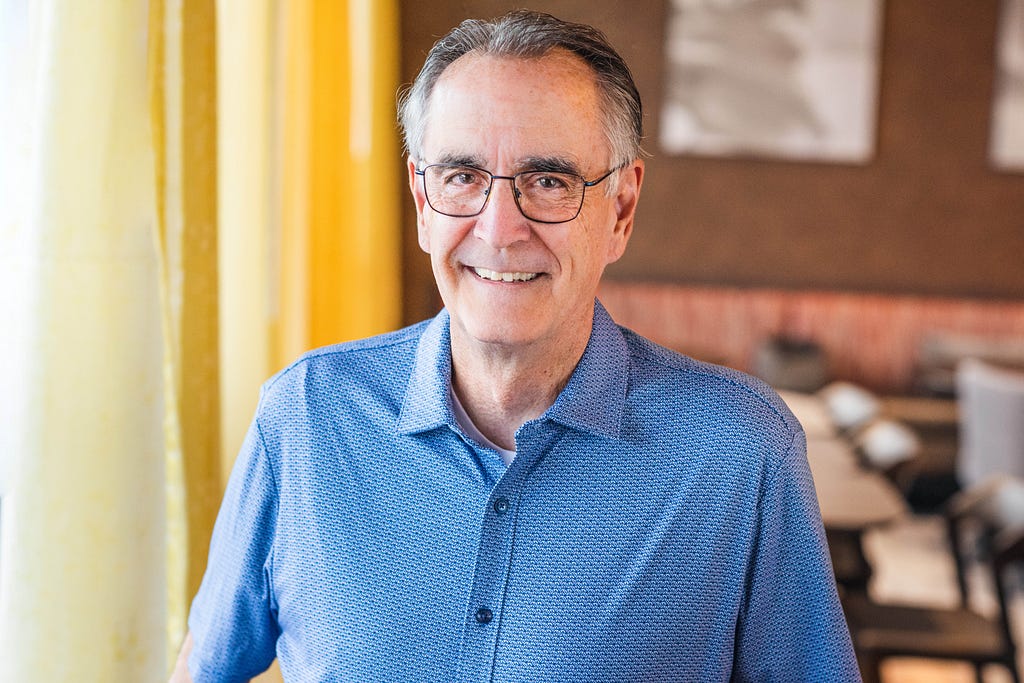
As a part of this series, I had the pleasure of interviewing David Foster.
David Foster is the CEO and Chairperson of the Board at Caveon, where he leads the company’s growth, innovation, and mission to advance secure, accessible testing solutions. A psychologist, psychometrician, and longtime leader in the assessment industry, Foster helped pioneer computerized adaptive testing and simulation-based performance testing, later co-founding Caveon in 2003 as the industry’s first dedicated test security company. Over his 40-plus-year career, he has contributed numerous innovations to the testing field, served in leadership roles with organizations including the Association of Test Publishers and ANSI, and continues to shape the future of exam security and psychometrics through research-driven innovation.
Thank you so much for joining us in this interview series. Before we dive in, our readers would love to learn a bit more about you. Can you tell us a bit about your childhood backstory and how you grew up?
Certainly, I was born on an Air Force base and moved around often until I was 12, including twice overseas. My family eventually settled in Utah near where my mom grew up. My dad started another career with a military contractor making shuttle booster rockets.
Those early years taught me how to adapt quickly to new circumstances and make (and lose) friends every few years. Today, I’m much more of a “roots” person; I enjoy the consistency that comes with staying in one place.
Can you share the most interesting story that happened to you since you began your career?
I have had many interesting stories during my career, but I’ll share one from early on. I had just completed a post-doctoral psychobiology fellowship at Florida State University, and despite having publications and teaching experience, I was unable to find a university research position. My only “near-successful” opportunity was an interview with a tobacco company. I was soon relieved to get a call from a professor and friend in Utah who was involved in a startup providing computerized tests and instruction to K–6 students. He asked what I knew about testing, and I replied that I knew almost nothing. Nevertheless, he invited me to come to Utah and help with the testing part of the project. That call started what is now a 44-year career in the field of testing, one that began with total ignorance, but became deeply meaningful to me because it let me use technology and sometimes even break traditional boundaries.
None of us are able to achieve success without some help along the way. Is there a particular person who you are grateful towards who helped get you to where you are? Can you share a story about that?
Many. However, Harold Miller Jr., a now-retired BYU professor, made the phone call to me in 1982 that launched my career. A few years later, he recommended me for a position at Novell to help launch the world’s first information technology certification program.
In 2009, he and I conducted and published research on a multiple-choice question alternative called the Discrete Option Multiple Choice. We continued to collaborate, with chapters on ethics and testing published a few years apart in consecutive editions of The Oxford Handbook of International Psychological Ethics.
Hal was the mentor and friend most responsible for starting my career and for keeping me moving forward.
Can you please give us your favorite “Life Lesson Quote”? Can you share how that was relevant to you in your life?
I don’t have a single quote I return to, but if I did it would be something like this: “Quit underestimating yourself! You can change the world!”
That mindset reflects how my career began. I entered the field of testing knowing almost nothing about it, yet with the right opportunity and sustained effort, I was able to contribute meaningful innovations.
You are a successful business leader. Which three character traits do you think were most instrumental to your success? Can you please share a story or example for each?
My business philosophy is pretty simple: be responsible with resources, invest where it matters, and make sure the value you create exceeds what you consume. Where I’ve been most effective is pairing that discipline with the right people, leaders who are strong in areas like operations, finance, and go-to-market execution.
Risk Taking. I’m comfortable taking risks when I believe the benefits will outweigh the costs. That also means sticking with the decision even when times are tough. Starting Caveon was certainly a risk, but the need to stop theft of test content and cheating was always there, and that gave me confidence we would eventually succeed. That need is still there today.
Reliable Prediction. I can usually see, fairly accurately, the long-term value to Caveon of new technology, whether it is the internet, AI, or our own innovations at Caveon. For example, I recognized the value of online proctoring early and presented the concept at industry conferences as far back as 2006.
Creative. I have usually been able to craft an innovative solution to a company or industry problem. For example, I think my scientific background helped me develop a way to use random sampling of test questions during testing to reduce cheating. A couple of years later, I discovered that the renowned psychometrician Fred Lord had suggested something very similar in 1955. There is nothing like having the industry G.O.A.T., even though he was no longer around, confirm that you are on the right track.
Ok super. Let’s now shift to the main part of our discussion about the tech tools that you are helping to create that can make a positive social impact on our educational systems. To begin, what problems are you aiming to solve?
First, an obvious one for educational tests that are high-stakes and which motivate fraud. We have a new tech/testing solution that would put a serious dent into student and teacher cheating in all forms of educational testing, from K-12 to higher education to adult education.
The second problem, and in my opinion a bigger one, is that today’s traditional tests cannot be repeated because the same items are used over and over again. Once items are experienced, they’re likely to become exposed to a broader audience. Once they’re exposed this way, they become worthless in determining if learning has occurred or in determining strengths and weaknesses in educational content.
As a result, testing has often been a limited partner for educators. The same innovation that addresses cheating can also solve this repeatability problem by delivering exam content randomly and on the fly to individual test takers, which helps limit item exposure and extend the life of the valuable intellectual property that makes up an exam, allowing assessments to be used multiple times without compromising their value.
How do you think your technology can address this?
Randomly parallel testing is a methodology that requires a large item pool. That is the key. If you want tests that are both repeatable and secure, you have to stop relying on a small set of fixed items. Computer technology we’ve created at Caveon can help generate very large item pools that cover any instructional topic and any educational standard. This can be done more quickly and inexpensively using Caveon’s SmartItem technology, and AI can help accelerate parts of that process when used responsibly. From there, the approach is straightforward: build a large pool of high-quality items for a domain, then deliver tests by randomly sampling from that pool each time a student tests. That simple shift changes everything. It makes pre-knowledge much harder, reduces content theft, and lets educators use assessment repeatedly without destroying its value. The methodology is grounded in statistical sampling theory, and it connects to work dating back to Frederick Lord. It also has growing support among current leaders in the field.
Can you tell us the backstory about what inspired you to originally feel passionate about education?
I have always been interested. As I described above, my first job was to create computerized tests to measure a student’s skill on standards before and after learning from a computerized curriculum. Since then, over my entire career, the tests I’ve designed and built have always been intended to serve as a measure of how competent a person is in the subject matter after they have learned it and practiced it.
Now, with today’s technology, new ways of building tests, and Caveon’s experience, educational tests can be (1) infinitely repeatable, (2) inexpensive and accessible, (3) less vulnerable to measurement error such as cheating, and (4) able to produce scores that generalize to whatever content domain the test or pool represents. In my view, those goals are not reachable with most current educational testing efforts, even those that incorporate “technology.”
How do you think your technology might change the world?
Better, faster, cheaper tests that target any domain, provide basic competency information, and can drill down diagnostically for strengths and weaknesses. Because the tests are repeatable, the same approach can be used more than once without losing its value. The same repeatable test can also be provided to parents and other partners in education so they can verify and support learning progress. This would allow teachers to track students who are falling behind and help them catch up sooner. There are many other benefits to randomly parallel tests (RPTs).
Keeping the “Law of Unintended Consequences” in mind, can you see any potential drawbacks about this technology that people should think more deeply about?
It reminds me of what can happen when someone wins the lottery: good fortune can be squandered. I’ve thought about this for a long time, and I’ve struggled to find major downsides in the core idea itself. That said, I do expect resistance. There are companies with offerings based on traditional testing approaches that were expensive to build and are still being sold. I also expect pushback from test preparation companies that benefit from the flaws of traditional testing practices.
How do you envision the landscape of education evolving over the next decade, and how does your technology fit into that future?
Good question. It might be that nothing changes, or things get worse. If traditional testing continues to be relied on, then I don’t expect much progress. If a different way of testing becomes acceptable, education can thrive with accurate and timely information about students. Our technology fits into that second path by enabling a different way of testing that is repeatable, scalable, and more resistant to cheating and content theft.
Based on your experience and success, can you please share “Five things you need to know to successfully create technology that can make a positive social impact”?
1. Critically examine existing technology, even when it looks modern
In this day of technology and AI, it is easy to assume that delivering a traditional test on a computer makes it innovative. It does not. If the underlying structure is the same, fixed items used over and over again, then the weaknesses remain. Real impact begins by questioning the foundation, not just the interface.
2. Be willing to abandon theories that only support outdated delivery models
Some test theories were developed in a different technological era. They made sense when printing and distributing paper exams was the only option. But if a theory only works when items must remain fixed and scarce, it may not serve us well in a digital world. Progress sometimes requires letting go of assumptions that no longer fit reality.
3. Rethink how items and tests are built
Traditional item development is slow, expensive, and produces limited pools. That scarcity drives many of the problems we see today. If you want scalable and repeatable assessment, you have to rethink how items are generated and maintained.
4. Embrace new ways of building and delivering tests
Large item pools, random sampling, and technology-assisted development are not cosmetic improvements. They represent a structural shift in how testing can function. When implemented properly, they can improve security, repeatability, and usefulness at the same time.
5. Do not resist change. Use it
We are in a period of rapid technological change, and it will only accelerate. AI, automation, and new computational tools can either reinforce outdated systems or help us build better ones. The goal should always be to create tools that improve accuracy, fairness, and access.
When I refer to traditional testing, I mean the model that dominated the last century and still persists today. It includes traditional multiple-choice items, fixed items used repeatedly, fixed forms administered repeatedly, and proctoring as the primary method of security. That model made sense in its time. My view is that technology now allows us to do better.
In the world of EdTech, there’s often data collection involved. How do you ensure the ethical handling of user data, especially when it concerns students?
If an organization or company collects and stores PII, including test scores and other data, that data needs to be highly protected. That is not optional; it is foundational. We follow standard practices of information security and obtain certifications that attest to our commitment, including SOC 2 and ISO 27001. We are a security company, albeit focused on test security. Protecting sensitive information is part of our culture and our responsibility. We take pride in protecting our systems from outside penetration and in treating student data with the level of care it deserves.
If you could tell other young people one thing about why they should consider making a positive impact on our environment or society, like you, what would you tell them?
Today, with such amazing technology at their fingertips, including AI, there are many new ways to make an impact. The opportunities are there. What matters is taking the time to truly understand the technology, gain practical experience, and look for real problems that need solving. When you put yourself in a position to recognize meaningful opportunities, you also put yourself in a position to create something that genuinely improves society.
Is there a person in the world, or in the US with whom you would like to have a private breakfast or lunch, and why? He or she might just see this, especially if we tag them. 🙂
Fred Lord, of course. Since we are likely talking hypothetically, I guess we could go back in time. That would add some color. Fred is our G.O.A.T. and would provide tremendous insight into testing today, and how to do it better given his invention of RPTs. Otherwise, I’m talking to several people these days who are very bright psychometricians, which I really enjoy and which help me considerably (like Bob Brennan and Randy Bennett, and even our own John Fremer.)
How can our readers further follow your work online?
Caveon’s website has a lot of resources for people wanting to learn. You can follow me directly on LinkedIn.
https://www.linkedin.com/in/davidffoster/
https://caveon.com/
Thank you so much for joining us. This was very inspirational, and we wish you continued success in your important work.
EdTech: David Foster Of Caveon On How Their Technology Will Make An Important Positive Impact On… was originally published in Authority Magazine on Medium, where people are continuing the conversation by highlighting and responding to this story.