


Disability Inclusion In The Workplace: Jessica Fabus Cheng On How Businesses Make Accommodations For Customers and Employees Who Have a Disability
An Interview With Eric Pines
Your voice is powerful — even when it shakes. I didn’t know I’d be using mine professionally after cancer, but I’m glad I didn’t give up on it
As we all know, over the past several years there has been a great deal of discussion about inclusion and diversity in the workplace. One aspect of inclusion that is not discussed enough, is how businesses can be inclusive of people with disabilities. We know that the Americans With Disabilities Act (ADA) requires businesses to make reasonable accommodations for people with disabilities. What exactly does this look like in practice? What exactly are reasonable accommodations? Aside from what is legally required, what are some best practices that can make a business place feel more welcoming and inclusive of people with disabilities? To address these questions, we are talking to successful business leaders who can share stories and insights from their experience about the “How Businesses Make Accommodations For Customers and Employees Who Are Disabled.”
As a part of this series, we had the pleasure of interviewing Jessica Fabus Cheng.
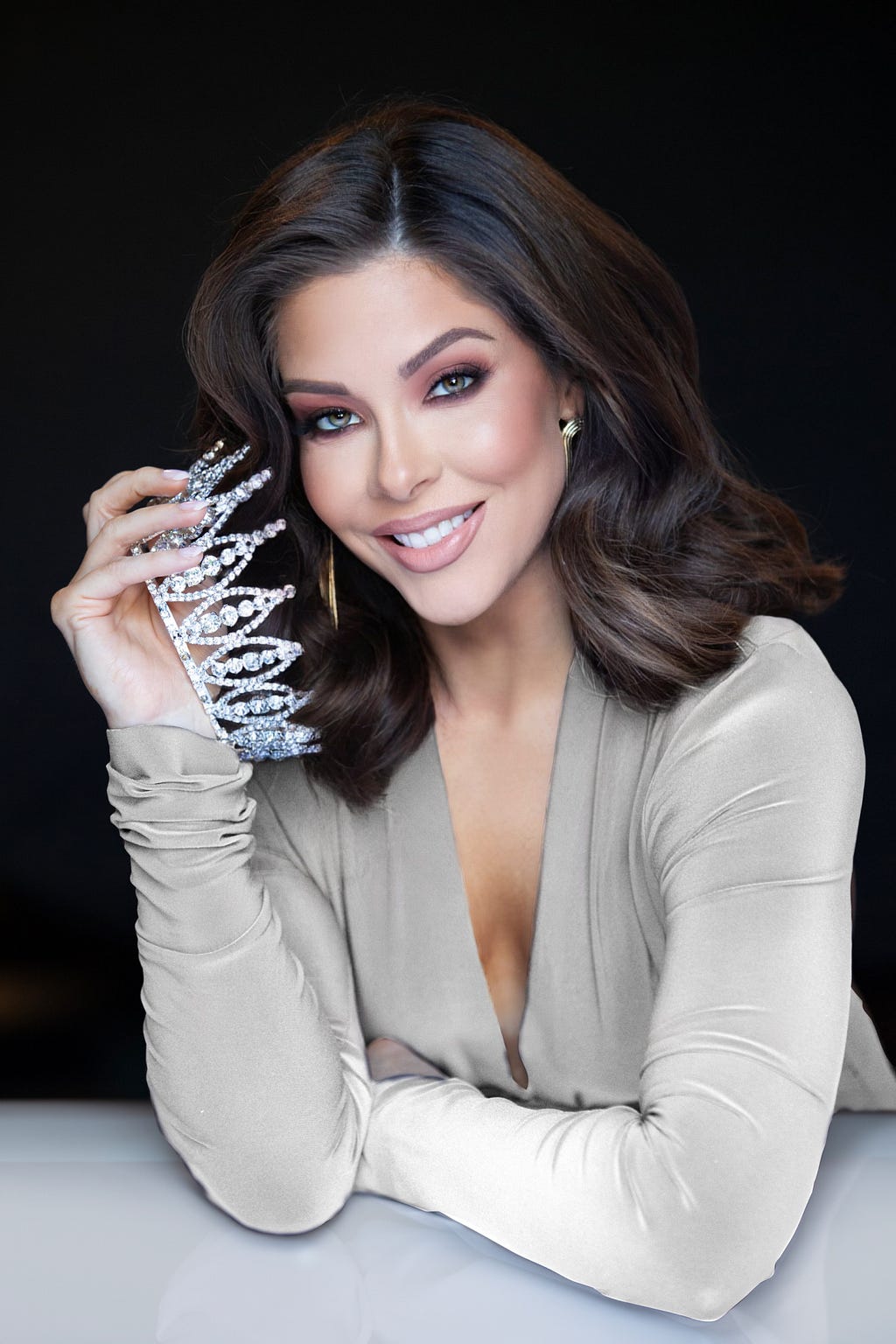
Jessica Fabus Cheng is a rare thyroid cancer survivor, accessibility advocate, and Mrs. DC International 2025. A former RN and Team USA Taekwondo athlete, she now uses her voice — literally and figuratively — to spotlight digital inclusion through her platform Accessibility in Action and her podcast, All the Best with Jess. With only 80% vocal function, Jessica is a speaker, puppy raiser with the Guide Dog Foundation, and founder of the Turnkey Accessibility program that empowers brands to create inclusive content with impact.
Thank you so much for joining us in this interview series! Before we dive in, our readers would love to “get to know you” a bit better. Can you tell us a bit about your ‘backstory’ and how you ended up where you are?
Absolutely! I’ve worn a lot of hats over the years — nurse, athlete, mom, pageant queen — but advocacy has always been the thread tying them all together. My journey into this work really began with my cousin’s diagnosis of Duchenne Muscular Dystrophy. When he was just 12, he tripped over an inaccessible sidewalk outside a doctor’s office, which forced him to become a wheelchair user prematurely. That moment shattered me and shaped me. I saw firsthand how systemic inaccessibility can change things instantly.
Years later, I was diagnosed with a rare form of thyroid cancer that resulted in me living with only 80% vocal function, but I’ve never felt more powerful in my purpose. I left nursing, leaned into advocacy, and launched my platform, Accessibility in Action, to help brands shift from compliance to connection. I also host All the Best with Jess, a podcast spotlighting voices that too often go unheard. And with my husband and daughter, I raise future guide dogs for the Guide Dog Foundation, because inclusion isn’t just my mission, it’s our way of life.
You are a successful leader. Which three character traits do you think were most instrumental to your success? Can you please share a story or example for each?
- Resilience — After surviving thyroid cancer and the threat of losing my voice, I could have chosen silence. Instead, I chose to speak louder, with purpose. I went through vocal therapy and training, and ironically, that made me a better speaker and advocate.
- Empathy — I’ve worked at the bedside as a nurse and now work alongside communities facing exclusion. Whether it’s sitting with a patient or training a guide dog with my 5-year-old daughter, I’ve learned that empathy fuels action.
- Tenacity — I moved to New York at 19 with a bag of change and a dream to pursue music. That same tenacity is what kept me going through cancer, career pivots, and launching a public-facing platform.
Can you share a story about one of your greatest work-related struggles? Can you share what you did to overcome it?
My biggest struggle was internally with myself. I had to learn how to not only accept but also embrace my own vocal disability. For quite a while, I didn’t feel worthy of the word ‘disabled’ because I didn’t obviously ‘look’ disabled. I was forced to reexamine my perception and realize that disability comes in many forms. Once I stopped minimizing my own experience and started owning and speaking from my own truth, my advocacy became more authentic and impactful.
What are some of the most interesting or exciting projects you are working on now?
I’m hosting monthly All the Best with Jess brunch events that bring together women entrepreneurs and thought leaders for live podcast panels. I’m also scaling Turnkey Accessibility, my free training that helps businesses easily embed accessibility into their digital content. And behind the scenes, I’m working with my PR team to land media that reframes accessibility as a growth driver, not a checkbox.
Fantastic. Let’s now shift to our discussion about inclusion. Can you tell our readers a bit about your experience working with initiatives to promote Diversity and Inclusion? Can you share a story with us?
Inclusion isn’t a campaign for me — it’s my compass. After my cousin’s accident, I was inspired to begin working on the beginnings of Accessibility in Action. The cases that always stay with me are when people realize how simple implementing accessibility can be, like explaining to visual artists and photographers how adding image descriptions on Instagram can open doors for them. Watching that lightbulb moment click for those artists was beautiful. They started implementing changes right away.
This may be obvious to you, but it will be helpful to spell this out. Can you articulate to our readers a few reasons why it is so important for a business or organization to have an inclusive work culture?
Not only is fostering innovation fundamentally the right thing to do, but it also nurtures innovation, loyalty, and growth. Aside from that, it can be unexpectantly lucrative. The disability community and its families hold $13 trillion in global buying power. It’s an underserved and often overlooked market that many brands aren’t aware of. When businesses ignore or dismiss accessibility, they aren’t just excluding people, they’re leaving money on the table. More importantly than that, inclusive brands provide space for wider communities to feel seen, valued, and empowered to contribute.
The Americans With Disabilities Act (ADA) requires businesses to make reasonable accommodations for people with disabilities. For the benefit of our readers, can you help explain what this looks like in practice? What exactly are reasonable accommodations? Can you please share a few examples?
For sure. Examples of reasonable accommodations can include accessible parking, ramps, closed captioning on training videos and other company materials, or offering information in plain language. In a digital space context, they could include utilizing high-contrast text, promoting screen-reader-friendly formatting, or writing hashtags in CamelCase. These are small, easily implemented tweaks that can make all the difference.
Aside from what is legally required, what are some best practices that can make a business place feel more welcoming and inclusive of people with disabilities? If you can, please share a few examples.
Integrate accessibility into your company’s storytelling narrative and strategy. You can start with normalizing representation and featuring people with disabilities in your marketing, not to meet some diversity quota, but as a part of everyday life and as a core pillar of your brand guidelines. Finally, hire those with disabilities, listen to their feedback and insights, and compensate them for their unique expertise.
Can you share a few examples of ideas that were implemented at your workplace to help promote disability inclusion? Can you share with us how the work culture was impacted as a result?
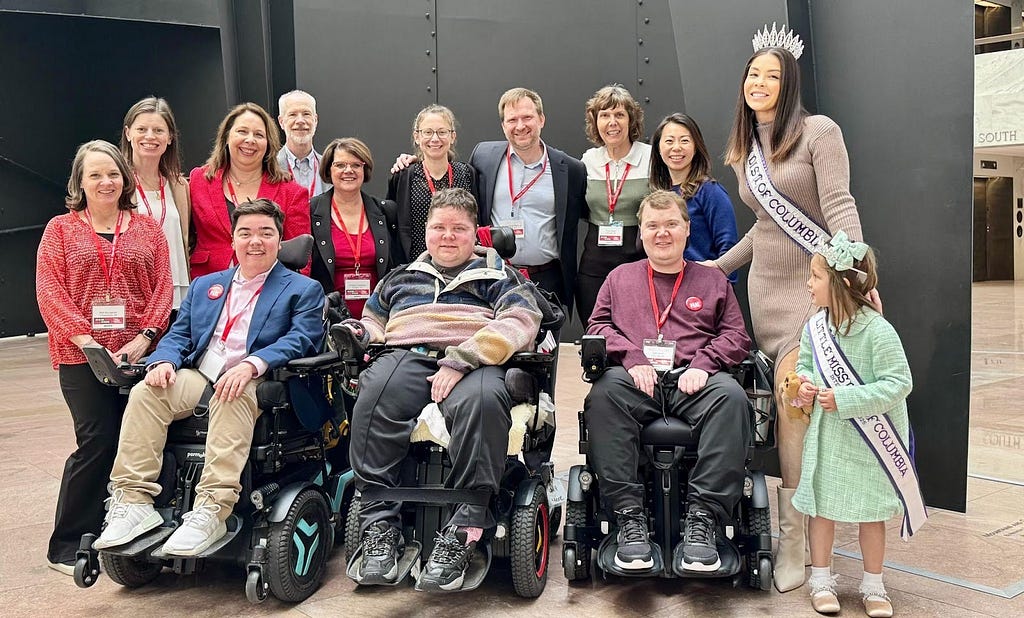
At Accessibility in Action, I embed accessibility from the first slide of a workshop to the last. Whether it’s describing images aloud on a podcast or capitalizing hashtags for screen readers, I practice what I teach. I also collaborate with brands across industries and digital creators in the disability space. I also have future plans to build partnerships with tech platforms to scale these efforts globally.
This is our signature question that we ask in many of our interviews. What are your “5 Things I Wish Someone Told Me When I First Started My Career”? (Please share a story or example for each.)
- Your voice is powerful — even when it shakes. I didn’t know I’d be using mine professionally after cancer, but I’m glad I didn’t give up on it.
- Perfection doesn’t create connection — authenticity does. My most meaningful wins have come from showing up as my full, messy self.
- Start with service. Whether you’re raising a guide dog or building a brand, leading with service will always ground you.
- Inclusion is innovation. Embedding accessibility isn’t extra — it’s excellent design, excellent leadership, and excellent business.
- You don’t need permission to make an impact. I waited for years before realizing I already had everything I needed to get started
Can you please give us your favorite “Life Lesson Quote”? Can you share a story about how that was relevant in your own life?
“Your greatest challenge is often your greatest calling.” When cancer took 20% of my voice, it gave me 100% of my mission. That diagnosis didn’t silence me; it gave me a megaphone. I’m now using it to help others feel seen, heard, and included.
You are a person of enormous influence. If you could inspire a movement that would bring the most amount of good to the most amount of people, what would that be? You never know what your idea can trigger. 🙂
I’d love to start a global campaign called “Socials for All,” a movement to normalize digital accessibility on social media. From captioned stories to accessible hashtags, these small changes could connect millions who are currently left out of everyday content. It’s free, scalable, and long overdue.
How can our readers further follow your work online?
You can follow my journey on Instagram at @jessica_fabus_cheng and @bestwithjesspodcast. You can also visit my website: www.jessicafabuscheng.com to learn more about Accessibility in Action, my Turnkey Accessibility program, my podcast, or upcoming events.
This was very inspiring. Thank you so much for the time you spent with this. We wish you continued success and good health!
About the Interviewer: Eric L. Pines is a nationally recognized federal employment lawyer, mediator, and attorney business coach. He represents federal employees and acts as in-house counsel for over fifty thousand federal employees through his work as a federal employee labor union representative. A formal federal employee himself, Mr. Pines began his federal employment law career as in-house counsel for AFGE Local 1923 which is in Social Security Administration’s headquarters and is the largest federal union local in the world. He presently serves as AFGE 1923’s Chief Counsel as well as in-house counsel for all FEMA bargaining unit employees and numerous Department of Defense and Veteran Affairs unions.
While he and his firm specialize in representing federal employees from all federal agencies and in reference to virtually all federal employee matters, his firm has placed special attention on representing Veteran Affairs doctors and nurses hired under the authority of Title. He and his firm have a particular passion in representing disabled federal employees with their requests for medical and religious reasonable accommodations when those accommodations are warranted under the Rehabilitation Act of 1973 (ADA). He also represents them with their requests for Federal Employee Disability Retirement (OPM) when an accommodation would not be possible.
Mr. Pines has also served as a mediator for numerous federal agencies including serving a year as the Library of Congress’ in-house EEO Mediator. He has also served as an expert witness in federal court for federal employee matters. He has also worked as an EEO technical writer drafting hundreds of Final Agency Decisions for the federal sector.
Mr. Pines’ firm is headquartered in Houston, Texas and has offices in Baltimore, Maryland and Atlanta, Georgia. His first passion is his wife and five children. He plays classical and rock guitar and enjoys playing ice hockey, running, and biking. Please visit his websites at www.pinesfederal.com and www.toughinjurylawyers.com. He can also be reached at eric@pinesfederal.com.
Disability Inclusion In The Workplace: Jessica Fabus Cheng On How Businesses Make Accommodations… was originally published in Authority Magazine on Medium, where people are continuing the conversation by highlighting and responding to this story.