

An Interview With Yitzi Weiner
The Lumberjills story helps us to imagine a world where there is equality in career choice, where women are regarded as equal to men in all jobs and skilled trades.
As a part of this series, we had the pleasure to interview Joanna Foat.
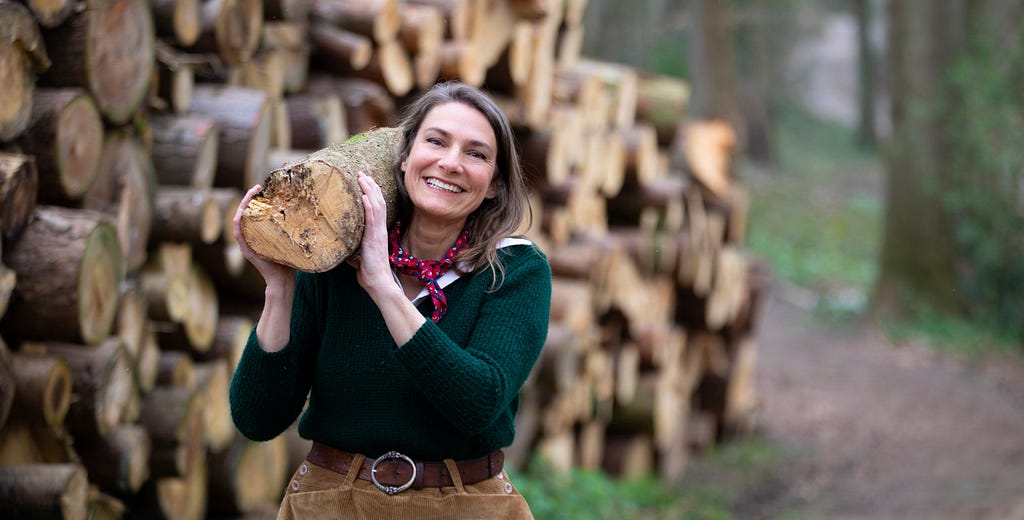
Joanna Foat is an author, historian and speaker specialising in the remarkable true story of Britain’s Women’s Timber Corps, known as the Lumberjills. After more than a decade of research, interviewing more than 60 former Lumberjills, she has become the UK’s authority on their history. Through four books, television and radio appearances, curating exhibitions and more than 200 talks, she is helping to ensure the Lumberjill’s contribution to the Second World War is no longer forgotten. To find out more visit www.thelumberjills.uk
Thank you so much for joining us in this interview series! Before we dive into the main focus of our interview, our readers would love to “get to know you” a bit better. Can you tell us a bit about your childhood backstory?
When I was a little girl, I was very shy, but I loved being outdoors and having adventures. I was fascinated by the old black-and-white Tarzan films with Johnny Weissmuller. I thought Tarzan was shy too because he couldn’t speak, but I realised that didn’t matter if he could swing through trees and wrestle alligators. So, I climbed trees, learnt to swim, went high-board diving and found confidence not through my voice, but through physical courage. I also loved mowing the lawn with a mechanical mower, helping my dad work on cars and restoring old furniture. At school, though, I was constantly reminded that girls were expected to do different things. While the boys played football, I was told to stick to netball. I asked for a football every Christmas but never got one. Instead, I poured my energy into athletics, where I discovered just how much I loved challenging myself. Everything changed during one history lesson about medieval peasant girls. For the first time, I found myself wondering what ordinary women from the past had really been like. What did they wear? What work did they do? Were they as adventurous as I wanted to be? I became fascinated by women’s history and chose to write about it in a mock exam. Unfortunately, my history teacher publicly ridiculed my work after I received the lowest mark in the class. It was humiliating and, for a long time, left me believing that writing about women in history was something to be ashamed of.
When you were younger, was there a book that you read that inspired you to take action or changed your life? Can you share a story about that?
How can I possibly choose just one? The first book that truly captured my imagination was Shrewbettina’s Birthday by John Goodall. It’s a beautifully illustrated picture book with no written text and ingenious half-pages which feature doors that transform each scene as you turn them. At first, my parents read me the story, but I realised they weren’t telling me the story I was seeing in the pictures. I began making up my own versions, discovering that every reading could be different. Looking back, I think that was the moment I fell in love with storytelling. The second book that had a profound influence on me was The Magic Finger by Roald Dahl. I read it over and over again. It featured a fearless young girl who stood up to the adults around her, challenged injustice and defended wildlife. It was funny, thought-provoking and completely unlike anything else I’d read. Looking back, those two books shaped the person I became. One taught me the joy of creating stories; the other gave me the confidence to question accepted ideas and stand up for what I believed in. Decades later, that’s exactly what I’ve tried to do by bringing the forgotten story of Women’s Timber Corps to new generations of readers and working for environmental charities.
Can you describe how you aim to make a significant social impact with your book?
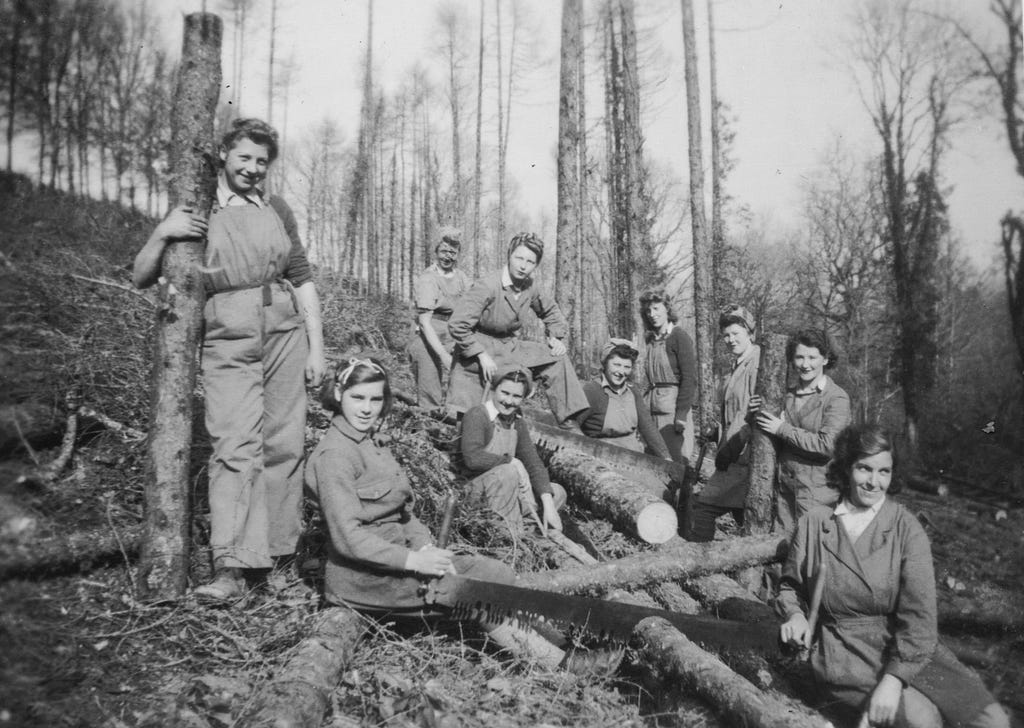
When I first discovered the story of the Women’s Timber Corps, I couldn’t believe hardly anyone had ever heard of them, myself included. These extraordinary women undertook dangerous, physically demanding work and kept Britain’s timber supplies flowing during the Second World War. They proved they were every bit as capable as the men, yet for eighty years their contribution was forgotten. Almost every Lumberjill I met told me how upset they were at the end of the war, as they had not received any recognition. I wanted to give them a voice and ensure they were remembered. So, I wrote a history book about them called, Lumberjills: Britain’s Forgotten Army. For me it felt like a really important story that resonated with the prejudices I had experienced as a young woman. They were judged because they were women doing “men’s work”. They faced ridicule, prejudice and suspicion, yet they persevered through courage, humour and friendship. I wanted to capture this in my novels, The Lumberjills Stronger Together, and my new novel, The Lumberjills Under Suspicion. If my books encourage people to look differently at women’s history, question outdated stereotypes and recognise the value of those whose stories have been forgotten, then I will have achieved something worthwhile. The Lumberjills deserve their place in history and their legacy also has the power to inspire courage, resilience and equality for future generations too. In The Lumberjills Photobook you can see more than 180 stunning black and white photos of the women working in all lines of forestry work during the Second World War. The Lumberjills story helps us to imagine a world where there is equality in career choice, where women are regarded as equal to men in all jobs and skilled trades. We can look to the Lumberjills as a shining example of what women could achieve in male dominated industries and sectors if given more freedom of choice, opportunity and greater representation.
Can you share with us the most interesting story that you shared in your book?
One of my favourite stories is about a Scottish Lumberjill called Bella Nolan. Like many women in the Women’s Timber Corps, she encountered prejudice from men who simply didn’t believe women were strong enough to do the job. One foreman was so dismissive that Bella challenged him to a tree-felling duel. The next day they worked together, each taking one end of the two person crosscut saw, pulling backwards and forwards hour after hour. As the day wore on, the foreman repeatedly asked whether she wanted to stop, but Bella refused. She was exhausted, yet she was determined to prove she was as capable as him. Together they felled an astonishing 120 trees. Months later, another supervisor said, “I’ve read about you. Your record is in the office.” I love this story because Bella won the argument through determination, resilience and sheer hard work. “Actions speak louder than words”, as my father used to say. This story is just one example of similar experiences had by other Lumberjills across Britain. Time and again, these women overcame prejudice. Their quiet courage changed attitudes and has helped pave the way for generations of women who follow.
What was the “aha moment” or series of events that made you decide to bring your message to the greater world? Can you share a story about that?
My “aha moment” came on the very day I made a commitment to myself to write a book about the Women’s Timber Corps. That morning, I walked into the office and told a colleague to make it official and public. Until then, it had simply been an idea I had been carrying around in my head. Within hours, I received a phone call from a BBC television production company looking for someone to speak about the Lumberjills. I contacted colleagues across the country, assuming there would be an established expert they could interview. Instead, everyone pointed back to me. Before I had even had time to process that, half an hour later a second BBC production company called about another programme featuring the Lumberjills. Two separate television enquiries on the very day I committed to writing the book felt extraordinary. That had never happened before, and it has never happened since. Whether it was coincidence or perfect timing, it gave me the confidence to believe I wasn’t the only person interested in these remarkable women. If two television producers were independently searching for the same forgotten story on the very day I decided to tell it, perhaps the world was more ready to hear about the Lumberjills than I had realised. That moment transformed an idea into a mission. Since then, I’ve spent more than a decade researching, interviewing former Lumberjills and their families, writing four books, curating exhibitions and speaking across the UK. Looking back, I often think that those two unexpected phone calls gave me the courage to pursue my dreams.
Without sharing specific names, can you tell us a story about a particular individual who was impacted or helped by your cause?
One moment will stay with me forever. After more than a decade researching the Women’s Timber Corps, I was contacted by the producers of the Royal Albert Hall’s VE Day 80 concert. They wanted authentic wartime letters and first-hand accounts to help tell the story of Britain’s war effort. Thanks to the research I’d carried out over many years, the Lumberjills were included in the final production alongside the better-known stories about men during wartime. Before the event, I was able to tell several Lumberjill families that their mothers’ and grandmothers’ contribution would finally be recognised on one of the nation’s biggest commemorations. One daughter simply replied, “Mum would be thrilled.” For more than sixty years after the war, the Women’s Timber Corps received almost no public recognition. Many of the women I interviewed told me they felt forgotten. Seeing their story honoured at the Royal Albert Hall, on the 80th anniversary of VE Day, felt like hugely significant step towards putting that right. Another Lumberjills’ daughter said, “What a wonderful show and unforgettable evening. So amazing to see Mum’s picture on the screen and hear her story. A proud and very emotional moment for us. We did need tissues handy. We’ll worth the long journey from Kingussie, Scotland. Thank you so much for making it possible.” But the impact has gone far beyond the Lumberjills and their families. Through my books and exhibitions, I’ve also heard from women working in forestry from all over the world who see the Lumberjills as pioneers and role models for them too. Recently, I was invited by a Canadian network representing thousands of women in the timber industry to share the Lumberjills story with them because they believe these remarkable women have the power to inspire future generations too.
Are there three things the community/society/politicians can do to help you address the root of the problem you are trying to solve?
1. Put women’s history at the heart of education.
I would love to see school curriculum reflect the contributions of women and men in equal measure across all subjects. For centuries, history has been written by men marking the achievements of men, meaning countless remarkable women have been forgotten. When young people grow up seeing women’s achievements as a normal part of history, it expands everyone’s sense of what is possible. It would be amazing if the stories like the Women’s Timber Corps became part of the national curriculum in the UK.
2. Open more doors for women in traditionally male industries.
The Lumberjills proved that women could excel in forestry, transport and other physically demanding occupations more than eighty years ago. Yet many skilled trades remain heavily male-dominated today. Businesses, educators and governments should work together to encourage more women into careers such as forestry, construction, engineering, plumbing, electrical work and haulage. Greater diversity doesn’t just benefit women; it benefits industries facing skills shortages and can creates a more flexible and welcoming workplace culture.
3. Celebrate the women who shaped our world.
Recognition matters. We should celebrate more women with exhibitions, books, films, memorials, public art, banknotes, awards and national days of remembrance. History doesn’t just tell us where we’ve come from, it shapes what future generations believe they can become. Every time we restore a forgotten woman’s story, we give women permission to dream a little bigger. The Lumberjills changed my life. They became my role models and inspired everything I have done over the past decade. We can all help uncover forgotten stories by talking to our parents and grandparents, reading books by and about women, supporting female historians and writers, and preserving family histories before they disappear. Every one of us can become a gate keeper of history. When we recognise the achievements of women alongside those of men, we don’t diminish anyone’s contribution, we enrich our understanding of the past and unlock the potential of future generations.
How do you define “Leadership”? Can you explain what you mean or give an example?
For me, leadership isn’t about having the loudest voice or the most senior job. It’s about giving other people the confidence to achieve more than they thought possible, treating everyone with respect, and being willing to step forward when something needs to be done. The best leaders create opportunities for others rather than seeking recognition for themselves. One of the lessons I learned from the Lumberjills is that leadership often emerges in the most unexpected places. Many of these women were just teenagers when they left home to undertake dangerous, physically demanding work in Britain’s forests during the Second World War. They weren’t military officers or politicians, yet they showed extraordinary resilience, encouraged one another through difficult times and proved that women were capable of work many believed they could never do. I try to follow that example in my own work. Whether I’m writing, speaking or curating exhibitions, my aim is to shine a light on other people’s stories. If my work gives someone the confidence to challenge assumptions, pursue an ambitious goal or recognise the value of an overlooked contribution, then I feel I’ve shown leadership in a meaningful way.
Can you please give us your favourite “Life Lesson Quote”? Can you share how that was relevant to you in your life?
When I began my writing journey, I had no idea how to write a book. The whole process felt overwhelming, and there were many moments when self-doubt and anxiety made me question whether I could do it. Someone once told me that successful authors aren’t necessarily the most talented, they’re the ones who don’t give up. So, whenever my motivation waned, I would play I Won’t Give Up by Jason Mraz. It became my reminder to keep writing, one page at a time, even when progress felt painfully slow. Sometimes perseverance matters more than perfection. More than a decade later, after four books, three exhibitions, hundreds of talks and meeting so many remarkable former Lumberjills, that lesson still guides me. Every worthwhile achievement begins with taking the next small step and refusing to give up.
Is there a person in the world, or in the US with whom you would like to have a private breakfast or lunch with, and why? He or she might just see this, especially if we tag them. 🙂
I would love to have lunch with Greta Gerwig. I admired the beautiful connections, warmth, humour and emotional depth she brought to the sisters lives in Little Women. I was equally impressed by the way Barbie combined humour with thought-provoking commentary about women’s lives and society’s expectations. The story of the Lumberjills has everything I think she does so brilliantly: courage, friendship, humour, heartbreak, romance and women challenging the roles society expected them to play. I would love to see her bring the Women’s Timber Corps to the big screen and introduce their remarkable story to audiences around the world. I honestly can’t think of anyone I’d trust more with their legacy.
How can our readers further follow your work online?
www.thelumberjills.uk, join my newsletter and follow me on social media
This was very meaningful, thank you so much. We wish you only continued success on your great work!
About The Interviewer: Yitzi Weiner is a journalist, author, and the founder & Editor-In-Chief of Authority Magazine. The guiding principle behind all of Authority Magazine’s content is that good stories should be beautiful to heart, mind, and eyes. Yitzi is also the CEO of Authority Magazine’s Thought Leader Incubator, which has guided dozens of leaders to become trusted authorities in their field after becoming syndicated columnists, authors, and media commentators. Yitzi is also the author of five books. At Authority Magazine, Yitzi has conducted or coordinated more than 4000 empowering interviews with prominent Authorities like Shaquille O’Neal, Floyd Mayweather, Kelly Rowland, Bobbi Brown, Daymond John, Lori Greiner, Robert Herjavec, Lindsay Lohan, Cal Ripken Jr., Jillian Michaels, Derek Hough, and the C-Suite executives of companies like eBay, Kroger, American Express, MasterCard, 3M, L’Oréal, Walgreens, Intuit, Virgin, Campbell, Walmart, CVS, Wells Fargo, AT&T, Oracle, ZOOM, Udemy, Samuel Adams Beer, Zappos, Adobe, Capital One, Lockheed Martin, Gallup, Procter & Gamble , Anheuser-Busch, Chipotle, Starbucks, and thousands others. A trained Rabbi, Yitzi is also a dynamic educator, teacher and orator. He currently lives in Maryland with his wife and children. If you are a successful leader in your field, and think you would be a good fit for the Thought leader Incubator, feel free to reach out to Yitzi anytime.
Social Impact Authors: How & Why Author Joanna Foat Is Helping To Change Our World was originally published in Authority Magazine on Medium, where people are continuing the conversation by highlighting and responding to this story.