

An Interview With Yitzi Weiner
The measure of leadership is not whether we accept them uncritically, but whether we possess the humility and courage to ask, “Is this just?” and then act accordingly.
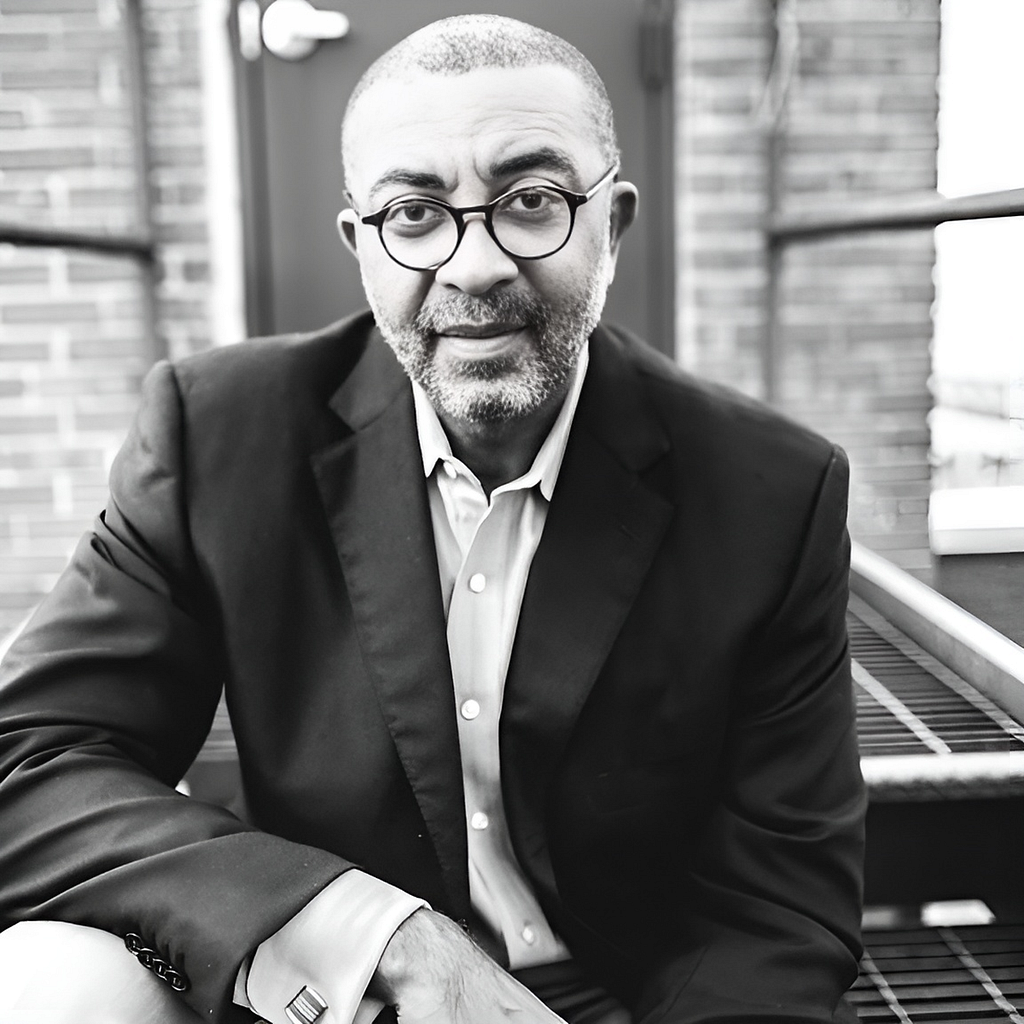
As a part of this series, we had the pleasure to interview Byron Williams.
Byron Williams is a columnist and author. Williams’ latest literary entry, Liberty and Equality in America: Examining the Radical and Paradoxical Legacy of the Declaration of Independence, five thought provoking essays that uses the Declaration of Independence to examine the American narrative through its stated commitments of liberty and equality and its unstated silent partner, paradox. Williams is one of the scholars to be interviewed by USA Today about the meaning of the 250th anniversary of the Declaration of Independence.
Thank you so much for joining us in this interview series! Before we dive into the main focus of our interview, our readers would love to “get to know you” a bit better. Can you tell us a bit about your childhood backstory?
I grew up in Berkeley California, during the 1960s, a remarkable time and place in American history. Berkeley was more than a city; it was a crucible of ideas, civic engagement, and social transformation. Questions about justice, freedom, equality, and democracy were not abstract concepts reserved for classrooms or newspapers. They were the conversations taking place around kitchen tables, in neighborhoods, in churches, and throughout the community. As a young African American growing up in that environment, I was surrounded by differing visions of how America should fulfill its founding promise. Some believed change would come through the nonviolent moral leadership of the civil rights movement. Others argued that more assertive forms of advocacy were necessary to secure justice and dignity. Even as a child, I recognized that these were not simply political disagreements, they were profound questions about what liberty and equality mean in practice.
Rather than leading me to choose sides, those experiences led me to ask questions. How does a nation dedicated to liberty extend that promise to everyone? What is the relationship between individual freedom and equal opportunity? How do democratic societies confront injustice while remaining faithful to their constitutional ideals? Those questions never left me. They became the foundation of my life’s work as a writer, historian, and public intellectual. They ultimately inspired Liberty and Equality, a book that explores the enduring tension and essential partnership between America’s two defining ideals. I have long believed that liberty without equality leaves too many people excluded from the American promise, while equality without liberty risks undermining the very freedoms that make progress possible. Our history demonstrates that the nation’s greatest achievements have come when we have worked to strengthen both together.
Growing up in Berkeley also taught me another enduring lesson: social justice is not merely about confronting injustice; it is about expanding the circle of opportunity, protecting human dignity, and strengthening the institutions that enable every person to flourish. It requires both the courage to challenge what is wrong and the wisdom to preserve what is right. Looking back, I realize that my childhood did not provide me with all the answers. It gave me something far more valuable; a lifelong curiosity and a deep conviction that history, honestly examined, can help us build a more just and more unified society. That conviction continues to guide everything I write, teach, and advocate today.
When you were younger, was there a book that you read that inspired you to take action or changed your life? Can you share a story about that?
For me, it has always been, and continues to be, Adventures of Huckleberry Finn. Every time I return to it, I discover something new. Its social impact isn’t confined to the era in which it was written; its lessons remain remarkably contemporary. At its heart, the novel is not simply about race or America’s past. It is about the moral courage required to choose humanity over convention.
One of Mark Twain’s greatest achievements was granting Jim the dignity of full humanity and personal agency at a time when American literature rarely afforded Black characters such complexity. But equally important is Twain’s choice of Huck as our guide. Huck is not educated, sophisticated, or politically enlightened. He is an ordinary young person wrestling with the values his society has taught him and the truths his conscience reveals. That is what makes the story timeless. Huck’s transformation reminds us that allyship does not begin with expertise or moral perfection. It begins with the willingness to question inherited assumptions, to see another person’s humanity, and to act on conscience even when doing so comes at personal cost. His famous moral dilemma, believing he is doing wrong by helping Jim yet choosing compassion anyway, illustrates one of literature’s most enduring lessons: our greatest moral breakthroughs often require us to challenge the accepted norms of our own time.
For me, that remains the contemporary formula for social progress. Every generation inherits customs, biases, and institutions that deserve examination. The measure of leadership is not whether we accept them uncritically, but whether we possess the humility and courage to ask, “Is this just?” and then act accordingly.
It has been said that our mistakes can be our greatest teachers. Can you share a story about the funniest mistake you made when you were first starting? Can you tell us what lesson you learned from that?
One of my earliest speaking engagements taught me a lesson I’ll never forget. I had spent weeks preparing every fact, every historical reference, every quote. I walked onto the stage determined to prove that I knew the material. About five minutes into the talk, I realized I had become so focused on delivering the “perfect” presentation that I had lost the audience. They weren’t connecting with my knowledge; they were waiting to connect with me. So, I stopped. I admitted I had become too scripted, laughed at myself, and simply started having a conversation. Ironically, the rest of the talk went far better than the carefully rehearsed beginning.
That experience taught me a lesson that has stayed with me ever since: people don’t remember how many facts you know nearly as much as they remember how you made them think and how you made them feel. As a historian and public intellectual, my responsibility isn’t simply to transfer information. It’s to create understanding. History isn’t meant to impress people; it’s meant to invite them into a conversation about who we are, what we’ve learned, and where we’re going. That early mistake reminded me that authenticity is more persuasive than perfection. Whether I’m speaking about America’s founding principles in Liberty and Equality or discussing today’s civic challenges, my goal is no longer to sound like the smartest person in the room. My goal is to leave the room with more people thinking deeply, asking better questions, and believing they have a role in strengthening our democracy.
Can you describe how you aim to make a significant social impact with your book?
The primary objective of Liberty and Equality is to elevate the national conversation about America’s founding ideals and their relevance today. My goal is to help readers move beyond the false choice between liberty and equality by demonstrating that the nation’s enduring strength depends upon both.
Rather than presenting history as a source of division, I view it as a bridge, inviting Americans to engage honestly with the country’s triumphs and shortcomings while remaining committed to the promise of constitutional democracy. He challenges readers to see that liberty is most secure when every person has a genuine opportunity to participate fully in civic life.
The book’s social impact lies in its ability to foster thoughtful dialogue across political, cultural, and generational divides. I encourage citizens, educators, judges, business leaders, students, and policymakers to embrace history not as a weapon, but as a teacher. By promoting civic literacy, constitutional understanding, and respectful discourse, I seek to strengthen belief in democratic institutions and cultivate a renewed sense of shared responsibility.
Can you share with us the most interesting story that you shared in your book?
The Experiment and Jazz. The American experiment is a paradoxical potpourri of high and low moments, where at times its greatest achievements were intertwined with its greatest shortcomings as related to the “idea.” Blinded by the certainty of the words, devoid of any exploration of the context, America becomes more like the thirteen postwar colonies, where the individual assumes the role of nation-state. It is to adopt the tragic belief that the contrarian perspective is adversarial. Only the speech, dissent, and viewpoints that do not cause discomfort are acceptable. It is an “us v. them” mentality, where the tough questions are deemed subversive. If this experiment is ongoing, does that not suggest that evolution is an organic part of the formula? Risking change is the hallmark of the revolution. As the Declaration’s “idea” proves, there are moments within the human condition when it becomes necessary for one people to dissolve the existing political bands with which they have become familiar in order to pursue a different course. It is not a course that moves away from the “idea,” but rather one that, albeit not identical, remains congruent with the nation’s inception. That is the unparalleled burden bestowed upon a nation dedicated to liberty and equality. The frustrating, brilliant, and revolutionary truth remains: There can be no expiration date on the “experiment.”
Like jazz, the experiment is truly an American creation, complete with syncopation and improvisation. Both are nonpareil projects that swing, scat, and innovate. Infused with the polytonality that jazz embraces, while the experiment reluctantly accepts, they are nevertheless indefinable works of unadulterated genius. Though at times the experiment has sought the refuge of the status quo, its greatest moments, like those of its musical counterpart, have been realized in its willingness to risk mistakes, pushing beyond its stated boundaries to discover something new, and the “idea” that is the Declaration serves as the permanent liner notes.
But embracing the “idea” is difficult. The courage that was on display when the Founders signed their names to the Declaration still remains. The viability of the “idea” requires the active involvement of its citizenry in ways unprecedented in human history. Fortunately, Rush provided the clarion call to all Americans in 1787 that remains applicable today: “Your country demands your services! Philosophers and friends to mankind, come forward! Your country demands your studies and speculations! Lovers of peace and order, who declined taking part in the late war, come forward! The revolution is not over!
What was the “aha moment” or series of events that made you decide to bring your message to the greater world? Can you share a story about that?
There wasn’t a single “aha” moment. It was more of a slow realization than a lightning bolt. For as long as I can remember, I’ve been a student of people, ideas, and history. Even as a child, I listened more than I spoke. I read voraciously, not simply to accumulate information, but to understand how ideas shape societies and how stories shape the way we see one another. Long before I considered myself a writer, I was observing, questioning, and connecting dots that others often seemed content to leave unconnected.
Writing became the natural extension of that curiosity. It was the place where I could wrestle with complex questions and discover what I actually believed. Over time, I realized that I wasn’t simply writing to express myself, I was writing to contribute to a conversation that I believed was missing an important voice. As I looked around our national discourse, I noticed that many conversations about America’s history and founding principles had become polarized. Too often, people were being asked to choose between liberty and equality, as though embracing one required abandoning the other. Yet when I returned to the founding documents, the Constitution, and the long arc of American history, I saw something different. I saw an ongoing effort, often imperfect, sometimes painfully slow, to bring those two ideals into closer alignment. I realized that I was approaching these questions through a different lens than many of the voices dominating the public conversation. I wasn’t interested in defending mythology, nor was I interested in promoting cynicism. I wanted to recover the complexity of the American story and remind people that our history is not diminished by honesty; it is strengthened by it.
That realization eventually became Liberty and Equality. The book is not simply about history; it is about civic responsibility. It asks readers to see our founding ideals not as relics of the past but as living principles that call each generation to continue the work of building a more perfect union. If there was an “aha” moment, it was recognizing that no one I knew was making this argument in quite this way. I felt both an opportunity and an obligation to contribute. Writers don’t choose the questions that haunt them; those questions choose the writer. Mine have always centered on how history can illuminate our present, how constitutional principles can guide our future, and how thoughtful dialogue can bridge the divides that threaten our democracy. Ultimately, I didn’t decide to bring my message to the world because I thought I had all the answers. I did it because I believed the questions were too important to leave unasked. If my work encourages people to think more deeply, listen more generously, and engage more thoughtfully with one another, then I believe it has served its purpose.
Without sharing specific names, can you tell us a story about a particular individual who was impacted or helped by your cause?
Without question, it was my father’s unwavering love for me.
Are there three things the community/society/politicians can do to help you address the root of the problem you are trying to solve?
- To authentically “see” those on the margin
- Take seriously (not hackneyed rote memorization) the nation’s public moral documents (the Declaration of Independence, Constitution, and the Emancipation Proclamation.)
- Make education less about a linear pursuit of employment but how to be better citizens regardless of one’s vocation, taking one’s “rights” and “responsibilities” with equal importance.
How do you define “Leadership”? Can you explain what you mean or give an example?
“The moral courage to preserve liberty by expanding opportunity, protecting human dignity, and creating the conditions where every person has an authentic chance to flourish.” That understanding of leader is not accompanied with title.

What are your “5 things I wish someone told me when I first started” and why? Please share a story or example for each.
I’ve always struggled with questions like this because they assume that wisdom can simply be transferred from one person to another. I’m not convinced it can. If someone had handed me a list of “five things you need to know,” I probably would have appreciated it, but I doubt I would have truly understood it. Some lessons can’t be taught; they must be lived. My journey has always been one of inquiry and curiosity. I’ve been driven less by certainty than by questions. Looking back, I realize that every meaningful step forward was preceded by disappointment, rejection, or failure. Those experiences weren’t detours from my path; they were the path. So instead of five things I wish someone had told me, here are five truths I eventually had to discover for myself.
1. Failure is not the opposite of success — it is the tuition you pay for it.
Early in my career, I viewed failure as evidence that I wasn’t ready. Over time, I came to understand that failure was actually refining my thinking. Every rejected idea, every difficult conversation, every opportunity that didn’t materialize forced me to ask better questions and produce better work. My success as a writer and public intellectual is, in many ways, the cumulative result of my failures.
2. Curiosity will take you farther than certainty.
I learned that my greatest strength wasn’t having answers, it was asking questions that others weren’t asking. Whether studying history, constitutional principles, or the American experience, curiosity opened doors that certainty would have kept closed. The moment we believe we’ve arrived intellectually is often the moment we stop growing.
3. Find your voice instead of borrowing someone else’s.
There were many accomplished scholars and commentators whose work I admired. It would have been easy to imitate them. But I eventually realized that my contribution would only matter if it reflected my own perspective. Liberty and Equality exists because I chose to explore questions through a lens I didn’t see represented elsewhere. Authenticity always outlasts imitation.
4. Write to discover, not merely to persuade.
When I first began writing, I thought the goal was to convince others. I eventually realized that writing is also a process of discovery. Often, I don’t fully understand what I think until I’ve written it. The page has become both my classroom and my laboratory. The best writing doesn’t begin with certainty; it ends with greater clarity.
5. Success is measured by contribution, not recognition.
Recognition is gratifying, but it is fleeting. What endures is whether your work improves someone else’s understanding or enlarges the public conversation. If a reader closes one of my books asking a better question than they had when they opened it, I consider that success. Influence is not measured by applause; it is measured by the conversations that continue after you’ve left the room.
If I could leave someone beginning their own journey with one thought, it would be this: Don’t fear failure. Pay attention to it. Failure is a remarkably honest teacher. It reveals your assumptions, tests your commitment, and asks whether your purpose is strong enough to continue when success isn’t guaranteed. Every worthwhile pursuit eventually asks the same question: Do you believe in the work enough to keep going when no one else does? The answer to that question is not talent, not luck, and not recognition, but what ultimately shapes both your character and your legacy.
Can you please give us your favorite “Life Lesson Quote”? Can you share how that was relevant to you in your life?
“The hottest places in hell are reserved for those who in a period of moral crisis maintain their neutrality” ~ Dante. Attributed to Dante’s Inferno, neutral souls are placed outside of hell entirely, considered too insignificant for either heaven or damnation. The emphasis behind the quote the propelled the abolitionists fight against enslavement, women to fight for suffrage, the demand for civil rights, and support for marriage equality. Neutrality is not an option when the nation’s moral questions are at issue.
Is there a person in the world, or in the US with whom you would like to have a private breakfast or lunch with, and why? He or she might just see this, especially if we tag them. 🙂
If I had the opportunity to share a private breakfast or lunch with anyone today, it would be Representative Hakeem Jeffries. The reason is not partisan; it is historical. Representative Jeffries stands at an important moment in American public life. Should he become Speaker of the House, he will inherit not only the responsibilities of legislative leadership but also the challenge of helping restore public confidence in our democratic institutions. Throughout our history, the nation’s greatest leaders have understood that their highest calling was not simply to win political debates, but to strengthen the constitutional republic they were entrusted to serve. I would welcome the opportunity to discuss the ideas explored in Liberty and Equality because I believe they offer a blueprint for navigating this moment in our nation’s history. The book argues that liberty and equality are not competing ideals but complementary principles that have shaped the American experiment from its founding. Too often, our public discourse treats them as opposing values, when in fact our greatest periods of progress have come from bringing them into closer alignment. Our conversation would not be about political strategy. It would be about civic leadership. I would ask how we can cultivate a political culture that values constitutional literacy over slogans, principled disagreement
How can our readers further follow your work online?
Readers can follow on Substack for ongoing features @bonecrivain1 and purchase my latest book on Amazon here. I was recently honored to be featured on Boston 25 News in recognition of the 250th Anniversary of the United States, and readers can also learn more about the release of my latest book through my feature in CityBiz Boston.
This was very meaningful, thank you so much. We wish you only continued success on your great work!
About The Interviewer: Yitzi Weiner is a journalist, author, and the founder & Editor-In-Chief of Authority Magazine. The guiding principle behind all of Authority Magazine’s content is that good stories should be beautiful to heart, mind, and eyes. Yitzi is also the CEO of Authority Magazine’s Thought Leader Incubator, which has guided dozens of leaders to become trusted authorities in their field after becoming syndicated columnists, authors, and media commentators. Yitzi is also the author of five books. At Authority Magazine, Yitzi has conducted or coordinated more than 4000 empowering interviews with prominent Authorities like Shaquille O’Neal, Floyd Mayweather, Kelly Rowland, Bobbi Brown, Daymond John, Lori Greiner, Robert Herjavec, Lindsay Lohan, Cal Ripken Jr., Jillian Michaels, Derek Hough, and the C-Suite executives of companies like eBay, Kroger, American Express, MasterCard, 3M, L’Oréal, Walgreens, Intuit, Virgin, Campbell, Walmart, CVS, Wells Fargo, AT&T, Oracle, ZOOM, Udemy, Samuel Adams Beer, Zappos, Adobe, Capital One, Lockheed Martin, Gallup, Procter & Gamble, Anheuser-Busch, Chipotle, Starbucks, and thousands others. A trained Rabbi, Yitzi is also a dynamic educator, teacher and orator. He currently lives in Maryland with his wife and children. If you are a successful leader in your field, and think you would be a good fit for the Thought leader Incubator, feel free to reach out to Yitzi anytime.
Social Impact Authors: How & Why Author Byron Williams Is Helping To Change Our World was originally published in Authority Magazine on Medium, where people are continuing the conversation by highlighting and responding to this story.