

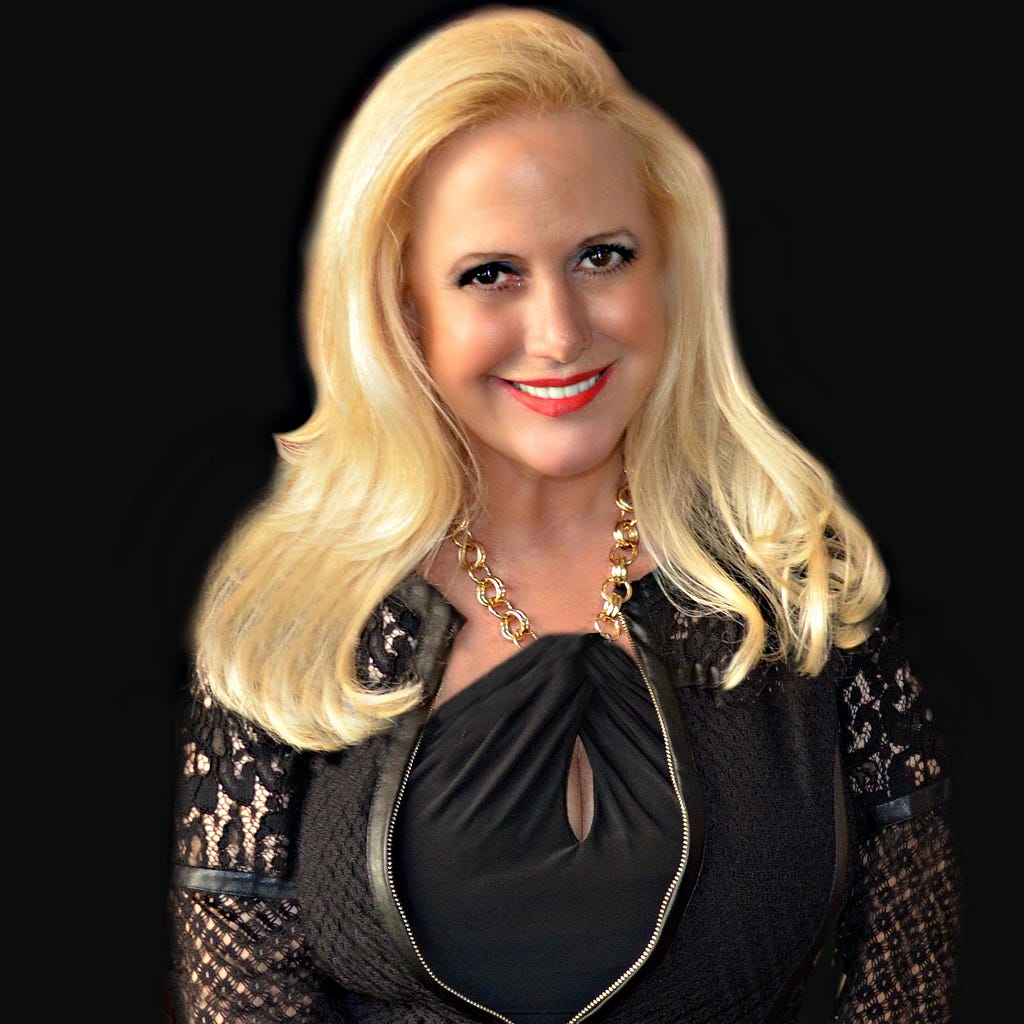
Music Stars Making a Social Impact: Why & How Karen King Of Alleva Dairy Is Helping To Change Our World
To me, success is doing what you love to do, knowing that you gave it your all and never gave up on the gift inside you.
As a part of our series about stars who are making an important social impact, I had the pleasure of interviewing Karen King.
Karen King, a multi-talented singer, songwriter, and businesswoman best known for her storied musical career and as the owner of Alleva Dairy, America’s oldest cheese shop, has turned her creative focus towards songwriting, channeling her passion for America into a new patriotic release in time for USA 250. “Here We Are” was co-written with longtime collaborator Adelaide Mancuso and features arrangement by King’s longtime musical director Angelo DiPippo who contracted top tier jazz musicians for the track. Her songwriting process — beginning with a clear concept and built on melody and structure — shines through on this new original patriotic song. Mancuso’s quick lyrical instincts, paired with decades of creative chemistry, perfectly complement King’s musical direction.
Thank you so much for joining us in this interview series! Can you share with us the backstory that led you to this career path?
I am an entertainer, not just by profession, but by nature. It is not simply what I do, it is who I have always been. From the earliest moments I can remember, the only thing I ever truly wanted was to sing, create, write, and make people smile through the talent God gave me. Music has never been separate from me. It has always felt like my calling. I grew up attending Catholic private school, where church was part of our daily life. I remember standing among the pews as the nuns led the hymns and encouraged everyone to sing. Most of the children did not really want to sing, but for me, it was the exact opposite. That was the moment I waited for.
Singing was not something I was shy about. It was something I ran toward. I poured my heart into every note. I sang loudly because I wanted to be heard. Those hymns became my first stage, my first connection to music, and my first experience sharing my voice with others. The nuns would have me stand at the first pew, turn around to face all the children from every grade in the church, and lead the hymns. They hoped my enthusiasm would encourage the other children to sing along. But for me, it was never about attention or praise. I did it because I loved it.
Even then, as a little kid, I had this great power in my voice. I knew my purpose so clearly at such a young age, and that was rare, but I did. Music grounded me. It gave me direction long before I fully understood what that meant. Looking back, I believe that was the beginning of everything. That little girl standing in the front pew, singing with everything she had, was already becoming the artist I was meant to be.
It has been said that our mistakes can be our greatest teachers. Can you share a story about the funniest mistake you made when you were first starting? Can you tell us what lesson you learned from that?
They say our greatest mistakes can become our greatest teachers, and I have lived that truth many times on stage. When I was first starting out, I constantly pushed myself to get in front of people and sing. My heart would race so hard, it felt like it was going to jump out of my chest. But no matter how nervous I was, I made myself get up there. It took many years of pushing myself to get on stage and sing before I finally got over that feeling of my heart pounding away. One time, when I was a teenager, I was so nervous that I tripped and fell right in front of the audience. I was embarrassed, and I actually hurt myself, but I got up, laughed at myself, composed myself, and finished the song. At the time, it felt awful, but looking back, it became one of the best lessons I ever learned. That moment taught me that no matter what happens on stage, you keep going. Even if you fall flat on your face, you get up, brush yourself off, and continue, because the show must go on. That lesson stayed with me throughout my life. I have sung the wrong lyrics, lost my place because I was so emotionally involved in a performance, and had to find my way back into the song. Even now, after singing my whole life, learning hundreds of songs, and even writing my own songs, I still have to revisit them and reconnect with them. Usually, all it takes is singing a song a few times, and it all comes back. But when mistakes happen, you cannot stop. If you forget a word or lose your place, you stay in the moment and keep moving forward. Most of the time, nobody even notices. And even if they do, it is okay. Today, I can laugh at all those moments, because if you cannot laugh at yourself, you will never make it through a life on stage. What I learned is that performing is not about being perfect. It is about knowing how to recover, trusting yourself, and continuing forward without losing your confidence.
What would you advise a young person who wants to emulate your success?
One of the most important pieces of advice I would give a young person is to stay passionate, stay humble, and never let anyone else’s lack of encouragement define what is possible for you. Early in my career, I asked a few very famous people how they got started. These were people I admired, people who had already achieved great success. One of them simply walked away, and another spoke to me in a way that offered no encouragement at all. I will not mention their names, because that is not the point, but I never forgot how they made me feel. From that moment on, I made a promise to myself. I decided that if I ever found any level of success in my own career, I would always answer those questions with honesty and kindness. If those of us who have lived it do not share what we have learned, how can the next generation know what is possible for them? What I always tell young people is this: no matter what your passion is, whether it is writing, singing, performing, creating, or even making meatballs, you have to give it everything you have. Give it your whole heart and soul. Work hard, stay open, keep learning, and know within yourself that you have done your very best work. Success is not defined only by fame or accomplishments. It is defined by the journey. The journey is where we learn, and everything we learn along the way is important. Even if you never reach the exact destination you imagined, everything you do along the way has value. To me, success is doing what you love to do, knowing that you gave it your all and never gave up on the gift inside you.
Is there a person that made a profound impact on your life? Can you share a story?
There have been several people who made a profound impact on my life and career. Angelo DiPippo, who was my conductor and musical director, was certainly one of them. Angelo was considered one of the greatest accordion players in the world, and he was also my arranger and conductor. He arranged my first album when I was only 19 years old, so our musical history goes back a long way. But there was another person whose influence changed my life forever, and her name was Mabel King. Most people remember Mabel for her role as Mama Thomas on the television show What’s Happening!!, but she was also a Broadway star who performed in The Wiz as Evillene with Stephanie Mills, and later played the same role, Evillene, the Wicked Witch, in the film version alongside Diana Ross and Michael Jackson. I met Mabel after moving to Los Angeles, where I was cast in a play in which she was my co-star. Before we even began rehearsals, she had heard my album and called me personally to tell me how much she loved it. I could not believe that Mabel King was calling me. We became much more than colleagues. We became like mother and daughter. She took me under her wing, introduced me to people, and helped me in ways I will never forget. I often opened shows for her, and she would introduce me as her daughter. We laughed because audiences actually believed it. After the performances, people would line up for her autograph and then mine, calling out, “Karen King.” One day, Mabel said to me, “Karen, I want you to take my name.” She offered it to me as her gift. She said it would be good for me. I accepted her name with gratitude and pride, and that is how I became Karen King. Mabel was a brilliant actor and singer, a kind, funny, middle-aged Black woman. I was a young, impressionable white girl, but our friendship went far beyond any of that. We laughed together, worked together, supported each other, and loved each other deeply. What I loved about Mabel was that she never saw color. I remember her saying to me, “Karen, I think we could even conquer this black and white thing.” That was in the early 1980s, and we both felt like we could through our music and artistry. Her favorite movie was Imitation of Life, and that movie, and what it represented to both of us, stayed with me all these years. Mabel gave me more than a name. She gave me confidence, guidance, love, and a deeper understanding of what it means to lift another person up. Her influence changed my life forever.
How are you using your success to bring goodness to the world? Can you share with us the meaningful or exciting causes you’re working on right now?
Through my song “Here We Are,” I hope to use whatever success I have to bring goodness into the world. One of the meaningful causes closest to my heart right now is sharing this song with our veterans and with organizations that support them, such as Wounded Warrior Project, Disabled American Veterans, and the Gary Sinise Foundation. I am singing “Here We Are” at veterans’ hospitals, especially throughout New York, and singing it for the men and women who have served our country. Our freedom was not simply given to us, it was won, and I believe our veterans deserve to be honored, remembered, and celebrated.
As America approaches its 250th anniversary, I feel this is the perfect time for “Here We Are” to come into the world. My writing partner, Adelaide Mancuso, and I created this song because we believe America needs unity, hope, and a reminder of who we are as a nation. I first suggested that we write a patriotic song, especially during this time in our country’s history, and we both took that idea and brought it to life.
To me, “Here We Are” represents everything this anniversary stands for: our history, our freedom, our resilience, our unity, and our hope for the future. We wanted to create something that celebrates the spirit of America, much like “God Bless America” did for previous generations. My hope is that “Here We Are” becomes part of the celebration of America’s 250th anniversary and helps bring people together at a time when we need unity more than ever.
Can you share with us a story behind why you chose to take up this particular cause?
I love my country, and I was raised with a real understanding that the freedoms we enjoy were not simply given to us. They were won by men and women who sacrificed, and who continue to sacrifice, for our nation. Freedom is precious, and it deserves to be honored, protected, and never taken for granted. My father and my uncles spoke about the war. They talked about what it was like, about how horrible it was, and what it meant to fight for this country. They were young men. They did not want to go to war, but they went because they understood what was at stake. They knew the importance of protecting America and defeating Hitler and his regime. My father used to say to me, “Karen, if we didn’t win that war, we would be speaking German.” That stayed with me. It made me understand, even as a young girl, that freedom has a price. That is why I want to share “Here We Are” with veterans. I want this song to honor them and remind people of what they gave, and what so many continue to give. Despite our differences, I believe we have far more in common than what divides us. That belief inspired “Here We Are.” Adelaide and I wrote it as a reminder that we are stronger together than apart, that freedom is worth cherishing, and that unity is still possible for the American people. For me, this is more than just another song. It is an opportunity to be part of something meaningful and to use my voice not only to entertain, but to honor, unite, and inspire. It is about remembering what we have, celebrating who we are, and looking forward to where we are going.
Can you share with us a story about a person who was impacted by your cause?
Because this cause is so personal to me, I always come back to my father and my uncles, who fought in World War II. They are the people who impacted me most and helped me understand what freedom really means. My Uncle Charlie lost his cousins and his brother in the war. His mother grieved her son for the rest of her life. They talked about the friendships they made and the friends who were killed. They talked about the men who did not come home. They sacrificed their lives for us. That is a really big sacrifice. I do not think the kids today truly understand the sacrifices that veterans went through for our freedom. My father talked about how he got shot and survived. I believe that is why this is so close to my heart. Writing this song, and having it happen during the 250th anniversary of our country, all comes together for me at this time in my life. It stayed with me for a long time. It made freedom real to me. It made me understand that America’s freedom came at a cost, and that we have a responsibility to honor the people who protected it. My Uncle Charlie met my father during the war, and they became lifelong best friends. Their example instilled in me what America and freedom are really about. In many ways, they are the reason this cause matters so deeply to me.
Are there three things or are there things that individuals, society, or the government can do to support you in this effort?
To support this effort, I believe both government and individuals can play a meaningful role. First, I would love to see the government expand support for veterans even further. Every veteran should have secure housing, consistent access to healthcare, and more programs that help them reintegrate into civilian life, whether through job opportunities, financial support, or community programs. No veteran should ever go hungry or feel forgotten. At the same time, individuals and society can continue to honor and uplift veterans. Whether it is supporting organizations like Wounded Warrior Project, Disabled American Veterans, Gary Sinise Foundation or attending events that raise funds and awareness, every action matters. I recently sang at a charity event for amputee veterans, where people came together to donate and show their gratitude. These amputee veterans came from all over the country to play in a softball game. Events like that give people a way to support them directly. Even something as simple as buying a ticket, showing up, donating, or saying thank you can make a difference. As we approach America’s 250th anniversary, I believe the national conversation about freedom and unity makes this the perfect time to ensure that those who served us are never forgotten. By supporting efforts like Wounded Warrior Project and Disabled American Veterans, Gary Sinise Foundation, we can foster the unity and gratitude that this milestone represents.
Why do you think music in particular has the power to create social change and create a positive impact on humanity?
Music holds a unique power to create social change because it taps directly into emotion and shared human experience. From a young age, we all grow up with music. Everybody listens to music, no matter who you are. It becomes part of who we are. In many ways, music is one of our first forms of independent expression. The music we choose, the songs we connect with, and the artists we love help define us and shape our lives. Because people love music, they also form a deep connection with the artists who create it. We look up to artists. We respect their voices. We believe they speak truth through their music, and because we relate to their songs, we often want to hear what they have to say about bigger issues. That is why music can be such a powerful tool for social change. When an artist uses their voice to bring awareness to a cause, raise money, or speak about something that matters, people listen. They may not always agree, but they listen because the music has already touched them. I also believe we need to return to respectful conversation. I believe in free speech. I believe in debate. People should be able to express what they believe, whether we agree with them or not. Debate should be strong, but it should also be respectful. Music can help open that door because it reaches people emotionally first. Music can uplift people, calm people, bring people together, and remind us of what we share. That is why it has the power to create positive change in humanity.
What are your “5 things I wish someone told me when I first started”?
1. Making money from music is very hard. I wish someone had told me how difficult it can be to make a living from singing, writing music, and performing. Unless you have a record company or a strong team behind you, you need a backup plan. You need a way to pay your bills while you pursue your passion.
2. Write your own music and own your songs. Writing your own songs gives you independence. It separates you from people who are only singing other people’s material. It also gives you ownership and can give you a better chance in the music business.
3. Learn to play an instrument. I think every singer and songwriter should learn an instrument. It gives you more insight into how music is created and helps you shape songs to your own taste, style, and needs as an artist.
4. Find a mentor in the industry. You need someone who understands the business to help guide you. A mentor can help you structure your goals, prepare yourself, and understand how to move forward in a smart way.
5. Get an education. Passion is important, but education opens doors. If you get an education, you have more understanding and more opportunities, not only as a performer, but in the music industry as a whole.
You’re a person of enormous influence. If you could start a movement that would bring the most amount of good to the most amount of people, what would that be? You never know what your idea can trigger.
The movement I would love to start would be the Bring Democrats and Republicans Together Movement for America’s 250th anniversary. We have come this far as one nation, and we must learn to respect each other again. Right now, people are screaming at one another, and it is not working. It is creating so much separation, and that is not who we should be as Americans. We can disagree. We can debate. We can argue our points. But we need to do it with respect. We need to come together as a people, not just to debate, but to listen. Through that, we can honor the resilience of our country and move forward together again. Through music, dialogue, and shared values, I believe we can focus on unity. My song “Here We Are” is one step in that direction. I created it to help bring America together, especially at this moment as we approach the 250th anniversary of our country. I am not saying I have all the answers. Politics is hard. Finding common ground seems distant. I do know that people are angry, and we are too divided. If I could start a movement that would bring the most good to the most people, it would be a movement that reminds Democrats and Republicans that we are Americans first. The goal is to unite us all. Let’s stop fighting.
Can you please give us your favorite life lesson quote? And can you explain how that was relevant in your life?
One of my favorite life lesson quotes comes from Winston Churchill: “We make a living by what we get. We make a life by what we give.” That quote is very relevant to my life. I make a living running Alleva, the oldest cheese store in America, but what gives my life meaning is giving. Whether it is giving to my family, giving food to the hungry, handing out a cannoli to someone who has never tasted one, or helping struggling artists, giving has always been a huge part of who I am. My husband, Cha Cha, and I both understood what it meant to struggle. He was a struggling actor, and I was a struggling musician. Our businesses gave us the ability to fund our passions, my music and his acting, but they also gave us the ability to help other people. That is what helping a life really means. Because we were involved in our businesses and able to make a living, we were able to give back. We gave free meals, desserts, coffee, and whatever we could to struggling artists, writers, directors, musicians, and actors who were trying to make it. We knew what that felt like, so when we could help, we did. That was more fulfilling to us than money itself. Of course, you have to work and make a living, but to me, what you give is what truly defines your life. My life has always felt more meaningful because of what I was able to give, not just what I was able to earn.
We are blessed that some very prominent names in Business, VC funding, Sports, and Entertainment read this column. Is there a person in the world, or in the US with whom you would love to have a private breakfast or lunch, and why? He or she might just see this if we tag them.
Rather than one person, I would love to address Congress as a whole. Congress is where the dialogue begins, and where it can rise to the attention of the highest levels in our country. Everyone is represented there: Democrats, Republicans, and Independents, each with different perspectives. In a private setting or in Congress itself, I would like to introduce my song “Here We Are” and share the message behind it. Right now, we are at war with one another politically, and it saddens me to see the division today. We live in the greatest country in the world. In the end, it is not just about politics, it is about people. If we remember how we got here over the last 250 years, and all the wars we fought together for the greatness of our nation, then maybe we can remember to open our hearts again as a people.
Thank you so much for these amazing insights. This was so inspiring, and we wish you continued success!
Music Stars Making a Social Impact: Why & How Karen King Of Alleva Dairy Is Helping To Change Our… was originally published in Authority Magazine on Medium, where people are continuing the conversation by highlighting and responding to this story.