

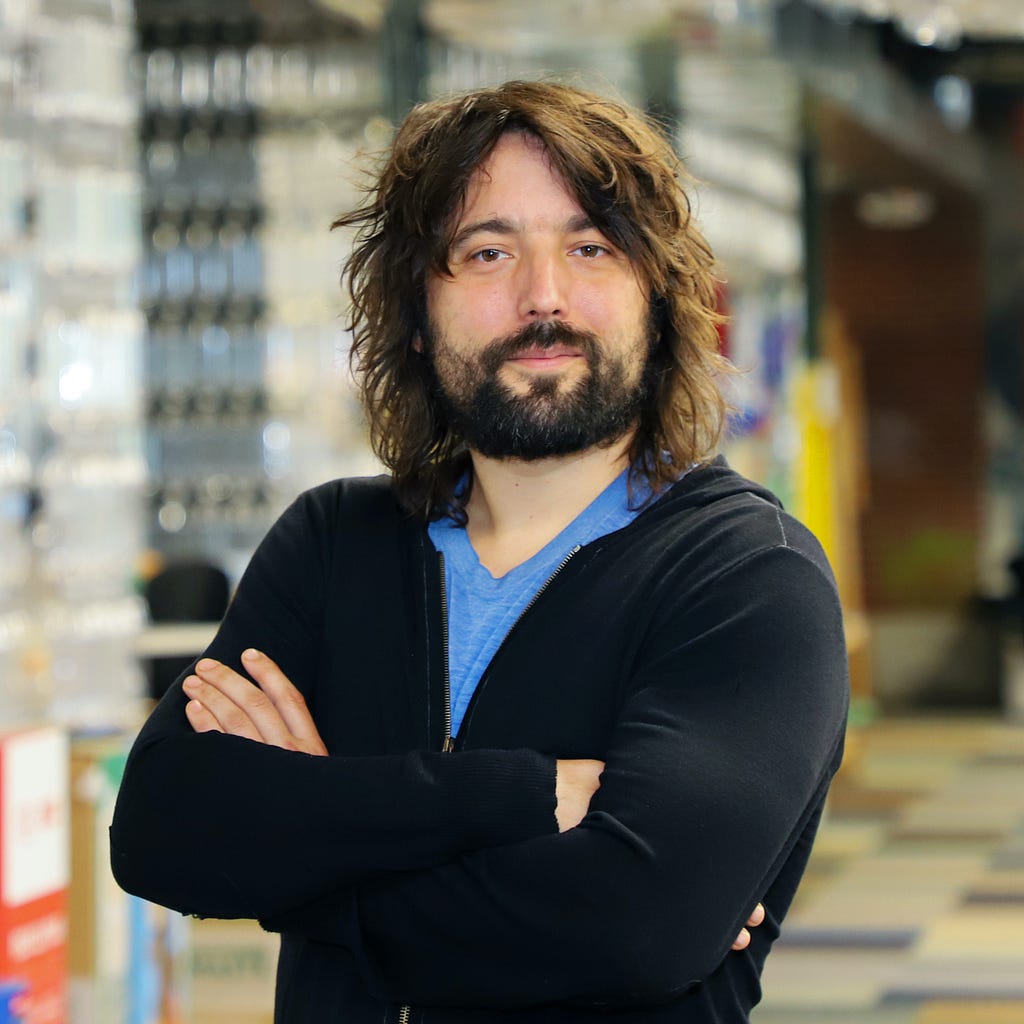
The lesson I take from that is the importance of holding on to your identity. We could have pivoted toward something more conventional dozens of times. We did not, and the mission itself turned out to be our greatest competitive advantage.
As we face an unprecedented environmental crisis, the need for sustainable solutions has never been more urgent. This series seeks to spotlight the innovative minds and passionate advocates who are leading the charge in environmental conservation and sustainable practices. We aim to explore the most effective strategies, breakthrough technologies, and transformative policies that are shaping a more sustainable future for our planet. As a part of this series, I had the distinct pleasure of interviewing Tom Szaky.
Tom Szaky is the Founder and CEO of TerraCycle®, an international leader in innovative sustainability solutions, creating and operating first-of-their-kind platforms in recycling, recycled materials, and reuse. Across 18 countries, TerraCycle is on a mission to eliminate the idea of waste and develop practical solutions for today’s complex waste challenges. Tom is the author of several books on the circular economy and a frequent speaker at global forums on waste, packaging, and circularity.
Thank you so much for joining us in this interview series! Before we dive in, our readers would love to “get to know you” a bit better. Can you tell us a bit about your ‘backstory’?
I was born in Budapest during the final years of Communist rule, and my parents and I fled Hungary shortly after the Chernobyl disaster. At the age of four, I found myself leaving home and ending up as a refugee, first in Germany and then Holland, before finally landing in Canada. Our move there was the product of a man-made disaster, and I credit that chapter of my life with exposing me to environmentalism at an early age. I got my first taste of entrepreneurship as a teenager, starting a web design firm called Flyte Design. I then came to the United States to attend college at Princeton University, where I studied economics and fell in love with building businesses. And that’s where TerraCycle was born: a company whose mission is Eliminating the Idea of Waste®. We started by packaging liquefied worm castings in used soda bottles. Today, we operate programs and solutions across 18 countries and are recognized globally as a leader in recycling hard-to-recycle items.
Can you share with us the most interesting story from your career? Can you tell us what lessons or ‘takeaways’ you learned from that?
The moments I find most meaningful are the unexpected encounters with the TerraCycle model playing out in the world. I have seen our logo on a pack of pens in Brazil and on cookie wrappers in the UK. I have visited the TerraCycle Foundation’s teams in Thailand, pulling waste from canals before it can reach the ocean. There is something profound about realizing that what started as a scrappy student project has become part of how people around the world think about their trash. The lesson I take from that is the importance of holding on to your identity. We could have pivoted toward something more conventional dozens of times. We did not, and the mission itself turned out to be our greatest competitive advantage.
You are a successful leader. Which three character traits do you think were most instrumental to your success? Can you please share a story or example for each?
First, relentlessness. TerraCycle faced countless moments where a rational observer would have quit. We stuck with it. Second, a genuine belief that business can be a force for good. I have always felt that the purpose of a business is to change society in some meaningful way, and that profitability enables that change rather than defines it. Third, a willingness to fail fast and learn from it. Any great business is built on a mountain of failures. The key is to test quickly, make lots of small bets, and apply what you learn.
Are you working on any exciting new projects now? How do you think that might help people?
The project I am most excited about right now is something a little different from what people might expect me to say. In our more than 20 years of building the recycling infrastructure the world needs, everyday people can invest in it. We have launched a $75 million Regulation A offering, open to individual investors, not just institutions, to fund our continued growth and strategic acquisitions that advance our mission of Eliminating the Idea of Waste®. This builds on a track record that goes back to 2018, when we first opened TerraCycle US to everyday investors. More than 6,300 people took that opportunity and have since received dividends totaling 22–24% of their invested capital. People want to put their money in successful companies that align with their values, and we proved that again in late 2025 with a Regulation CF raise that hit the $5 million maximum in under 60 days. If you believe in what we are building, you can read the offering circular and explore the opportunity at invest.terracycle.com.
Ok, thank you for all that. Now let’s shift to the main focus of our interview. What pivotal moment led you to dedicate your career to sustainability, and how has that shaped your approach to environmental challenges?
When I was about nine years old, I remember driving around Toronto with my dad and being genuinely astonished by what people were throwing away. I had grown up in Hungary where scarcity meant reuse was simply how life worked. So the first time I ever saw a television set, it was on the side of the road in the trash. That experience shaped a fundamental conviction I still hold: waste is a design and business model failure, not a fact of life. It drives every strategic decision we make at TerraCycle. Our approach is always to find the business model that makes recycling economically viable, because if it pencils out, it will scale.
Could you describe a groundbreaking project or initiative you’ve been involved in that significantly contributed to sustainability?
One of the most groundbreaking things we have ever done is Loop, our reuse platform. The idea was simple but radical: what if you could buy the products you already love, from the brands you already trust, in durable reusable packaging, at the stores where you already shop? No real behavior change, no compromise on convenience or price, just the same experience without the disposable waste. We launched Loop in January 2019 at the annual World Economic Forum meeting in Davos, in partnership with the World Economic Forum and some of the world’s biggest consumer brands, including P&G, Unilever, Nestlé, and PepsiCo, with Kroger and Walgreens as our founding retail partners. The concept was the 21st-century milkman: products delivered in durable packaging, returned, cleaned, refilled, and reused. We piloted across the US, Canada, the UK, France, and Japan, and the lessons were hard won. In France, with Carrefour as our retail partner and the backing of strong national regulation, Loop has now reached commercial scale. Today, French consumers can access more than 400 products in reusable packaging across over 500 Carrefour supermarkets nationwide, with brands such as Ferrero, Danone, Coca-Cola, and Suntory participating. France has proven that reuse is not a fringe concept. It is a mainstream way of doing business when the conditions are right. That is the blueprint we are now taking to the rest of the world.
How do you navigate the balance between economic growth and environmental preservation in your sustainability strategies?
I do not see these as opposing forces, and I think that framing holds back progress. TerraCycle has been profitable for more than ten consecutive years. We have grown net revenue by 93% over the past five years. Our investors have seen meaningful returns on their invested capital. None of that came at the expense of the mission. It came because of it. The key is finding or building a business model where environmental good and economic value are aligned. When brand partners fund the recycling of their hard-to-recycle packaging, they meet their sustainability goals, their customers get a free recycling option, and we generate revenue that lets us do more. That is not a compromise. It is what a successful mission-driven enterprise looks like.
What emerging technologies or innovations do you believe hold the most promise for advancing sustainability and why?
The emerging innovation I am paying close attention to right now is not a technology. It is a policy framework called extended producer responsibility (EPR). The idea is straightforward. If a company puts packaging or products into the market, it should bear the cost of managing those materials at the end of life, not the taxpayer. While we have seen EPR exist for over two decades in Europe and other markets around the world, EPR for packaging only arrived in the US in 2021. Today, seven US states now have packaging EPR laws on the books, and Oregon was the first to move into full implementation in 2025. While EPR is by no means a silver bullet for recycling, it creates a valuable philosophical and practical shift in how waste is managed. This matters enormously for what we do at TerraCycle, where manufacturers voluntarily choose to fund recycling programs for their products and packaging. Right now, the reason most hard-to-recycle materials are not recycled is economic: the cost of collection and processing exceeds the value of the recycled raw material. By shifting fiscal responsibility to producers, EPR underscores the importance of creating a money flow to improve collection and recycling systems.
Here is our main question. Based on your research or experience, can you please share your “5 Top Strategies for a Cleaner Planet”?
1. Reduce overall consumption. Buying less is better than recycling.
Reduce, reuse, recycle: the order matters. Recycling is the last line of defense, not the first. The most environmentally impactful decision a person can make is simply to buy less. The second most impactful is to reuse what they already have. We have always been honest with our community about this hierarchy, even though it is somewhat counterintuitive coming from a recycling company. Our mission is Eliminating the Idea of Waste, and the truest expression of that is a world where less trash is created to begin with.
2. Design waste out at the source.
The most important strategy is also the most upstream: if we design products and packaging to be reusable or locally recyclable in the first place, we never need the more complicated and costly solutions downstream. At TerraCycle, our first recommendation to any brand partner is always to design their materials for reusability or municipal recyclability. Our work with hard-to-recycle items is critically important, but it is a symptom we are treating. A real cure is design.
3. Make recycling as convenient and free as possible for the end user.
One of TerraCycle’s foundational insights is that most people want to do the right thing, but only if it is easy and does not cost them anything. Our brand-sponsored free recycling programs put the financial burden on the companies whose packaging creates the challenge in the first place. The result is that participation scales. When we launched that first drink pouch recycling program, we had no idea how many people would join. The answer was tens of millions globally.
4. Engage consumers and communities as active participants, not passive recipients.
People are far more committed to sustainability when they feel like stakeholders in the outcome. Our programs have raised millions for schools and charities worldwide by allowing our network of “TerraCyclers” to donate the rewards of their recycling efforts to the organizations of their choice. That personal stake transforms recycling from a chore into something meaningful. We also partner with schools and community organizations to run recycling contests with real, tangible prizes, like playgrounds built from the hard-to-recycle packaging the students themselves collected and recycled with us.
5. Build business models where sustainability is the profit driver, not a cost center.
Sustainability initiatives that depend on subsidies or corporate goodwill are inherently fragile. The ones that endure are those where environmental value and economic value are the same thing. At TerraCycle, we have never accepted the premise that doing good and making money are in tension. Our entire model is built on finding the business case for recycling materials that no one else will touch. When brands fund the recycling of their own hard-to-recycle products and packaging, they meet their sustainability commitments, their customers get a free recycling option, and we generate the revenue to do more. Nobody is subsidizing anybody. It works because the incentives are aligned. That is the only kind of sustainability that scales.
In your view, what are the key steps individuals, communities, and governments need to take to achieve a more sustainable future?
For individuals: vote with your dollar. Every purchasing decision is a signal to the market about what you value. Support brands that take responsibility for the end-of-life of their products. Reduce and reuse before you recycle. For communities: create the infrastructure and social norms that make sustainable choices the default, not the exception. Schools are an especially powerful lever because the habits children develop become lifelong patterns. For governments: accelerate extended producer responsibility frameworks, create markets for recycled content, provide grants and subsidies to help fund gaps in recycling access and education, and set mandatory recycling targets.
You are a person of enormous influence. If you could start a movement that would bring the most amount of good to the most amount of people, what would that be? You never know what your idea can trigger. 🙂
I would love to see a global movement toward a real cultural shift away from our current throwaway economy where we focus on reducing overall waste, not just recycling more of it.
The TerraCycle Foundation, an independent nonprofit whose mission is to fight ocean plastic at the source, is doing great work by pulling millions of pounds of waterway waste from rivers and canals in Thailand to keep it from reaching the ocean. But while cleaning up the waste that already exists is vital, our ultimate goal must be to stop creating it in the first place.
As I mentioned earlier, every time you spend money, you are casting a vote for the kind of world you want. If enough people cast those votes thoughtfully and intentionally, the market will respond, and the idea of waste will start to disappear.
What is the best way for our readers to continue to follow your work online?
The best way to stay connected is through terracycle.com, where you can learn about our programs, join a free recycling program, or explore our paid Zero Waste Box solutions. If you are interested in the investment opportunity, visit invest.terracycle.com to read the offering circular. You can also connect with me or TerraCycle on LinkedIn.
This was very inspiring. Thank you so much for the time you spent on this. We wish you only continued success.
The Future Is Green: Tom Szaky Of TerraCycle On Their Top Strategies for a Cleaner Planet was originally published in Authority Magazine on Medium, where people are continuing the conversation by highlighting and responding to this story.