

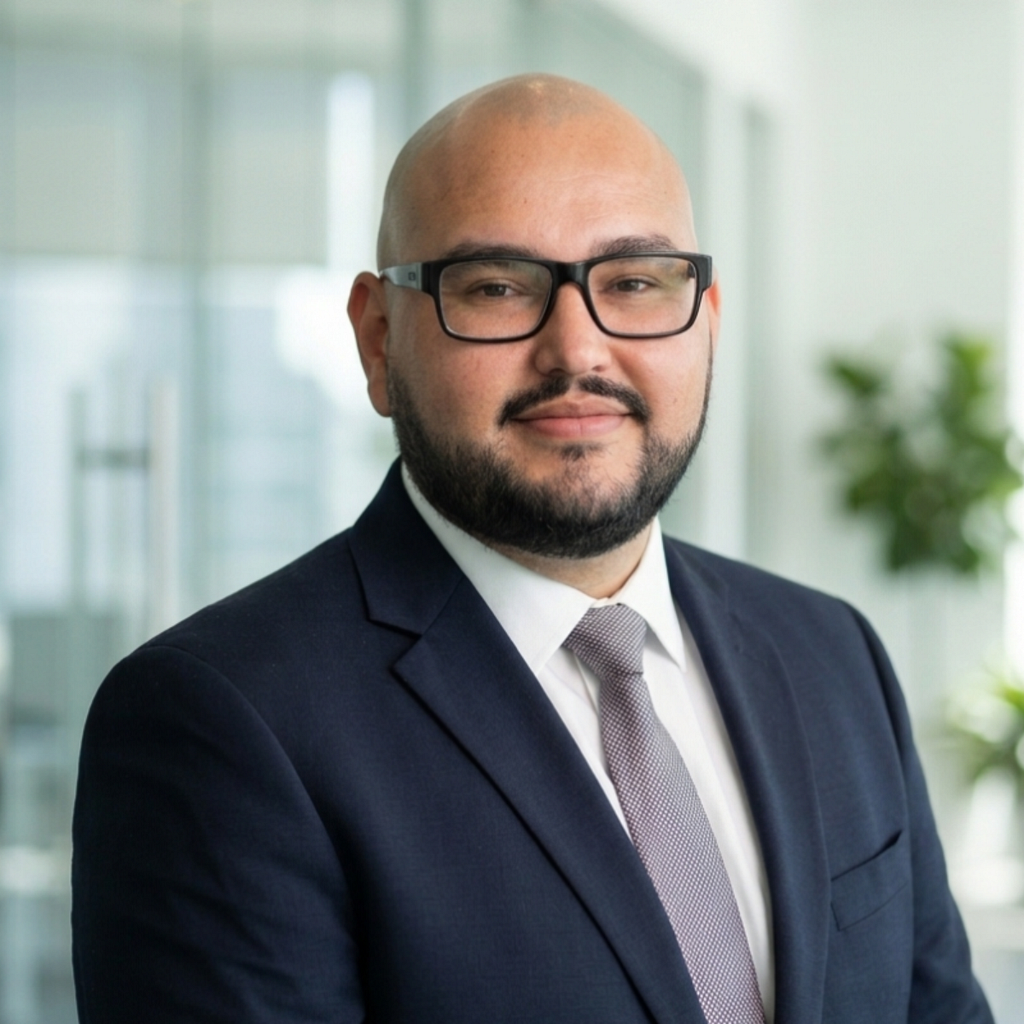
Heroes Of The Addiction Crisis: How Eliseo Becerra Of Horizon Treatment Services Is Helping To Battle One of Our Most Serious Epidemics
The reality is that so many children are deeply affected by their parents’ decisions, often bearing the weight of circumstances beyond their control. Seeing a client bridge that gap and actively reunite with his family was incredibly moving.
As a part of our series about “Heroes Of The Addiction Crisis,” I had the pleasure of interviewing Eliseo Becerra.
Eliseo Becerra serves as Chief of Strategic Growth and Special Operations at Horizon Treatment Services, bringing over 20 years of leadership to the expansion of behavioral health infrastructure. His career spans fifteen years dedicated to scaling clinical operations, navigating complex compliance landscapes, and building medically enhanced sobering centers. Grounded in an MBA in Health Administration from the University of Colorado, he blends advanced management frameworks with modern innovation to drive meaningful systemic change in patient care.
Thank you so much for joining us in this interview series! Can you tell us a bit of your backstory?
I come from humble beginnings, raised as a small-town farm boy by parents who taught me the value of hard work and deep community roots. My dad immigrated from Mexico, and my mother came from El Paso, Texas. I grew up watching them pour their hearts into everything they did, which instilled in me a lifelong passion for giving back. When I pursued my business education, I knew I wanted to channel that drive into something meaningful, and I found a natural connection in healthcare for the less fortunate. I have intentionally dedicated my career to working with organizations that accept Medicaid, driven by the firm belief that everyone, regardless of their financial situation, deserves world-class experience and high-quality care.
Is there a particular story or incident that inspired you to get involved in your work with opioid and drug addiction?
My turning point came during the pandemic, when the world shut down, and the gaps in our healthcare system became impossible to ignore. I watched as many individuals struggling with addiction and co-occurring mental health disorders were completely cut off from the care they desperately needed, left to suffer in isolation. It was heartbreaking to witness, and it lit a fire under me to do something about it. Right around that time, Horizon actually reached out and found me. I truly felt it was a sign from God, a clear door opening for me to pour my leadership talents into something that could genuinely change lives.
Can you explain what brought us to this place? Where did this epidemic come from?
When I look at how we got here, I see a crisis that stems from multiple interconnected sources rather than just a single failure. It started with the complete lack of supervision around prescription opioids, but it quickly merged with a deeper human struggle where regular people were just searching for any way to cope with day-to-day life.
At the same time, the explosion of modern technology turned into a digital pipeline, making it incredibly easy to access substances and pouring more drugs directly onto our streets. Combine that with an unpredictable economy that has made basic living costs unbearable for so many, and you create an environment where desperate people feel forced to resort to trafficking substances just to survive. Underneath all of this is our societal failure to truly embrace mental health tools in everyday life, leaving people to self-medicate because they do not have the real support they need.
Can you describe how your work is making an impact in battling this epidemic?
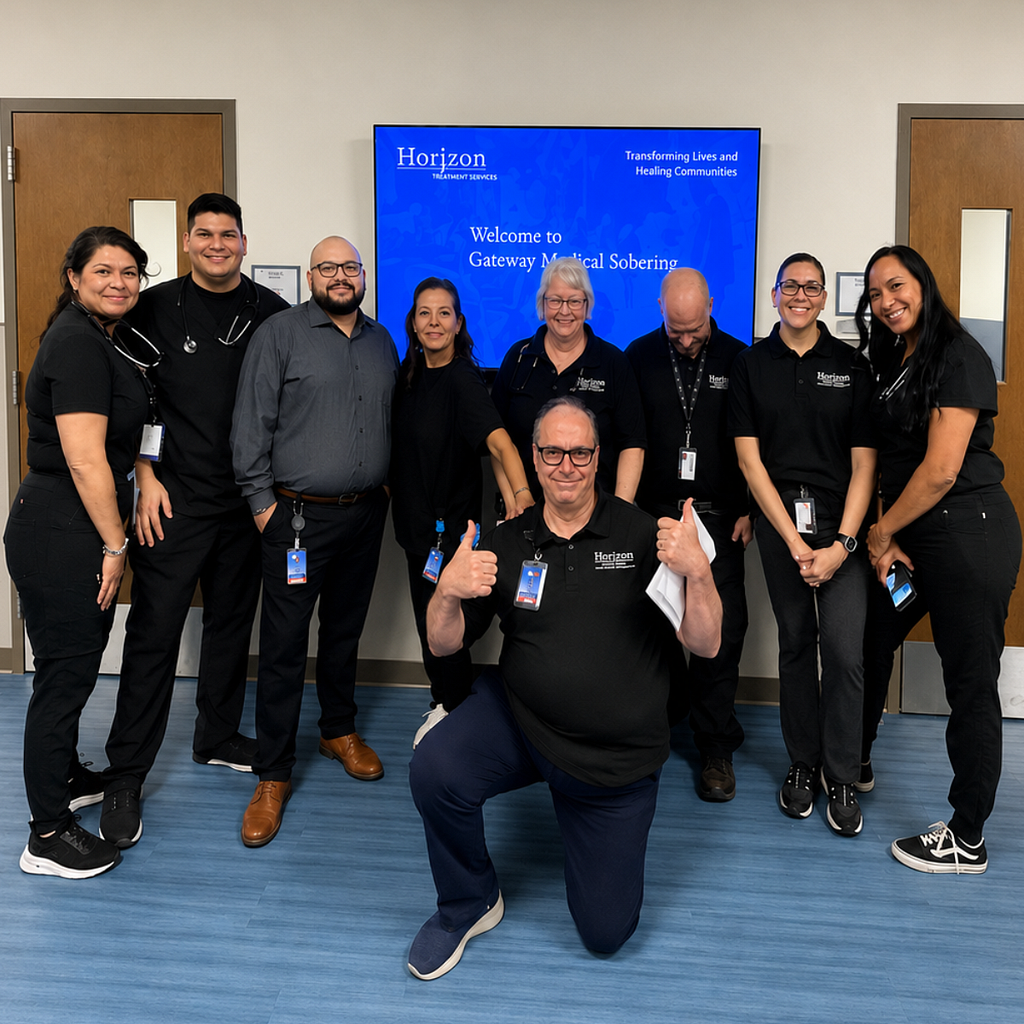
Our approach at Horizon Treatment Services is completely shifting the dynamic from simply providing crisis stabilization services to actively changing the trajectory of people’s lives. A major driver of this impact is our Gateway Medical Sobering Center in Albuquerque, New Mexico, which directly addresses the critical trends highlighted in the NM-IBIS drug overdose deaths report. The New Mexico state data shows a devastating reality regarding overdose fatalities, and Gateway Medical Sobering Center (GMS) provides the immediate medical intervention needed to disrupt that trajectory. By offering a fast turnaround time for EMS drop-offs, we are successfully freeing up emergency departments and creating substantial cost savings for Bernalillo County and surrounding communities.
Furthermore, our strategic partnership with Albuquerque Community Services (ACS) allows us to extend our intoxication recovery support directly to the streets. The ACS teams now have a reliable alternate location to meet clients exactly where they are and bring them directly to GMS. Once they are safely inside our facility, our medical staff can continuously monitor them, intervene immediately if an overdose situation occurs to save their life, and actively engage them with medication-assisted treatment the moment withdrawal symptoms onset. We are proving every day that an operational model built on a seamless continuum of care, rapid response, and deep community partnership can effectively turn the tide on this crisis.
Without sharing real names, can you tell us a story about a particular individual who was impacted by your initiative?
One of the most profound examples of our impact involves a former client who was brought to us within the very first hour of our Gateway Medical Sobering center opening its doors. Normally, a client in his position would have been taken directly to the emergency department, stabilized briefly, and then discharged back onto the street with no long-term public intoxication support. Instead, because our facility was open, he was immediately linked into a withdrawal management program to safely manage his symptoms and continue onto treatment.
When he first arrived, he was severely intoxicated and completely unable to feed himself. Seeing this, one of our staff members sat down right beside him and patiently helped feed him. That simple act of dignity, along with the compassionate conversations it sparked, showed him how much our team truly cared, and that profound sense of safety is exactly what guided him to accept further care. Our incredible case management staff, led by our clinical supervisor, then worked relentlessly to root out every available option to keep him successfully engaged in the next level of treatment. His success became a powerful testament to what happens when you treat every individual with absolute dignity and provide a clear path forward.
Can you share something about your work that makes you most proud? Is there a particular story or incident that you found most uplifting?
What makes me most proud of our work is that it goes far beyond helping an individual stop using substances; it is about completely rebuilding the foundation of a person’s life so they can show up for the people who need them most.
I make it a priority to visit our facilities and spend real time on the ground. During one of my walkthroughs at a residential site, I witnessed a father who had been separated from his children preparing for an upcoming visit. He was standing there admiring the toys he purchased to surprise his kids with during their visit. What made this moment even more special is that the stability, income, and support he had gained through our program made it possible.
After witnessing that, everything clicked for me. The reality is that so many children are deeply affected by their parents’ decisions, often bearing the weight of circumstances beyond their control. Seeing a client bridge that gap and actively reunite with his family was incredibly moving. It filled me with genuine warmth that I still carry to this day. It serves as a constant reminder that we are not just saving a single person; we are lifting them up so they can create a lasting, positive impact within their own families and their greater communities.
Can you share three things that the community and society can do to help you address the root of this problem? Can you give some examples?
To truly address this epidemic, we must shift our mindset from punishment to active community investment, starting with three critical steps. First, we must demolish the stigma surrounding addiction by normalizing these discussions in our everyday lives, making it safe for people to seek help before they reach a breaking point. Second, we have to completely redefine how we view unhoused individuals struggling on our streets, recognizing them not as lost causes, but as neighbors and souls who possess the untapped potential to become healthy and productive, if given high-quality care. Finally, we must actively support neighborhood-based infrastructure by advocating for local sobering centers and residential clinics right in our own communities, ensuring that life-saving tools, behavioral health stabilization services, and mental health resources are woven directly into the fabric of everyday life.
If you had the power to influence legislation, which three laws would you like to see introduced that might help you in your work?
If I had the power to shape national legislation, I would introduce three critical laws to fundamentally transform our behavioral health system First, I would mandate universal, standardized Medicaid reimbursement rates for medically enhanced sobering centers and residential recovery facilities across all states, ensuring providers can sustainably deliver world-class care to the most vulnerable populations without constant financial roadblocks. Second, I would establish a federal “Integration of Care Act” that legally requires and funds the absolute blending of mental health and addiction services, destroying the traditional silos that force individuals with co-occurring disorders to navigate two separate, fragmented systems. Finally, I would pass an infrastructure protection law that prohibits local zoning boards from weaponizing ordinances to block or delay the opening of essential treatment centers, ensuring that lifesaving, neighborhood-based care can be built exactly where the data shows it is needed most.
I know that this is not easy work. What keeps you going?
What keeps me pushing forward through the hardest days is my family. I have an amazing wife who stands completely behind this work, constantly supporting me and encouraging me to keep fighting to save lives. I also do this for my two boys. My deepest hope is to show them firsthand that we have the power to make a real, lasting impact and to leave this world a little bit better than how we found it.
Do you have hope that one day this leading cause of death can be defeated?
Honestly, I absolutely have that hope, and the way you frame it is exactly how we should be looking at it. My ultimate goal every day is to help build my organization to be so impactful that we can be victorious over this epidemic. To me, real success in this field means working toward improving care to address this current epidemic plaguing many communities.
But achieving that kind of endgame is incredibly complex. Beating an epidemic like this isn’t something a single organization can do alone; it requires a massive, coordinated effort where political leadership and frontline providers are completely aligned. Policy and funding must catch up with reality on the ground. From our side as providers, the only way we move the needle is by consistently delivering high-quality care while establishing a culture of strict, data-driven accountability. We have to use hard data to prove what works, show real outcomes, and set a new standard for the entire field. It is going to take both systemic political willpower and clinical excellence, but that is the only way we truly win.
How do you define “Leadership”? Can you explain what you mean or give an example?
To me, leadership isn’t about a title; it is defined by a commitment to lift up everyone around you. I see myself strictly as a servant leader, which means my primary job is to ensure my team has the resources, support, and protection they need to thrive.
True leadership means being willing to roll up your sleeves and jump into the trenches with frontline staff when things get tough. For instance, you don’t just look at operational charts from a distance; you actively round on the floor, see the challenges firsthand, and share the weight of the work. When your team sees that you are willing to do the exact same work you ask of them, it builds a foundation of trust and respect that you simply cannot get from a memo or a directive.
What are your “5 things I wish someone told me when I first started” and why? Please share a story or example for each.
1. Compliance is the foundation of growth, not a hurdle
When we were building our compliance department at Horizon Treatment Services, the sheer volume of regulatory checkpoints felt like a massive bottleneck. I quickly realized that if your compliance framework isn’t bulletproof from the start, you can’t scale sustainably. Treating regulations as an operational roadmap rather than a checklist is what actually allows you to expand safely as well as quickly.
2. A Medicaid bed isn’t just a metric; it’s a lifeline
Early on, the business side of healthcare teaches you to look at payer mixes and spreadsheets. But everything shifted for me when I spent time rounding on the treatment floors of Horizon and looking into the eyes of our clients. That Medicaid designation is the single bridge keeping an overlooked human being alive, and it deserves the exact same operational excellence as any commercial contract.
3. Your frontline staff will teach you more than any MBA framework
You can map out the perfect strategic plan using top-tier management models, but those theories change the moment they hit the floor. Standing shoulder to shoulder with our frontline teams during intense shifts showed me where the real gaps are. True operational wisdom comes from listening to the people doing the heaviest lifting, not just analyzing data from a distance.
4. Reuniting a family is the truest measure of clinical quality
We track metrics like readmission rates and length of stay, but as I mentioned earlier in the interview, the real breakthrough hit me when I saw a father in our residential program buying toys for his visiting kids. Addiction disrupts entire generations, and watching a parent build that bridge back to their children showed me our true ROI.
5. The ultimate goal is changing lives
In traditional business, you build a strategy to capture market share and ensure permanent demand. In this field, the perspective is completely flipped. We are fighting an epidemic with the explicit goal of saving lives, and keeping that in mind changes how you lead, how you collaborate, and how you invest in the community.
You are a person of enormous influence. If you could inspire a movement that would bring the most amount of good to the most amount of people, what would that be? You never know what your idea can trigger. 🙂
If I could inspire a movement it would be dedicated to establishing an unyielding national standard of accountability and excellence across our entire behavioral health infrastructure.
For too long, the system has tolerated fragmented, subpar care that allows the most vulnerable individuals to fall through the cracks. The movement I want to trigger is a collective demand that every provider deliver a complete, seamless continuum of care, ensuring that a person is never just passed along, but actively lifted up at every stage of their journey. This requires setting a hard line of operational accountability, where success is measured by true, lasting human outcomes rather than checkboxes or profit margins. To achieve this, the movement would focus heavily on investing in the frontline workforce, ensuring we have the right staff with the right clinical training, backed by the genuine grit and heart required to do this heavy lifting. By holding providers to this elite standard of quality and wrapping clients in a complete care network, we can transform a broken system into a powerful engine of recovery that restores families, strengthens neighborhoods, and changes the trajectory of entire generations.
Can you please give us your favorite “Life Lesson Quote”? Can you share how that was relevant to you in your life?
One of my absolute favorite quotes comes from my CEO, Jaime Campos, during a conversation we were having about a complex project and how to find the right solutions. He looked at me and said, “If Elon Musk can send rockets up and land them, we should be able to do this.”
That exact phrase sparked something in me and triggered my brain to think freely, completely stripping away any perceived limitations. In my life and career, it serves as a powerful reminder that when you are responsible for caring for human lives, there are no permanent barriers or impossible problems. Some solutions just require a little creativity and tenacity.
Is there a person in the world or in the US whom you would love to have a private breakfast or lunch with, and why? He or she might just see this, especially if we tag them. 🙂
If I could sit down for a private lunch with anyone, it would be Robert F. Kennedy Jr.
He has the ability to look directly at the root causes of our chronic health crises. I would want to have a candid, ground-level conversation with him about what it really takes to build accountable behavioral health systems. I would want to share how we are successfully scaling medically enhanced care and maintaining high compliance standards on the front lines, proving that substance use disorders can be treated effectively when you combine operational tenacity with real human dignity.
How can our readers follow you on social media?
https://www.linkedin.com/in/eliseobecerra
This was very meaningful. Thank you so much!
Heroes Of The Addiction Crisis: How Eliseo Becerra Of Horizon Treatment Services Is Helping To… was originally published in Authority Magazine on Medium, where people are continuing the conversation by highlighting and responding to this story.