

Veterans Care Today: Dr Chrisanne Gordon Of Resurrecting Lives Foundation On How The US Has Improved Its Care For Veterans Over The Past Five Years
An Interview With Eric L. Pines
My injury didn’t end my career; it redefined it. It gave me the ultimate gift of empathy, rewriting my mission to ensure no veteran navigates recovery alone.
As a part of this series, we had the pleasure to interview Dr. Chrisanne Gordon.
Dr. Chrisanne Gordon is a board-certified physician and a leading national advocate for veterans living with Traumatic Brain Injury (TBI). As an accomplished author and filmmaker, Dr. Gordon leverages media to give a voice to the “invisible wounds” of war, bridging the gap between clinical expertise and creative advocacy. In 2008, she began serving at a Veterans Affairs (VA) hospital, Chalmers P. Wylie VA Outpatient Clinic, conducting brain injury assessment for veterans coming back from Afghanistan and Iraq. This work inspired her 2013 documentary Operation Resurrection, narrated by Benjamin Patton. Her early work was instrumental in bridging the gap between military medicine and legislative action, beginning with a 2012 presentation to the Army Medical Corps at Ft. Sam Houston and the subsequent introduction of landmark TBI legislation on Capitol Hill in 2013. Following this work, she co-produced the award-winning short film Brainstorms, which premiered at the 2022 Soho International Film Festival and won Best Narrative Short and Best Actor at the 2023 GI Film Festival. Today, Dr. Gordon serves as founder and executive director of the Resurrecting Lives Foundation, a national 501c3 non-profit focused on raising awareness of the consequences of untreated brain injuries while advocating for services preventing suicides among veterans. By facilitating community-based access to healthcare, education and employment, the Resurrecting Lives Foundation ensures those who served receive the support they earned. Dr. Gordon furthered her national veteran suicide prevention initiatives with the 2025 Gold ADDY-winning PSA, “We Need You Now Too.” A champion for policy and research, she remains a leading voice in the national movement for veteran advocacy and recovery.
Thank you so much for joining us in this interview series! Can you tell us a bit about your backstory and a bit about what brought you to this specific career path?
My career is a journey of two distinct chapters, bridged by a life-altering moment. In my first chapter, I was a Traumatic Brain Injury (TBI) rehabilitation physician managing a demanding medical portfolio, including serving as a hospital Director of Rehabilitation Medicine. My success was anchored by peak cognitive capacity and clinical logic. I lived in a fast-paced, highly analytical world. Then, a moderate concussion changed everything. Suddenly, the doctor became the patient. As I navigated my own recovery, I quickly realized the protocols I had been taught didn’t work for an injury like mine. The injury left me profoundly altered — aphasic, isolated, and unable to speak, drive or handle basic sensory environments for months. To go from peak cognitive function to barely comprehending the world was terrifying. Before the injury, my brain was wired strictly for science and statistics. But as I healed, a profound shift occurred: the rigid analytical structure shattered, and a deeply creative, empathetic and holistic way of thinking emerged. This grueling recovery became my personal bootcamp. Being on the inside of an invisible wound is why I identify so deeply with our veterans, except, of course the mechanism of the injury. Whereas our military members suffered invisible wounds of war through courage and conviction, my injury was simply clumsiness. When these Guardians return home with a TBI, they face that same terrifying transition from peak operational performance to feeling helpless. My injury didn’t end my career; it redefined it. It gave me the ultimate gift of empathy, rewriting my mission to ensure no veteran navigates recovery alone.
Can you share the most interesting story that happened to you since you began your career?
To choose just one story is impossible. Medicine is a profound profession because it doesn’t give you just one great story over a career; it gives you several a day. The key is being a “listening physician.” In a fast-paced healthcare system, truly listening is becoming a rare art. But when you take that time, you realize every patient’s story is extraordinary. Throughout my career, especially in my work with veterans, I have witnessed daily acts of immense courage and deep compassion. Rather than a single dramatic medical miracle, what stands out to me is the fundamental goodness of human beings, even when facing life-altering events. I don’t view myself as the ultimate healer in those rooms; instead, I look back with immense gratitude to my patients. They were my greatest teachers, and they got me to where I am today.
Can you please give us your favorite “Life Lesson Quote”? Can you share how that was relevant to you in your life?
I have two guiding lights that dictate how I navigate medicine and life. Professionally, it’s a quote from Sir William Osler: “Listen to the patient, he is giving you the diagnosis.” It captures the core of medicine. You can have all the data in the world, but if you aren’t actively listening to the human being in front of you, you will never truly understand how to care for them. Personally, my ultimate anchor is the Serenity Prayer: “God, grant me the serenity to accept the things I cannot change, courage to change the things I can, and wisdom to know the difference.” In brain injury rehabilitation, this concept is everything. Faced with a life-altering injury, a patient must find the serenity to accept limitations they cannot immediately fix, while summoning immense courage to fight for the pieces of their cognitive health and future that they can change. Navigating that balance requires deep wisdom, and it’s a lesson I practice every day.
Are you working on any exciting new projects now? How do you think that will help people?
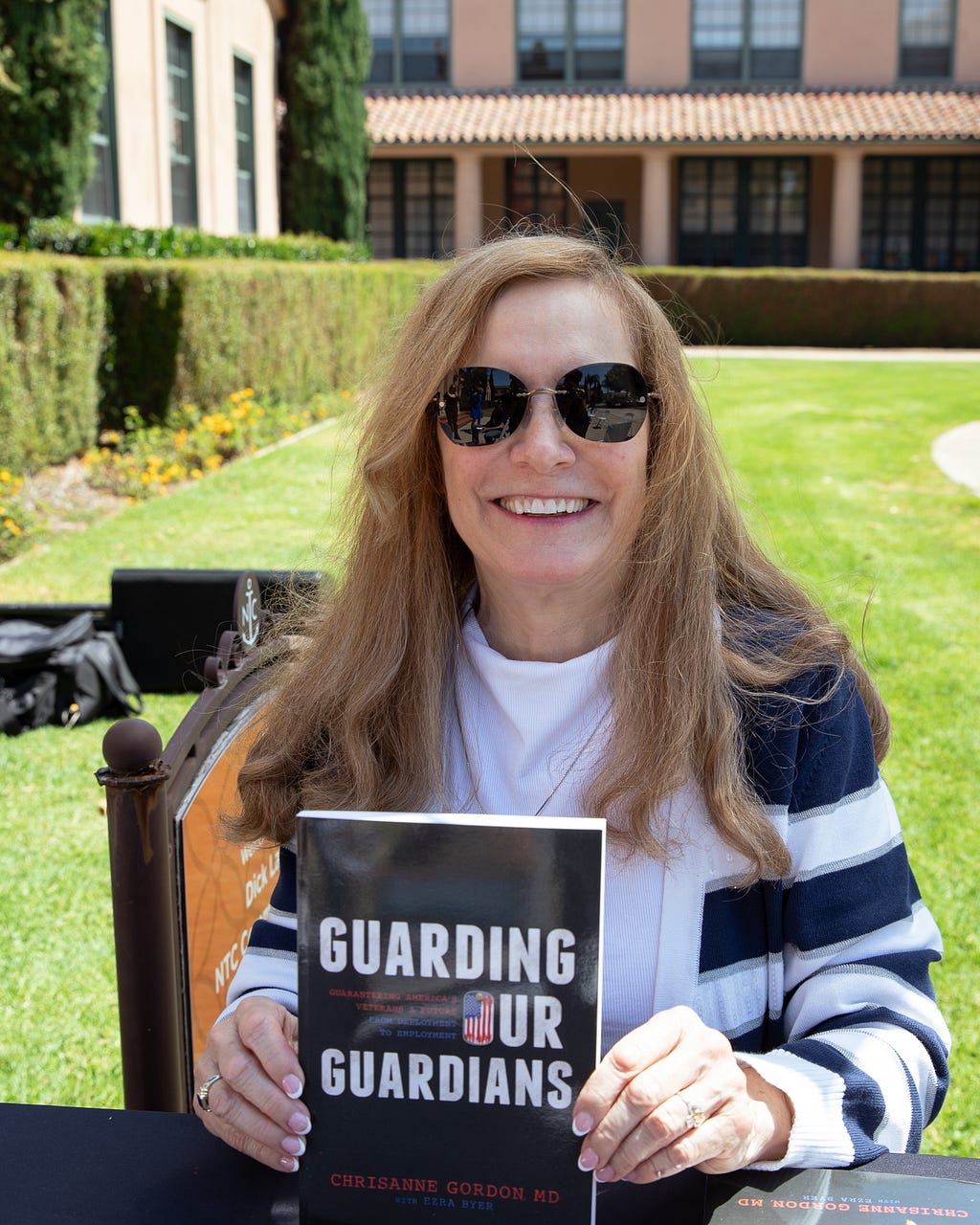
Right now, all of my energy is channeled into a national call to action with my new book, “Guarding Our Guardians: Guaranteeing America’s Veterans a Future from Deployment to Employment.” For our team at the Resurrecting Lives Foundation, this is far more than a book launch — it is a mission launch. Currently, the military separation process is incredibly fragmented. Returning warriors are forced to self-navigate complex, isolated systems of healthcare, education and employment simultaneously. For the 450,000+ veterans returning home with invisible wounds like TBI, this lack of coordination can be a life-threatening barrier. This project is designed to change that by establishing a true “soft handoff” into civilian life. We don’t need to build new systems; we simply need to align existing ones. By uniting healthcare providers, educators and employers into a centralized pathway, we can prevent the profound isolation that so often leads to veteran unemployment and suicide. After 250 years as a country, it is time we move beyond “thank you for your service” and provide measurable, daily action for the Guardians who secured our future.
How would you define an “excellent healthcare provider”?
I define an excellent healthcare provider as equal parts competency and compassion, and above all, they must be a listener. Sir William Osler perfectly encapsulated this when he said, “The good physician treats the disease; the great physician treats the patient who has the disease.” Unfortunately, in today’s modern medical landscape, we are losing sight of that distinction. Too often, the focal point of a patient’s visit has become the computer screen. A provider walks in, looks at a device, plugs in data, and reads back what an algorithm dictates. But technology can never capture the true essence of healing, nor can it diagnose an invisible wound. True excellence in medicine requires us to look up from our screens, look our patients in the eye, and bring human connection back to the forefront of care.
Based on your experience can you please share three recent improvements to veterans care that you are really pleased about?
There is a lot of positive momentum right now, beautifully highlighted by VA Secretary Doug Collins during his recent appearance on the Shawn Ryan Show. Beyond logistical wins, what pleased me most was his philosophy of shifting the culture from “numbers to names,” recognizing the human first is a massive victory for dignity. Building on that veteran-first baseline, there are three specific improvements I am incredibly encouraged by:
- Aggressive Backlog Reduction: The VA has utilized automation to cut the long-term disability claims backlog by over 70%. My broader hope is that we use this momentum to transition from a “disability” system to an “ability” system, compensating veterans for their wounds while aggressively championing their remaining strengths so they can find a fulfilling civilian mission.
- Expansion of Community Care Funding: Landmark initiatives like the Choice Act and the MISSION Act are proving to be literal lifesavers, particularly for TBIs. This funding allows veterans to seek specialized, local care outside the traditional VA network if a facility lacks a specific TBI expert.
- Improved Access and Technology: The opening of dozens of new facilities and the rollout of over 1.4 million after-hours appointments is a game-changer. While there is still a mountain of work to do on electronic medical records, investing heavily in opening physical and digital doors for our Guardians is a massive step forward.
In contrast, can you highlight three areas of veterans care that still need improvement? What would you suggest needs to be done to address those challenges?
While we have made strides, systemic barriers still prevent seamless care. To truly honor our veterans, we must urgently address three critical areas:
- Transparent, Portable Medical Records: The VA historically keeps medical records isolated, making it incredibly difficult for outside civilian doctors or different VA facilities to review a veteran’s history. When service members transition to civilian life, they should immediately be handed a complete, secure digital copy of their own records.
- Collaboration with Civilian Healthcare Megaplexes: While the MISSION Act allows for community care, execution is fragmented. TBI is a highly specialized field, and the top experts are predominantly located at major civilian teaching hospitals, not rural VA clinics. Given that nearly 47% of veterans return to rural areas, we must create a unified network that allows the VA and civilian megaplexes to seamlessly share clinical expertise.
- Shifting from a “Disability” to an “Ability” System: The current system forces injured veterans, many of which are dealing with cognitive deficits from TBI, into an adversarial process to “prove” they are broken. Furthermore, if a veteran tries to go back to school or work, they risk losing their benefits overnight, which actively punishes resilience. We need an institutional shift that wraps services around veterans to maximize their remaining abilities, retraining and empowering them for a purposeful civilian life.
From your perspective how does the US care for veterans compared to other comparable countries?
At the Resurrecting Lives Foundation, we have a specific guiding principle: we do not measure success by how much money is spent, but by how many lives are actually saved and healed. If you look at the U.S. model, the focus is continually on historic budgets and billions of dollars spent. Yet, despite those massive resources, the suicide rate for America’s Guardians dramatically surpasses that of our peer nations. The difference isn’t the quality of our medical technology; it is the quality of our transitional philosophy. Peer countries like France and Germany place an immense, systemic emphasis on vocational reintegration. In France, the government automatically provides comprehensive retraining and direct job placement assistance. Germany takes a similarly holistic approach, wrapping specialized rehabilitation directly into structured civilian transition pipelines. These countries understand what the U.S. is still failing to operationalize: you cannot treat a veteran’s invisible wounds in a vacuum. True healing requires purpose. While peer nations invest heavily in helping veterans adapt through employment and community identity, the U.S. remains overly focused on a bureaucratic, clinical model. We spend the most money, but we fail to provide that vital “soft handoff” into a purposeful future.
What exciting new technological or methodological innovations are being used to improve veterans’ health outcomes?
We are witnessing an incredible convergence of advanced neuroimaging and artificial intelligence that is completely reshaping how we diagnose, treat and support veterans with TBIs. Two specific innovations stand out as true game-changers:
- Advanced Neuroimaging and the Polytrauma Model: Historically, looking inside a living brain to map microscopic changes was impossible. However, the VA Polytrauma Centers were intentionally embedded alongside the nation’s premier academic and clinical megaplexes, ensuring Guardians have immediate access to cutting-edge technology. Through this model, our team at the Resurrecting Lives Foundation, funded the first pilot study, developed and administered by Michael Lipton, MD, PhD., using Diffusion Tensor Imaging (DTI) to prove exactly where and how blast waves cause structural brain injury. DTI allows us to see microscopic white matter tracts, making these “invisible wounds” undeniably visible and drastically improving personalized rehabilitation. Our next hurdle is scaling this model into rural clinics.
- AI in Administrative & Operational Healthcare: Innovation isn’t just happening in the exam room; it’s happening in the bureaucracy. The VA’s recent integration of AI and automation to streamline claims processing is a massive methodological victory. By using AI to rapidly sort, verify and process complex medical data, the VA has drastically cut the time veterans wait for benefits. Reducing this friction gets veterans into treatment faster, and in brain injury rehabilitation, early intervention is everything. Although the pros and cons of AI are still debated and evolving, there appears to be areas where its use is beneficial.
This is our signature question that we ask in many of our interviews. What are your “5 Things I Wish Someone Told Me When I First Started My Career”?
1. Prepare for Administrative and Insurance Battles
When I first started out, physicians were in control of their own clinical decisions. Today, providers are buried under mountains of record-keeping just to appease insurance companies who often get to decide if a patient can receive a prescribed treatment. I wish I had known that the battle to actually practice medicine would become just as demanding as the medicine itself.
2. Protect Your Medical Ethics from Corporate Pressure
For the first 15 years of my career, my clinical ethics were never tested. But as healthcare shifted into a corporate model, it became a daily fight to do what is right for the patient against outside financial metrics. The Hippocratic Oath remains absolute: protect the patient, no matter the administrative pressure.
3. Learn That You Can Care Too Much
Early in my training, I wanted to be an oncologist to serve the sickest patients. But watching experimental protocols fail some patients while others succeeded carried an emotional weight that nearly broke me. I realized I had to build emotional guardrails, eventually finding that my empathy was better suited for brain injury rehab, where I could anchor my compassion to definitive, actionable hope.
4. Replenish Your Own Strength First
The medical culture I grew up in taught us to ignore our own exhaustion. We simply didn’t understand the necessity of self-care. But you cannot pour from an empty cup. If you do not intentionally step away to replenish your own brain and physical strength, you will burn out and fail the very people relying on you.
5. Embrace the “Two Rules of War”
This is the heaviest lesson, beautifully articulated by Navy clinical psychologist Dr. Heidi Squier Kraft. Rule number one is that in war, young people die. Rule number two is that doctors cannot stop rule number one. Whether in a combat hospital or treating veterans years later, you have to accept that you are not a deity. Accepting this reality doesn’t mean you stop fighting; it simply teaches you the humility required to survive the losses and honor the lives you can save.
You are a person of great influence. If you could inspire a movement that would bring the most amount of good to the most amount of people, what would that be? You never know what your idea can trigger.
If I could ignite a global movement tomorrow, it would be a movement to fundamentally redefine how we calculate the true cost of war, and a universal commitment to securing the futures of our Guardians. When a nation goes to war, the cost is traditionally measured in defense budgets and battlefield casualties. But the true cost is paid in the decades that follow — in the lives lost to the invisible wounds of trauma long after the uniform comes off, and the families who watch their loved ones slip away. My movement would champion a simple mandate: We must guard our Guardians. When a community makes a true, actionable commitment to ease the transition of a returning veteran — aligning healthcare, education and employment to ensure a purpose-driven future — something incredible happens. It doesn’t just heal the veteran; it injects highly trained, mission-oriented leaders back into the civic bloodstream, bridging societal divides. This is not just an American issue; war affects the brains and souls of young warriors across every border. Right now, thousands of young people and civilians across Ukraine, Russia, Gaza, and the Middle East are surviving the microscopic trauma of blast injuries and TBI. If we can pioneer a successful model of holistic, “ability-based” rehabilitation in the United States, we can create a blueprint for the world. My dream is to spark a global awakening that ensures those sent to protect our nations are never abandoned to navigate the aftermath alone. My vision is that the world will someday understand that the true costs of war are ongoing, affecting warriors, their families, their communities, and generations to come.
Thank you for sharing these insights!
About The Interviewer: Eric L. Pines is a nationally recognized federal employment lawyer, mediator, and attorney business coach. He represents federal employees and acts as in-house counsel for over fifty thousand federal employees through his work as a federal employee labor union representative. A formal federal employee himself, Mr. Pines began his federal employment law career as in-house counsel for AFGE Local 1923 which is in Social Security Administration’s headquarters and is the largest federal union local in the world. He presently serves as AFGE 1923’s Chief Counsel as well as in-house counsel for all FEMA bargaining unit employees and numerous Department of Defense and Veteran Affairs unions. While he and his firm specialize in representing federal employees from all federal agencies and in reference to virtually all federal employee matters, his firm has placed special attention on representing Veteran Affairs doctors and nurses hired under the authority of Title. He and his firm have a particular passion in representing disabled federal employees with their requests for medical and religious reasonable accommodations when those accommodations are warranted under the Rehabilitation Act of 1973 (ADA). He also represents them with their requests for Federal Employee Disability Retirement (OPM) when an accommodation would not be possible. Mr. Pines has also served as a mediator for numerous federal agencies including serving a year as the Library of Congress’ in-house EEO Mediator. He has also served as an expert witness in federal court for federal employee matters. He has also worked as an EEO technical writer drafting hundreds of Final Agency Decisions for the federal sector. Mr. Pines’ firm is headquartered in Houston, Texas and has offices in Baltimore, Maryland and Atlanta, Georgia. His first passion is his wife and five children. He plays classical and rock guitar and enjoys playing ice hockey, running, and biking. Please visit his websites at www.pinesfederal.com and www.toughinjurylawyers.com. He can also be reached at eric@pinesfederal.com.
Veterans Care Today: Dr Chrisanne Gordon Of Resurrecting Lives Foundation On How The US Has… was originally published in Authority Magazine on Medium, where people are continuing the conversation by highlighting and responding to this story.