

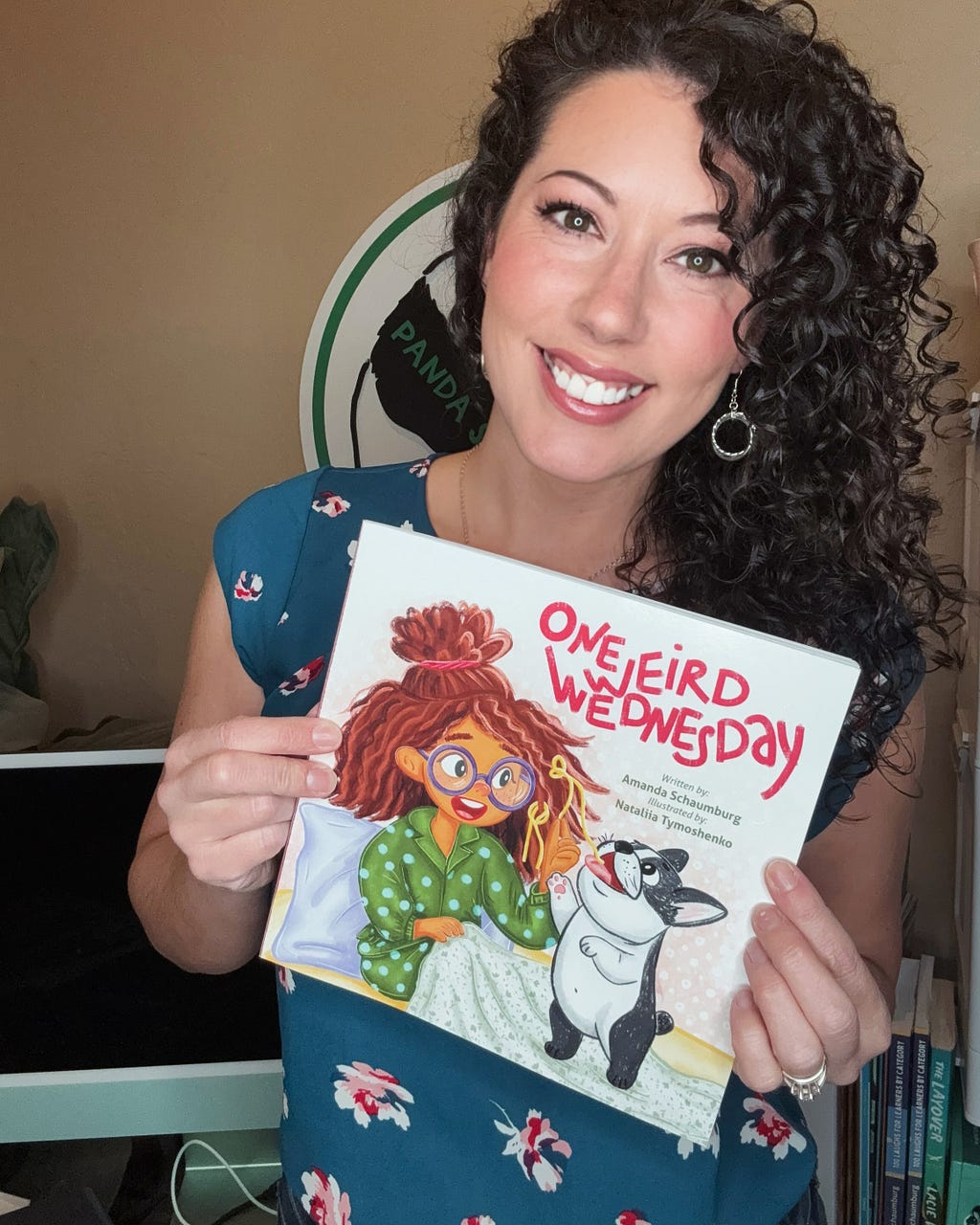
Amanda Schaumburg Of Panda Speech Educational Consultants On How To Write A Book That Sparks A Movement
“Books allow readers to step into experiences, perspectives, new worlds, and possibilities that they might never encounter otherwise. A great book doesn’t simply deliver information or tell a story, it creates an emotional connection.”
As part of my series about “How to write a book that sparks a movement” I had the pleasure of interviewing Amanda Schaumburg.
Amanda Schaumburg M.S., CCC-SLP is an award-winning children’s book author, nationally recognized speaker, pediatric speech-language pathologist, and founder of Panda Speech Educational Consultants and Panda Speech Publishing. Recognized for her impact in education, literacy, and child development, Amanda has dedicated her career to helping children build confidence, communication skills, and a love of learning through both clinical practice and storytelling. Drawing on extensive experience working with families in schools, early intervention programs, and healthcare settings, she creates imaginative children’s books and educational resources that inspire creativity, literacy, and meaningful connection. She is the author of 13 children’s titles, including the multi-award-winning One Weird Wednesday. Amanda is also a highly sought-after speaker who travels nationwide training educators and professionals on special education services, advocacy, and workplace development. Her accomplishments have earned widespread recognition, including being named one of the Top 100 Speech-Language Pathologists Impacting the Field. Passionate about inclusion and community outreach, Amanda also serves as a Special Olympics coach, Kids Inclusion softball coach, and board member of Smiles for Speech, supporting children with disabilities and underserved families through access to critical therapy and intervention services.
Thank you so much for joining us in this interview series! Can you share the “backstory” of how you grew up?
I was born in a small mountain town in Montana and then my family moved to a small town in Texas (small town through and through). We didn’t have a lot growing up, but my parents always found a way to make me feel seen, heard, and valued. My parents shaped me in very different but equally important ways. My mother is one of the funniest, hardest working, and most whimsical people I know; while my father is a musician, artist, gifted writer, and lifelong intellectual. Between the two of them, I was surrounded by creativity, curiosity, comedy, and storytelling from an early age. As a child, I loved anything creative; singing, art, writing, theater, and reading; but early on I was shy and rarely shared those interests with others (letting my brother and sister have all of the attention). Instead, I poured my thoughts into my diaries and sang and danced in my bedroom (I loved everything from 90s country to Boys II Men to Michael Jackson). I still have most of my childhood diaries, and while they make me cringe to read them now, they remind me that I’ve always been a storyteller at heart. By high school, I finally started coming out of my shell and found confidence through musical theater, choir, sports, and leadership opportunities. I was also drawn to service and spent a summer overseas leading children’s camps and teaching English. Back home, I volunteered with Special Olympics and children’s programs through local churches. Helping children discover their strengths became a recurring theme in my life long before I realized it would become my career. Because we didn’t have a lot as a family, I started working at a young age, so in between all of my activities at school, I was babysitting or waitressing at the restaurant my my ran in our small town (I even made theme songs I would sing to customers…I know, another cringe moment ha ha). Working from a young age taught me the importance of showing up consistently, being dependable, and doing the work even when it’s difficult (and when you don’t want to!). My path as an adult wasn’t a straight line. I was married and divorced young and spent part of my twenties as a single mother while working as a social worker and attending graduate school. It was challenging, exhausting, and at times overwhelming, but it taught me resilience and determination. Looking back, growing up with modest means in a small town gave me something incredibly valuable: perspective. It taught me that happiness isn’t tied to what you have, but to the people around you, the stories you tell, and the dreams you’re willing to chase.
When you were younger, was there a book that you read that inspired you to take action or changed your life? Can you share a story?
When I was younger, one of the books that had a lasting impact on me was Where the Wild Things Are. I remember being captivated by the idea that an ordinary bedroom could transform into a magical world filled with strange creatures and grand adventures. It was one of the first books that made me realize that imagination had no limits. As a child, I loved the adventure and the whimsy, but as an adult, I appreciate the deeper message even more. Beneath the imaginative creatures is a story about emotions, belonging, and unconditional love. Max experiences anger, loneliness, independence, and ultimately the comfort of knowing that he is loved and has a place to return to. We can experience big feelings, make mistakes, and still be loved, and that theme has stayed with me throughout my life. As a child, as mentioned before, I was very introverted and had a hard time expressing my feelings. I typically kept to myself and lived in my own imagination, not unlike the main character in this book. Looking back, I think that book gave me permission to embrace creativity and showed me that children’s stories can be both playful and deeply meaningful. It taught me that imagination isn’t an escape from reality; it’s a way for children to process their emotions, understand themselves, and make sense of the world around them. As an author today, I hope to create stories that capture some of that same magic; books that make children laugh and wonder, while also reminding them that they are seen, accepted, and deeply loved. Although One Weird Wednesday is a humor and imaginative book, I have other children’s book that have deeper meanings such as finding your self worth, your uniqueness is special, and being accepted just the way you are (see the books Zoo Truck Mix Up and Dottie Don’t Do That!)
What was the moment or series of events that made you decide to bring your message to the greater world? Can you share a story about that?
As a speech-language pathologist, I spend my days helping children communicate and build confidence. Over the years, I noticed how powerful books were during therapy sessions and in classrooms. As a mother, reading was huge in our household. My husband would read novels to our children and our house was flooded with children’s books that we would read over and over again. My children would write their own stories and I loved watching their creativity bloom. One of my children even went to a state story writing competition in elementary school. I wanted to create stories that children would genuinely enjoy but also spark imagination. Books that made them laugh, predict what might happen next, and engage with language in a meaningful way. That drive ultimately led me to write One Weird Wednesday.
What impact did you hope to make when you wrote this book?
My goal was simple: I wanted children to laugh, imagine, and enjoy reading. In a world where so much of children’s time is structured and scheduled, I hoped to create a story that encouraged creativity and reminded readers that it’s okay to embrace a little silliness.
Did the actual results align with your expectations? Can you explain?
The response exceeded my expectations. I hoped families would enjoy the story, but I never imagined it would receive awards or connect with so many readers. The most rewarding part has been hearing from parents and teachers who tell me that children ask to read it again and again. After I do a reading of my book, I bring one of my included activities (one of the worksheets that come free with the book) where children get to illustrate one room in their house and make it wacky, it is my favorite thing to see what they come up with!
What moment let you know that your book had started a movement? Please share a story.
I don’t know that I’d call it a movement, but there was a moment when I realized the book was reaching beyond my immediate circle. A teacher shared that her students had started writing their own “weird” stories after reading the book. All of my books come with extension activities, as mentioned previously (available through links in the books) that help keep the imagination and learning going. This teacher used my book and ideas for a whole creative writing lesson. Her students were using their imaginations, writing creatively, and sharing their ideas with one another. That was incredibly meaningful because it showed the story had become a spark for something beyond the pages.
What kinds of things did you hear right away from readers? What are the most frequent things you hear from readers about your book now? Are they the same? Different?
Early on, people told me the book was funny and unexpected. Today, I still hear that, but I also hear from adults who appreciate the creativity and the conversations it starts with children. Many readers tell me they enjoy trying to guess what strange thing will happen next, which is exactly the kind of engagement I hoped for. In fact, it inspired me to write a sequel (this time the wacky things happen at the character’s school instead of her house).
What is the most moving or fulfilling experience you’ve had as a result of writing this book? Can you share a story?
One of the most meaningful experiences was visiting schools and seeing children react to the story in real time. Watching a room full of students laugh together, raise their hands to make predictions, create wacky illustrations themselves through my extension activities, and excitedly talk about their favorite parts reminds me why I wrote the book in the first place. Those moments are far more rewarding than any sales number or award.
Have you experienced anything negative? Do you feel there are drawbacks to writing a book that starts such colossal conversation and change?
Writing and publishing a book comes with challenges. There are revisions, rejections, production issues, and moments of self-doubt. Throughout the editing process, authors receive feedback that seems critical but really is just a tool to help sharpen their skills (it was very hard to hear my first draft was a little too wordy and I didn’t let my illustrations tell enough of the story). Once a book is out in the world, you also have to accept that not every reader will connect with it. I’ve learned that you can’t write for everyone (and you will ALWAYS have critics!). You have to stay focused on serving the readers you intended to reach.
Can you articulate why you think books in particular have the power to create movements, revolutions, and true change?
Books allow readers to step into experiences, perspectives, new worlds, and possibilities that they might never encounter otherwise. A great book doesn’t simply deliver information or tell a story, it creates an emotional connection. When people feel connected to a story, they are more likely to remember it, share it, and talk about it.
What is the one habit you believe contributed the most to you becoming a bestselling writer? (i.e. perseverance, discipline, play, craft study) Can you share a story or example?
Perseverance. There were plenty of moments when it would have been easier to quit. Balancing a career, family, and writing wasn’t always simple, but I kept showing up, learning, revising, and moving forward one step at a time. Writing a book isn’t usually one big breakthrough, it’s a series of small decisions not to quit and to not get bummed out by your internal critic.
What challenge or failure did you learn the most from in your writing career? Can you share the lesson(s) that you learned?
One of the biggest lessons was realizing that creating a good story is only part of the process. Publishing, marketing, distribution, and connecting with readers all require their own skills. Creating my own publishing company was a learning curve that required a lot of trial and error. Early on, I assumed the hardest part would be writing the book. I learned that success comes from being willing to learn, adapt, and take on challenges (and not being afraid to seek guidance).
Many aspiring authors would love to make an impact similar to what you have done. What are the 5 things writers need to know if they want to spark a movement with a book?
1. Write something you genuinely care about or find interesting. Readers can tell when an author is passionate about a topic. My books are designed to spark imagination and communication in children, this comes naturally to me as a speech language pathologist. When someone reads my book to a child, I want the conversation to keep going! I want my readers to connect to the story in a personal way.
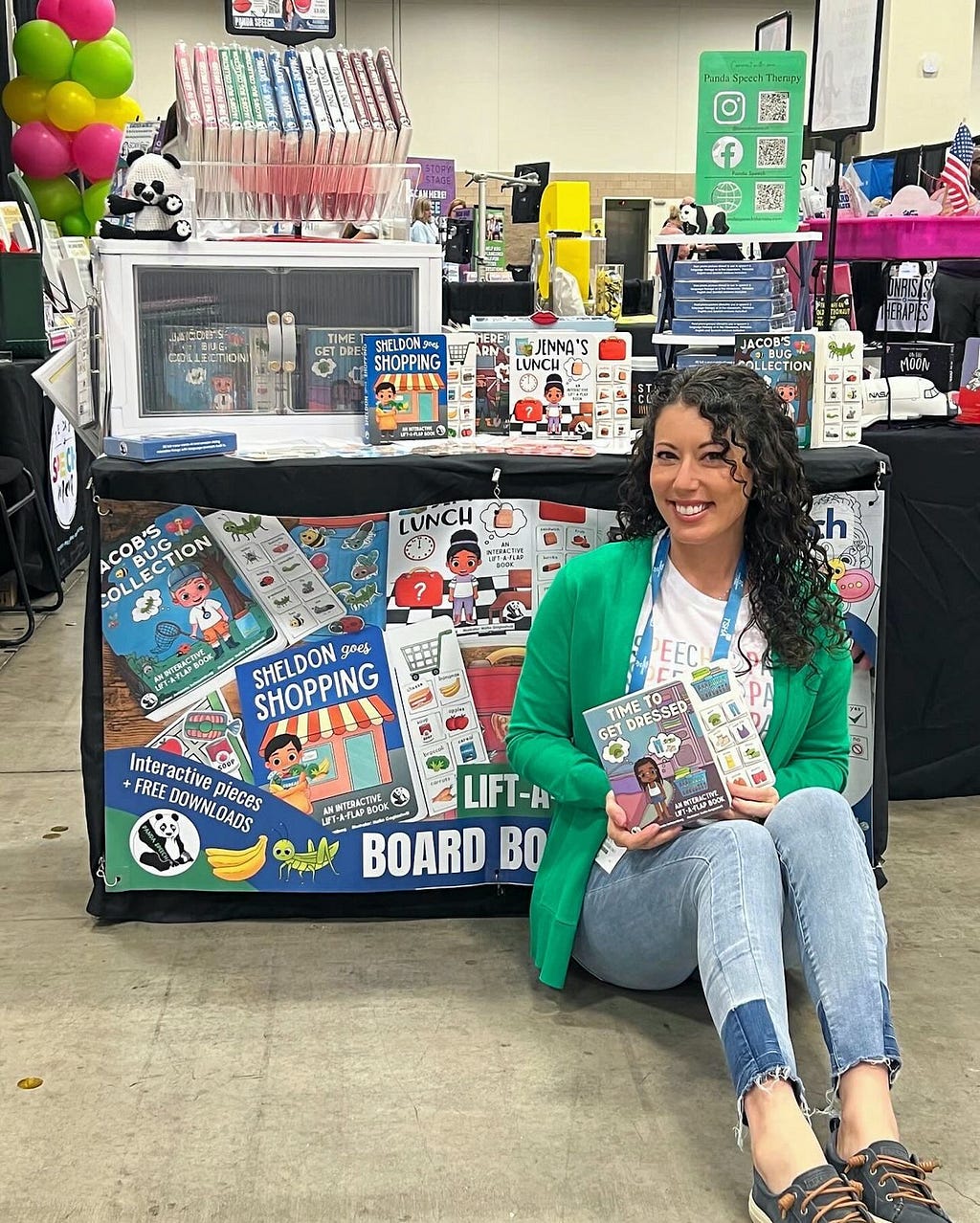
2. Know who you’re writing for. The more clearly you understand your audience, the stronger your connection will be. My most successful books are my preschool lift a flap board books. While I love writing picture story books, I know my audience wants the board books, so that is a huge focus in my business.
3. Focus on the reader, not yourself. Ask what value, joy, or insight you’re providing. When I write a book, I typically do test reads with kids of different ages to see what resonates with them or makes them laugh. If a story falls flat, it tells me that I need to go back to the drawing board (I want kids to love my book just as much as I do).
4. Be persistent. Most successful books are the result of consistency, not overnight success. Put some effort into marketing and connecting with programs in your community. I had the pleasure of doing a read aloud with a local non-profit agency in my community that hosts free book fairs and free little libraries. My book was exposed to over 600 children and their families at an event because of this!
5. Show up after publication. Visit schools, book stores, engage with social media, and get involved in your community. Books create impact when conversations continue beyond the final page. One of the most difficult parts of being an independent publisher is exposure. It is important to get your book in front of as many eyes as possible. I set up my author page on Amazon and Good Reads to help with this! Share your book on social media, donate books to local programs/libraries, see if a local book store will sponsor an author signing/reading!
The world, of course, needs progress in many areas. What movement do you hope someone (or you!) starts next? Can you explain why that is so important?
I’d love to see a stronger movement focused on helping children reconnect with imagination, creativity, and meaningful human interaction. Technology has incredible benefits, but children also need opportunities to create, wonder, play, and tell stories. Those experiences help build communication, problem-solving, and social-emotional skills that will serve them throughout their lives. Children obviously need to know how to run the tech, but putting it down is equally important (take it from a language development specialist; children need to be played with, talked to, and read to regularly; no tech can replace that).
How can our readers follow you on social media?
Readers can follow me on social media @pandaspeech (I am most active on Instagram). I enjoy sharing behind-the-scenes glimpses into my books, literacy tips, speech-language resources, and upcoming projects. You can also visit my website to learn more about my books and future releases. I have a “book list” that gets exclusive deals on new release and restocks (you can find the link to this list on my website). www.shoppandaspeech.com
Thank you so much for these insights. It was a true pleasure to do this with you.
Amanda Schaumburg Of Panda Speech Educational Consultants On How To Write A Book That Sparks A… was originally published in Authority Magazine on Medium, where people are continuing the conversation by highlighting and responding to this story.