

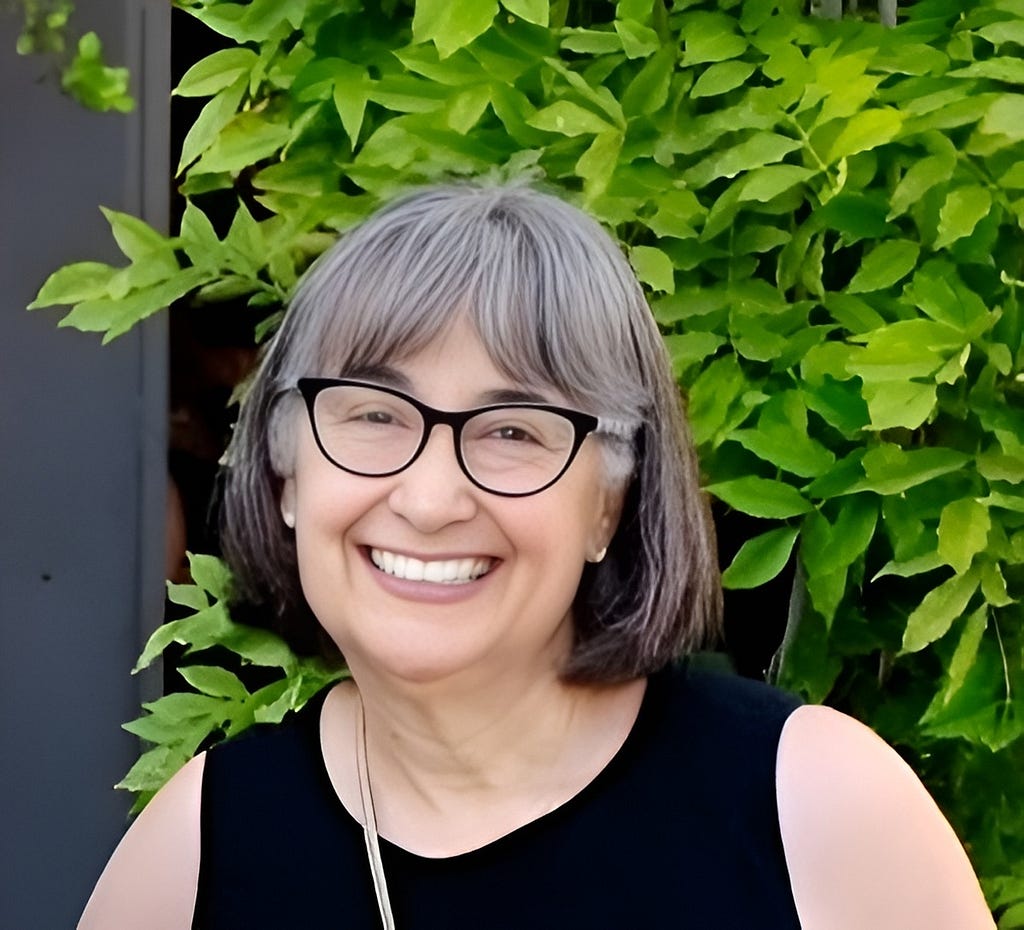
Social Impact Heroes: How Lissa Zanville Of Los Angeles Trial Lawyers’ Charities Is Helping To Change Our World
I realized that all those years spent mastering crisis management and strategic communication were actually preparing me for a higher purpose: giving a voice to the most vulnerable communities in Southern California.
As a part of this series, we had the pleasure to interview Lissa Zanville.
Lissa Zanville is the Executive Director of Los Angeles Trial Lawyers’ Charities, where she leads the organization’s community outreach, philanthropic initiatives, and strategic partnerships throughout Southern California. With more than 30 years of experience in communications, public affairs, and nonprofit leadership, she has worked across the nonprofit, political, corporate, and entertainment sectors. Since joining LATLC in 2016, Zanville has helped expand the organization’s impact through programs supporting children, survivors of abuse, persons with disabilities, and underserved communities.
Thank you so much for joining us in this interview series! Can you tell us a story about what brought you to this specific career path?
My journey into community advocacy was a natural evolution deeply tied to my roots as a second-generation Angeleno. Growing up, I was surrounded by a family that valued civic engagement, which led me to dive headfirst into local political campaigns as a teenager. After graduating from UCLA, my career took a very dynamic path — navigating intense media environments from the Los Angeles City Attorney’s office and corporate spaces like Pacific Bell, to eventually launching my own communications firm. For decades, my job was to teach corporate executives, athletes, and political figures how to find their voice and speak to the public with clarity. But a turning point came when I pivoted my skills entirely into the nonprofit sector, starting with nine years heading the Phase One Foundation for cancer clinical trials. When I took the helm at Los Angeles Trial Lawyers’ Charities (LATLC) in 2016, everything clicked. I realized that all those years spent mastering crisis management and strategic communication were actually preparing me for a higher purpose: giving a voice to the most vulnerable communities in Southern California.
Can you share the most interesting story that happened to you since you began leading your company or organization?
One of the most fascinating challenges of leading LATLC has been completely redefining how a traditional charity operates and fundraises. Historically, legal charities were known for very formal, predictable sit-down dinners. I wanted to shake that up. We decided to pivot toward highly engaging, community-centric events that felt alive and directly connected donors to our mission. Watching a room full of trial attorneys trade their courtroom suits for volunteer t-shirts to build adaptive tricycles, or seeing our board members directly hand out packed bags of groceries in underserved neighborhoods, has been incredible. Breaking the mold of the “stuffy” charity and replacing it with rolling up our sleeves has been the most rewarding story of my time here.
Los Angeles Trial Lawyers’ Charities is different from most non-profits. It is hands-on, direct, and flexible. In other words, if we identify an immediate need, we will do everything we can to meet it. Like everyone, we had to completely pivot during the COVID pandemic. We could not host normal fundraisers, volunteer in person, nor provide grants or scholarships without being very creative! Instead of in-person fundraisers, we published a 15th Anniversary Tribute Book that raised enough funds so we could meet community needs. We hosted volunteer projects via Zoom. But the biggest challenge was at the end of 2020. Every year, LATLC hosts a holiday event called Comfort and Joy. We work with the LAPD to select 500 families in South Los Angeles to receive household items, non-perishable food, and, of course toys for the kids. LATLC purchased about $50,000 in items and the week of our event, there was a complete shutdown. No volunteers. No families to collect the items. The LAPD Newton Division stepped in, filled the bags, and became “Patrol Car Santas” delivering EVERYTHING to these families in need. It was absolutely incredible.
It has been said that our mistakes can be our greatest teachers. Can you share a story about the funniest mistake you made when you were first starting? Can you tell us what lesson you learned from that?
Someone once told me that, even if you fall on your face, you have fallen forward. One of the biggest professional mistakes I made was when I worked for the phone company decades ago. AT&T was being broken up into smaller companies, and everyone was putting together local press events. I thought it was very “LA” to have a piñata with the old logo on it, then have someone break it and items with the new company’s logo fall out like candy.
Unfortunately, the person hitting the piñata was not strong, and it just wouldn’t break. Every TV crew and newspaper was at this event! Finally, my boss took a knife and slashed it open! What looked like a public disaster ended up on every station and the front page of newspapers, showing how hard it was to break up AT&T! Lesson learned: FIRST, PLAN AHEAD FOR ANY CONTINGENCY, and SECOND, PRACTICE BEFORE THE FINAL EVENT. PREPARATION IS EVERYTHING! Never made that mistake again.
Can you describe how you or your organization is making a significant social impact?
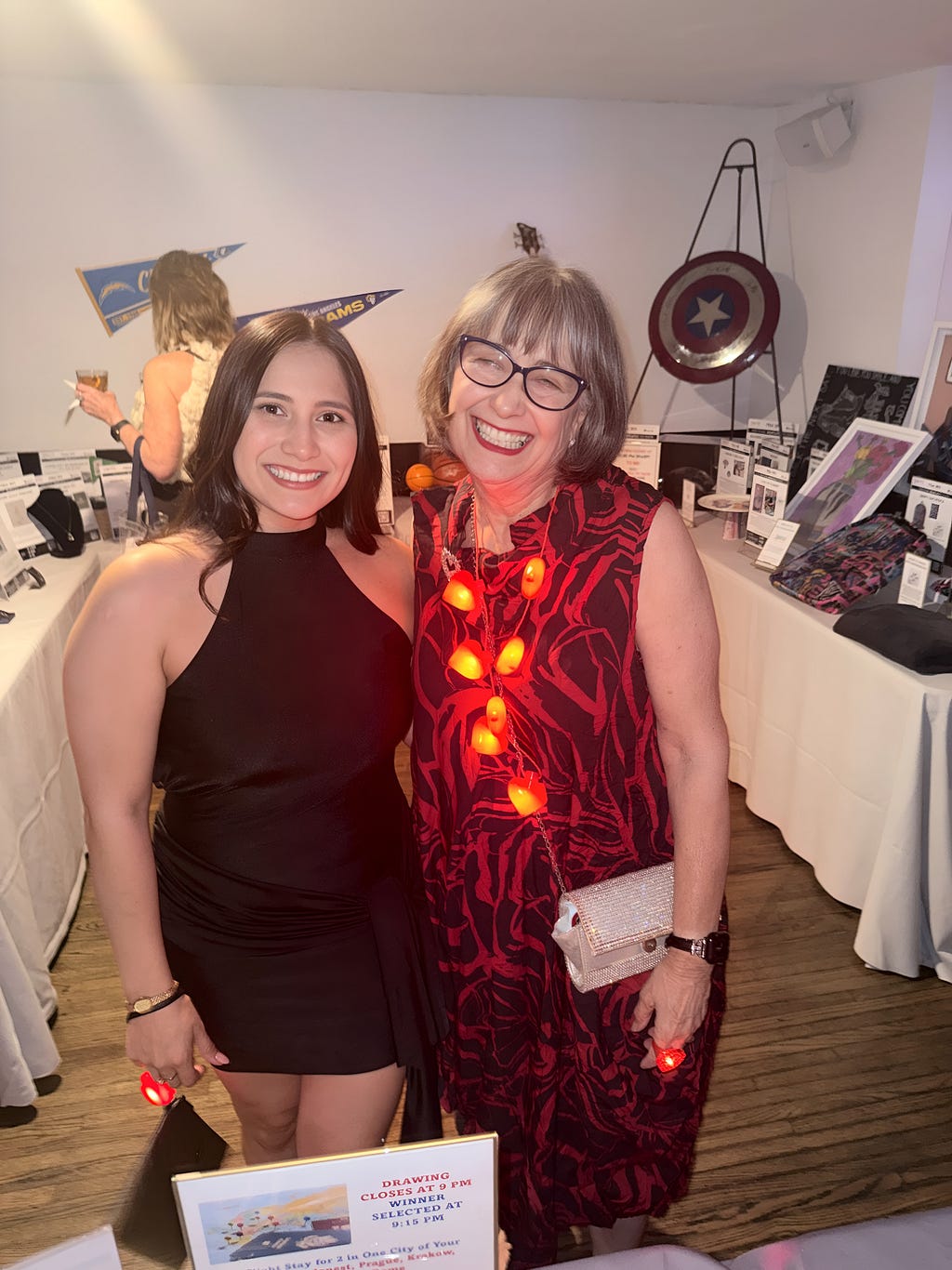
LATLC creates a massive social impact by serving as a bridge between the resources of the legal community and the immediate, ground-level needs of Southern California. We operate as a $6 million foundation that champions local grassroots organizations focusing on children, survivors of domestic abuse, individuals with disabilities, and the unhoused. We don’t just provide funding; we provide a network of consistent physical support. Right now, as we celebrate our landmark 20th Anniversary Gala, we are looking back on two decades of true transformation. We created three signature events: DAY OF DIGNITY for the unhoused in Hollywood, bringing in partner charity services, manicures, showers, haircuts, chiropractic care and more. Our GREAT TRYKE GIVEAWAY provided hundreds of adaptive tricycles to children with special needs. While the kids are getting the final adjustments to their custom bikes, volunteers assemble 1,000 toiletry kits for U.S. VETS and their outreach program. And of course, COMFORT & JOY holiday giving. By keeping our operations lean and our community partnerships deeply vetted, we ensure that every dollar raised goes directly into programs that change lives.
Can you tell us a story about a particular individual who was impacted or helped by your cause?
What I love about LATLC is that we can really change ONE LIFE as well as improving the lives of many. At one of the first GREAT TRYKE GIVEAWAYS, there was a family with 3 daughters. The oldest, Evangeline, was non-communicative with intellectual limitations. I remembered how excited she was to receive her first red tryke! A few days after the event, we received a card and photos from the family. The parents wrote that, because of the new tryke, Evangeline was able, for the first time, to ride with her sisters after years of missing out.
Are there three things the community/society/politicians can do to help you address the root of the problem you are trying to solve?
- First, diversify funding strategies. In an era where government grants are increasingly unpredictable, society and the nonprofit sector must get incredibly creative with sustainable, private sector partnerships.
- Second, institutionalize inner equity. True diversity can’t just be an outward-facing marketing tool; it must be built into the very foundation of how organizations plan, govern, and make decisions. We need more varied perspectives making the actual rules.
- Third, break down informational silos. Politicians and community members need to step out of their respective echo chambers. We cannot solve local poverty or homelessness if we only talk to people who agree with us; we have to actively listen to the uncomfortable realities on the ground.
How do you define “Leadership”? Can you explain what you mean or give an example?
When I was in college, I read this quote from Lao Tzu and it has been a real guide for me:
A leader is best when people barely know that he exists,
Not so good when people obey and acclaim him,
Worst when they despise him,
“Fail to honor people, THEY FAIL TO HONOR YOU;”
But of a good leader, who talks little,
When his work is done, his aim fulfilled,
They will all say, “We did this ourselves.”
What are your “5 things I wish someone told me when I first started” and why? Please share a story or example for each.
1. Trust the ultimate trajectory
My mother always reminded me that things have a way of working out for the best. When a major professional door closes, it’s usually because you need to walk through a different one.
2. Every task carries a lesson
Whether you are fetching coffee or presenting to a board, treat every single job with the same level of respect, because you will use those exact building blocks later in life.
3. Focus on immediate proximity
The concept of “Think Globally, Act Locally” changed how I view change. Don’t get paralyzed by the world’s massive problems; look exactly at your own community and ask how your specific skills can help right now.
4. Embrace the unexpected pivot
My career path looks like a patchwork quilt — politics, corporate PR, entrepreneurship, and philanthropy. None of it was perfectly planned, but every single pivot gave me a unique tool that makes me a better leader today.
5. Master the art of deep listening
Early in my communications career, I realized the best spokespeople aren’t the ones who talk the most; they are the ones who listen the closest. To solve real problems, you have to genuinely hear what people are experiencing before you try to fix it.
Can you please give us your favorite “Life Lesson Quote”? Can you share how that was relevant to you in your life?
“Things always work out for the best.” This piece of wisdom from my mother has been my north star. In crisis communications and high-stakes fundraising, variables change constantly. Whenever an event faces a major roadblock or a strategy has to change at the last minute, I don’t panic. I ground myself in this mindset, which allows me to pivot creatively and calmly find a better path forward.
Is there a person in the world, or in the US, with whom you would like to have a private breakfast or lunch with, and why? He or she might just see this, especially if we tag them. 🙂
If I could have a private lunch with anyone right now, it would be MacKenzie Scott. Her approach to philanthropy has been an absolute breath of fresh air and a masterclass in trust-based giving. In the non-profit world, so much time and energy are often wasted jumping through rigid, overly bureaucratic corporate hoops just to secure funding. MacKenzie completely flipped that script by identifying grassroots, local organizations that are already doing incredible work on the ground and giving them major, unrestricted grants — essentially saying, “We trust you to know what your community needs better than we do.” Because LATLC operates on a similar philosophy of directly lifting up local partners without making them wade through red tape, I would love to talk with her about the long-term impact of decentralized giving and how we can encourage more major donors to lead with trust rather than control.
You are a person of enormous influence. If you could inspire a movement that would bring the most amount of good to the most amount of people, what would that be? You never know what your idea can trigger. 🙂
I would love to trigger a movement called “The Five-Mile Circle.” The idea is simple: if every individual and business committed to dedicating just a small fraction of their time, resources, or skills to solving a problem within a five-mile radius of their own front door, the global ripple effect would be monumental. We often get overwhelmed looking at massive, worldwide crises. By shrinking our focus to our immediate geographic neighbors, we replace helplessness with direct action.
President Obama said it best during his 2008 campaign:
“One voice can change a room. And if one voice can change a room, then it can change a city. And if it can change a city, it can change a state. And if it can change a state, it can change a nation. And if it can change a nation, it can change the world. Your voice can change the world.” — 2008
How can our readers further follow your work online?
Readers can stay up to date with our community grant cycles, volunteer initiatives, and our landmark 20th Anniversary Gala by visiting our official website at www.latlc.org. They can also follow our day-to-day community impact on Instagram and Facebook via our handle @LATLC. ANYONE can join us — in the upper right hand corner of our website are boxes to DONATE as well as VOLUNTEER. We welcome everyone!
This was very meaningful, thank you so much. We wish you only continued success in your great work!
Social Impact Heroes: How Lissa Zanville Of Los Angeles Trial Lawyers’ Charities Is Helping To… was originally published in Authority Magazine on Medium, where people are continuing the conversation by highlighting and responding to this story.