

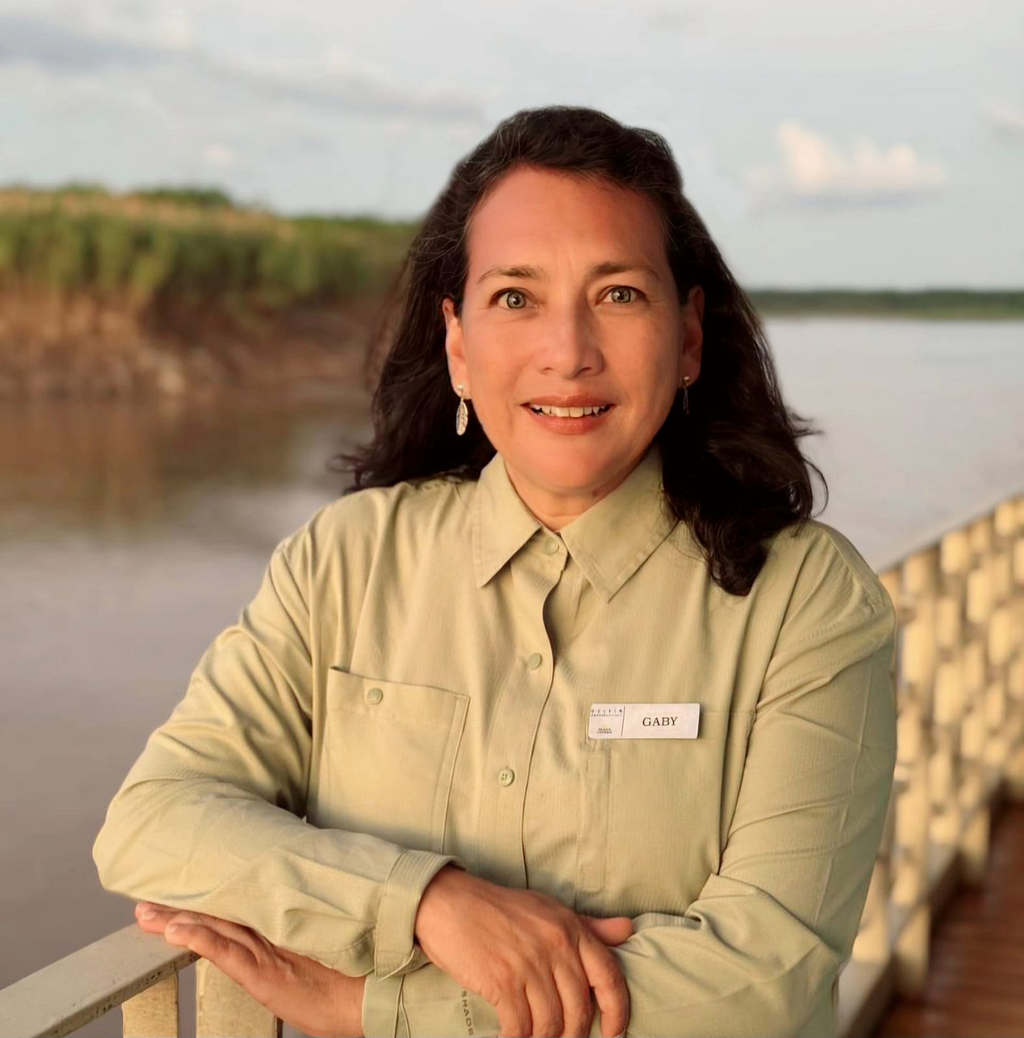
How Gabriela Orihuela Of Delfin Amazon Cruises Is Helping to Promote Sustainability and Climate Justice
Advocating for nature was part of my DNA.
According to the University of Colorado, “Those who are most affected and have the fewest resources to adapt to climate change are also the least responsible for the greenhouse gas emissions — both globally and within the United States.” Promoting climate justice is an incredibly important environmental responsibility that is slowly becoming more and more recognized. In this interview series, we are talking to leaders who are helping to promote sustainability and climate justice.
As a part of this series, we had the pleasure to interview Gabriela Orihuela.
With 30 years of expertise as a tropical biologist, Gaby Orihuela has dedicated her career to building bridges between scientific conservation and the heart of local communities. From leading environmental education and experience at Florida’s Fairchild Tropical Botanic Garden to spearheading Peru’s National Botanic Garden initiative, she transforms nature-based solutions into impactful, science-driven action. Today, she brings this lifelong passion for the Amazon to her role as Sustainability Advisor for Delfin Amazon Cruises, where she leads the charge in authentic ecosystem restoration and sustainable tourism.
Thank you so much for joining us in this interview series! Before we dig in, our readers would like to get to know you a bit. Can you tell us a bit about how you grew up?
Thank you for having me! My journey began in Lima, our capital nestled along the Peruvian desert. As a child, I spent four years in the countryside of Arequipa, an Andean city, and I vividly remember our traditional twenty-hour road trips crossing the coastal valleys to visit my grandparents in northern Trujillo, always seeking for wildlife -often without luck- in the arid scenarios. Later, as a biology student, I was completely awed by the sight of endless greenery when I first traveled to the Peruvian rainforest. Mesmerized by that immense biodiversity, I knew instantly that the Amazon was where I would spend the years to come.
Everyone has a cataclysmic moment or marker in their life which propels them to take certain actions, a “why”. What is your why?
While in college, I joined a student group focused on the Peruvian mangroves (the southernmost remnant of this vital ecosystem along the South American Pacific). During our biodiversity inventories, we watched as bulldozers decimated hundreds of acres of old-growth mangroves for shrimp farms with no one to stop them. We took action, launching a campaign that was soon picked up by national newspapers and political magazines. Supported by Peru’s first environmental-law non-profit, we successfully advocated for a congressional bill to protect this invaluable ecosystem. As a young twenty-something, it became clear to me that advocating for nature was part of my DNA.
You are currently leading the Sustainability program in an organization that is making a difference for our planet. Can you tell us a bit about what you and your organization are trying to change?
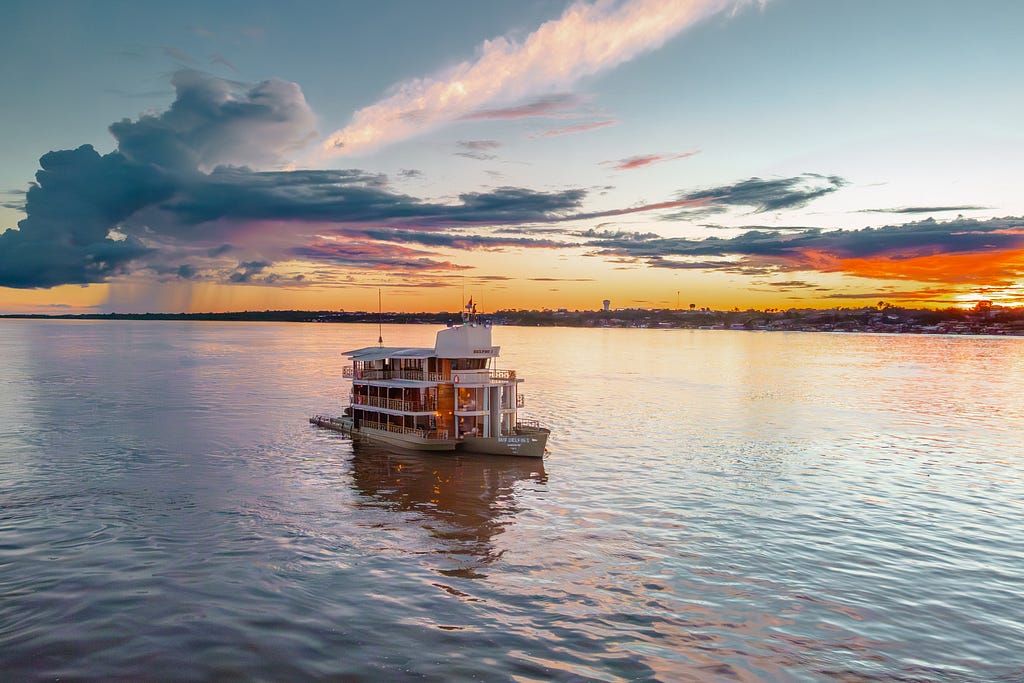
I am thrilled to have joined Delfin Amazon Cruises (DAC), a Peruvian family owned expedition cruise company with a 20-year legacy in the Pacaya Samiria National Reserve, in the Upper Amazon of Peru. Building on DAC’s deep-rooted community relationships and support for traditional handcrafts, we are now looking toward the future. To address the urgent climate and biodiversity crises, we have launched BioRest (our Biocultural Restoration Program). This long-term program transforms lands cleared by slash-and-burn agriculture back into thriving forests using useful native species with an agroforestry strategy. By blending Traditional Ecological Knowledge (TEK) with technical horticulture, we are creating a restoration corridor across three neighboring communities. BioRest is a voluntary, participatory mission. As co-designers and facilitators, we provide families with capacity strengthening and tools needed to foster a biodiversity-positive environment while protecting their invaluable cultural heritage.
Can you share the most interesting story that happened to you since you began leading the Sustainable Program at Delfin?
During one of the firsts BioRest co-design workshop, we were identifying which species to include in our conservation corridor based on the community’s needs. As we discussed traditional remedies and the flavors of their childhood, we realized many key plants were now missing from their immediate forest. One elder asked, “Can we plant lechehuayo?” “Of course,” I replied. “Tell me more!” He described it with a smile: “As a kid, I’d draw out the sweet juice from the succulent fruit and then use the rest as chewing gum. I loved it.” Others quickly joined in, sharing nostalgic memories of the delicious fruit and wishing they still had a tree nearby. We agreed to include it, then an elder sighed, “But it doesn’t grow close to us anymore.” “Then let’s find it,” I said. Later, an elderly resident approached me with a lead: “I have an old lechehuayo on my land. Let’s go find it!.” We set off on a mission, trekking two miles through the brush. When we finally reached the tree, there was a collective burst of joy, but a quick search for seeds or seedlings yielded nothing. Just as we were turning back, disappointed, an elder let out a shout and raised a tiny green stem into the air: “I got one!”. The collective joy filled the forest for a second.
None of us can be successful without some help along the way. Did you have mentors or cheerleaders who helped you to succeed? Can you tell us a story about their influence?
Throughout my career, I have been shaped by a diverse tapestry of mentors. As a college freshman, I was guided by senior peers leading our mangrove conservation cohort. Later, during my rainforest research, members of the Infierno Native Community offered a perspective on nature that beautifully paralleled my academic training. While Juan Pesha taught me to track peccaries and porcupines by their subtle traces, Drs. Louise Emmons and Monica Romo trained me to master the ecology and scientific identification of species from bats to large mammals. Dr. John Terborgh further expanded my vision, immersing me in the complexities of forest fragmentation and trophic cascades. By synthesizing these formative experiences, I can now apply technical knowledge to science-based solutions that directly improve native communities’ livelihoods. Yet, my greatest cheerleaders have always been my family, anchored by my father, an exploration geologist.
Thank you for that. Let’s now move to the central part of our discussion. Let’s start with a basic definition of terms so that everyone is on the same page. What does climate justice mean to you? How do we operationalize it?
Last year, I witnessed the raw impact of climate change firsthand. After an unusually late dry season in the Upper Peruvian Amazon, flash floods arrived unannounced, wiping out community crops just days before harvest. The struggle to put food on the table was devastating; the families’ hopes for their seasonal income vanished overnight. It is a profound injustice that the most vulnerable people, those who contribute the least to this global crisis, suffer its worst effects without an immediate government response. Why should the heaviest burden fall on the most fragile communities? Beyond providing immediate food relief, we are taking long-term action through the BioRest Program. We are planting diverse native edible species on high terraces and strengthening natural barriers against rising waters. At times, it feels like a David and Goliath scenario, but we refuse to stay idle. By implementing highland agroforestry, we are working alongside these communities to build resilience and minimize the impact of a changing climate. As Peruvians, we feel a deep responsibility to help our local communities thrive, especially in challenging times.
Science is telling us that we have 7–10 years to make critical decisions about climate change. What are three things you or your organization are doing to help?
Yes, science tells us we have less than a decade to make critical decisions for the climate. Here is how we are taking action:
- Measuring and Reducing our Footprint: We are auditing our daily operations to identify and eliminate carbon emissions at their source. Our goal is a clear path towards achieving carbon neutrality in the near future.
- Biocultural Mitigation: Through the BioRest Program, we are replacing monocultures with diverse, productive native forests. This does more than just bring back biodiversity; it actively mitigates climate change by converting degraded lands into high-capacity carbon sinks.
- Modeling Scalability: We are creating a replicable, science-based model for the private sector. Our aim is to prove that industry in the Amazon can, and should, operate as a restorative force rather than an extractive one.
Are there three things the community, society, or politicians can do to help you in your mission?
Yes, here there are three actions that can help in our mission:
- For our traveling community: Exchanging knowledge is crucial. I invite our travel colleagues to share their own conservation successes. By exchanging what works in different ecosystems, we build a collective know-how that inspires and strengthens restoration efforts worldwide.
- Politicians: Mobilizing the Paris Agreement urgently. Leadership must move beyond rhetoric. We need politicians to proactively mobilize resources to meet Paris Agreement targets, creating tangible incentives for nature-based solutions and prioritizing biodiversity in national policy.
- Society: Practicing impact-first travel. We must transition from passive tourists to conscious travelers. This means actively minimizing your footprint and ensuring your presence supports the social and ecological health of local communities, which means leaving them better than you found them. We trust our travelers will leave the Amazon as more conscious citizens of the world, at least, that is one of our deepest goals.
How would you articulate how a business can become more profitable by being more sustainable and more environmentally conscious? Can you share a story or example?
Sustainability is not a cost, it is a driver of efficiency and brand value. A business can become more profitable when it operates in harmony with its environment through three key factors:
Operational Efficiency: Because fuel is our largest expense and carbon contributor, auditing emissions allows us to optimize our river routes and reduce terrestrial trips. This significantly lowers our footprint while delivering substantial cost savings. To ensure precision, we utilize Relais & Châteaux’s MyImpact platform to accurately measure, track, and reduce our carbon footprint.
Localized Supply Chains: By prioritizing regional gastronomy and seasonal ingredients, we eliminate the high logistical costs of importing goods. This creates an authentic, unique product that guests highly value while directly supporting the local economy. Looking ahead, this impact will grow as the fruit trees we are currently planting in the BioRest communities begin to yield within three to five years, allowing us to source fresh, ultra-local produce directly from them.
Destination Stewardship: Our business model relies on a thriving Amazon. Through the BioRest Program, we actively drive biodiversity conservation, climate mitigation, and cultural preservation, the very experiences our guests travel across the globe to witness. By investing in community heritage and forest restoration, we protect the long-term viability of our destination.
As we reduce our impact, we are strengthening a more resilient, authentic, and cost-effective business model.
This is the signature question we ask in most of our interviews. What are your “5 things I wish someone told me when I first started promoting sustainability and climate justice” and why? Please share a story or example for each.
1. Address the Misalignment Between People’s Needs, Biological Urgency, and Bureaucratic Speed
Ecosystems and climate impacts move fast; a flash flood can destroy a community’s livelihood in hours, but the government sector operates on an entirely different clock, shifting political agendas. When bureaucracy stalls a conservation initiative or a land-titling request, it isn’t just an administrative delay; it is a climate justice failure.
2. Understand How Blind We Are to Our Own Privilege Regarding Natural Resources
In urban scenarios, because clean water flows seamlessly from a tap, there is a treacherous assumption that it is endless and universally accessible. The reality on the ground is a clear contrast. In the very regions where we operate, right alongside the world’s largest river system, access to safe drinking water is a daily crisis. Hundreds of people must rely on untreated rainwater or basic filtration. This work quickly taught me that climate justice is about challenging the privilege of unawareness, because communities surrounded by water shouldn’t have to struggle to drink it.
3. Don’t Treat Conservation Like an Administrative Puzzle
When you start out, you are hyper-focused on the technicalities: legal frameworks, data, and permits. But the critical truth is that your most powerful allies are the local people. I learned this firsthand after years of following traditional, top-down models in the field. When we began developing the BioRest concept, we inverted that approach: we visited the communities first, inviting them to shape the initiative in real-time. After a period of mutual evaluation, three communities voluntarily chose to join this long-term, participatory program as true co-designers.
4. Recognize How Deeply Sustainability Ignites Your Imagination
People often frame climate justice as a series of restrictions, sometimes focusing on what we have to give up or cut back. But the reality on the ground is the exact opposite: it is an absolute catalyst for creativity. Whether that is finding a new loop for circularity in your supply chain or inventing zero-waste recipes in the kitchen. This work forces you to become an innovator in every aspect of life, turning constraints into a playground for fresh ideas.
5. This is the Most Deeply Fulfilling Work You Can Do
The one thing nobody tells you is that despite the numerous challenges, this is the most deeply fulfilling work you can do. People often warn you about the negativity, the burnout, and the slow pace of change in climate justice. What they fail to mention is the unmatched joy of seeing your efforts translate into tangible reality.
Is there a person in the world, or in the US with whom you would like to have a private breakfast or lunch with, and why? He or she might just see this, especially if we tag them. 🙂
I would love to meet Pope Leo XIV to thank him for his direct impact in the Amazon. Throughout his papacy, he has been instrumental in raising awareness and driving action for water conservation in the region. By keeping the principles of Laudato si’ at the core of his actions, he continues to prove that social, economic, and environmental issues must be solved together, and that environmental justice is a crucial pillar of poverty alleviation.
How can our readers continue to follow your work online?
You are welcome to read Delfin Amazon Cruises’ nature stories at https://www.delfinamazoncruises.com/category/nature/page/2/
Thank you!
How Gabriela Orihuela Of Delfin Amazon Cruises Is Helping to Promote Sustainability and Climate… was originally published in Authority Magazine on Medium, where people are continuing the conversation by highlighting and responding to this story.