

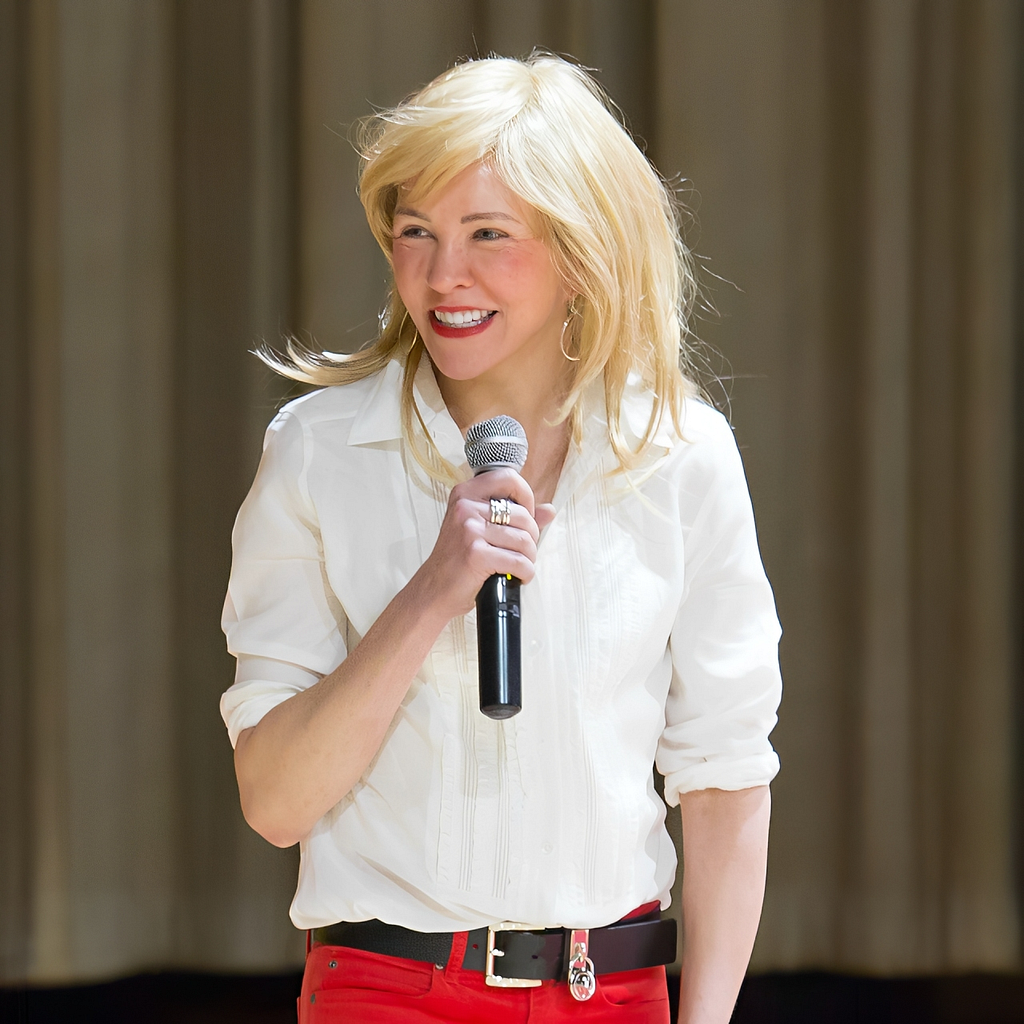

What started with my own story has become a lifetime of making sure others are heard, believed, and never forced back into silence.
As a part of my series about “individuals and organizations making an important social impact”, I had the pleasure of interviewing Katie Koestner.
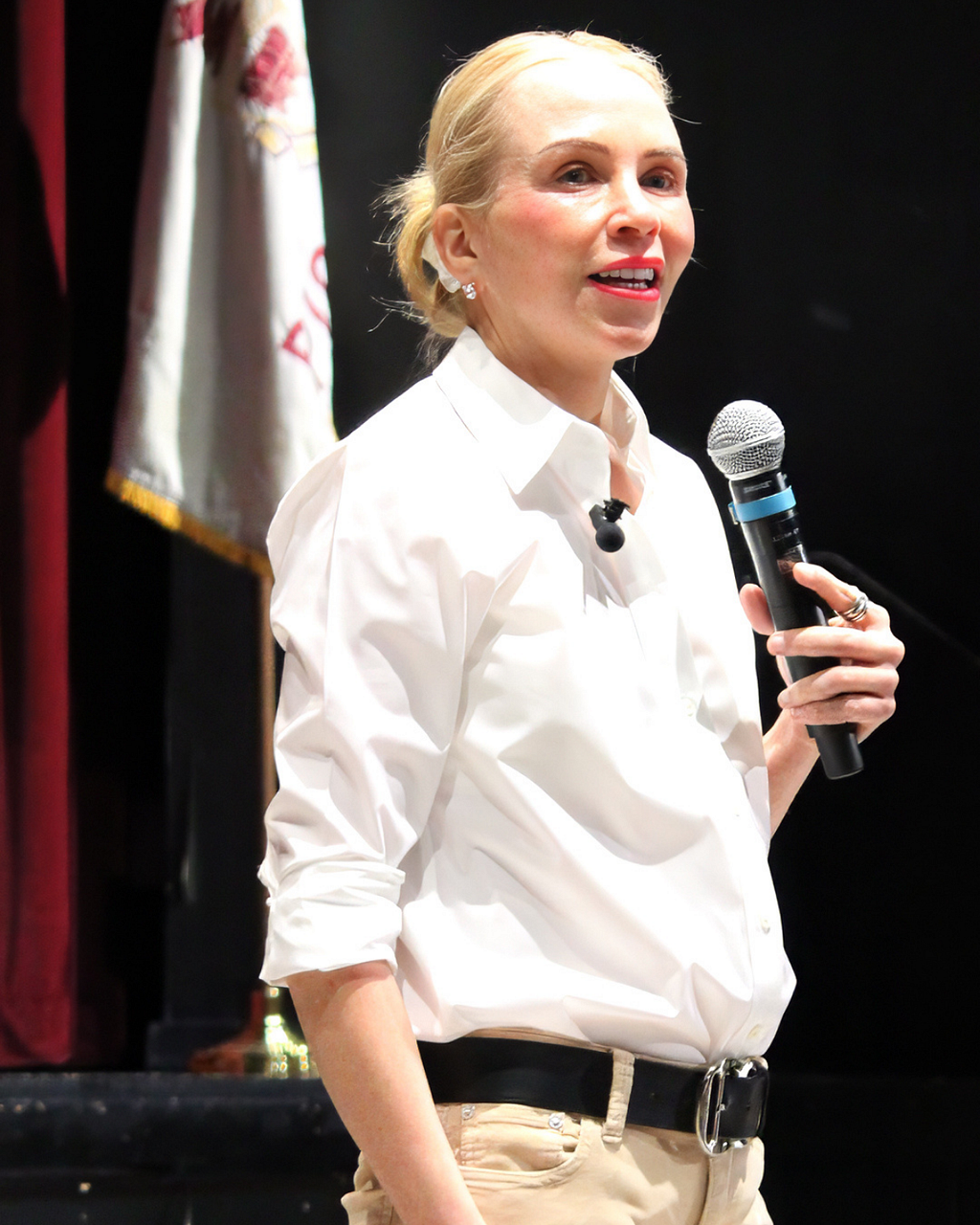
Katie Koestner is the CEO of Take Back the Night and a leading voice on sexual misconduct policy and institutional response. At 18, she brought national attention to “date” rape as the first woman to speak publicly about her experience, appearing on the cover of TIME Magazine. She has since worked with more than 5,000 institutions and founded the 24/7 National Sexual Assault Legal Hotline, providing survivors in all 50 states with access to free, trauma-informed legal guidance.
Thank you so much for joining us in this interview series! Can you tell us a story about what brought you to this specific career path?
The third weekend of my first year at The College of William & Mary, a simple date ended in a night that changed my life. We went out to dinner, came back to campus, and spent time in my dorm room. That night, he raped me.
I began speaking openly about what had happened, and the conversation quickly moved into the national spotlight. The media picked up the story, HBO produced a documentary, and at just 18 years old, I was featured on the cover of TIME Magazine. I went from being a regular college freshman to speaking to the entire country about date rape. At the time, most people still thought of sexual assault as something that only happened with a stranger. The idea that it could happen between two people who actually knew each other was something many were not yet ready to face.
My original plan was to double major in chemistry and Japanese, so this was hardly the path I expected for myself. As more people shared their own stories with me, I realized my experience was part of a much larger, collective weight. I saw how many others were living with that same pain and confusion, and I knew then I could not step away.
That realization turned into a lifelong responsibility. For more than three decades, I have worked with schools, corporations, and communities around the world to prevent sexual violence and promote healthy relationships. What started with my own story has become a lifetime of making sure others are heard, believed, and never forced back into silence.
Can you share the most interesting story that happened to you since you began leading your company or organization?
One moment I often think about is when I was 21 and asked to speak on the National Mall in Washington, D.C. I stood in front of 250,000 people at a national rally following the murder of Nicole Brown Simpson. I was on a stage with national leaders and performers, telling my story to a crowd that stretched farther than I could see. It felt completely surreal to realize my story had started in a dorm room and was suddenly part of a national conversation about domestic violence and accountability.
Moments like that stay with you, yet they are only one part of the work. What has stayed with me just as much are the conversations that happen after I speak. I am in different communities constantly, whether on a college campus, at a military base, or with a corporate leadership team. People almost always stay afterward. On average, at least ten people come forward to share something that has happened to them, often something they have never said out loud before.
Those are the moments I carry with me. I think of the student who waits until everyone else leaves, the survivor finding the words for the first time, or the parent who does not know how to help their child. That is why I continue to do this work.
It has been said that our mistakes can be our greatest teachers. Can you share a story about the funniest mistake you made when you were first starting? Can you tell us what lesson you learned from that?
I was invited to speak at The Citadel, a military college in South Carolina, early in my career. This was back when the school was still almost entirely male. I was about 24 years old, though if I am honest, I probably looked closer to 18, so I was already nervous walking into that environment.
Right before I was supposed to go on, I was standing in the lobby when the student body president came up to me and said, “Just so you know, my boys do not want to hear what you have to say.”
I carried that sentiment with me as I walked into the gymnasium where the entire student body was assembled. There was a long microphone cord stretched across the floor leading up to the podium, and as I walked out, I tripped on it. It was not a full fall, but it was enough that everyone saw it, and the entire room started laughing.
It was a moment where everything could have gone wrong. I had just been told I was not welcome, and now I had seemingly confirmed every stereotype they might have had about me. When I reached the podium, I took a breath and decided exactly how I was going to handle it. I said something along the lines of, “Yes, gentlemen, I am the dumb blonde who was sent here to tell you about how she was raped at 18.”
I leaned into the moment instead of trying to recover from it. I used the mistake to connect with them, and by the end of the talk, they gave me a standing ovation. That experience taught me something important. You do not get to control how people receive you when you walk into a room, and you do not get to control every mistake you make. But you do get to decide what you do with it. When you meet the moment directly, even when it feels uncomfortable or unfair, you can change the outcome.
Can you describe how you or your organization is making a significant social impact?
Our work focuses on creating real change at both the individual and systemic levels. Through Take Back the Night, we support more than 1,000 events each year across over 30 countries, creating space for survivors to be heard and bringing communities together to raise awareness and take a visible stand against sexual violence.
Beyond awareness, we provide direct support through the 24/7 National Sexual Assault Legal Hotline. This service connects survivors with free, trauma-informed legal guidance. Many people do not know what their rights are or what options they have after an assault, and access to clear, immediate information can change what comes next.
I also work closely with schools, corporations, military organizations, and communities to strengthen how institutions respond to sexual misconduct. This includes everything from training and policy development to education centered on healthy relationships, accountability, and prevention.
Our work extends globally as well. Through initiatives like the Dignity Girls project in Kenya, we support trafficked and exploited teen mothers by funding safe spaces to provide long-term stability. Sitting in a room with young girls who have experienced that level of trauma makes it clear how urgent this work remains.
For me, impact shows up at a broad scale and in individual moments. It is found in the number of people reached and the policies strengthened. It also shows up in the life of a single survivor who finally feels heard and takes a step forward that they did not think was possible.
Can you tell us a story about a particular individual who was impacted or helped by your cause?
There is one story that comes to mind because it shows how impact often unfolds over time. Many years ago, a father brought his daughter to hear me speak. She was in ninth grade and had experienced sexual assault by an older boy at her high school. Her father was trying to find any way to support her and help her feel less alone, and someone told him I happened to be speaking nearby.
She sat in the audience that day, and I had no idea who she was at the time. Years later, she reached out and told me she had been there. Hearing my story had stayed with her through those years, and she eventually began to find her own voice.
Today, she speaks publicly, participates in conversations around this issue, and has even joined me on my podcast, the Dear Katie Podcast. Seeing her now, doing this work in her own way and creating that same moment of connection for someone else, is what matters most to me. That is what full circle looks like. You speak, you leave, and you trust that something landed. Sometimes it takes years to truly understand how one moment becomes part of someone else’s path forward.
Are there three things the community/society/politicians can do to help you address the root of the problem you are trying to solve?
There are a few key areas where real progress is possible if we are intentional about our approach.
The first area is policy. Survivors of sexual assault need clear and consistent pathways to seek justice. Right now, those pathways are often complicated or entirely out of reach. Continued work at the legislative level to strengthen protections and expand access to legal options is essential to ensuring real accountability.
The second area is education, which needs to start much earlier than most people think. Conversations around respect and healthy relationships should begin in elementary school and continue in age-appropriate ways as young people grow. Waiting until a student reaches college is too late to begin these foundational discussions.
The third area involves engagement from the institutions that shape our culture, including faith communities. These spaces deeply influence how people understand relationships and personal values. When these institutions are willing to have direct, thoughtful conversations about consent, it can shift how entire communities think and respond to these issues.
None of these efforts works in isolation. Together, they begin to address the root of the problem instead of only responding after sexual violence has occurred.
How do you define “Leadership”? Can you explain what you mean or give an example?
To me, leadership is not about personal advancement or building a profile. It is about doing the necessary work when there is no spotlight and no immediate reward. It means stepping into the gaps where something needs to be done, even when there is no recognition attached. I believe leadership is defined by the obstacles you remove for others, not the accolades you collect for yourself.
I think about a time I went to speak in a very rural part of Montana. It was hours from the nearest airport, and the only real employers in the area were the park service and the local high school. It is the kind of place that rarely makes it onto anyone’s radar, and yet the challenges there were very significant. Young girls were growing up in poverty with limited options, and they were sometimes attaching themselves to older men because it felt like a way forward. These are not the communities people usually picture when they think about this work, but they matter just as much.
Because there was no built-in system of awareness, no ongoing programming, and very little visibility, leadership in that moment came down to showing up anyway. I had to be willing to go where the need actually existed rather than where it was most convenient or visible.
When you step into spaces like that, you create access where there was none before. Once that path exists, it becomes much easier for others to follow.
What are your “5 things I wish someone told me when I first started” and why? Please share a story or example for each.
I have always had a complicated relationship with this question because the truth is no one told me anything when I was first starting. There was no one to tell me. No one had done what I was doing in the specific way I was doing it, so there was no roadmap or established set of best practices to follow.
In some ways, that absence of direction was a gift. If someone had tried to tell me how to do this work, it might have limited what I believed was possible. I would have been reacting to someone else’s version of the path instead of creating my own.
I often think about it like walking into a jungle no one has traversed before. You do not have a map, so you are not confined by one. You learn by moving forward and trusting your own instincts. Over time, that process builds a kind of confidence you cannot get any other way. When you have had to figure things out on your own repeatedly, you begin to trust you can handle whatever comes next.
So when I think about what I wish someone had told me when I first started, the honest answer is nothing. That experience of figuring it out for myself is exactly what allowed me to take risks, learn as I went, and create something that did not exist before.
Can you please give us your favorite “Life Lesson Quote”? Can you share how that was relevant to you in your life?
My favorite quote is from Plato: “The soul takes flight to the world that is invisible but there arriving she is sure of bliss and forever dwells in paradise.”
My sister loved that quote. She wrote it to me once, and I have held onto it ever since. She was the only person in my family who fully supported me when I first spoke publicly about my sexual assault, and she was fearless in her own way, always pushing into things I would never have thought to try. If I stayed in one lane, she would find another and master it. She learned to fly helicopters, taught sailing, sang opera, and rescued animals, moving through life without hesitation.
She passed away in a car accident not long after getting married and having a baby. It was sudden, and there was no way to prepare for such a loss. I come back to that quote often because it reminds me that the people we love do not simply disappear, and that connection does not end in the way we fear it will. The way she lived still shapes how I move through my own life, in the risks I take, the choices I make, and the way I choose to show up every day.
Is there a person in the world, or in the US with whom you would like to have a private breakfast or lunch with, and why? He or she might just see this, especially if we tag them. 🙂
I would want to sit down with someone who has real influence over how young men think and behave.
I am not particularly interested in meeting someone from politics or a traditional business role. Instead, I am interested in someone who shapes culture and reaches millions of boys and young men every day, especially in online spaces where those ideas are forming in real time. There are entire online ecosystems where ideas about masculinity, power, and relationships are being shaped, often without accountability or balance. You see this with streamers like Adin Ross and Sneako, who are reaching those audiences earlier and more consistently than most educators or institutions ever could.
I want to understand that perspective directly, not from a distance or through headlines, but through actual conversation. The focus would be on influence, responsibility, and what it means to shape how an entire generation understands respect. If we want to create real change, we have to be willing to engage in the spaces where those ideas are being formed.
You are a person of enormous influence. If you could inspire a movement that would bring the most amount of good to the most amount of people, what would that be? You never know what your idea can trigger. 🙂
I would focus on reaching people earlier.
There is a concept I have worked on called Respect My Red. At its core, it teaches respect and boundaries from the youngest possible age. The idea is simple. Red means stop. It is not a suggestion or something to negotiate. It is something you respect.
We teach children they have ownership over their own bodies, they have the right to say yes or no, and those choices matter. When that understanding is built early, it fundamentally shapes how people move through the world. Too often, these conversations happen only after harm has already occurred. We wait until high school or college, when patterns and beliefs are already firmly in place.
Real change starts much earlier, by making respect and consent the baseline from the very beginning.
How can our readers further follow your work online?
Readers can learn more about the work and get involved with Take Back the Night at takebackthenight.org, where we share upcoming events, resources, and ways to support survivors. We are always looking for people to get involved, whether through volunteering with us, attending an event like our annual Global Virtual Event, or helping us expand this work into new communities.
You can also visit my website at katiekoestner.com to learn more about my speaking engagements, training programs, and work as an expert witness.
The Dear Katie Podcast is another place to connect. On the show, I talk with survivors, experts, authors, activists, attorneys, whistleblowers, and more, about their journey and what propels them forward to effect change while maintaining internal strength.
This was very meaningful, thank you so much. We wish you only continued success in your great work!
Social Impact Heroes: How Katie Koestner of Take Back the Night Is Helping To Change Our World was originally published in Authority Magazine on Medium, where people are continuing the conversation by highlighting and responding to this story.