

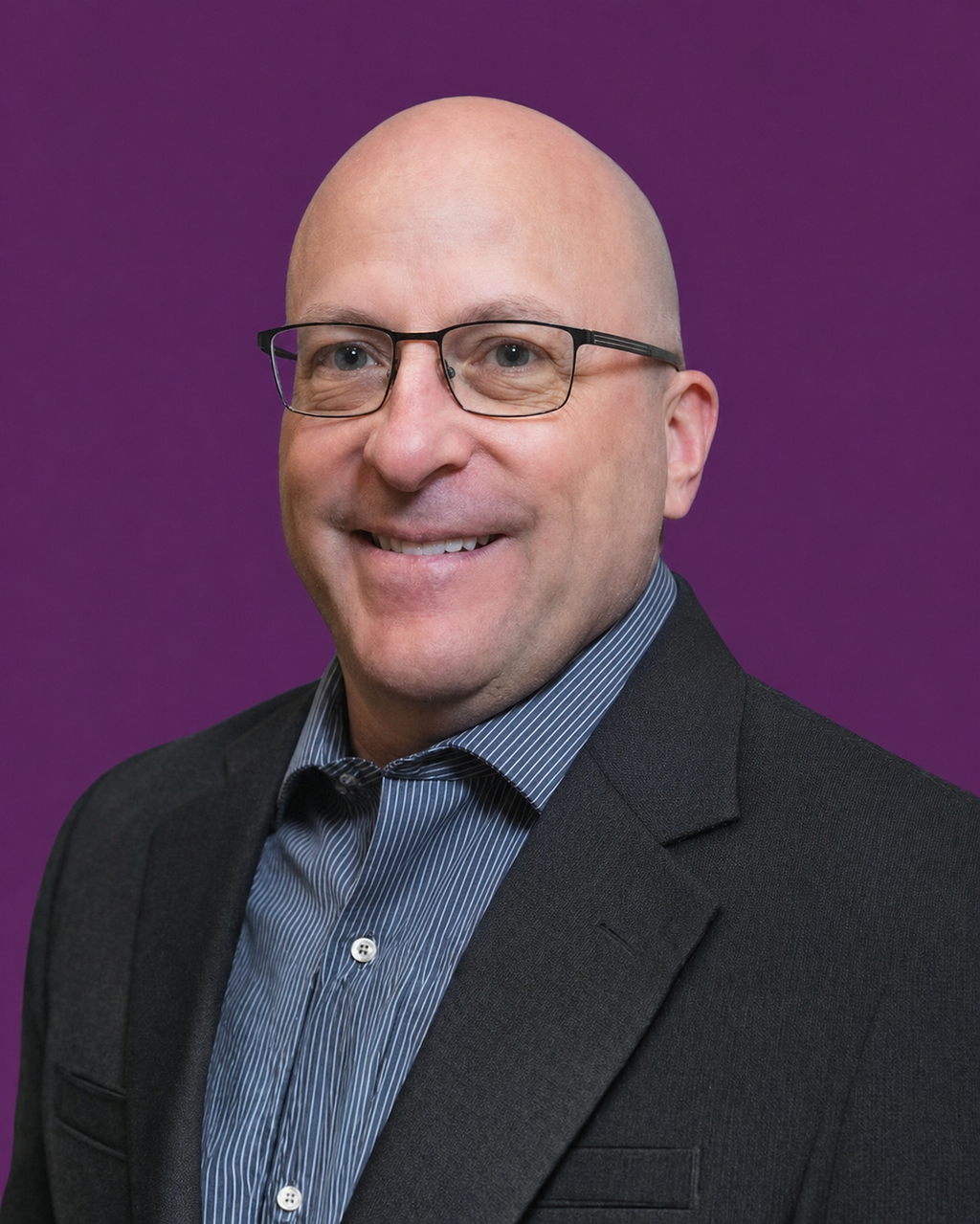
Education Revolution: Dr Brian Allen of Excelsior University On Innovative Approaches That Are Transforming Education
An Interview With Dr. Bharat Sangani
Education provides options and options create pathways to advancement.
The landscape of education is undergoing a profound transformation, propelled by technological advancements, pedagogical innovations, and a deepened understanding of learning diversities. Traditional classrooms are evolving, and new modes of teaching and learning are emerging to better prepare students for the complexities of the modern world. This series will take a look at the groundbreaking work being done across the globe to redefine education.
As a part of this interview series, we had the pleasure to interview Brian Allen.
Dr. Brian Allen is Dean of the School of Business at Excelsior University, where he leads the development of innovative, practitioner-focused programs that prepare future business leaders. With more than 30 years of leadership experience across education, global operations, and project management, he brings a deeply applied and international perspective shaped by work in 48 U.S. states and 38 countries. A U.S. Air Force veteran and dedicated educator, Dr. Allen is committed to bridging theory and practice through student-centered leadership, with expertise spanning entrepreneurship, strategy, and organizational performance.
Thank you so much for doing this with us! Our readers would love to “get to know you” a bit better. Can you share the “backstory” behind what brought you to this particular career path?
I did not begin my career intending to become an educator. I started in the U.S. Air Force, expecting to follow a path similar to my father’s successful military career. However, I quickly realized I needed to pursue a path better aligned with who I was. After six years of service, my career took a number of unexpected turns across different roles and industries, largely driven by the need to support a growing family. At one point, during a brief period of unemployment, I made the decision to complete my undergraduate degree to expand my opportunities. That decision changed everything. I discovered a genuine love of learning, which led me to pursue a Master of Project Management, an MBA, and eventually a doctorate. Initially, my goal in earning a doctorate was to differentiate myself for C-suite leadership roles — and it worked.
While serving in a C-level position, I began teaching part-time in the evenings. What started as a way to “give back” quickly became something much more meaningful. I found great fulfillment in helping students, particularly doctoral learners working on their dissertations. Over time, my passion for education grew stronger than my interest in industry roles. Eventually, I transitioned fully into higher education and moved into academic leadership, where I could have a broader impact beyond the classroom. Today, my focus is on empowering educators to, in turn, empower students. It is incredibly rewarding work and a path I’m grateful I discovered along the way!
Can you share the most interesting story that happened to you since you started your career? Can you tell us what lesson you learned from that?
I’m not sure there has been a single defining moment. Instead, my career has been shaped by a series of incremental experiences that, at the time, may have seemed unrelated but ultimately built on one another. As a young man, I spent two years in Bolivia doing missionary work for my church. During that time, I saw firsthand how even small businesses can change lives, which sparked my interest in business and entrepreneurship. I also learned Spanish, a skill that has been valuable throughout my career. After that experience, I served in the U.S. Air Force, where I developed expertise in logistics management, contracting, warehouse operations, quality control, and information technology.
These foundational experiences opened doors to opportunities across a wide range of industries, primarily in business operations and technology. Along the way, I became a serial entrepreneur, further broadening my perspective. Working across industries, building businesses, and continuing my education has helped me better understand and connect with students and faculty from diverse backgrounds. The most important lesson I’ve learned, and one I often share, is that your path does not need to be linear to be meaningful. If you remain open to learning at every stage, even seemingly disconnected experiences can lead to incredible opportunities. It’s equally important to find fulfillment in where you are along the journey, even if you haven’t yet reached your ultimate destination.
Can you briefly share with our readers why you are an authority in the education field?
That’s a challenging question, because I’m not sure I would describe myself as an “authority” or expert. One of the realities of education is recognizing how much there is still to learn, and that’s part of what makes this work so rewarding. In my role, I have the opportunity to work with and hire individuals who are true subject matter experts in their fields. I believe effective leadership comes from surrounding yourself with people who bring deep expertise and diverse perspectives.
Where I add value is in shaping a clear vision and aligning teams around shared goals. My focus is on connecting strengths across the team, maximizing what each person does best while minimizing gaps through collaboration. In a strong, cohesive organization, success is less about any one person being the expert and more about how well the team works together to move forward.
Can you identify some areas of the US education system that are going really great?
Yes — but perhaps not in the most obvious ways. Over the past decade, I’ve seen a significant shift in the traditional 18–22-year-old student model. Today, far more mid-career, working adults are enrolling in or returning to college. When I went back to complete my undergraduate degree in my early 30s, I was often the oldest student in the room. That’s no longer the case. Working adults now represent one of the fastest-growing segments in higher education, and many universities are beginning to better support their unique needs.
I’m also encouraged by the growing adoption of AI in education. While some educators approach it with hesitation, others are embracing it in innovative ways to enhance learning and improve efficiency. Increasingly, I see institutions using AI tools to do more with limited resources which is a reality that resonates across nearly every educational environment I’ve encountered.
Can you identify the key areas of the US education system that should be prioritized for improvement? Can you explain why those are so critical?
First, there is growing uncertainty across higher education due to ongoing discussions about restructuring, or even eliminating, the Department of Education. This comes at a particularly challenging time, as institutions are already facing a demographic decline in traditional 18–22-year-old college students. Colleges and universities are being forced to adapt, as seen in the increasing number of closures and mergers. While change is inevitable, institutions and students need clearer guidance and stronger support systems to navigate this transition effectively.
Second, there is a broader public skepticism about the value of a college education. Having spent part of my career without an undergraduate degree, I understand how limiting that can be in the job market. While a college degree may not be necessary for every career path, it remains a powerful tool for expanding opportunities. Education provides options and options create pathways to advancement. Narratives that dismiss the value of higher education often overlook this reality and seem particularly short-sighted.
Please tell us all about the innovative educational approaches that you are using at Excelsior University. What is the specific problem that you aim to solve, and how have you addressed it?
Our MBA is a strong example of how we combine the best of multiple educational approaches to develop market-ready skills. The program is primarily asynchronous, allowing students to complete coursework on their own schedules. This flexibility is complemented by live, synchronous sessions where students engage directly with experienced, industry-active faculty. The problem we aim to solve is the gap between academic learning and real-world application. By blending flexibility with meaningful interaction, our model helps students become practical, real-world problem solvers.
Because business skills apply across industries, our graduates are prepared to address complex challenges related to sustainability, ethics, technology, accountability, and more. Rather than training students to solve a single type of problem, we focus on building adaptable leaders with the tools and mindset to create meaningful change, wherever their careers take them.
In what ways do you think Excelsior University’s approach might shape the future of education? What evidence supports this?
Education, like many industries, is undergoing significant change — and Excelsior is actively leading through that transition. We are building strategic partnerships that expand opportunities for our students rather than limit them, while supporting both traditional learners and working adults seeking career advancement. Our collaboration with business partners and professional associations allows us to offer both credit and non-credit pathways aligned with real workforce needs. As further evidence of this commitment, we are launching a Doctor of Business Administration (DBA) program next year, expanding our ability to serve learners across their entire professional journey.
The DBA, in particular, reflects our focus on practical, applied education. The DBA is designed as a terminal degree for working professionals who want to solve complex, real-world problems. Graduates of programs like these will help shape the future of education and the workforce alike. They will be the rockstar problem solvers of the future.
How do you measure the impact of your and Excelsior’s innovative educational practices on students’ learning and well-being?
There isn’t really a “me” in this equation. It’s a unified team effort focused on one goal: empowering learners to achieve their educational objectives. We measure our impact through student success. That means students who enroll, complete their programs, and successfully apply what they’ve learned in their careers. Ultimately, outcomes matter. It is all about how well our graduates translate their education into real-world results. Innovation, for us, is not just about technology. It’s about building stronger connections with students, being responsive to their needs, fostering community, and improving the systems that support them. These elements allow us to better serve students, alumni, and our broader network of partners. At Excelsior, innovation is reflected in the success of our learners. While many institutions describe themselves as student-centric, our faculty and staff demonstrate that commitment every day. It’s one of the reasons I find this work so meaningful.
What challenges have you faced in implementing your educational innovations, and how have you overcome them?
Life is full of challenges, and I don’t see them in isolation. They exist on a continuum. Working with talented, capable people means everyone can contribute where they are strongest. I don’t need to solve every problem myself; I need to bring my best and collaborate with others who do the same. Implementation is often the easier part. The real challenge is identifying the right educational paths and support systems for student success in a rapidly changing world. That requires people who are open to change, committed to improvement, and willing to be guided by data; even when it reveals difficult truths. In the end, clarity and honesty provide the right benchmarks for measuring success.
What are your “5 Things I Wish I Knew When I First Started”?
1. Don’t be afraid to be wrong.
Failure and readjustment are part of the journey toward excellence.
2. You don’t need to be the most talented, smartest, or have the best head of hair (highly personal assessment) to make a difference.
Come to the team with the best “you” and others will be inspired to do so as well.
3. Accept advice, counsel, and correction.
You are not going to be right or get it right all of the time. Life is mostly Plan B. Feedback is always a gift and generally not about you personally. Thick skin is important!
4. Don’t be afraid to say you don’t know.
Early on in my career I was convinced that if I did not know, it was a sign of a shortcoming or a weakness. No one knows everything, period. Take it easy on yourself and quit trying to be everything to everyone. Humility is an amazing trait for every single person, but vital for leaders.
5. Train your replacement.
I only grew in my career because leaders saw there was potential. Real leadership comes not from what you do in an organization but from the legacy you leave when you move on.
Can you please give us your favorite “Life Lesson Quote”? Can you share how that was relevant to you in your life?
My wife and I raised six children, and during times when money was tight, we often bought movies we could watch again and again as a family. Two quotes from those films became guiding principles in our home and life in general. The first is “Keep moving forward” from Meet the Robinsons. The second is “See a need, fill a need” from Robots. Together, they capture how I approach life. “See a need, fill a need” reminds me that we each have a responsibility to act and to contribute rather than wait for others to create a better world. And “Keep moving forward” has been just as important during setbacks, which are inevitable. It’s a reminder to get back up, stay focused, and continue progressing.
We are blessed that some of the biggest names in Business, VC funding, Sports, and Entertainment read this column. Is there a person in the world, or in the US, with whom you would love to have a private breakfast or lunch, and why? He or she might just see this if we tag them 🙂
If I could choose anyone, it would have been Clayton Christensen. I greatly admired his work, and I believe it should be required reading for all business leaders. His insights on innovation and disruption fundamentally shaped how I think about organizations and strategy. More broadly, I’m drawn to thought leaders who challenge my assumptions. A few who have had a strong impact on my thinking include Malcolm Gladwell, for his perspective on first judgments; Seth Godin, for his holistic view of marketing; Daniel Kahneman, for his groundbreaking work in behavioral economics; and Sandeep Swadia, for his focus on systems thinking and building for success. There are many others I could name, but what connects them all is their ability to push me to think differently and that’s what I value most in any great conversation.
How can our readers further follow your work online?
I am in the process of launching a personal webpage for two upcoming book projects. For now, I welcome connections on LinkedIn https://linkedin.com/in/brianallen.
Thank you so much for these insights! This was so inspiring!
About The Interviewer: Dr. Sangani (“Doc”) is a thriving cardiologist, business owner, husband, father and friend. His latest venture — LifeRx — is a community committed to helping growth-minded professionals create happiness through the pillars of health, wealth and connection.
Education Revolution: Dr Brian Allen of Excelsior University On Innovative Approaches That Are… was originally published in Authority Magazine on Medium, where people are continuing the conversation by highlighting and responding to this story.