


“If you want to go fast, go alone. If you want to go far, go together.” This African proverb shows the importance of teamwork and collaboration is achieving more than one can achieve on their own.
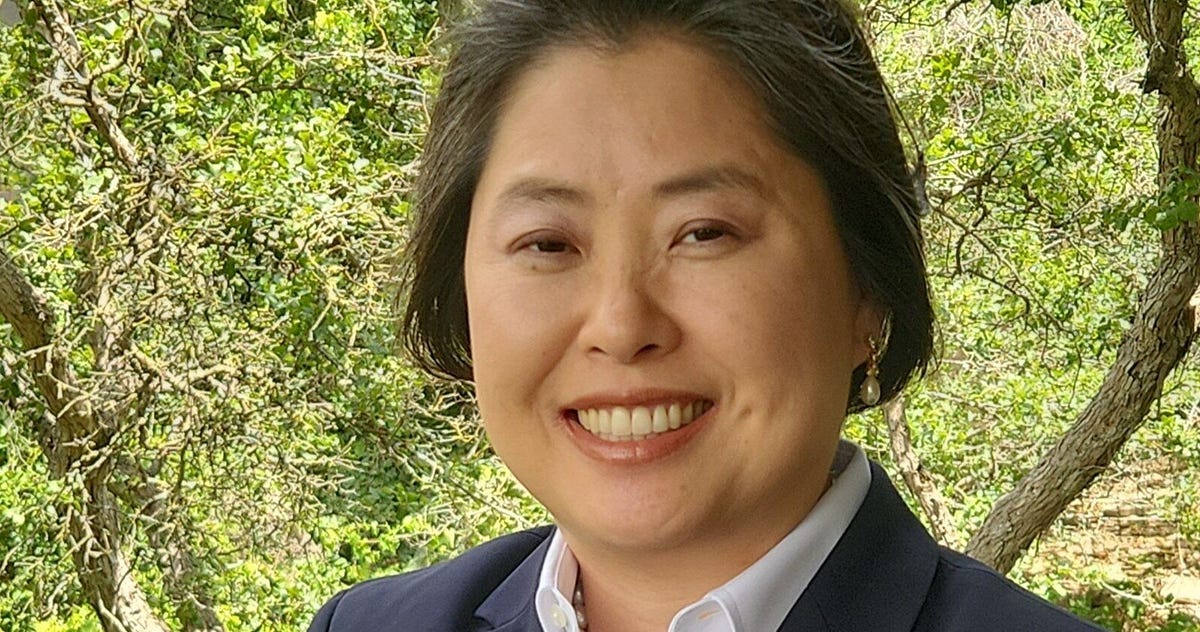
As a part of our series about social impact heroes helping our planet, we had the pleasure of interviewing Dr. Su Yeong Kim.
Dr. Su Yeong Kim is a Professor of Human Development and Family Sciences at the University of Texas at Austin. A leading figure in research on immigrant families and adolescent development, she earned the honor of being a Fellow on multiple national psychology associations, and is the Editor of the Journal of Research on Adolescence. Dr. Kim has authored and published more than 170 works, and is recognized with Division 45 of American Psychological Association’s Distinguished Career Contributions to Research Award. Her research, funded by the National Institutes of Health, National Science Foundation, and other bodies, covers bilingualism, language brokering, and cultural stressors in immigrant-origin youth. Dr. Kim is an enthusiastic mentor and community advocate, as well as a member of UT’s Provost’s Distinguished Leadership Service Academy.
Thank you so much for joining us in this interview series! Can you tell us a story about what brought you to this specific career path?
As a Professor of Human Development and Family Sciences at the University of Texas at Austin, I conduct research on adolescents and teach undergraduate and graduate students. My research focuses on the development of adolescents in minoritized and immigrant families by focusing on family and cultural contexts of development. My path towards this career first involved conducting research for my psychology honors thesis as an undergraduate student, which sparked my interest in developmental psychology. I then did my Ph.D. in Human Development with my dissertation research focused on cultural dissonance, parenting, and adolescent outcomes. I completed my postdoctoral training in prevention science to improve developmental outcomes in adolescents. After completing two years of postdoctoral training, I started my faculty position at the University of Texas at Austin.
Can you share the most interesting story that happened to you since you began work with your organization?
The most interesting story is the cumulation of results from about 50 of my publications showing the impact of language brokering experiences on a range of developmental outcomes in Mexican immigrant families. I am the first researcher to demonstrate that language brokering, where children function as translators and interpreters for their English-limited parents, is linked physiologically to the stress hormone cortisol. I also showed that contextual stressors, together with language brokering stress, function together to influence internalizing symptoms, sleep, and life meaning.
It has been said that our mistakes can be our greatest teachers. Can you share a story about the funniest mistake you made when you were first starting? Can you tell us what lesson you learned from that?
A mistake I made early on in my career was not having enough research assistants when starting my research project. It is always difficult to know what new opportunities will come up in the upcoming semester when recruiting research assistants. I now make sure to accept a few more research assistants to ensure we have sufficient personnel for new endeavors that may come up unexpectedly in an upcoming semester.
Can you describe how you or your organization is making a significant social impact?
My research lab collects original data and publishes original research on the experiences of minoritized adolescents in immigrant families in the United States. Most of the existing research on adolescent development is on White adolescents. My research lab fills this void by conducting research showing the culture of wealth and assets that minoritized adolescents possess, to show positive developmental outcomes in mental health, language development, and academic outcomes.
Can you tell us a story about a particular individual who was impacted or helped by your cause?
My research project collects data on cognitive games from study participants. An undergraduate research assistant was a biology major, and he told me he wanted to switch his major to computer science, but that it was too late for him to do so. Therefore, he wanted an opportunity to program the cognitive games for my research project using JavaScript to hone his computer science programming skills. Due to his strong conviction, I took a chance on him and had him program the cognitive games needed for my research project. Thereafter, he took on several other programming tasks on my project. Upon graduation, he was able to use the skills he learned from my research project towards a job as a computer programmer and is now a computer programmer in the industry.
Are there three things the community/society/politicians can do to help you address the root of the problem you are trying to solve?
- First is creating more friendly policies towards immigrants in the United States. Immigrants support the economy and make significant contributions to the U.S. economy.
- Second is having more funding available for research. Funding for social science research is historically smaller than the amount available for hard sciences.
- Third is providing funding that does not restrict the topic of research. Research projects on various topics are of vital importance to society, and there should be ample funding for different areas of inquiry.
How do you define “Leadership”? Can you explain what you mean or give an example?
Leadership is giving autonomy to people one leads so that they have the freedom to create in ways the leader did not think of. For example, I had given a tedious task of adding users to a database program to an undergraduate research assistant. The research assistant was able to develop a Python script to work with API scripts to automate the process rather than relying on manual addition of users to the project.

What are your “5 things I wish someone told me when I first started” and why. Please share a story or example for each?
- Develop relationships with your employees. I learned that employees will be more devoted to our project if they see their supervisor as a person and someone they can connect with.
- Be generous. I learned the importance of being generous to others. When one is generous to others, they will reciprocate and be generous in return.
- Pay yourself first. As an academic, there are many ways one can be pulled into doing service and mentoring of students. In order to keep one’s job, though, it is important to publish and move forward with one’s program of research. Therefore, it is important to pay yourself first and ensure that your research agenda takes priority.
- Take time to meditate. It is not possible to work 24/7. It is important to take time to rejuvenate and take time for oneself to have the energy to give your best.
- Write everyday. The biggest reward for being an academic comes with publications. It is therefore important to practice one of the most important things of an academic, which is to write everyday.
Can you please give us your favorite “Life Lesson Quote”? Can you share how that was relevant to you in your life?
“If you want to go fast, go alone. If you want to go far, go together.” This African proverb shows the importance of teamwork and collaboration is achieving more than one can achieve on their own.
Is there a person in the world, or in the US with whom you would like to have a private breakfast or lunch with, and why? He or she might just see this, especially if we tag them. 🙂
I recently listened to a podcast interview with Koraly Perez-Edgar, Professor at Penn State University. It was part of a podcast called Vida de Ph.D., where the host interviews different academics. I was truly inspired by Dr. Perez-Edgar’s wisdom, perseverance, and unwavering commitment to her science, her family, and her identity.
You are a person of enormous influence. If you could inspire a movement that would bring the most amount of good to the most amount of people, what would that be? You never know what your idea can trigger. 🙂
I would like to provide more opportunities for the dreamers in the United States to have a way to have a path towards citizenship. They came to the United States as children and are now living their lives precariously as adults with no path towards citizenship. I would love to enact policies to change that.
How can our readers further follow your work online?
There are multiple ways to follow my work online. My work can be found through PubMed, ORCID, Google Scholar, suyeongkimresearch.com, or suyeongkim.com.
Pubmed: https://www.ncbi.nlm.nih.gov/myncbi/su%20yeong.kim.1/bibliography/public/
Orcid: https://orcid.org/0000-0001-9222-2505
Google Scholar: https://scholar.google.com/citations?user=IXv3mLsAAAAJ&hl=en&oi=ao
This was very meaningful, thank you so much. We wish you only continued success in your great work!