


IDEA-Having a good idea is not enough to have others adopt the idea. You need to show success before others will join. Change takes time. You may see slow progress until the gates of opportunity open up and then you need to scale up to accommodate the wave. New ideas are impossible, until they become inevitable. Data, Demand and Design all need to align.
According to the University of Colorado, “Those who are most affected and have the fewest resources to adapt to climate change are also the least responsible for the greenhouse gas emissions — both globally and within the United States.” Promoting climate justice is an incredibly important environmental responsibility that is slowly becoming more and more recognized. In this interview series, we are talking to leaders who are helping to promote sustainability and climate justice. As part of this series, we had the pleasure of interviewing Jo Bond.
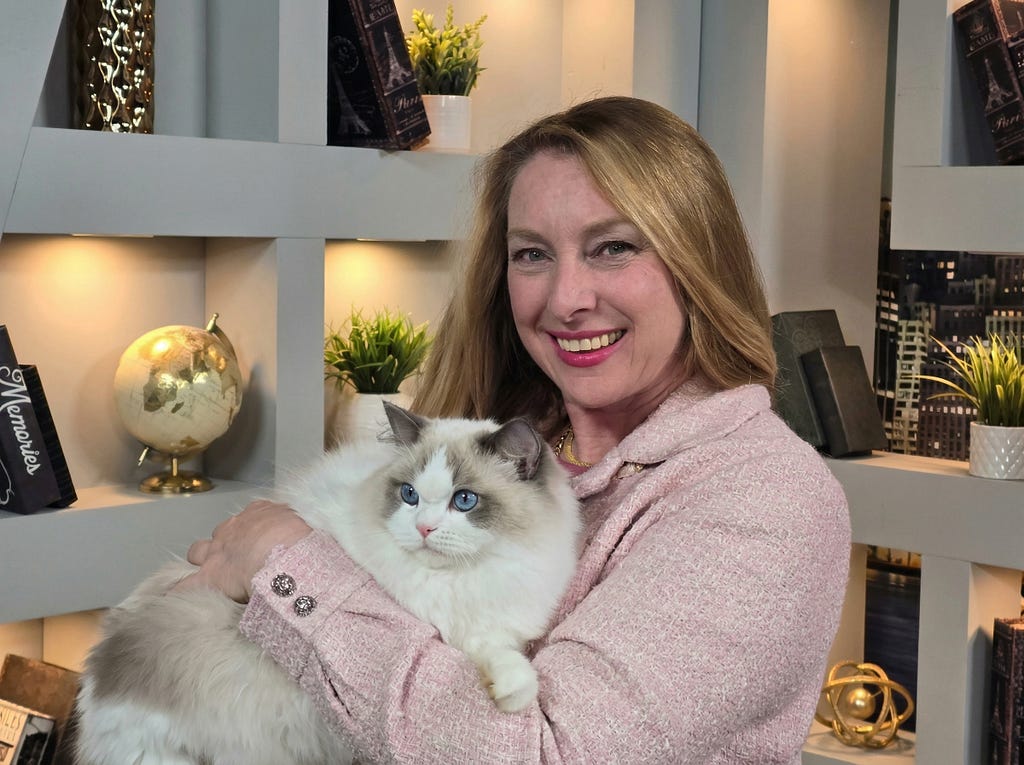
Jo Bond is an award winning television host of “The Bond”, the talk show which combines passion for nature, community, and green technology, which makes the world a better place. She engages audiences with compelling interviews. Under a pen name, she has also written over 50 fictional titles and numerous articles, contributing to business journals, as well as lifestyle High Net Worth magazine publications like The Modern Butler’s Journal, Auto Aficionado, Estate and Manor Magazine.
Thank you so much for doing this with us! Before we dig in, our readers would like to get to know you a bit. Can you tell us a bit about how you grew up?
My parents are experts in their fields and travelled around Europe when I was younger. This exposure gave me a greater appreciation for how different cultures evolve and protect their resources. Every country needs clean air and fresh water as a minimum for everything to work. As I grew up, I knew I wanted to share my love of nature with others. Eventually, an opportunity arose to allow me a media platform, which I hope engages audiences and inspires them to value their own resources.
Everyone has a cataclysmic moment or marker in their life which propels them to take certain actions, a “why”. What is your why?
I never thought of myself as on-camera talent. But one day, an opportunity arose when a Newport Beach, California, TV station was in the process of developing fresh content for their viewers.
I pitched an idea: Give a platform to people who usually stay in the background because they are focused on being experts in making the world a better place. They are naturally selfless and not seeking a spotlight, so develop a show which would search for them and share their stories to inspire others to be better, themselves.
The station not only liked the idea, but then they surprised me by saying I should develop and lead it.
I was given a very talented crew and after quite a lot of work and planning, we have not only produced consistently valuable content, but we have also won awards.
You are currently leading an organization that is making a difference for our planet. Can you tell us a bit about what you and your organization are trying to change?
THE BOND team has one goal: Deliver the message that even somebody who lives in the city can do something to experience and appreciate nature. Making a difference can be in everyday small actions, or you may be inspired to join an organization. What we are trying to do is demonstrate the wide variety of green options in which you can participate.
Most of our interviewees have a business, club, charity, or a way to get involved in something they do. These people are quietly solving enormous problems, often fighting an uphill battle as they also have to live their daily lives. We want to share their victories and tips for how to handle personal and business failures. They are motivated by that instance which makes them choose if they will give up or go on. They realize they cannot fix everything, but maybe they prevent another person from having to endure a hardship.
For example, one guest himself lost a home due to a natural disaster. The storm of red tape was just as bad as the tempest they had survived. He developed a way to leverage a large 3D printer to build a home. After the 2025 Los Angeles fires, we connected him to city officials so his company could formally bid on rebuilding projects for Californians who had recently suffered a similar tragedy. He repaired despair.
Another woman found herself depressed after the death of loved ones and she found that cows calmed her. She opened up a cow sanctuary where she could rescue mistreated cows, and also welcomed others who were in need of mental consoling.
An organization realized that trained dogs help first responders and military veterans deal with PTSD, and those dogs need to be nearby almost constantly. They developed a kayaking program which offered life jackets for dogs and modified kayaks to comfortably allow a dog to join their human companion on the calming waters.
A small business headed by a man who loves nature, wanted to teach the joy of fishing to city-dwellers. He would bring a pool, fill it with water, contact a local hatchery to borrow live fish, and offer lessons on how to fish responsibly. It is a great way to encourage city folk trapped in a cubicle during the work week to explore nature in a safe familiar city surrounding. They can explore nature and “catch and release” fishing on a real lake in nature when they feel ready.
A luxury sports car manufacturer challenged their engineering team to make a greener hybrid sports car. They were successful and in collaboration with CSAT TV, won an award.
There are many more stories which show the innovation, compassion and empathy which were the seeds of healing for so many. CSAT TV and “The Bond” wants to reveal their sagas to learn to love and understand why they wanted to Bond With Nature. Bond with animals, bond with the water, bond with helping others, bond with community.
Can you share the most interesting story that happened to you since you began leading your company or organization?
When you approach nature with respect instead of control, it opens to you in the most unexpected ways.
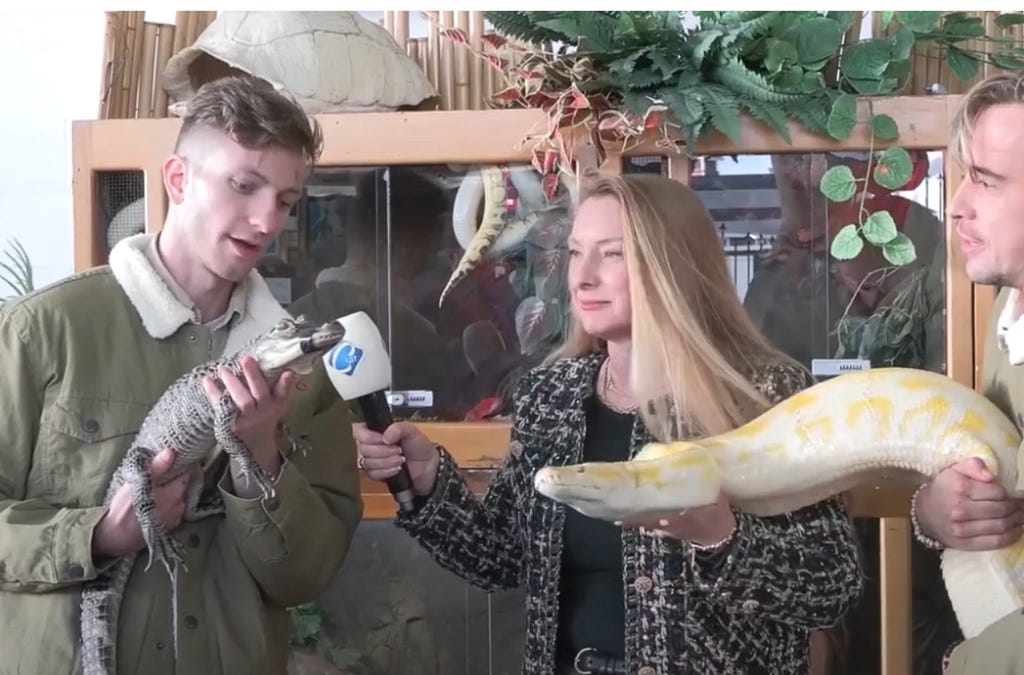
Our studio in Newport Beach does not have a sign in front of it. That is intentional so that we do not get unexpected visitors, especially during filming or when we are live on air. This is particularly important if the guest is bringing a live animal with them. We do not want any unexpected sounds to spook the adorable critter.
When guests are invited to CSAT TV, they are emailed a photo of the entrance door with instructions on how to enter. The door is unlocked during the time they will arrive to be greeted at reception, then pass the business offices, and then finally get to the control booth and studio set where they will be interviewed.
One person was rather concerned and told us later that she was so tense that she did not think she would have so much fun. After her interview, she laughed, then told us of her concerns, and asked when she could come back for another interview.
Lesson learned: Even if you think your precautions would be appreciated, sometimes they are misunderstood until they are experienced and understood and eventually loved.
None of us can be successful without some help along the way. Did you have mentors or cheerleaders who helped you to succeed? Can you tell us a story about their influence?
Yes. The station owner, Heidi Saad, was a fantastic mentor and cheerleader. She has managed CSAT TV for over 14 years. She had faith in me and told me it would be a success before we won our first award. She is a Christian who believes that God arranges situations to allow things to work together for good.
“And we know that in all things God works for the good of those who love him, who have been called according to his purpose”. Romans 8:28 (NIV)
Although my face is what you see, the show is not about me at all. Behind the camera is a sturdy network of talented people who are all doing their very best consistently each and every day. A win for the show only happens because each person doing their part really builds such a strong foundation to allow me to take risks. The point of “The Bond” is to remember the message should always uplift and encourage the audience. “The Bond” does not sell sustainability, it translates the whispers of Mother Nature so that the audience can understand how valuable a resource we all have; how worthwhile sustainability is; how easily you can partake in supporting green efforts.
Thank you for that. Let’s now move to the central part of our discussion. Let’s start with a basic definition of terms so that everyone is on the same page. What does climate justice mean to you? How do we operationalize it?
Climate Justice is: Cool Minds. Warm Hearts. By that I mean that when you think logically, being sustainable makes logical sense which will have a welcoming warm embrace. All of society benefits from clean air and fresh water. Nature needs nurture. What I mean is nature will thrive when people nurture the process.
Operationalizing Climate Justice means: Sustain; don’t blame. Act local to impact global. By this I mean that every small choice you make does impact the overall effort. If you are feeling overwhelmed, then just do one thing. Maybe that is using a glass mug instead of a disposable plastic one. Focus on the goal. Turn the idea that you want fewer heatwaves and more normal predictable weather into policy with financing to build the infrastructure and education pipeline to reward everyday citizens to participate. Every country wants clean air, fresh water, nourishing food, and mobility.
The Intergovernmental Panel on Climate Change (IPCC) is part of the United Nations. Its job is to “provide governments at all levels with scientific information that they can use to develop climate policies”.
The IPCC special report urges us to take immediate action. Their website quotes Antoine de Saint Exupéry, Citadelle, 1948 with a quote which translates to, “As for the future, it’s not about predicting it, but about making it possible.”
We share this air. Let’s keep it breathable.
We can encourage green fueling infrastructure for airports and Fixed Based Operator (FBO), which is a private business operating on an airport to provide services or products to aviation customers. Consider hydrogen or other alternate energy refueling options for heavy transport or a network of Electric Vehicle (EV) charging stations. Consider offering SAF (Sustainable Aviation Fuel) at airports.
When the government buys, it provides incentives. They can offer subsidies or tax credits for users. Today nobody even thinks about seat-belts, but they were not included in new cars until 1968 when a federal law made it mandatory. If everybody does it, then it is eventually accepted. We need every politician and corporation to see the benefits of sustainability.
Let me ask you some questions. Could the government give an incentive to oil companies which would give them an incentive to produce low carbon products at a reliable profit? Could refineries pivot to SAF, or Hydrogen, or another alternate source of energy production? Could the people vote on having regular delivery companies be the first to convert to clean energy for deliveries? Could Compressed Air Vehicles (CAV), which can be refilled rapidly and avoid liquid fuel, leveraging physics to power the next generation of commuter cars?
Maybe hydrogen is applicable for specific sectors and compressed air vehicles should be limited to golf carts or a bus with a predictable route. The point is start a conversation.
Science is telling us that we have 7–10 years to make critical decisions about climate change. What are three things you or your organization are doing to help?
California could partner with other states and even smaller countries to set the example for repurposed incentives to welcome both big business and researched ideas along with public education to make a difference. It could be setting up an office in, say Basel, to collaborate with an existing station like TeleBasel or TeleZüri to highlight local innovations or green start -ups which could benefit from a partnership with California.
CSAT TV would want to help amplify whatever is the best solution and even report on research pilot studies. Shows with insight into what works and what does not would do two things: Provide transparency into development process so the public sees why a path was selected over another option; and it allows the public to get involved. Somebody watching a show may actually have an idea about how to improve on a concept.
Many research organizations urge the public to take action by 2030.
CSAT TV welcomes interviewing policy makers to explain the legislation and economic impact to communities.
The station would encourage city planners to learn from each other. For example, how do Dutch or Swiss cities make bicycle-friendly cities? Does re-planning improve the overall health of citizens living there?
CSAT TV always welcomes collaborations with other television programs to help get the word out. That could be syndicating “The Bond” or another method which supports the green efforts of another station.
Are there three things the community, society, or politicians can do to help you in your mission?
Three things?
Politicians could host public forums so constituents can see profit and loss of various green programs to clarify if the investment is worth it or not. For example, California issued an executive order because they feel that Californian health and safety is being impacted, so action needs to be taken.
Media can help by reporting the progress of deploying these green efforts so the public is aware of how to take advantage of new programs or green products.
Consumers could buy and support legitimate sustainable businesses. Buy local or encourage your workplace to engage with vendors which are sustainable.
The aviation industry generates 2% of all carbon dioxide (CO2) emissions, and 12% (CO2) of all transportation industry emissions. One company, Million Air of Burbank , a private FBO company which helps refuel planes, decided to offer their customers SAF as a refueling option.
Sustainable Aviation Fuel (SAF) can reduce greenhouse gas emissions by 50% to 94% compared to conventional jet fuel. This reduction is because SAF is made from sustainable non-petroleum feedstock, used cooking oil, animal fats, municipal solid waste, agricultural residues, and woody biomass.
How would you articulate how a business can become more profitable by being more sustainable and more environmentally conscious? Can you share a story or example?
This is the signature question we ask in most of our interviews. What are your “5 things I wish someone told me when I first started promoting sustainability and climate justice” and why? Please share a story or example for each.
1 . IDEA-Having a good idea is not enough to have others adopt the idea. You need to show success before others will join. Change takes time. You may see slow progress until the gates of opportunity open up and then you need to scale up to accommodate the wave. New ideas are impossible, until they become inevitable. Data, Demand and Design all need to align.
2 . COLLABORATE-Always approach a green business with the spirit of collaboration, not competition. When you figure out how to partner and find your own niche, you will help each other get stronger.
3 . ABSORB RISK-New ideas carry risk. As the leader, you need to be willing to bear that risk and take the hit if it does not work out. All is not lost. Every failure is a lesson which means the next idea will be even better.
Using nature as a model, everything has a season. Plant the seeds, nourish the soil, harvest the crop, distribute the product. Execute in sequence.
A Time for Everything
Chapter 3:
1 For everything there is a season,
a time for every activity under heaven.
2 A time to be born and a time to die.
A time to plant and a time to harvest.
3 A time to kill and a time to heal.
A time to tear down and a time to build up.
4 A time to cry and a time to laugh.
A time to grieve and a time to dance.
5 A time to scatter stones and a time to gather stones.
A time to embrace and a time to turn away.
6 A time to search and a time to quit searching.
A time to keep and a time to throw away.
7 A time to tear and a time to mend.
A time to be quiet and a time to speak.
8 A time to love and a time to hate.
A time for war and a time for peace.
Ecclesiastes 3:1–8 (NLT)
4 . PATIENCE-Always be willing to partner with a worthy cause even if you do not see immediate profit nor results. Partnerships can turn ripples into waves. Collaboration leads to new opportunities which could benefit all involved.
5 . RESEARCH TO CHANGE Research builds the idea. The idea builds momentum. Momentum builds change. Sustainability is a design principle. Companies which embed circular sustainable processes, leverage clean technology, and easy to use interfaces on the products results in stronger customer loyalty, established brand reputation, and profits.
Is there a person in the world, or in the US with whom you would like to have a private breakfast or lunch with, and why? He or she might just see this, especially if we tag them. 🙂
I would love to have lunch with any or all of these outstanding thinkers:
- Nicholas Berggruen and Nils Gilman: Nicholas developed the institute which bridges long term vision with impact on society to study how communities can better connect. Nils is the editor of NOEMA, the Berggruen magazine.
- Emile Nuwaysir is an executive blazing a path for regenerative medicine
- Thomas Ingenlath was the CEO of Polestar electric cars
- Andrew Beebe helps entrepreneurs that work to decarbonize and use alternative energy
I would also love to connect with TeleBasel, the TV station in Basel Switzerland or Euro channel Switzerland or www.bbc.com in the UK and see if we could do an English Language show on their TV station. It would be a great excuse for CSAT TV to set up a branch nearby.
How can our readers continue to follow your work online?
You can leave a message for Jo Bond with CSAT TV . Sign up for the free playlist on Youtube https://youtube.com/playlist?list=PLoP-LmqvcH7czvq58SM9_mUgNm7mEliTd&si=DWrE_G0DTOna5HLT
Facebook https://www.facebook.com/csat.tv/
Live free Arabic and also English content broadcast https://www.csat.tv/
You can leave a message for GJ dePillis https://www.linkedin.com/in/depillis/
This was very meaningful, thank you so much. We wish you only continued success on your great work!
Thank you so very much for speaking with me. I enjoyed it!
How Jo Bond Of CSAT TV Is Helping to Promote Sustainability and Climate Justice was originally published in Authority Magazine on Medium, where people are continuing the conversation by highlighting and responding to this story.