

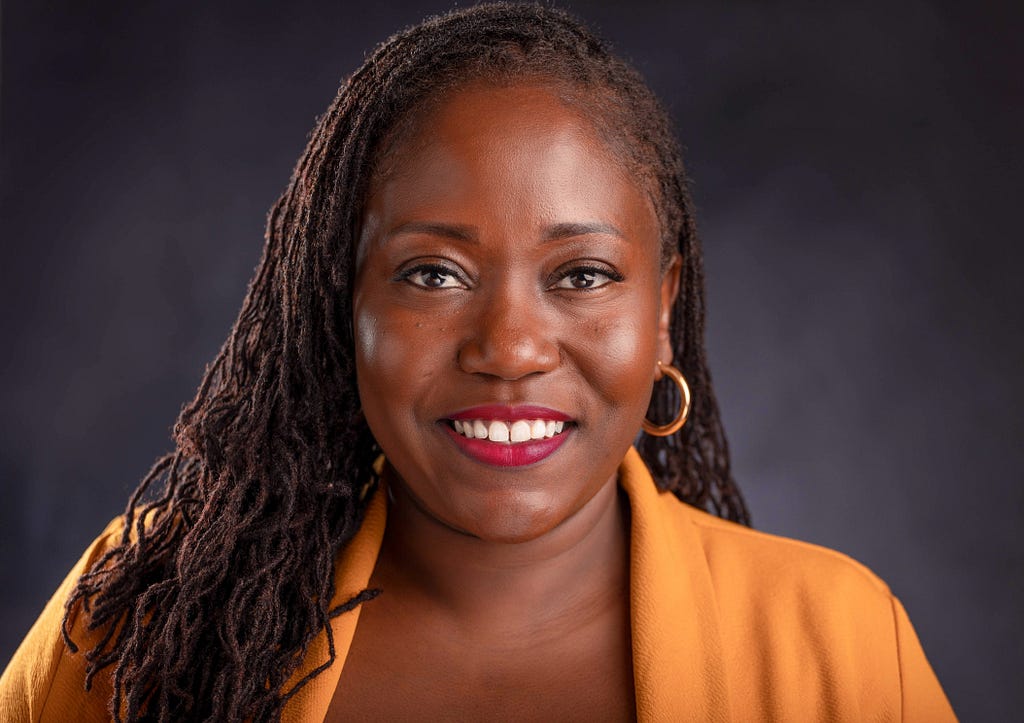

Mental Health Champions: Why & How Dr Shantalea Johns Of Johns Counseling and Consulting Is Helping To Champion Mental Wellness
An Interview With Eden Gold
In low-resourced communities, I see a different but familiar story. Many of these families have carried the weight of generational traumas such as poverty, racism, underinvestment, and unequal access to opportunities. In those neighborhoods, survival often came first, and mental health conversations were pushed to the side. Add to that a long history of mistrust in institutions, cultural beliefs about vulnerability, and limited access to care, and you have environments were asking for help can feel impossible or wrong.
As a part of our series about Mental Health Champions helping to promote mental wellness, I had the pleasure to interview Dr. Shantalea Johns.
Dr. Shantalea Johns is a social worker, mental health educator, speaker, and licensed therapist with nearly 20 years of experience in community mental health and higher education. Dr. Johns helps clients create personalized wellness plans that support lifelong resilience. Her mission is to empower individuals to take control of their mental well-being early, setting the foundation for healthy aging.
Thank you so much for doing this with us! Before we dig in, our readers would like to get to know you a bit. Can you tell us a bit about how you grew up?
I grew up on Detroit’s east side. Detroit at the time was distinguished by abysmal national rankings — one of the lowest per capita incomes, one of the highest rates of children living in poverty, and among the greatest numbers of single-parent households. Growing up in a predominantly low-income neighborhood, it was typical for me to witness gang fights in the lunchroom at my school or see the effects of the crack cocaine epidemic while playing outside with friends. At home, life was just as complex. I was a ward of the state until I turned 18 years old. I was raised by my aunt and father, both of whom faced mental health challenges. Our home was full of chaos, and as a shy child who stuttered, I often felt invisible. Yet, during all that, there were people — church members, schoolteachers, and neighbors — who saw me. They reminded me that I had value and that I could contribute something meaningful to the world. Their belief planted seeds in me that took root once I got to college.
I was fortunate enough to graduate from Wayne State University with both my bachelor’s and master’s degrees in social work. Social work is a helping profession dedicated to enhancing the overall well-being of others, particularly the most vulnerable populations. I later got my doctorate in Education, which expanded my understanding of how people learn, how they process information, and how knowledge can truly transform lives.
When I combined social work and education, I began to see the power of helping people survive and thrive. Social work taught me to look at the person in the environment or the “whole person.” This means that we assess how they interact with their family, friends, relationships, their community, and the policies that shape their lives. Education teaches how to translate that knowledge into growth, into tools, into strategies to promote the quality of life that we desire for ourselves.
I smile now when I think of that shy girl who stuttered, because I never would have imagined that most of my career would be spent using my voice, whether as a therapist, director, a mental health educator, or as a professor in college classrooms.
You are currently leading an initiative that is helping to promote mental wellness. Can you tell us a bit more specifically about what you are trying to address?
I am trying to educate parents and caregivers about the impact of traumatic events can have on the health and well-being of their children and teach them strategies for helping their children heal so they can thrive as they transition into adulthood.
Can you tell us the backstory about what inspired you to originally feel passionate about this cause?
As a child, Saturday mornings weren’t just for cartoons or sleeping in for me. Instead, they started with my aunt waking me up and telling me to meet her in the kitchen. Once I got there, I’d watch as she pulled out stacks of bread, layers of meat, cheese, and whatever else we had in the fridge. Together, we’d build the biggest double-decker sandwich I’d ever seen, one so big it barely fit between my small hands.
When I first asked why we made such a huge sandwich, she never gave a direct answer (you know how Southern caregivers didn’t like kids asking too many questions. They knew that ‘no’ was a complete sentence before we did). Later, she would tell me that we have enough to share.
After we made these sandwiches, my aunt watched out the window as I ran across the street to the parking lot where a man sat near the trash cans, searching for food and talking to himself. I was instructed to smile, hand the man the sandwich, and then come back home. This routine continued for years.
At the time, I didn’t fully understand. Why did we give him so much when we didn’t have much? But as I grew older, I realized that the act wasn’t just about food, it was about seeing people, acknowledging their humanity, and understanding that community means looking out for one another, even when it’s hard.
That act of kindness planted another seed in me. It taught me that even small acts of care can restore dignity, hope, and connection for the giver and the receiver of good deeds.
Many of us have ideas, dreams, and passions, but never manifest them. They don’t get up and just do it. But you did. Was there an “Aha Moment” that made you decide that you were actually going to step up and do it? What was that final trigger?
My first major speaking engagement came shortly after I was selected for the 2016 Emerging Leaders Program with NACADA, a global community for academic advisors. The following year in the program, I presented alongside a close colleague and friend. Our presentation was on ways to better support African-American college students. We practiced relentlessly before flying to St. Louis, hoping at least a handful of people would show up. To our surprise, we walked into a packed room with over 100 attendees eager to hear what we had to share. I remember looking out at the audience, realizing they were listening; they were taking notes, nodding, laughing at our jokes, and leaving with tools to help them create stronger, more inclusive experiences for students of color on their campuses.
That moment became my Aha moment. Since then, I’ve delivered nearly 100 presentations across the country, speaking on a range of topics, including promoting academic success and student well-being, as well as managing burnout in the workplace. Those sessions fueled my passion, but I also felt a deep pull to bring the work closer to home — back to Detroit.
That’s when I started Johns Counseling and Consulting and began partnering with The Yunion Inc., a Detroit-based organization with a trusted reputation for uplifting youth and families. Together, we began offering mental health education workshops for parents. It mattered to me that the work wasn’t just about theory, it was about strengthening families by applying the knowledge I gained about the neurobiology of trauma in a way that parents could understand and use strategies to create a space for healing and recovery in their homes. Years later, I’m still facilitating trauma-informed parenting trainings at The Yunion in-person and on their social media platforms and with other youth-serving organizations across Detroit. Each session is a reminder that while my work has taken me across the globe, some of the most meaningful impact I want to make is in the place I call home.
Alongside these efforts, I also serve clients directly as part of a group practice, providing mental health care across Michigan, Ohio, and Washington. This ongoing work with individuals and couples keeps me rooted in the heart of why I do what I do, helping people heal, grow, and build better relationships.
Can you share the most interesting story that happened to you since you began leading your company or organization?
One of the most interesting things that happened since starting my venture was being able to facilitate trauma-informed parenting workshops in Detroit Public Schools, the very same district where I once walked the hallways as a child. In 2021, Detroit Public Schools Foundation recognized me during Women’s History Month, honoring the contributions of alumnae making an impact in the community. That acknowledgment still feels like a full circle moment in my journey.
See the video here: https://dpsfdn.org/celebrating-shantalea-johns-ed-d-lmsw-as-part-of-our-dps-proud-womens-history-month-series/
None of us can be successful without some help along the way. Did you have mentors or cheerleaders who helped you to succeed? Can you tell us a story about their influence?
I believe that none of us makes it alone. However, when I consider this question, I hesitate to name names because I know I would inevitably leave someone out. Earlier in this conversation, I mentioned that many men and women have come into my life at different stages, and each of them has played a role in shaping the person I’ve become.
There were church members to teachers, neighbors to mentors, they consistently reminded me of what was possible even when I couldn’t see it for myself. Their encouragement helped me to push through challenges and to imagine a future beyond what my circumstances suggested. So, while I won’t single out one person, I do want to say thank you to those folks who may read this interview and smile because they know that they hold a special place in my heart.
According to Mental Health America’s report, over 44 million Americans have a mental health condition. Yet there’s still a stigma about mental illness. Can you share a few reasons you think this is so?
There are various reasons stigma about mental health still exists. I will share why I think it still exists in the areas that I most interact with folks. When I walk onto a college campus, I often see two realities happening at once. On the surface, you see students, faculty, and staff smiling, laughing, and hustling between classes. But when you sit with them in private, you hear about the pressure to perform, the fear of not belonging, and the worry that admitting ‘I’m struggling’ will be seen as weakness. In a culture that celebrates resilience and achievement, vulnerability can feel unsafe. That silence feeds stigma.
In low-resourced communities, I see a different but familiar story. Many of these families have carried the weight of generational traumas such as poverty, racism, underinvestment, and unequal access to opportunities. In those neighborhoods, survival often came first, and mental health conversations were pushed to the side. Add to that a long history of mistrust in institutions, cultural beliefs about vulnerability, and limited access to care, and you have environments were asking for help can feel impossible or wrong.
In your experience, what should a) individuals b) society, and c) the government do to better support people suffering from mental illness?
Schools, workplaces, faith communities and even Influencers can weave mental health into everyday culture, rather than just hosting one-time events. And at the government level, we need continued investment in access to affordable, culturally responsive care in the places people live and learn like what is being done through the Certified Community Behavioral Health Clinic, or CCBHC. These clinics are designed to make mental health care more accessible by offering a range of services, including crisis care, therapy, substance use treatment, physical healthcare, and connections to community supports, all in one location. What’s powerful is that they don’t turn people away because of their ability to pay.
In many urban communities, CCBHCs have become lifelines in closing the gap between the need for care and the ability to receive it. This investment is what it looks like when government funding and community partnerships show a commitment to supporting people living with behavioral health conditions.
What are your 5 strategies you use to promote your own well-being and mental wellness?
What are your favorite books, podcasts, or resources that inspire you to be a mental health champion?
Some of my favorite resources are Nedra Glover Tawwab’s books. I love how she reminds us that setting healthy boundaries is an essential part of protecting our mental health.
If you could tell other people one thing about why they should consider making a positive impact on our environment or society, like you, what would you tell them?
As an avid gardener, I would tell them that making a positive impact is like tending a garden. Every act of care you plant may seem small, but together they take root and grow into something that can nourish entire communities.
How can our readers follow you online?
www.Shantalea.com or https://www.linkedin.com/in/shantalea-johns/
This was very meaningful, thank you so much. We wish you only continued success on your great work!
Mental Health Champions: Why & How Dr Shantalea Johns Of Johns Counseling and Consulting Is Helping… was originally published in Authority Magazine on Medium, where people are continuing the conversation by highlighting and responding to this story.