

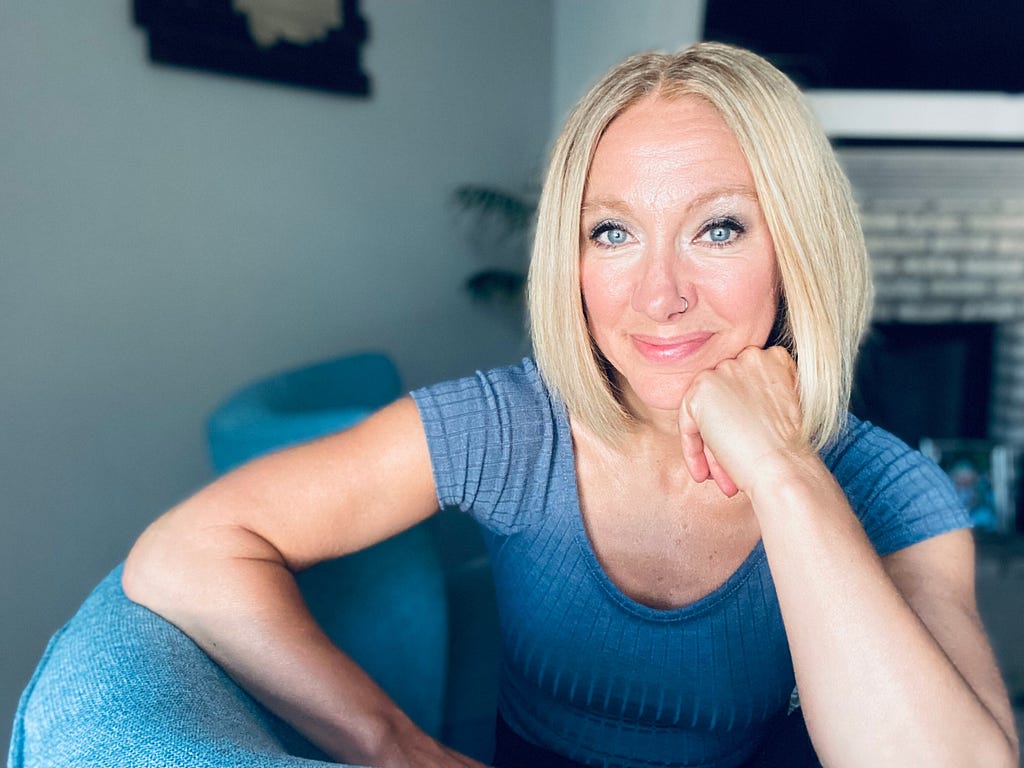

Sarah Saxby Of ‘The Soul Rehab Project’ On How Authenticity and Vulnerability Pay Off and Help You Win Personally and Professionally
Relationships that actually work: when you find the strength to become vulnerable and live authentically, you learn very quickly that there a lot of people that only liked you for your performance and who you pretended to be. As a reward for your courage, however, you will gain relationships, personally and professionally, that are real. And once you have real, you will never settle for performance again.
Being vulnerable and authentic are some of today’s popular buzzwords. It may seem counterintuitive to be vulnerable, as many of us have been taught to project an air of confidence, be a boss, and act like we know everything. In Brene Brown’s words, “vulnerability takes courage.” So is vulnerability a strength or a weakness? Can someone be authentic without being vulnerable? How can being authentic and vulnerable help someone grow both personally and professionally? In this interview series, we are talking to business leaders, mental health professionals and business and life coaches who can share stories and examples of “How Authenticity and Vulnerability Pay Off and Help You Win Personally and Professionally.” As a part of this series, I had the pleasure of interviewing Sarah Saxby.
Sarah Saxby is a speaker, storyteller, and creator of The Soul Rehab Project™, known for her unapologetic truth-telling and her ability to call out the performance of “authenticity” in today’s world. After years of self-betrayal, narcissistic abuse, and living a life that looked perfect on paper but felt hollow inside, she dismantled everything to discover what was real. With a background spanning corporate leadership, holistic nutrition, and 20+ years of study at the Kabbalah Centre, she now blends Human Design, intuition, and raw life experience to help people stop pretending and start living. Sarah doesn’t offer surface-level inspiration, she delivers truth that cracks illusions wide open so people can finally come home to themselves.
Thank you so much for doing this with us! Before we start, our readers would love to “get to know you” a bit better. Can you tell us a bit about your childhood backstory?
I was the scapegoat in my family, which meant I often carried the blame for things that weren’t mine. I was the kid who could sense the truth, who noticed the dysfunction and the lies, even when no one else wanted to acknowledge them. Instead of being supported for that awareness, I was often treated like I was the problem.
So I learned to play nice, stay agreeable, and keep quiet. I became skilled at enduring, at keeping secrets, and at betraying myself so everyone else could remain comfortable. On the surface, I looked like a good kid, but inside I was carrying rage with nowhere for it to go. That’s the kind of child I was: hyper-aware, deeply sensitive, and already practicing self-betrayal just to survive.
Even though I was very aware of the abuse and injustice that surrounded me, I was taught to believe there was nothing I could do. But, fortunately, this also planted the seed of my gift: the ability to see through the illusion and eventually reclaim the voice I was told not to use.
Can you please give us your favorite “Life Lesson Quote”? Can you share how that was relevant to you in your life?
One of my favorite life lesson quotes is from Rollo May, the existential psychologist: “The opposite of courage in our society is not cowardice, it’s conformity.”
That line has defined my life in so many ways. For years, I betrayed myself to conform, whether it was in my family, in relationships, or in my career. I played the role, kept the peace, and performed the version of myself that made sure everyone else stayed comfortable. On the outside, it looked like I was doing everything “right.” On the inside, I was becoming more and more of an empty shell.
Conformity was safe, but it was also suffocating. Eventually, the pain of pretending became greater than the fear of telling the truth. That’s when I finally found the courage to expose the lies — by being pushed out of my job for daring to call out the very people who were abusing their power, by walking away from a narcissistic relationship, and by confronting the reality that much of my identity had been built on lies.
This quote reminds me that real courage isn’t about being fearless, it’s about being willing to stand out, to be misunderstood, and to risk rejection for the sake of living in truth. Choosing authenticity over conformity has cost me relationships, jobs, and approval, but it has given me something far more valuable: my REAL self. She’s been quiet for way too long.
Is there a particular book, podcast, or film that made a significant impact on you? Can you share a story or explain why it resonated with you so much?
A book that made a profound impact on me is Man’s Search for Meaning by Viktor Frankl. What struck me most was his realization that, even in the unimaginable horrors of concentration camps, there was one freedom the Nazis could never take away from him: the freedom to choose his response. They could strip him of his family, his dignity, and his future, but they could not control how he chose to experience what was happening.
That truth has stayed with me through my own hardships. I’ve lived through abuse, injustice, loss, and periods of feeling completely powerless. Frankl’s insight reminds me that while I can’t always control my circumstances, I can surely decide whether I let them define me, and my response is my power.
Another lesson from his story that resonates deeply is how his suffering became the foundation of his life’s work. Without those experiences, he might not have touched millions of lives. I see my own path in the same way. Had I not endured what I’ve gone through, I wouldn’t be able to reach people at the depth I do now. My hardships became my training ground for helping others find truth and meaning in their own lives.
Let’s now shift to the main part of our discussion. Let’s begin with a definition of terms so that each of us and our readers are on the same page. What exactly does being authentic mean?
At its most basic definition, authenticity means something that is real, genuine, not false or staged. But in today’s world, the word “authentic” has become a buzzword that is overused and watered down to the point where it’s often more performance than truth.
I see so many people who believe they are being authentic, but in reality, they’re just playing a slightly more polished version of the role they’ve always played. When you’ve been conditioned your whole life to perform, whether it’s for your family, your job, or society, you can mistake the performance for the real thing. So it “feels” authentic, but it’s really only surface-level.
Real authenticity is not curated, staged, or filtered. It’s raw, often messy, and it never needs to be announced. If someone has to constantly proclaim how “authentic” they are, chances are, it’s just another layer of performance.
That’s why I struggle when I see healers or influencers posting staged photos of themselves and calling it authenticity. Authenticity doesn’t need props or a photoshoot. It shows up in your willingness to stop pretending, even when it’s uncomfortable or inconvenient.
What does being vulnerable mean? Can you explain?
By definition, vulnerability means the possibility of being attacked or harmed. On the surface, why would anyone willingly choose that? We’ve been conditioned to believe that strength means hiding our weaknesses, faking it until we make it, and never letting the imperfections show. But that conditioning hasn’t gotten us very far. It’s actually left us quite disconnected, exhausted, and often pretending.
Vulnerability is no longer about weakness. It’s about allowing the parts of ourselves we’ve been taught to hide to bravely come into the light. Think about what happens when you really cry. You might feel drained afterward, but you also feel lighter, clearer, and stronger. Vulnerability works the same way. When we allow ourselves to be seen in our mess, in our struggles, and in our truth, something flips inside of us.
The world is shifting. People are no longer satisfied with the old model of performing strength at all costs. Vulnerability is becoming the new strength, because it’s honest. And in that honesty, there is power. It’s not about exposing yourself recklessly, it’s about choosing truth over performance, even when it feels risky.
What are the positive aspects of being authentic and vulnerable? Can you give a story or example to explain what you mean?
For most of my life, I thought I was “transforming” when I read books, took classes, or had the little awakenings from something I learned. And while those things gave me insight, they didn’t seem to create the deep change I unknowingly needed. The truth is, I stayed stagnant in my transformation because I wasn’t willing to be fully authentic or vulnerable.
Like most people, I wanted to change without having to face the darker, more uncomfortable truths about myself and my life. But, unfortunately, real transformation doesn’t happen in the light, easy places. It happens when you’re willing to step into the raw, messy, unfamiliar territory of being fully seen, and exposed, first by yourself, and then by others.
Being authentic and vulnerable can feel scary, even dark at times, but it’s also the doorway. Once I finally accepted that there was no way forward except through my own truth, things began to open up. The positive aspect is that authenticity and vulnerability unlock a kind of freedom and clarity you can’t get any other way. It’s what moves you from surface-level change into transformation that actually lasts.
Are there negative aspects to authenticity and vulnerability? Can you give a story or example to explain what you mean?
On the surface, there can absolutely be negative aspects to authenticity and vulnerability. When you stop pretending and start speaking truth, you often make people very uncomfortable. Think about it: when you pretend you’re not hurt, when you pretend to like people who wouldn’t choose you, when you go along with the game, you align with the majority of society that is also pretending. There’s safety in that, even if it’s suffocating.
The moment you step outside of that performance and live authentically, you upset the balance. People don’t know what to do with it. At my last job, as long as I played along and pretended everything was fine, I could stay. But the minute I started speaking openly about the abuse, the lies, and the dysfunction, management had two choices: face their own behavior or get rid of the problem. They chose the easier option and fired me.
So yes, you most certainly may lose people, jobs, and relationships. And that will surely appear to be negative in a world built on lies. But in reality, it’s the biggest blessing you can receive, because what you actually lose are the spaces and people that require you to keep betraying yourself. What you gain is the freedom to finally live in truth.
From your experience or perspective, what are some of the common barriers that hold someone back from being authentic and vulnerable?
I believe that the biggest barrier to authenticity and vulnerability is fear of loss. We’re afraid of losing family, friends, relationships, jobs, even identities. And that fear is real. But what I’ve come to realize is that most of the things we’re so afraid of losing were built on a foundation of pretending in the first place.
Speaking for myself, I had never truly been who I am meant to be until now. And I assure you, I am still a work in progress. What tells me I’m finally on the right track, however, is the sheer amount of loss I’ve experienced along the way. Every time I’ve chosen truth over performance, something has fallen away. But instead of that being proof I was doing it wrong, it became the confirmation that I was finally stepping into what was real.
We live in a world where corruption and lies are being exposed everywhere, but I’ve found that it’s often easier for people to face the corruption “out there” than to confront the corruption within themselves. For me, speaking authentically often feels like standing in the middle of a fire, screaming about the illusion we’ve all agreed to live in. It’s so hard. But I also know now that it’s much harder to keep up the charade than it is to speak from the fire.
What are five ways that being authentic and vulnerable pay off, and help you win, both personally and professionally?
1 . Relationships that actually work: when you find the strength to become vulnerable and live authentically, you learn very quickly that there a lot of people that only liked you for your performance and who you pretended to be. As a reward for your courage, however, you will gain relationships, personally and professionally, that are real. And once you have real, you will never settle for performance again.
2 . The tough choice of authenticity over pretending: the pressure to live in truth is rising. This can be felt because the weight of performance is becoming heavier and the relationships that were built on pretending are breaking down. Speaking your truth, no matter the cost, is scary, but the payoff is real freedom, clarity, and trust in all areas of life.
3 . Alignment and freedom: Being authentic ends the need for a double life because who you truly are on the inside will finally match who you show on the outside. That alignment is exactly what creates real freedom: the freedom to stop managing lies and expectations and to pour your energy into work and relationships that actually matter.
4 . Resilience & Strength: Vulnerability feels like weakness, but it’s actually where strength is found. Avoiding your feelings keeps you fragile, and anything can knock you down. Facing them builds resilience where nothing owns you anymore. Vulnerability also builds trust because people will know where you stand. As a leader, they will follow you because of your honesty, not your mask.
5 . Energy Shift: Pretending takes a lot of work and drains your energy. Constantly performing a role is exhausting. Authenticity frees up that energy so you can finally dive into real living, creating, and connecting, rather than the balance act of managing lies.
You are a person of great influence. If you could inspire a movement that would bring the most amount of good to the most amount of people, what would that be?
The movement I would inspire is radical self-honesty. Not the surface-level kind of “authenticity” that’s become trendy, but the kind that forces you to confront the roles you’ve been performing just to belong. Most people don’t walk around thinking, “I’m lying to myself.” They think, “This is just how life works.” That’s the trap. If you’re stuck living inside a one-size-fits-all script, you’ll only ever be as “authentic” as that script allows.
My vision is a collective shift where people wake up to the roles they’ve been trapped in, whether it’s the perfect marriage, the career ladder, or the social mask of success, and finally see them for what they are: illusions. Radical truth dismantles the performance, and once you realize you don’t have to keep playing by those rules, you reclaim the power to choose differently. That kind of awakening doesn’t just change your life, it changes everything.
Is there a person in the world whom you would love to have lunch with, and why? Maybe we can tag them and see what happens!
If I could have lunch with anyone, it would be Joe Rogan. Not because of his fame, but because he represents something rare in our world: the willingness to have real, unfiltered conversations. He feels familiar to me, like someone who creates space for truth without needing it to be polished or staged. That’s the kind of platform and energy where I know my message would land, because it’s about breaking through illusions and getting to what’s real.
How can our readers follow you online?
You can dive deeper into my work at strategiesforhappiness.com. That’s where I share my sessions, offerings, and episodes of The Soul Rehab Project — a podcast and movement about exposing the lies we live by and rebuilding from truth. You can also find me speaking raw and unfiltered on TikTok (@sarahsaxby), Instagram (@sarahsaxby72), and YouTube (@thesoulrehabproject).
Thank you so much for sharing these important insights. We wish you continued success and good health!
Sarah Saxby Of ‘The Soul Rehab Project’ On How Authenticity and Vulnerability Pay Off and Help You… was originally published in Authority Magazine on Medium, where people are continuing the conversation by highlighting and responding to this story.