


An Interview With Vanessa Ogle
Progress over perfection: Perfectionism is a virus of exploitative systems. Perfectionism is used to keep marginalized folks down by nitpicking their work to disregard it. Meanwhile, the same standards aren’t applied equally to everyone. Don’t ever let perfection be the enemy of the good.
In a world where diversity is often acknowledged but not always celebrated, we are taking a step forward to highlight the importance of inclusivity in building strong, vibrant communities. This series aims to explore the various facets of diversity — be it racial, cultural, gender-based, or within the differently-abled community — and understand how embracing these differences strengthens our social fabric. As part of this series, we had the pleasure of interviewing Sarah Seraj.
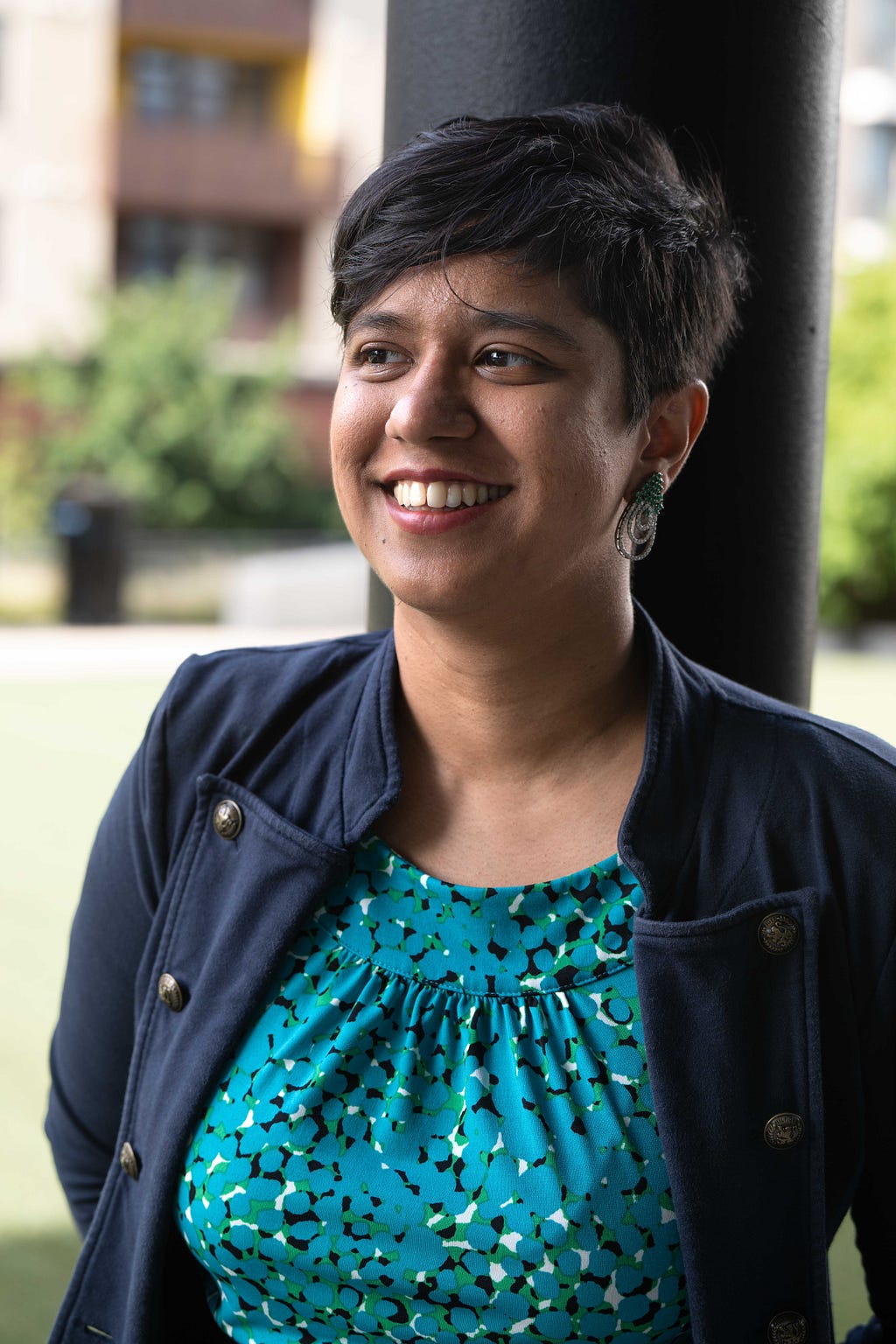
Sarah Seraj, Ph.D. is an outspoken psychologist, data-driven DEI Advisor, and the co-founder & Chief Technology Officer of A Better Force (ABF), a professional training and coaching organization that empowers individuals and companies to transform themselves through customized programs. Combining her expertise in psychology and data science with her lived experience as a woman of color and an immigrant, she aims to create more inclusive spaces for women, BIPOC, and other underrepresented groups by addressing systemic inequalities within organizations.
Thank you so much for joining us in this interview series. Before we dive into our discussion about celebrating diversity, our readers would love to “get to know you” a bit better. Can you share with us the backstory about what brought you to your specific career path?
My sister and I started our small business due to our shared frustration with traditional professional and leadership training programs. We felt these did not adequately serve the BIPOC (Black, Indigenous, and People of Color) community — the majority of the training focused on individual improvement, and self-help solutions, rather than tackling the broader systemic issues that keep marginalized communities from thriving. Things like education and housing inequalities, employment discrimination, mass incarceration, and many many others. As an example, leadership development can look very different for a single mother without generational wealth who is keeping up two jobs just to make ends meet. So, if the suggestion to her is to spend her free time learning new professional skills in order to make a career transition, it’s simply not feasible. She doesn’t have any “free time.”
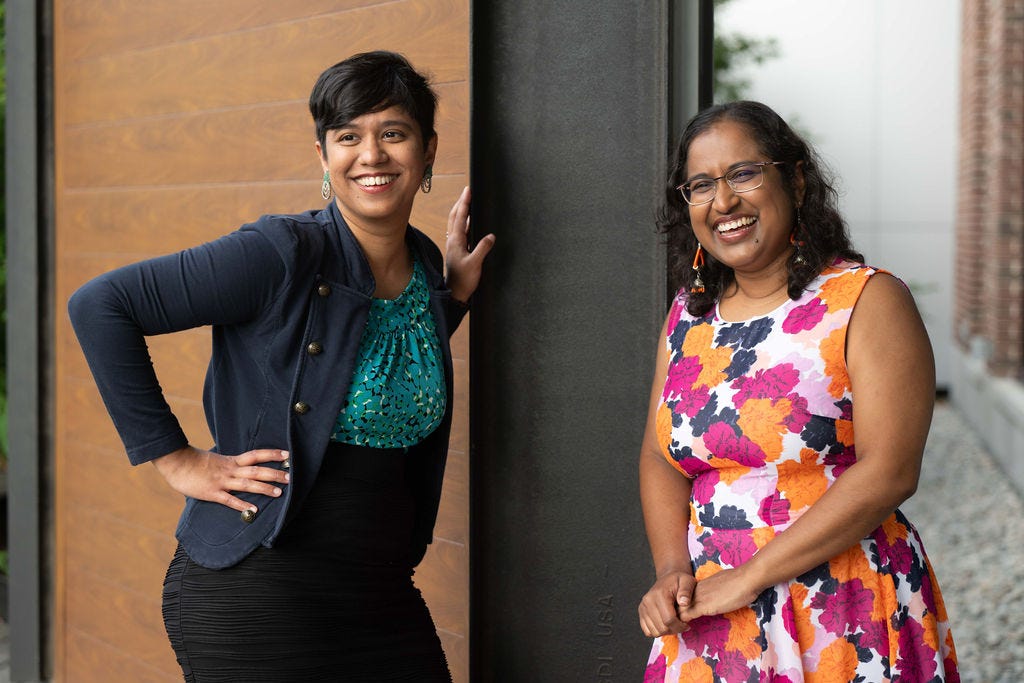
We started our company A Better Force to bring our unique voices and intersectional identities to the leadership training space in Central Texas and support underserved communities.
Can you share an interesting or hopeful story where spending time with someone who did not look like you or who was different from you taught you something that has been useful to you?
Due to the nature of my work as an equity-focused organizational consultant, my sister and I get to work with many communities outside of our own and I am always honored to get the chance to learn from them. For example, recently we got the opportunity to conduct focus groups with some of Austin’s elderly communities as part of a quality of life study. It was eye-opening to me how access to city services can look very different for an older adult, and I got the opportunity to learn about many of the challenges they face.
In this case the city was taking input from its target demographic, which is great. But too often, I’ve seen how organizations aren’t embedded into or engaging with the communities they serve, which means that they have a fundamental lack of understanding about what their community members need. It’s always worth the time and effort to interact and engage with the communities being affected by your services because you will learn so much and it will help you design better solutions.
You are a successful leader. Which three character traits do you think were most instrumental to your success? Can you please share a story or example for each?
Self-awareness, conscientiousness, and forthrightness have been integral to my career.
With regards to self-awareness, I believe that it’s always important to turn the lens on yourself and reflect inwards. When leaders don’t spend enough time doing that, they can lose sight of their values and become stagnant in their growth. Or they might start striving for things that run perpendicular to their values. For myself, I spend time reflecting every week on things that I am proud of or grateful for versus challenges that I need to address. This keeps me humble. I also cherish friends and family members who are open with me and willing to give me honest feedback so that I can always improve.
I strive to be conscientious in all aspects of my work, following through on commitments and maintaining transparency with clients and partners about what they can realistically expect from my services. That same sense of responsibility extends to my community involvement. I serve on the boards of several nonprofit organizations, where I contribute time, energy, and expertise to support causes I care about. I also donate services to organizations that need help but may not have the resources to pay, because I believe in showing up fully, whether in business or in service to others.
Finally, being outspoken and speaking out about injustice is something quite central to my values. It’s something I’ve been able to hone with practice, since it’s not always easy to speak out against those with power (sometimes there are consequences and you lose opportunities). Practice really helps — when I know I have a difficult conversation coming up, I will write down a rough script based on the key points I want to cover. I try to guess what counters people might bring up and have a response prepared in advance since it can be hard to cover everything you want to in the heat of the moment. I also have trusted peers look over my response and provide feedback. Where possible, I make sure to inform my allies in advance about what’s happening so that they can speak up on my behalf if things get really ugly. All of these tools have helped me immensely in continuing to be an outspoken advocate. When it comes to losing opportunities, the truth of the matter is that I just have to be okay with it. I remind myself that if someone runs counter to things I care about, I don’t really want to keep working with them in the long run anyway. There are plenty of values-aligned individuals and groups I can find as alternatives. And I’ve found that it’s always worth it to do the right thing.
Ok, thank you for that. Let’s now jump to the primary focus of our interview. Can you share a personal story that highlights the impact of diversity and inclusivity in your life or career?
Author Chimamanda Ngozi Adichie has talked about the danger of a single story. If you hear only one perspective about a group of people, and you think that’s all they represent, you will have a very skewed and stereotyped view of who they are. But, this occurs in our own networks all the time — our circles are so insular. For example, in the US, white folks mostly hang out with other white folks, Asians mostly hang out with other Asians, so on and so forth. When this happens, we forget to learn from each other’s perspectives and histories. We start to believe stereotypes about each other, or rely on biased dominant narratives to tell us what to expect about other communities (after all, history is written by the winners and people in power). Spaces that aren’t diverse and inclusive feel very different, because they end up being a lot more narrow-minded which can then bleed into other spaces like the workplace.
When I first moved to the US, I was shocked by how alcohol-centric social events were. I’m from Bangladesh, a predominantly Muslim country where alcohol wasn’t part of the social fabric of society. The thing is, despite not partaking, I don’t mind going to events that have alcohol. The issue is that the non-alcoholic options were usually so limited (if they were there at all). I never knew quite what to do with myself. I would have to awkwardly sit around sipping my water, on some occasions catching the eye of another non-partaking Muslim. But what a difference it made when I attended events put together by organizers who had a culturally sensitive lens and made sure to have non-alcoholic options, or events that weren’t centered only around drinking. It was easier to connect and network when people weren’t asking why I wasn’t drinking.
How do you approach and manage the challenges that arise when working towards creating more inclusive communities?
It’s not always easy to manage challenges especially because there’s so much backlash and pushback in equity related work lately. But I remember to lean in on the power of community. Alone, we are easily conquered. Together, we are strong. It helps to remind myself that individualism, scarcity mindset, and the need to bear superhuman burdens are symptoms of the exploitative systems we live in.
There is a better way, which is the creation of communal systems. There are more than enough resources in the world to meet everyone’s needs if we share fairly. We just have to get there. It will happen one day, even if it doesn’t happen in our lifetimes. It’s easy to despair and feel like giving up because the progress feels so slow, and the exploitative systems we are trying to dismantle are so powerful. But just like Rome wasn’t built in a day, reimagining our systems from the ground up will also take time. Just because things are slow and difficult doesn’t mean we shouldn’t do them.
What innovative strategies or initiatives have you implemented or observed that effectively promote the importance of diversity and inclusivity?
My sister and I run a free book club through A Better Force, where we read books from authors of color. We started the book club because BIPOC authors are still vastly underrepresented in publishing. And, when our stories aren’t shared and heard, our very existence is diminished. We wanted to do our part to change that and to amplify BIPOC stories. We also feel like there’s so much people can learn from hearing about the experiences of communities outside of their own. We don’t need to reinvent the wheel — we can learn from the trials and joys that people have already experienced. Our monthly book club has been running for 28 consecutive months and counting! We’ve also been able to invite some authors in our sessions to share their experiences of publishing. At a time of rising book bans and suppression of free speech, it’s become even more important to highlight important books that are talking about the pressing issues of our time.
Outside of our book club, my sister and I also host workshops where we talk about important topics related to improving equity and inclusivity in our communities. We create safe spaces where people can talk about the issues they are facing in their personal and professional lives and figure out how to move forward. These conversations are really important because it enables folks to voice the issues out loud, which helps them define the problem and figure out potential solutions. It also makes them realize they are not alone since more than likely, there is someone in the room who has faced similar challenges. These workshops help build bridges of solidarity, understanding and mutual support.
In your opinion, what are the key elements that make a community truly inclusive, and how can these be fostered on a larger scale?
I think one common error people make when they are trying to build more inclusive communities is that they equate niceness with equity. Shying away from important conversations in order to reduce conflict or not rock the boat does not ultimately improve inclusiveness. In a situation where harm is happening, dismissing it and moving on typically means protecting the status quo or siding with the oppressor, because the harm continues.
I’ve been in situations where when someone brought up something harmful that happened, people tried to change the topic or move on because they were uncomfortable. But in doing so, they dismissed the harm being done in order to prioritize their comfort. In many cases, discomfort can pave the way for important changes to the system and it’s really important not to shy away from those conversations.
Ok super. Here is the main question of our interview. Based on your experience and research, can you please share “5 Ways We Can Build Inclusive Communities”? If you can, please share a story or an example for each.
- Center the most marginalized voices: This principle ensures that we’re not trampling on the rights of one group while trying to uplift another, and that we are collectively uplifting each other. Too often, marginalized groups have been pitted against each other because oppressors fear the collective power that we have. This principle helps us break away from that and build bridges with each other. Because no-one is free until we are all free.
- Prioritize impact over intent: Currently, people in the US are struggling with the erosion of their basic rights. Even before we got to this point, if I had a dollar for every time people hid behind ‘good intentions’ for their poorly thought out initiatives that don’t take into account what the community really needed… let’s just say I could treat myself to several expensive meals.
- Trust communities to know what they need: This brings me to the next principle of trusting communities to know what they need. If we take the time to really hear from community members on what the gaps are and what they need, the solutions become immediately clear. There is no shortcut to engaging with the community. Often they will have a lot more insight about what they need than ‘experts’ who aren’t embedded in the community. But note that, some communities may be distrustful of community engagement initiatives at first due to past histories of botched relationships and ignoring their feedback. It takes time to build relationships with community members and trust is a two-way street.
- Foster community over competition: Having a scarcity mindset won’t serve us in the long run. If we want to foster true inclusivity, we have to rise above it. There are more than enough resources to go around for everyone if we have a communal spirit and serve as stewards of the earth. Instead of having transactional relationships of give and take, think about nurturing communities.
- Progress over perfection: Perfectionism is a virus of exploitative systems. Perfectionism is used to keep marginalized folks down by nitpicking their work to disregard it. Meanwhile, the same standards aren’t applied equally to everyone. Don’t ever let perfection be the enemy of the good.
How do you measure the impact and success of diversity and inclusion efforts, and what changes have you seen as a result of these initiatives?
One really easy way to test the impact of diversity and inclusion efforts is to see recruitment and retention numbers of marginalized groups in your organization. What percentage of your members or employees are BIPOC, queer or disabled? Does the leadership demographics match the population you serve and your employees as a whole? In other words, are marginalized folks being promoted to leadership at equal numbers? Are there wage gaps for marginalized employees? Do they have higher turnover than the rest of the staff? These numbers are easy to track and would clearly show discrepancies if there are any.
You are a person of great influence. If you could start a movement that would bring the most amount of good to the most amount of people, what would that be? You never know what your idea can trigger. 🙂
I would advocate for universal basic income and universal healthcare, because it would reduce income inequality and give everyone a basic foundation to build from. For so many people around the world, it’s a struggle to get basic needs met. And it’s simply not possible to rise above poverty when you can’t get things like food, shelter and medical aid. It would reduce suffering for so many people.
But if I had a magic wand that could do anything, what I would want to do even more is remove the existence of weapons of mass destruction from the world, whether it’s nuclear weapons, long-range missiles or anything related that can brutalize people at scale. We don’t need those in the world, and they are causing too much suffering in the world at present.
How can our readers further follow you online?
I am pretty active on LinkedIn. You can also follow our company Instagram account where we post about our upcoming events and initiatives.
Thank you for the time you spent sharing these fantastic insights. We wish you continued success in your great work!
About The Interviewer: Vanessa Ogle is a mom, entrepreneur, inventor, writer, and singer/songwriter. Vanessa’s talent in building world-class leadership teams focused on diversity, a culture of service, and innovation through inclusion allowed her to be one of the most acclaimed Latina CEO’s in the last 30 years. She collaborated with the world’s leading technology and content companies such as Netflix, Amazon, HBO, and Broadcom to bring innovative solutions to travelers and hotels around the world. Vanessa is the lead inventor on 120+ U.S. Patents. Accolades include: FAST 100, Entrepreneur 360 Best Companies, Inc. 500 and then another six times on the Inc. 5000. Vanessa was personally honored with Inc. 100 Female Founder’s Award, Ernst and Young’s Entrepreneur of the Year Award, and Enterprising Women of the Year among others. Vanessa now spends her time sharing stories to inspire and give hope through articles, speaking engagements and music. In her spare time she writes and plays music in the Amazon best selling new band HigherHill, teaches surfing clinics, trains dogs, and cheers on her children.
Please connect with Vanessa here on linkedin and subscribe to her newsletter Unplugged as well as follow her on Substack, Instagram, Facebook, and X and of course on her website VanessaOgle.
Celebrating Diversity: Sarah Seraj of A Better Force On How To Build Inclusive Communities was originally published in Authority Magazine on Medium, where people are continuing the conversation by highlighting and responding to this story.