

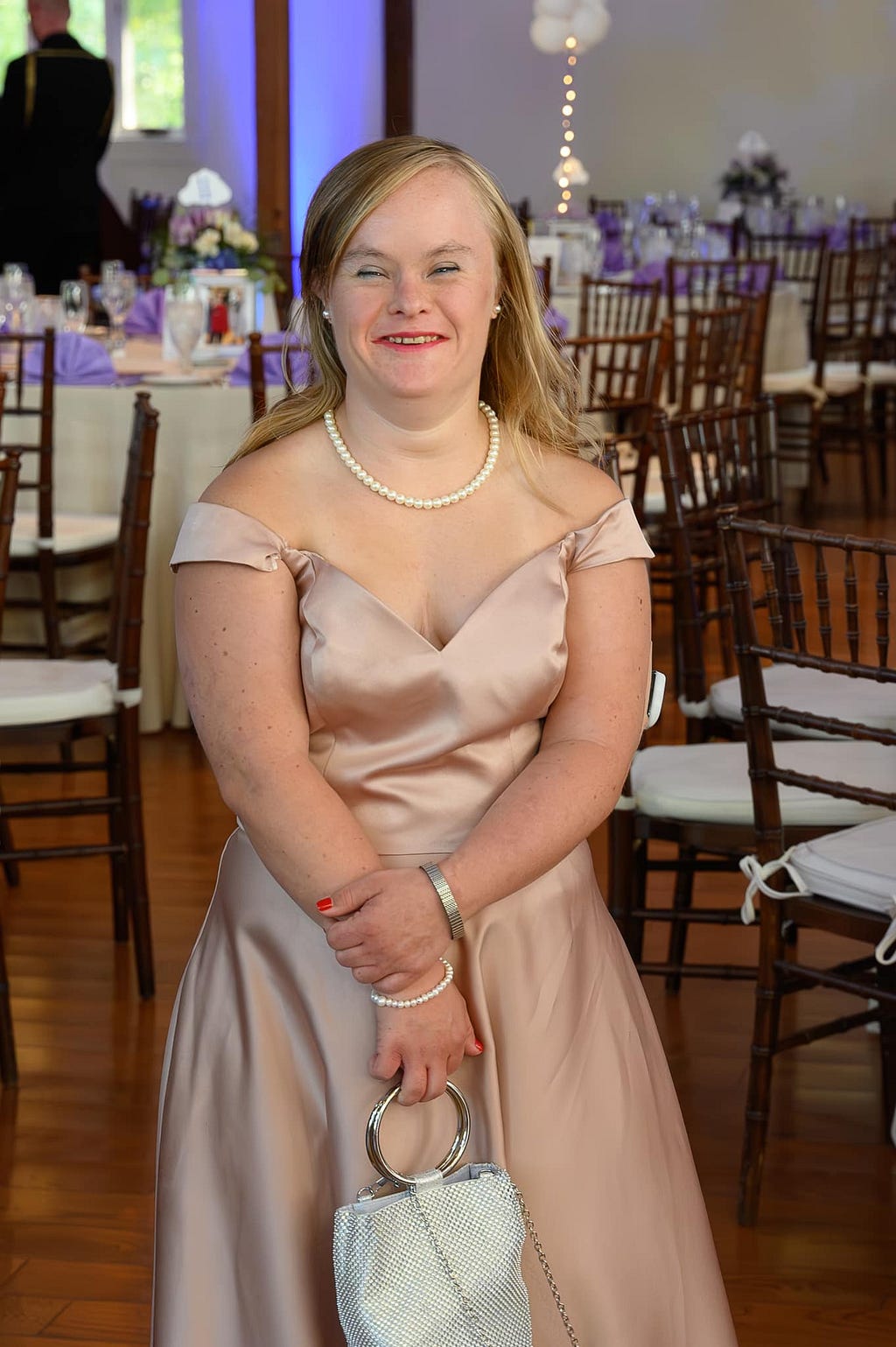

Neurodiversity in the Workforce: Meghan Kensil On Why It’s Important To Include Neurodiverse Employees & How To Make Your Workplace More Neuro-Inclusive
An Interview With Eric Pines
Welcome people when they come. Say hello, how are you today? Ready to start your work day?
There has been a slow but vitally important rise in companies embracing neurodiversity. How can companies support neurodiversity in the workplace? What are some benefits of including neurodiverse employees? To address these questions, we are talking to successful business leaders who can share stories and insights from their experience about “Neurodiversity in the Workforce: Companies Including Neurodiverse Employees”. As a part of this series, we had the pleasure of interviewing Meghan Kensil.
Meghan Kensil is the Office Manager for The Next Step Programs, a position she has held for the last 3 years. Growing up, Meghan was not always sure what her future held. Having Down syndrome, her opportunities can sometimes be limited due to society’s barriers. Working alongside her childhood best friend, Meghan has helped to build The Next Step Programs, a nonprofit dedicated to building opportunities for people with disabilities after high school. In her free time, Meghan loves to dance, sing, spend time with her friends and family, and is the volunteer Basketball Manager for the local high school.
Thank you so much for joining us in this interview series! Before we dive in, our readers would love to ‘get to know you’ a bit better. Can you tell us a bit of your backstory and how you ended up where you are (how did you end up working at TNS, which seemed like the best way to phrase this)
This is a long story about working with my bestie Josh Fields. We were at Tamanend Middle School. We were at the lunch table. We were discussing what we should do in the future. We began TNS together working as buddies, CEO and office manager. We are super cool.
You are a successful leader. Which three character traits do you think were the most instrumental to your success?
A person’s personality to be successful is hard-working, staying focused, and doing your best at what you are doing at your dream job.
Can you share a story about one of your greatest work-related struggles? Can you share what you did to overcome it?
I struggled at work. One of the things I struggle with is repeating things over and over again. I have struggled with that. I am overcoming my fears. I am overcoming my fears to take a break and take a drink. Something else I do is breathe in and out slowly and talk it out with someone who I feel comfortable with to talk to.
Can you share a few examples or ideas that were implemented at your workplace to help include neurodiverse employees? Can you share with us how work culture has affected as a result? How does TNS support people with disabilities at work?
TNS supports people at work by asking someone who is working in the office and also asking the office manager and the boss and his person and all of us for support for everyone in work.
What are some challenges or obstacles to including neurodivergent employees? How does TNS help people who have disabilities?
TNS helps people with disabilities by helping them stay on track with their work. They also give people reminders about what they are doing. They also help me get my work done and stay on task. They help me do my best at my job!
What are 5 ways a company can be more welcoming to people with disabilities?
- Defining and setting specific accommodations.
- Having accessible bathrooms.
- A sensory room or space to calm down or not be stressed.
- A job for people to help others do a task, to help other people to stay on track.
- To welcome people when they come, and say hello how are you today? Ready to start your work day?
Can you please share your favorite “Life Lesson quote?” Can you share a story about how that was relevant in your own life? What is your favorite life lesson quote?
My favorite life lesson quote is living my dream life with all of my besties. I made in my whole life and in my heart always all the time.
Thank you for the time you spent sharing these fantastic insights. We wish you only continued success in your great work!
About the Interviewer: Eric L. Pines is a nationally recognized federal employment lawyer, mediator, and attorney business coach. He represents federal employees and acts as in-house counsel for over fifty thousand federal employees through his work as a federal employee labor union representative. A formal federal employee himself, Mr. Pines began his federal employment law career as in-house counsel for AFGE Local 1923 which is in Social Security Administration’s headquarters and is the largest federal union local in the world. He presently serves as AFGE 1923’s Chief Counsel as well as in-house counsel for all FEMA bargaining unit employees and numerous Department of Defense and Veteran Affairs unions.
While he and his firm specialize in representing federal employees from all federal agencies and in reference to virtually all federal employee matters, his firm has placed special attention on representing Veteran Affairs doctors and nurses hired under the authority of Title. He and his firm have a particular passion in representing disabled federal employees with their requests for medical and religious reasonable accommodations when those accommodations are warranted under the Rehabilitation Act of 1973 (ADA). He also represents them with their requests for Federal Employee Disability Retirement (OPM) when an accommodation would not be possible.
Mr. Pines has also served as a mediator for numerous federal agencies including serving a year as the Library of Congress’ in-house EEO Mediator. He has also served as an expert witness in federal court for federal employee matters. He has also worked as an EEO technical writer drafting hundreds of Final Agency Decisions for the federal sector.
Mr. Pines’ firm is headquartered in Houston, Texas and has offices in Baltimore, Maryland and Atlanta, Georgia. His first passion is his wife and five children. He plays classical and rock guitar and enjoys playing ice hockey, running, and biking. Please visit his websites at www.pinesfederal.com and www.toughinjurylawyers.com. He can also be reached at eric@pinesfederal.com.
Neurodiversity in the Workforce: Meghan Kensil On Why It’s Important To Include Neurodiverse… was originally published in Authority Magazine on Medium, where people are continuing the conversation by highlighting and responding to this story.