


Freedom came the day I stopped running and faced the truth about myself.
As a part of this series, we had the pleasure to interview David Watson.
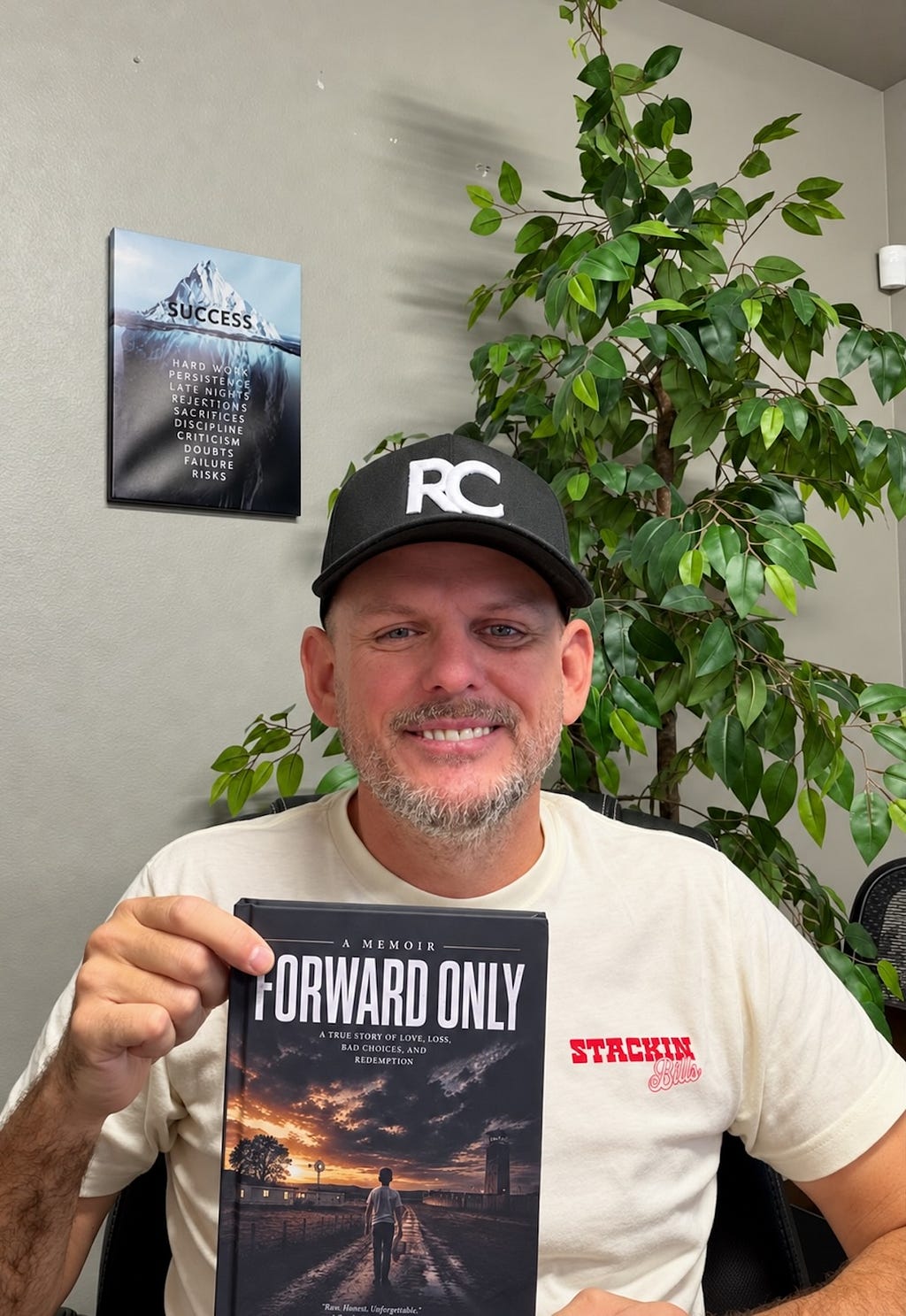
David Watson is a Fort Worth author, speaker and founder of The Redemption Foundation, which gives at-risk youth a second chance. After more than 30 arrests and a 2018 Secret Service arrest for credit card fraud, he served a federal sentence and now shares his story of accountability and redemption in his memoir, FORWARD ONLY: The True Story of Redemption Against All Odds.
Thank you so much for joining us in this interview series! Can you tell us a story about what brought you to this specific career path?
I didn’t choose this path so much as I was handed it in the worst way possible. My mother passed away during my first year in federal prison. I couldn’t be there for her. I couldn’t go to her funeral. I sat in a cell completely powerless while the one person who never gave up on me was buried without me. That moment broke something in me, and then it built something.
Up until I was 12, I was a straight-A student, in church every Wednesday and Sunday, planning on the military. Then I lost my Pawpaw, and the kid who had a plan became a kid who was running. I spent years as a man who could talk his way out of anything except the truth about himself. That’s the story in Forward Only, my memoir. I wrote it from the inside, honestly, because I’d read enough books that cleaned the story up.
When I got out, I made a promise: I’m not powerless anymore, and I won’t let a young person in my community feel like they have no choice, no future, and nobody who believes in them. That promise became The Redemption Foundation, the book, the screenplay, and the speaking. It’s all one mission with different doors.
Can you share the most interesting story that happened to you since you began leading your company or organization?
The most interesting thing is how fast the world opened up once I stopped hiding the story. For years the past was something to explain away. The day I put it on paper and said “this is who I was, and this is who I am now,” the same past started opening doors.
Within months of finishing the book, a FOX 4 Dallas feature aired, I signed books at Barnes & Noble two days after launch, producers started reading the screenplay, and I’m headed to New York for CBS Sunday Morning. A man who was told his record would follow him forever found out it could lead him somewhere, as long as he was honest about it.
And here’s the part people don’t expect: I did most of that on home confinement. Pitching, writing, building a foundation, booking interviews, all from a monitored address. If I can build a second chance from there, nobody gets to tell a kid in Fort Worth he’s out of options.
It has been said that our mistakes can be our greatest teachers. Can you share a story about the funniest mistake you made when you were first starting? Can you tell us what lesson you learned from that?
When the book first went up for pre-order, I turned on paid ads on Amazon, Instagram, and Facebook all at once, because that’s what I thought you were supposed to do. I checked the numbers every morning like a man checking lottery tickets. The ads were getting clicks. Money was going out. Books weren’t going anywhere.
It took me way too long to admit the problem wasn’t the platforms. It was me. The ad copy said “buy my book.” It didn’t say what the book was. I was asking strangers to trust a stranger. The old me could talk anybody into anything in person, and here I was writing the most boring sales pitch on the internet.
The lesson: lead with the story, not the ask. Once I started telling people about my mother, about Pawpaw, about running, the right readers showed up. That’s true for ads, for pitching producers, and for standing in front of a room of teenagers. Nobody buys a product. They buy a story they see themselves in.
Can you describe how you or your organization is making a significant social impact?
The Redemption Foundation is built on one idea: a second chance is a competitive advantage, not a charity case. We work on both ends of the problem.
On the front end, we reach kids before the street does. Our backpack giveaways in Fort Worth and through the YMCA put supplies in the hands of students, but the backpack is just the reason to show up. The real work is a grown man standing in front of them saying, “I had a plan at your age, I lost it, and here’s what it cost me.” Kids listen to someone who has been where they’re headed.
On the back end, we speak for the people coming home. I talk to business leaders and HR teams about hiring people with a record, because the number one thing that keeps someone from going back is a job and someone who believes they can keep it. I speak to men and women who just got out about reclaiming their power instead of waiting for someone to hand it back.
The book, the film, and the speaking are the megaphone. The foundation is the hands.
Can you tell us a story about a particular individual who was impacted or helped by your cause?
There was a small kid at the Fort Worth backpack giveaway. He was maybe 5 years old and I could see it the minute he walked up, that he was hoping to get a coloring book or a sticker or something. And sometimes you can just tell when a family, or a kid is down on their luck. Well everyone had already cleaned the table out dry. But under the table I had a pokemon lunch box that I had been holding for the right kid. I walked astound and knelt down and asked him How old are you? He told me he was 5. When I gave him that lunch box his eyes lit up and I knew he loved it. He asked his mom what it was and she explained that it was to put his lunch in to go to school. He was so happy. Those are moments where you can tell you are actually making an impact on a young boy’s life from the start.
That’s the whole foundation in one conversation. One kid, one honest story, one adult who made his day.
Are there three things the community/society/politicians can do to help you address the root of the problem you are trying to solve?
- Hire people with a record, and say so out loud. The single biggest predictor of whether someone goes back is whether they can earn a living. Business owners: post that you’re second-chance friendly. Politicians: make it easier, not harder, for someone with a conviction to get a license, a lease, and a loan. I run a roofing company and I work in a body shop. Work is what kept me straight.
- Get to kids before 12, not after 18. I was a straight-A kid in church twice a week until I lost my Pawpaw. Nobody caught me when I fell. Fund the mentors, the coaches, the after-school programs, and the people who notice when a kid goes quiet. It costs a fraction of a prison bed.
- Let people who have been through it do the talking. A pamphlet never changed anybody. A man who sat in that cell and now stands in front of your kids, that changes somebody. Put formerly incarcerated people on the panels, in the schools, and in the rooms where reentry policy gets written. We know where the holes are because we fell through them.
How do you define “Leadership”? Can you explain what you mean or give an example?
Leadership is going first and telling the truth about what it costs you.
For most of my life I could lead people anywhere. That was the problem. I was persuasive, I was charming, and I was leading people straight into my own mess. Talking people into things isn’t leadership. It’s just talent pointed the wrong way.
Real leadership showed up for me in a cell, when I had nobody to perform for. I had to lead myself first: get honest, take the hit, stop running. Then I had to go first in public. Writing Forward Only meant putting the worst days of my life in print with my name on the cover, so that the next person could read it and think, “If he can say it out loud, maybe I can too.”
That’s the example I’d give. Not a speech I gave, but the book I wrote. Leadership is standing in front of the room with nothing hidden, so the people behind you know it’s safe to step forward.
What are your “5 things I wish someone told me when I first started” and why. Please share a story or example for each.
1. Escape is not freedom. I spent years confusing the two. Every time I ran, I thought I was getting free, and every time I ended up in a smaller box. Freedom came the day I stopped running and faced the truth about myself. If I’d understood that at 15, the whole story would be different. That’s the heart of the screenplay, and it’s the first thing I tell every young person.
2. Your past is not your prophecy. I believed for a long time that what I’d done was who I was. Then I sat down and wrote the whole thing, and somewhere around page 100 I realized the man writing it was not the man in it. The record is real. The sentence is real. But it’s a chapter, not the ending.
3. Tell the story before you ask for anything. When I started pitching the book and the film, I led with the ask. Producers passed. Ads flopped. When I started leading with my mother, Pawpaw, and the day I stopped running, the right people started saying yes. Nobody owes you a yes. They’ll give you one if they see themselves in your story.
4. Nobody is coming to save you, and that’s good news. In home confinement I waited for a while for somebody to open a door. Nobody did. So I wrote the book, registered the screenplay, started the foundation, and sent the emails myself. Every door I walked through, I knocked on first. That’s the whole message of the speaking work: you’re not powerless. You never were.
5. Make the promise bigger than yourself. The only thing that kept me going when the money was thin and the rejections stacked up was the promise I made after my mother died: I will not let another kid feel like he has no one. Goals about me came and went. That promise doesn’t move. Find yours before you start, because you’ll need it on the hard days.
Can you please give us your favorite “Life Lesson Quote”? Can you share how that was relevant to you in your life?
“Forward only.”
It’s two words, it’s the name of my book, and it’s on my hats and my hoodies, but it started as something I said to myself in a cell. I had spent my whole life looking backward: at what I lost when Pawpaw died, at who I blamed, at the next way out. In prison, after my mother passed, I finally ran out of places to run.
Forward only means you don’t get to undo it, you don’t get to explain it away, and you don’t get to use it as an excuse. You get to take the next step. Then the next one. I’ve said it to myself in home confinement when I didn’t know how I’d pay for the book launch, and I’ve said it to kids in Fort Worth who thought they’d already blown it. It works at every age.
Is there a person in the world, or in the US with whom you would like to have a private breakfast or lunch with, and why? He or she might just see this, especially if we tag them. 🙂
Mark Wahlberg. Before the movies and the production company, he was a teenager in Dorchester who got locked up for hurting people. He has never hidden it. He did his time, got honest about who he’d been, and built a life that nobody would have predicted for that kid. Then he turned around and started a foundation for young people headed where he’d been.
That’s my story with a different zip code. I was a straight-A kid until I lost my Pawpaw at 12, and I spent the next stretch of my life running until I ran out of road in a federal prison. Now I’m out, the book is on shelves, the screenplay is registered, and I’m working with kids in Fort Worth so they don’t have to learn it the way we did.
I’d want breakfast with him for two reasons. First, he’s one of the few people in Hollywood who can read Forward Only and not need the second-chance part explained, as an actor and as a producer. Second, I’d want to ask him how he kept the past from becoming the whole story once he was in the spotlight, because I’m about to find out. If he happens to see this: the coffee’s on me, and I’ll bring the script.
You are a person of enormous influence. If you could inspire a movement that would bring the most amount of good to the most amount of people, what would that be? You never know what your idea can trigger. 🙂
A second-chance hiring movement, led by the businesses themselves. Every company in America puts up a sign that says “Now Hiring.” I want a million of them to add two words: “Records Welcome.”
Here’s why that’s the one. Jobs stop recidivism better than any program. A paycheck keeps a man out of the game, keeps a family together, and keeps a kid from watching his dad go back in. And it isn’t charity. People who have been to the bottom and climbed back show up early, don’t complain, and don’t take the job for granted. I’d put a second-chance hire up against anybody.
I run a roofing company. I know what it’s like to need hands and to need people who want it. The movement is simple: hire one. Then tell another owner you did. That’s it. If every business owner who reads this hired one person with a record this year, we’d empty more cells than any law ever passed.
How can our readers further follow your work online?
Everything lives at iamdavidwatson.com: the book, the foundation, speaking, and press. Forward Only is available on Amazon, at Barnes & Noble, and in local bookstores, in English and Spanish (Solo Hacia Adelante). I’m on Instagram and TikTok at @imdavidwatson. For speaking and interviews, email info@iamdavidwatson.com.
This was very meaningful, thank you so much. We wish you only continued success in your great work!
Thank you for the opportunity!
Social Impact Heroes: How David Watson Of The Redemption Foundation Is Helping To Change Our World was originally published in Authority Magazine on Medium, where people are continuing the conversation by highlighting and responding to this story.