


The most interesting thing that has happened since I started leading Breakthrough ABA is a meaningful one for me, and it is a quiet one. Today, my son Hussein works at Breakthrough ABA. The boy I once could not find a place for is now helping build that place for other children and other families.
As a part of this series, we had the pleasure to interview Heba Salem.
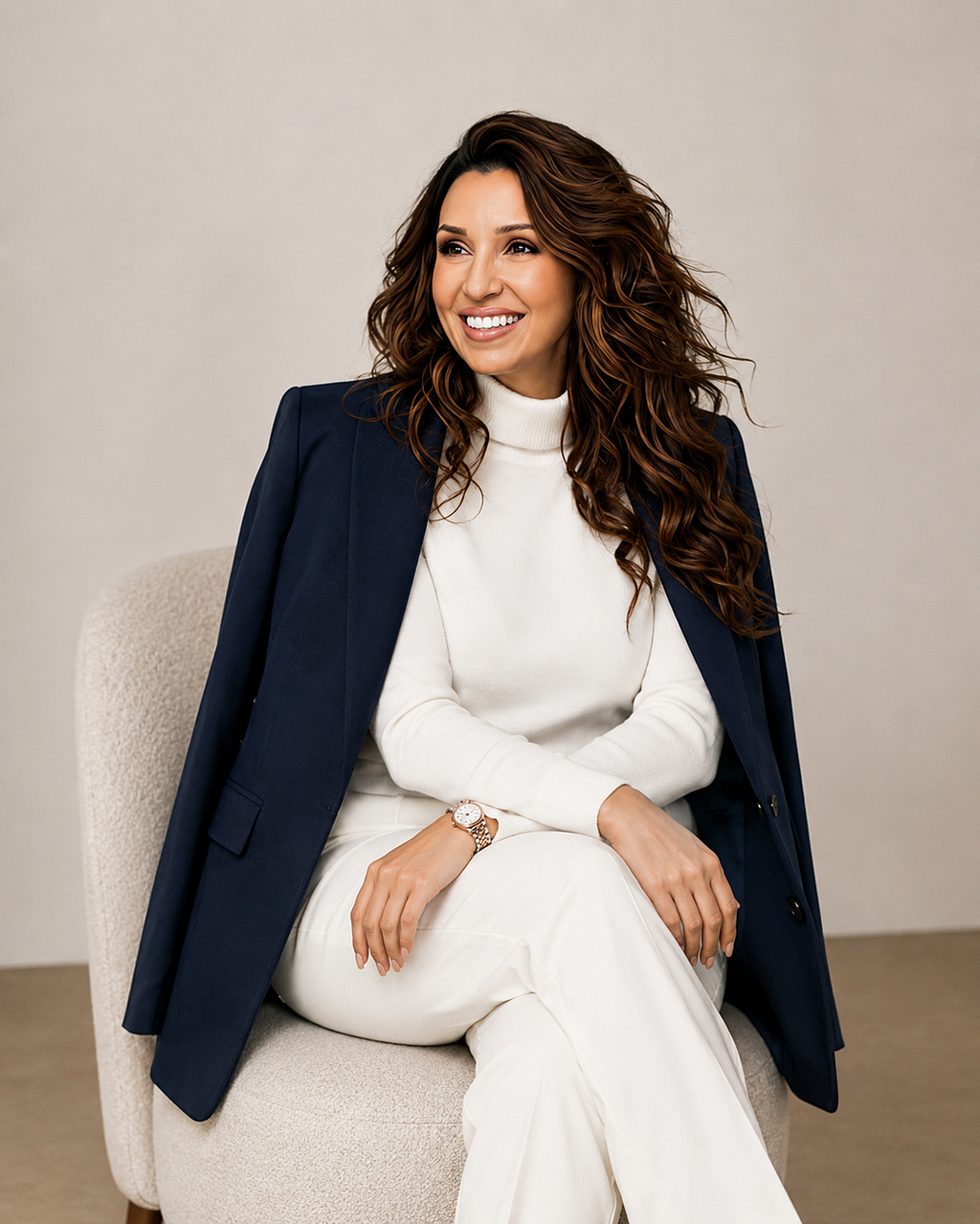
Heba Salem is an entrepreneur, Board Certified Behavior Analyst, author, and founder & CEO of Breakthrough ABA. Her personal journey raising her son Hussein inspired the creation of Breakthrough ABA, a behavioral therapy organization built to address the gaps she experienced firsthand while navigating autism and developmental disabilities across four countries. Holding a PhD in Marketing, a Master’s degree in Developmental Psychology from the University of Toronto, and an MBA with honors, Heba combines clinical expertise, business leadership, and lived experience to advocate for families while advancing access to quality care.
Thank you so much for joining us in this interview series! Can you tell us what brought you to this specific career path?
Honestly, I did not choose this path. It chose me, one closed door at a time. My son, Hussein, was born while I was building a career in corporate banking. By the time he was two, I knew he was developing differently. At six, he was barely speaking. I wanted someone, anyone, to tell me what was happening and what to do next. That answer never came. For nearly two decades, there were assessments that left us with more questions, and schools that closed their doors. Each time, we packed up and looked for another one, in Egypt, then Canada, Saudi Arabia, and finally the United States. So, I did what I knew how to do: I learned. I earned my MBA and then a PhD while raising Hussein and his sister. I completed an early intervention program at the University of British Columbia, then a master’s in developmental psychology and education at the University of Toronto. A professor there asked what I wanted to do with my degree, and when I told her, she suggested I become a Board-Certified Behavior Analyst. So, I did that too. And still, with all of that knowledge, I could not give my son what I had been searching for. I could not make it easier for him, and I could not change what he was up against. I had become the expert I had been looking for, and it still wasn’t enough to find him a place. Then one evening, Hussein, almost seventeen and finishing specialized high school, looked at me and asked, “Mummy, what will I do after school?” He was asking about his own future. That night, the idea for Breakthrough ABA was born. If the place we needed didn’t exist, I would build it. A few years later, I did, in Texas, as its founder and CEO.
Can you share the most interesting story that happened to you since you began leading your company?
The most interesting thing that has happened since I started leading Breakthrough ABA is a meaningful one for me, and it is a quiet one. Today, my son Hussein works at Breakthrough ABA. The boy I once could not find a place for is now helping build that place for other children and other families. For most of his life, I searched everywhere for a place that could see him clearly. I sat in waiting rooms in Cairo, Toronto, Riyadh, and Jeddah hoping someone would look past the test scores and see the young man I knew was there. In May 2026, Hussein graduated from the Aggie ACHIEVE program at Texas A&M, a four-year university program for young adults with developmental disabilities. He lived on his own, managed his own schedule, completed a retail internship, and was elected to the student council. And now he works at our clinic every day, as part of the Breakthrough ABA team. What I did not expect about leading this company is how often I see my younger self in it. Parents come to us worn out from their own waiting rooms, hoping someone will finally see their child clearly. I know that feeling, and it shapes every decision I make as a leader. I did not plan that ending when I started the company. But when I see Hussein there, I understand that everything I built was, in some way, built for him first.
It has been said that our mistakes can be our greatest teachers. Can you share a story about a mistake you made when you were first starting? What lesson did you learn from that?
In the early months, I built my cash flow projections on the assumption that insurance payments would arrive within thirty to forty-five days of service. I was careful, but I was optimistic. We had no outside investors. Everything came from our family savings, and payroll came every two weeks no matter what. Then one morning an email arrived saying the insurance company was reviewing additional documentation and our payment could be delayed by weeks, possibly months. Payroll was due in less than two weeks, and I knew exactly how many people were counting on it. I spent nearly half an hour on hold, pacing past therapy rooms where children were learning, completely unaware of what was happening in my office. That night I went through the spreadsheet line by line at my kitchen table. The next morning, I started calling and emailing every contact I had, politely and persistently, until our file was escalated. We covered the gap from our personal savings, and the payment finally came through three weeks late. The lesson was simple and it has never left me: in this work, the therapy moves slowly and the money moves even slower. If you are not prepared for both, everything you have built can collapse before it has a chance to prove itself. I had done the math carefully, but I had trusted a timeline that was never mine to control. Since then, building reserves has not been optional for us. It is how we protect the families who depend on us.
Can you describe how you or your organization is making a significant social impact?
I believe every family raising a child with a disability deserves to feel supported, informed, and hopeful about their child’s future. Our social impact is working to make that the standard of care, one family at a time. Breakthrough ABA provides behavioral therapy to children with autism and other developmental disabilities, in their homes across Greater Houston and Beaumont and at our clinic in Cypress. But the impact I care about most is in how we do it. When I looked back at the care my son received while he was growing up, I saw the same four gaps again and again: therapy that was available but not always meaningful, progress that was described in vague impressions instead of real data, care that treated the child as if he existed apart from his family, and professionals who talked at parents instead of with them. As a mother, I felt every one of those gaps. As a clinician and a CEO, I knew they could be fixed, but only if they were built into how the company operates, not left to individual good intentions. Those four gaps became the four pillars of our company: quality, data, family centered care, and genuine listening. When all four come together, the change does not stay in the therapy room. It reaches the dinner table, the siblings, the grandparents, and everyone whose daily life has been shaped around that child. We are not only treating a child. We are changing what a family can expect from care, and we will not stop until every family can expect it. Beyond the clinic, my memoir, From A Mother To A CEO, is my way of reaching the parents I will never meet in person, including mothers in the Arab world who are walking this road in places where disability is still often met with silence.
Can you tell us a story about a particular individual who was impacted or helped by your cause?
A mother once sat across from me during an intake and told me about her six-year-old son. She was holding herself together the way parents so often do in those rooms. When I asked about her goals for him, she looked down at her hands and said that all she dreamed of was hearing him say one word: mom. I took that very personally, because I had been in her shoes. To someone on the outside, one word might not seem like much. But for a mother, it means everything. It means that when your child needs help, or simply needs you, he can call for you. It means he knows who you are and can name you. After years of waiting, it can feel like the whole world fits inside one syllable. During the assessment, I asked her to give me a picture of herself. From the very first day, we built that goal into his program. It took a lot of work from our team, from her, and most of all from her son. Every session, her photograph was in front of him, and every session we reached for that one word. By the end of four weeks, he was saying “mom” Not just repeating a sound but using it functionally: he could see her and call her by name. I will never forget what that meant to her, and honestly, what it meant to me. It is the reason I tell my team that there are no small goals. Sometimes the most meaningful outcome in a child’s entire treatment plan is a single word that a mother has been waiting years to hear.
Are there three things the community, society, or politicians can do to help you address the root of the problem you are trying to solve?
- Fund care in a way that rewards quality. Reimbursement rates for ABA therapy have stayed largely flat while the cost of delivering good care keeps rising. When payment rates do not keep pace with the realities of care delivery, maintaining the highest standards of quality becomes increasingly challenging. Policymakers and payers can help by building reimbursement around outcomes and by paying on time, because a delayed payment to a small provider can mean a family loses their therapist.
- Invest in the people who deliver the care. Behavior technicians are the heart of this work, and turnover across the field is high. Colleges, workforce programs, and state agencies can help create real career pathways, with training, fair pay, and a ladder to grow, so that families are not starting over with a new therapist every few months.
- Build places for our children after childhood. Most support ends when a child ages out of school. Inclusive college programs and meaningful employment changed my son’s life, and there are far too few of them. Communities, universities, and employers can open more doors to inclusive higher education and meaningful employment for young adults with developmental disabilities. I have seen how much talent is waiting for someone to simply make room.
How do you define “Leadership”? Can you explain what you mean or give an example?
For me, leadership is the discipline of keeping what you say and what you do in the same place, especially when no one is watching. Values on a wall mean nothing. Staff see everything, and they notice every gap between the culture we describe and the culture we actually live. I often describe my approach with the image of a rescue helicopter. Most of the time, I try to stay at an altitude where I can see the whole organization: the patterns in our data, the shifts in morale, the trends that no one on the ground can see. But when something needs my attention, I land. I sit beside the person who needs me, I listen, and I work through the problem with them. Then I rise again. I also learned something about leadership from being honest about my own failure. For a while, I was absorbing worrying numbers privately and reassuring my team that we were on track. Part of me believed I was protecting them. The truth was that saying those numbers out loud meant admitting I had not yet met my own responsibility. When I finally shared them openly, the team did not panic. They started solving. That taught me that a leader’s job is not to carry everything alone. It is to make sure everyone can see what they need to see. And if I am honest, my son taught me most of what I know about leading. He raised me into patience and advocacy long before I ever had a title.
What are your “5 things I wish someone told me when I first started” and why?
1. An industry average is not your destiny. When I raised our therapist turnover in leadership meetings, the answer was always, “This is just how the industry is.” I had spent years being told that the systems around my son could not change, so I refused to accept that. We stopped treating hiring as an emergency task and built it as a strategy: a pipeline of candidates before positions opened, steady relationships with colleges, a rebuilt onboarding process, and real attention to supervision and culture. If everyone struggles with the same problem, it usually means no one has solved it well yet.
2. Build for disruption before it arrives. One morning, a therapist knocked on my door and told me she was leaving that day. In Texas, no notice is required. By lunchtime we were reassigning clients, calling parents, and I was covering an afternoon session myself so no child went without care. From that day on, cross training became mandatory and every client had a backup plan. A small organization has to be able to survive its own disruptions.
3. Say the hard numbers out loud. I wish someone had told me that protecting my team from difficult data was really protecting myself. Transparency is not a burden you place on people. It is a form of respect, and it turns a leader’s private worry into a shared problem that a whole team can solve.
4. Quality will cost you, and it is worth it. We do not place a therapist with a family until we are confident they are ready, even when there is a waitlist and pressure to move faster. I have watched families choose another provider because someone else could start sooner, and each time it stung. But rushing would have cost us the standard that makes every other family’s experience possible.
5. Your values become culture only when you hear them in someone else’s voice. Early on, I repeated our values constantly: in meetings, in emails, in how I responded to problems. The moment I knew they had taken root was when I heard a therapist say, “I know we value collaboration, so I asked for support before the session got harder.” No one had prompted her. That is when a value stops being a slogan and starts being who you are.
Can you please give us your favorite “Life Lesson Quote”? Can you share how that was relevant to you in your life?
“I will find a way, or I will make one.” It is a line often attributed to the ancient Carthaginian general Hannibal, and it has been the quiet promise underneath my whole life. When Hussein was five, after yet another school told me they could not accept his profile, I sat alone in our living room in Cairo after he had gone to sleep and made him a silent promise: I will find a way, or I will build one. I wrote that line into my book because it is exactly what happened. I searched four countries for the right support. And when I could not find the place I was looking for, I built it. I think every parent of a child with a disability lives some version of this quote. You stop waiting for the system to hand you a path, and you start making one, for your child and eventually for others.
Is there a person in the world, or in the US, with whom you would like to have a private breakfast or lunch, and why?
I would love to have breakfast with Oprah Winfrey. She has spent her life giving ordinary people the space to tell their stories and be truly heard, and she turned her own difficult beginnings into a platform that has changed millions of lives. Being heard is at the center of everything I do. So many parents of children with disabilities carry their stories in silence, and I wrote my book so they would know they are not invisible. I would want to ask her how she built a platform that never lost its humanity as it grew, and how she decides which stories the world most needs to hear.
If you could inspire a movement that would bring the most amount of good to the most amount of people, what would that be?
I would call it the I Am Able movement. It rests on two beliefs. The first is that parents are able. For years, I sat in rooms where my observations about my own son were treated as secondary to test scores and credentials, as if the professionals held a magic wand and knew everything. Professionals bring essential knowledge and guidance, and I say that as one of them. But no single professional stays with a child for a lifetime. Therapists change, teachers change, programs end. The parent is the one who is there through every stage of the journey. So, parents deserve to be empowered, to feel confident that they are able to help and support their children, with the guidance of professionals, not in their shadow. The second belief is that our children are able. Every child has their own potential, and it deserves to be seen and built on. That is why we measure every child against their own progress rather than someone else’s timeline, leading with the gain rather than the gap. Imagine if every clinic, school, and doctor’s office began with the same invitation we give families at Breakthrough ABA: question us, you know your child best. When parents believe they are able and believe their children are able, everything changes, for the child, for the family, and for the professionals working beside them. That belief is also behind I Am Able, the app I am developing to put practical, evidence-based strategies directly in parents’ hands, including families in the Middle East and other regions where services are still limited.
How can our readers further follow your work online?
Readers can reach me through my website, iamhebasalem.com, and through Breakthrough ABA at breakthroughaba.com. They can also follow Breakthrough ABA on Instagram at @breakthrough_aba and on Facebook at facebook.com/ababreakthrough. My memoir, From A Mother To A CEO: A Story of Resilience, Advocacy & A Mother’s Unstoppable Will, is available on Amazon and through booksellers internationally.
Thank you so much for the opportunity to share our story.
Social Impact Heroes: How Heba Salem Of Breakthrough ABA Is Helping To Change Our World was originally published in Authority Magazine on Medium, where people are continuing the conversation by highlighting and responding to this story.