


I define leadership as creating the conditions for other people to recognize and use their own abilities. A leader should not need to be the person with every answer. Leadership can mean listening, asking the right question, or stepping back so someone else has room to contribute.
As a part of my series about “individuals and organizations making an important social impact”, I had the pleasure to interview Nisa Thomas.
Nisa Thomas is a junior at Del Norte High School and the founder of Decode, now in its third year of offering free, hands-on coding and artificial intelligence classes that make technology approachable for elementary school students. She is also a founding member of the Scratch Youth Advisory Board, where she playtests and co-designs new tools and features that impact Scratch’s global community of more than 140 million users. Through her work, Nisa seeks to expand access to technology education and ensure that young people have a voice in shaping the future of AI and computing.
Thank you so much for joining us in this interview series! Can you tell us a story about what brought you to this specific career path?
When I was in elementary school, I was introduced to coding through Scratch. It taught me much more than how to arrange blocks of code. It taught me to think creatively, experiment without being afraid of failure, and turn an idea into something real that others could experience.
Now, as a student AI researcher, I appreciate how valuable those skills truly are. AI is making it easier to accomplish technical tasks, which makes our ability to identify meaningful problems and imagine original solutions even more important. I founded Decode because I wanted younger students to experience coding not simply as a technical subject, but as a tool for creativity, logic, and self-expression.
Can you share the most interesting story that happened to you since you began leading your company or organization?
One of the most meaningful experiences was being selected as the first teen co-emcee of the International Scratch Conference. I began using Scratch as an elementary school student, so returning years later to help lead its international conference felt like a full-circle moment.
More importantly, being trusted with such a visible role demonstrated the importance of including youth voices in spaces traditionally led by adults.
It has been said that our mistakes can be our greatest teachers. Can you share a story about the funniest mistake you made when you were first starting? Can you tell us what lesson you learned from that?
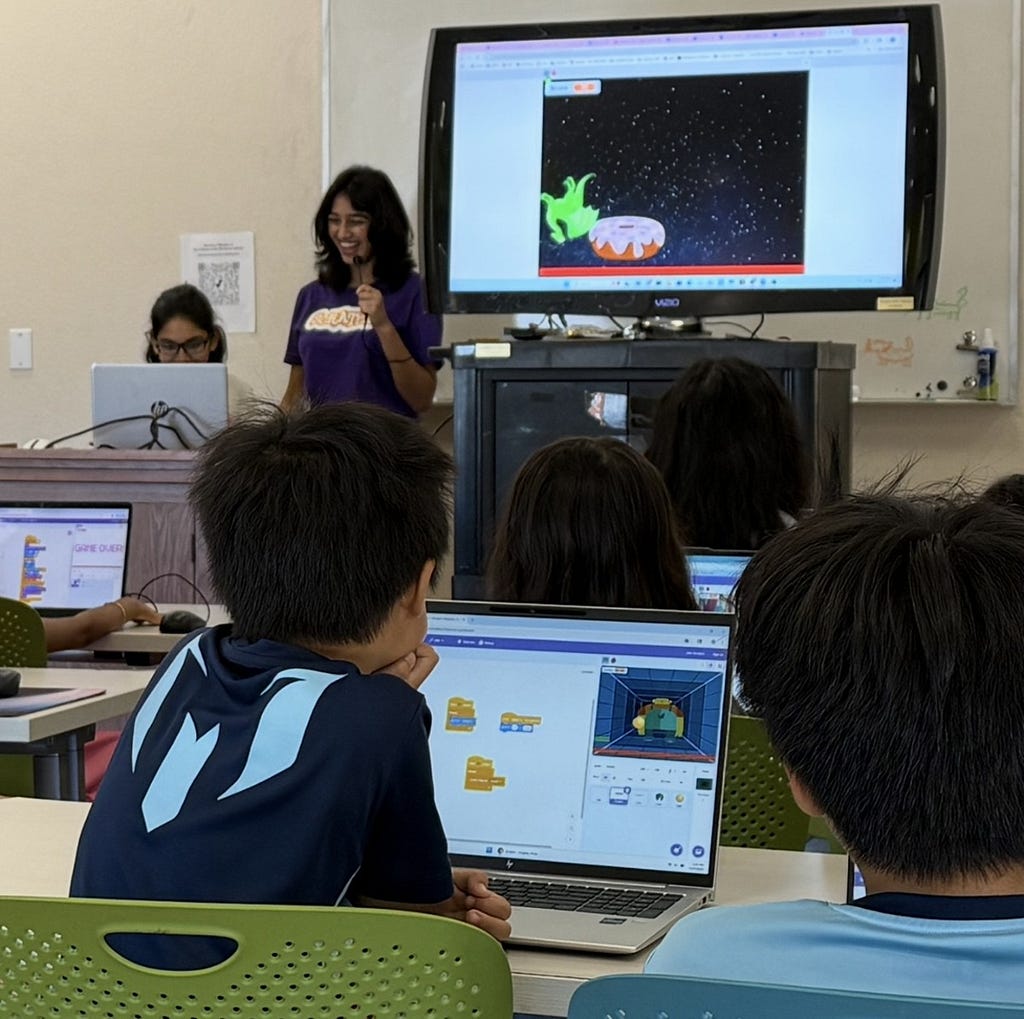
When I first began leading workshops, I created what I thought was the perfect step-by-step Scratch lesson. Within minutes, students were changing the characters, adding unexpected sounds, and taking their projects in new directions. My first instinct was to guide everyone back to the “correct” project until I realized that their versions were far more imaginative than the one I had designed. For example, one student created a game of Pong and replaced the paddle and ball with a dragon and a doughnut!
I learned that education should provide students with a foundation while still allowing room for creativity. The goal is not for every student to produce an identical project. It is to give them enough confidence and knowledge to create something that reflects their own ideas.
Can you describe how you or your organization is making a significant social impact?
Decode provides free, beginner-friendly coding and AI workshops that help elementary school students see themselves as creators of technology rather than simply consumers of it. Now in its third year, the initiative conducts recurring hands-on classes at our local public library, making early technology education more accessible in a familiar community space.
Our projects are designed to show students that computer science can connect with storytelling, art, music, and the subjects they already enjoy.
Can you tell us a story about a particular individual who was impacted or helped by your cause?
One of the most rewarding moments was learning that a student had continued developing their Scratch project after the workshop and had begun creating original games and animations independently. What began as a guided activity became something the student personalized, expanded, and made entirely their own.
Are there three things the community/society/politicians can do to help you address the root of the problem you are trying to solve?
First, schools, libraries, and community organizations can invest in free, hands-on technology programs beginning at an early age. Access should not depend on whether a student’s family can afford a private coding course.
Second, technology organizations should involve young people in co-designing the tools and platforms intended for them. Students should be treated not only as users, but as stakeholders whose experiences can improve how technology is built.
Third, policymakers and educational leaders should support teacher training and curricula that combine technical literacy with creativity and responsible AI use. Students need to understand not only how technology works, but also how to question its limitations, recognize bias, and use it thoughtfully.
How do you define “Leadership”? Can you explain what you mean or give an example?
I define leadership as creating the conditions for other people to recognize and use their own abilities. A leader should not need to be the person with every answer. Leadership can mean listening, asking the right question, or stepping back so someone else has room to contribute.
During Decode workshops, I try not to immediately fix a student’s project when something goes wrong. Instead, I ask questions that help the student discover the solution independently. Watching the student’s frustration turn into confidence reminds me that leadership is not about demonstrating how capable you are. It is about helping others discover how capable they are.
What are your “5 things I wish someone told me when I first started” and why. Please share a story or example for each.
1. Being a near-peer mentor is an advantage, not a weakness: When I first began leading workshops, I worried that being a student myself would make me seem less qualified. Instead, I found that it made the younger students feel less intimidated and more comfortable asking questions, making mistakes, and experimenting. Being closer to their age allowed me to create a collaborative environment where I could share what I had learned and invite them to explore coding alongside me.
2. Consistency matters: Recurring workshops allow trust and curiosity to grow over time. Decode is now in its third year, and that continuity has shown me that meaningful impact often comes from returning, listening, and improving month after month.
3. A successful lesson does not always look the way you planned it: Some of the most engaging workshop moments have occurred when students took a project in an unexpected direction.
4. Do not underestimate what younger students are capable of understanding: It can be tempting to simplify technology so much that students never get to engage with its most interesting questions. I have learned that young students are capable of discussing creativity, AI, bias, and responsible technology when those ideas are presented through accessible examples.
5. Seeking feedback is essential: After each workshop, I talk with students about what they enjoyed, what they found confusing, and what they would like to do next. Their feedback helps me make future sessions more interactive, accessible, and engaging.
Can you please give us your favorite “Life Lesson Quote”? Can you share how that was relevant to you in your life?
One of my favorite quotes is, “You can’t be what you can’t see.” It captures why representation and near-peer mentorship matter so much to me.
When a young girl approached me after a coding workshop and shared how seeing me lead had inspired her, the quote became more personal. The interaction made me realize how important it is for young girls to see role models participating and leading in technology. Addressing the persistent gender disparity in STEM begins by helping girls recognize from an early age that they belong in these fields.
Is there a person in the world, or in the US with whom you would like to have a private breakfast or lunch with, and why? He or she might just see this, especially if we tag them. 🙂
If I could have lunch with anyone in the world, it would be with Sal Khan. I admire his commitment to democratizing education and making high-quality learning accessible regardless of a student’s location or financial circumstances.
I would love to discuss how AI can expand educational access without replacing the curiosity, creativity, and human connection that make learning meaningful.
You are a person of enormous influence. If you could inspire a movement that would bring the most amount of good to the most amount of people, what would that be? You never know what your idea can trigger. 🙂
I would inspire a movement encouraging high school students to identify their own strengths and use them to lead free, near-peer sessions for younger students in their communities. Those strengths could include art, music, athletics, writing, science, or any other subject they are passionate about.
For me, those strengths are coding and public speaking, which I combined to create Decode and introduce younger students to technology. If coding is one of your strengths and you would like to lead a beginner-friendly session but are unsure where to begin, I encourage you to reach out to us. Every young person has something valuable to share, and collectively, those skills can expand access to learning across entire communities.
How can our readers further follow your work online?
Learn more about Decode at https://www.projectdecode.org/.
This was very meaningful, thank you so much. We wish you only continued success in your great work!
Young Social Impact Heroes: Why and How Nisa Thomas Is Helping To Change Our World was originally published in Authority Magazine on Medium, where people are continuing the conversation by highlighting and responding to this story.