

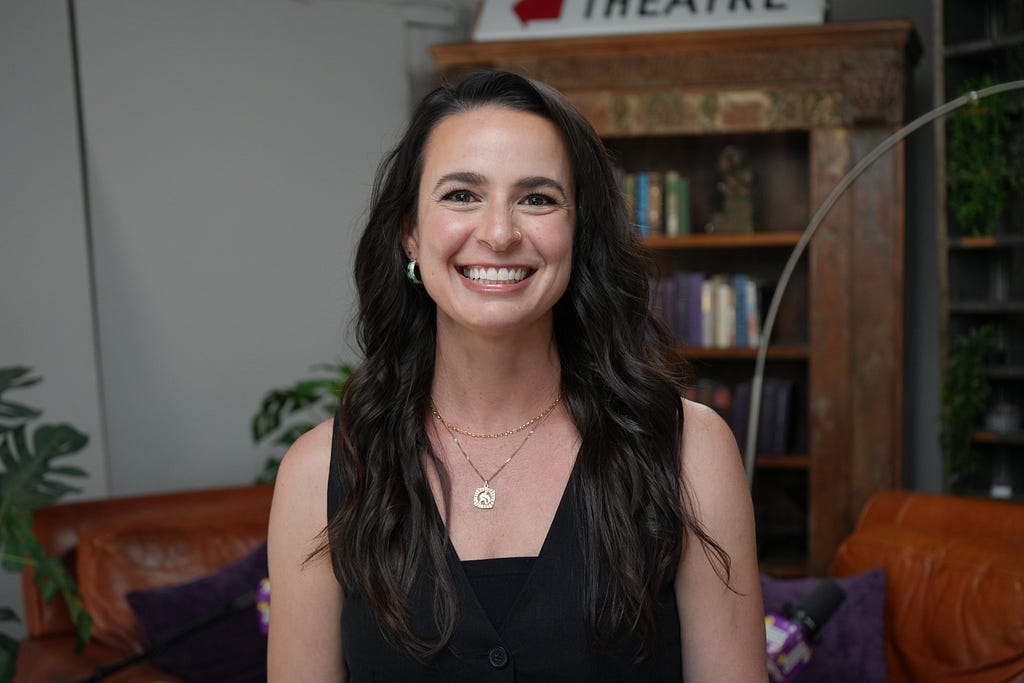

Education Revolution: Joie Laykoff of Fusion Academy On Innovative Approaches That Are Transforming Education
Teaching is less about what you know and more about how you connect with the students in front of you.
The landscape of education is undergoing a profound transformation, propelled by technological advancements, pedagogical innovations, and a deepened understanding of learning diversities. Traditional classrooms are evolving, and new modes of teaching and learning are emerging to better prepare students for the complexities of the modern world. This series will take a look at the groundbreaking work being done across the globe to redefine education. As a part of this interview series, we had the pleasure to interview Joie Laykoff.
Joie Laykoff is passionate about equipping individuals with the skills and resources they need to succeed and about developing programs that support meaningful student learning. Her goal is for every Fusion student to have access to an environment in which they can learn, connect, and feel seen and understood by both peers and adults. Through strong operations, skilled staff, and high-quality programming, she believes Fusion schools empower every member of the community to thrive. Joie brings a background in special education, holding a bachelor’s degree in psychology, a master’s in special education, and a teaching credential in mild-to-moderate disabilities. At Fusion, she leads work focused on people development, program design, and educational operations.
Thank you so much for doing this with us! Our readers would love to “get to know you” a bit better. Can you share the “backstory” behind what brought you to this particular career path?
It’s a pleasure. Thank you for having me.
From an early age, I knew I wanted to be a teacher. I was the child who would line up stuffed animals and teach lessons, and later the teenager who became the neighborhood babysitter. I loved helping young people learn and gain confidence.
Looking back, teaching combined many of the things I naturally enjoyed: building relationships, organizing ideas, solving problems, and presenting information in engaging ways. Great teaching has always felt a little like both an art and a science to me.
The defining moment came during college when I worked with autistic children and their families in a therapeutic setting. That experience opened my eyes to the profound impact educators can have on a student’s life, particularly when they take the time to understand how each individual learns and experiences the world.
It was there that I discovered my passion for supporting neurodivergent students and helping create environments where all learners feel understood, capable, and valued. From that point on, I knew education wasn’t just the career I wanted but it was the work I was meant to do.
Can you share the most interesting story that happened to you since you started your career? Can you tell us what lesson you learned from that?
One of the most formative experiences of my career was my first teaching position at a therapeutic school serving students with moderate to severe behavioral challenges. I had a classroom of 12 students, each with unique needs, learning differences, and behavioral expressions that often made it difficult for them to engage successfully in school. As you can imagine, placing 12 students with those challenges together created a highly complex learning environment.
Early in my career, I was eager to dive into lesson planning and instruction. I thought success would come from delivering great content. Instead, I quickly learned that learning doesn’t happen until students feel safe, regulated, and connected.
Each day required me to look beyond behaviors and understand what each student was communicating through them. I spent time building trust, learning their interests, celebrating small victories, and creating a classroom where they felt genuinely seen and valued.
That experience fundamentally changed my understanding of education. I entered the profession believing that teaching was primarily about content and instruction. I left that year understanding that relationships are the foundation of learning. When students know they are seen, heard, and valued, they become more willing to engage and persevere.
It’s a lesson that has stayed with me throughout every role I’ve held since. Whether I’m working directly with students or designing programs at a national level, I still believe the same thing: connection isn’t separate from learning, it makes learning possible.
Can you briefly share with our readers why you are an authority in the education field?
I believe expertise in education comes less from the number of years you’ve spent in the field and more from the number of perspectives you’ve had the opportunity to learn from. I have served as a special education teacher, school leader, and now a national education leader at Fusion Academy, which has given me a unique view of how students, families, teachers, and schools all interact to support learning.
In the classroom, I worked directly with students with diverse learning, behavioral, and social-emotional needs. As an administrator, I partnered closely with families and educators to bridge the gap between what students needed and what schools were able to provide. Today, my work focuses on designing programs, developing educators, and ensuring sound operational practices that strengthen our mission to personalize education.
What has remained constant throughout my career is a commitment to students whose needs may not fit traditional educational models. Working in both special education and Fusion’s highly personalized environment has reinforced my belief that there is no single path to success. Students thrive when we understand who they are, how they learn, and what helps them feel engaged.
Those experiences have given me the opportunity to contribute to conversations about education from multiple perspectives and it’s that combination that shapes the lens I bring to the field today.
Can you identify some areas of the US education system that are going really great?
One of the most encouraging trends in education is that we’re becoming more thoughtful about personalization. For many years, schools were largely designed around standardization, but we’re increasingly recognizing that students learn differently and thrive under different conditions.
AI is a great example of this shift. While it’s understandably creating both excitement and uncertainty, educators are beginning to use it in meaningful ways that support creativity, differentiation, and individualized learning. The most promising applications aren’t about replacing teachers; they’re about giving teachers more tools to meet students where they are.
At the same time, schools are becoming more aware of the impact that technology can have on attention, learning, and well-being. Many districts are taking a closer look at cellphone use and creating environments that help students be more present and engaged. We know that meaningful learning requires focus, and reducing distractions can help students participate more fully in both academics and relationships.
Perhaps most importantly, there is a growing recognition that academic success and social-emotional well-being are deeply connected. More schools are acknowledging that skills like self-awareness, resilience, empathy, collaboration, and emotional regulation are not separate from learning, they support learning. As information becomes increasingly accessible, the ability to build relationships, navigate challenges, and work effectively with others will become even more valuable.
Taken together, education is evolving to place greater emphasis not only on what students learn, but how they learn and who they become.
Can you identify the key areas of the US education system that should be prioritized for improvement? Can you explain why those are so critical?
There are two areas I believe should be prioritized above all others.
The first is reimagining what and how we teach in an era increasingly shaped by AI. As information becomes instantly accessible, memorization and recall become less valuable than critical thinking, creativity, problem-solving, and the ability to apply knowledge in new situations.
Our students need opportunities to collaborate, question, create, and wrestle with complex challenges. Learning should be less about finding the right answer and more about developing the thinking processes that lead to meaningful solutions. In many ways, AI is forcing education to focus on the uniquely human skills that technology cannot easily replicate.
The second priority is strengthening social-emotional learning and mental health support in schools. Today’s students are navigating a world that is significantly more complex and interconnected than previous generations experienced. They face constant access to information, social media pressures, evolving technology, political division, global conflict, and growing mental health challenges.
We can no longer view social-emotional development as separate from academic learning. Research supports that school-based social-emotional learning programs improve behaviors, relationships, safety and academics (Cipriano et al, 2023), and mental health programs increase outpatient mental health use and reduce suicide attempts (Golberstein et al., 2024).
In my view, the schools that will be most successful in the future will be those that don’t treat academic excellence and emotional health as competing priorities. They are deeply interconnected and reinforce one another.
Please tell us all about the innovative educational approaches that you are using. What is the specific problem that you aim to solve, and how have you addressed it?
At Fusion Academy, we believe one of the biggest challenges in education today is that too many students move through school feeling unseen. They may be physically present in the classroom, but they don’t feel deeply connected to their learning, their teachers, or their school community. When that happens, motivation and confidence suffer.
Our approach is built on the belief that meaningful learning begins with meaningful relationships. While many schools focus primarily on content delivery, we place equal emphasis on connection. We view our teachers as instructors and mentors who take the time to understand each student’s strengths, interests, challenges, and goals.
Personalization is at the heart of our model. Programmatically, we offer more than 300 courses designed to inspire a wide range of interests, aspirations, and learning needs. Then, the majority of our classes are taught one-to-one, allowing teachers to adjust pacing, instruction, discussion, and assessment to the individual student. An Algebra lesson for one student may look very different from an Algebra lesson for another.
We also recognize that students learn best when they feel a sense of belonging. Beyond the classroom, our Homework Café spaces are intentionally designed to foster connection and community. We want every student to know that there is a place for them.
The research is clear that school belonging is positively associated with academic achievement, student engagement, and motivation (Korpershoek et al., 2020). Students who report higher levels of school connectedness are less likely to experience poor mental health, suicidal thoughts and behaviors, substance use, and other risk behaviors (Wilkins et al., 2023; CDC, 2024).
We’ve seen this come to life in countless student stories. Many students arrive at Fusion feeling discouraged or disconnected from school. Through personalized instruction, strong mentoring relationships, and a supportive community, they often rediscover confidence in themselves as learners.
Everything we do is built around creating those conditions for learning.
In what ways do you think your approach might shape the future of education? What evidence supports this?
We partner with so many incredible schools that want our version of personalization for their students; who refer their students to us. There are millions of students in our country who have learning and mental health diagnoses. Take for example that over 15% of children between the ages of 12–17 are diagnosed with ADHD (2022 National Survey of Children’s Health) and 21% of children between the ages of 3–17 had ever been diagnosed with a mental, emotional, or behavioral health condition (US data from 2022–2023). We need schools to recognize the need for alternative ways of learning. While our version of instruction is the maximum personalization, we hope to inspire others to take steps in that direction. Planning for multiple ways of instruction and assessment and providing choice to address a variety of learners. Accepting the interplay between learning and wellbeing. It’s very difficult to have the cognitive capacity to learn when you not on sure footing. At Fusion we believe that the precursor to learning is connection. And this isn’t just something we can do, but it can be done in any classroom. Addressing students by their names, checking in about a hobby or interest, asking how their weekend was. Structurally, we are designed for the highest levels of personalization, but in other settings, it’s about not letting great in the way of good. Students will notice even the smallest adjustments.
I believe the future of education will be increasingly personalized. This isn’t because it’s a trend, but because students are increasingly diverse in how they learn, engage, and demonstrate mastery.
Across the country, we’re seeing growing numbers of students with learning differences, mental health needs, and varied pathways to success. More than 15% of adolescents have been diagnosed with ADHD (2022 National Survey of Children’s Health), and 21% of children between the ages of 3–17 have ever been diagnosed with a mental, emotional, or behavioral health condition (US data from 2022–2023). We are well beyond a one-size-fits all approach.
At Fusion, we’ve built our model around the belief that students learn best when education adapts to them, rather than requiring them to adapt to a rigid system. Our one-to-one classrooms represent the highest degree of personalization, but the principles behind the model can be applied in any educational setting. Teachers can provide greater choice, offer multiple ways for students to demonstrate learning, vary instructional approaches, and build stronger relationships with students.
I don’t believe every school should look exactly like Fusion. What I do hope is that education continues moving toward a mindset that recognizes learner variability as the norm, not the exception.
Equally important is recognizing the relationship between learning and well-being. Students are better able to take intellectual risks, persevere through challenges, and engage deeply in learning when they feel connected, supported, and understood. That’s why we often say that connection is the precursor to learning.
While our model is intentionally designed around personalization and relationships, the underlying practices are accessible to every educator. Something as simple as learning about a student’s interests, checking in regularly, or even sharing about your own joys and adventures. The future of education doesn’t require every school to completely reinvent itself, but it requires taking intentional steps toward helping every student feel known and capable of success.
How do you measure the impact of your innovative educational practices on students’ learning and well-being?
Because our mission is to support both academic growth and student well-being, we believe it’s important to measure both outcomes. We want to understand not only whether students are learning, but also whether they are developing the skills, confidence, and sense of belonging that contribute to long-term success.
On the academic side, we use the NWEA MAP assessment, one of the most widely utilized measures of student growth in the country, representing millions of students across thousands of schools. The data shows that Fusion students demonstrate growth scores that exceed the national norm in both Reading and Math.
We also know that academic performance tells only part of the story. We partner with Wayfinder, a leading social-emotional learning and future-ready skills platform, to use their assessment to understand our students and assess their growth within our learner outcomes of critical thinking, inclusivity, resourcefulness and self-awareness.
By comparing beginning- and end-of-year results, we’ve seen measurable growth across every outcome.
What challenges have you faced in implementing your educational innovations, and how have you overcome them?
One of the biggest challenges in implementing any educational innovation is ensuring that the solution remains closely aligned to the problem you’re trying to solve.
In our case, we wanted to create a more intentional and structured approach to supporting students’ social-emotional growth. Fusion has always valued mentorship and connection, but we saw an opportunity to strengthen those experiences by creating clearer programming, expectations, and support systems for students.
The first step was establishing a shared vision. We grounded the work in our longstanding learner outcomes, ensuring that the initiative was directly connected to who we are as an organization and what we want students to gain from their experience at Fusion.
We then identified meaningful ways to measure success, including student feedback, engagement indicators, and social-emotional growth data. Having clear outcomes helped us evaluate whether the innovation was making the impact we intended.
Most importantly, we involved the people who would ultimately bring the work to life. Students, teachers, and school leaders all contributed feedback throughout the design, pilot, and implementation phases. Their perspectives helped us refine the program and created a stronger sense of ownership across the organization.
The experience reinforced three lessons that apply to any innovation effort: stay grounded in your mission, define success before implementation begins, and build solutions with the people you serve.
Keeping in mind the “Law of Unintended Consequences” can you see any potential drawbacks of this innovation that people should think more deeply about?
Any innovation carries the risk of becoming performative rather than meaningful if it isn’t implemented thoughtfully. In education, we sometimes become excited about a new idea and focus so heavily on the program itself that we overlook the human experience of the people participating in it.
In our work around social-emotional learning, one potential unintended consequence would have been creating something that felt transactional or compliance-driven rather than authentic. Students are remarkably perceptive. They can quickly tell the difference between a genuine investment in their growth and an activity that feels scripted or disconnected from their daily experiences.
That’s why professional development and ongoing support are so important. The quality of any educational innovation is ultimately dependent on the confidence, skill, and belief of the educators implementing it. If teachers and mentors don’t feel prepared or connected to the purpose behind the work, students will feel that as well.
Another consideration is balance. While structure is valuable, we have to be careful not to over-engineer experiences that are inherently human. Some of the most meaningful moments in education happen through authentic conversations, relationships, and opportunities for connection. Effective innovation should strengthen those experiences, not replace them.
The lesson for me is that successful innovation isn’t just about designing a good program, it’s about investing in the people who bring it to life.
What are your “5 Things I Wish I Knew When I First Started”?
1 . The creativity and acceptance required as a Special Education teacher is just good teaching and mentoring for all students.
2 . Teaching is less about what you know and more about how you connect with the students in front of you.
3 . Success begins with a good idea, but only gets expertly refined and applied with strong collaboration.
4 . There are many ways to do the right thing and there are many perspectives about what is right; with good intentions and insight from trusted sources, yours is often one of them.
5 . I’ve learned that curiosity is more valuable than certainty. The most effective teachers and leaders aren’t the ones with all the answers, but the ones asking the best questions.
Can you please give us your favorite “Life Lesson Quote”? Can you share how that was relevant to you in your life?
“I’ve learned that people will forget what you said, people will forget what you did, but people will never forget how you made them feel.”- Maya Angelou
We are blessed that some of the biggest names in Business, VC funding, Sports, and Entertainment read this column. Is there a person in the world, or in the US, with whom you would love to have a private breakfast or lunch, and why? He or she might just see this if we tag them 🙂
Brene Brown
How can our readers further follow your work online?
Come say hello over on my LinkedIn! Joie Laykoff | LinkedIn
You can also visit https://www.fusionacademy.com.
Thank you so much for these insights! This was so inspiring!
Education Revolution: Joie Laykoff of Fusion Academy On Innovative Approaches That Are Transforming… was originally published in Authority Magazine on Medium, where people are continuing the conversation by highlighting and responding to this story.