

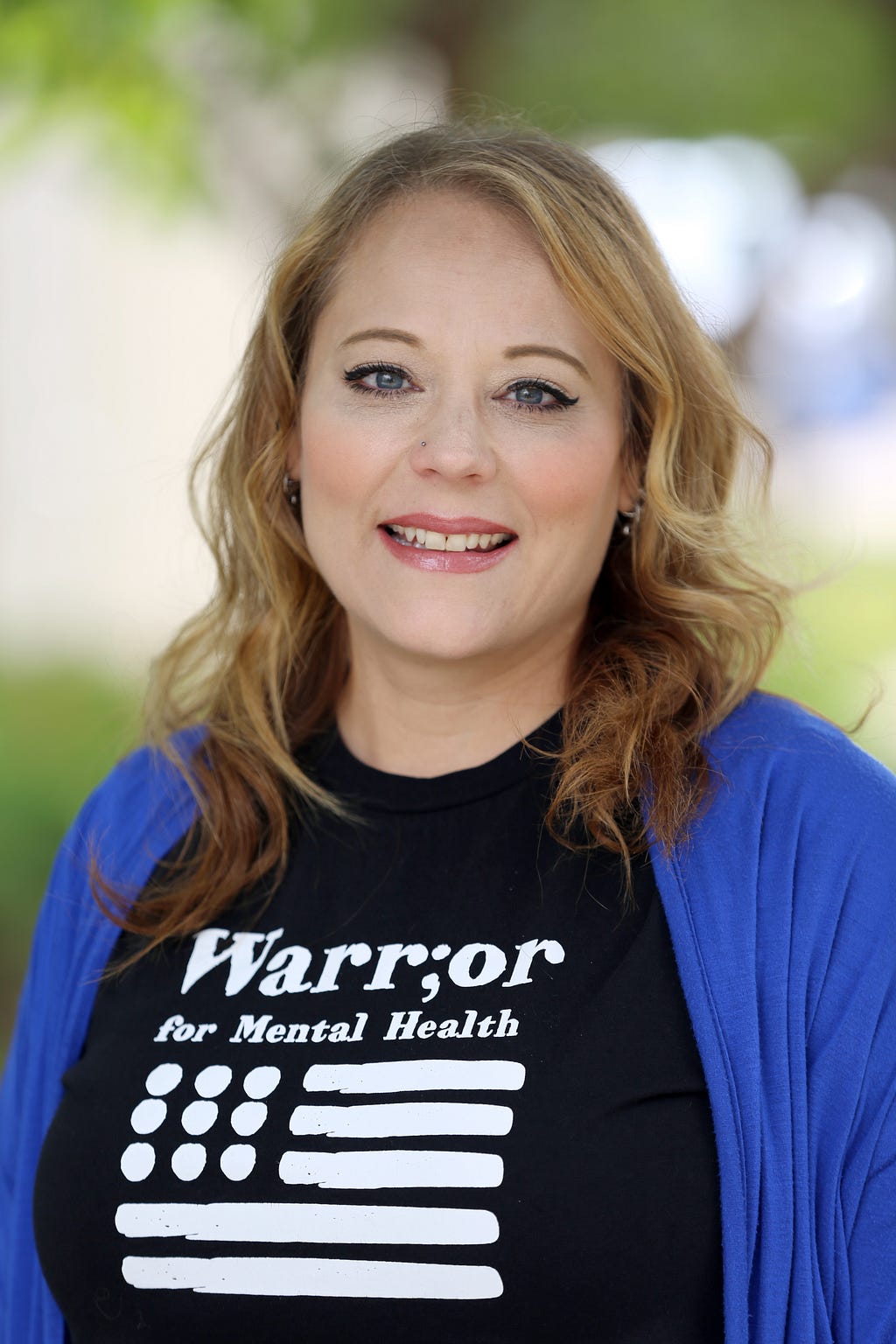
Social Impact Heroes: How Kelli Melissa Reinhardt Of Make Mental Health Matter Is Helping To Change Our World
I’ve learned that I can’t save everyone. None of us can. But together, we can create a ripple that reaches people we’ll never meet and changes stories we’ll never hear.
As a part of our series about “individuals and organizations making an important social impact”, we had the pleasure to interview Kelli Melissa Reinhardt.
Kelli Melissa Reinhardt is the Founder and CEO of Make Mental Health Matter, a Colorado-based nonprofit dedicated to empowering individuals and communities through Action, Conversation, and Education to build life-saving skills, strengthen connections, and inspire hope. Following the loss of her sister to suicide in 2017, she transformed personal tragedy into a growing movement that provides mental health and suicide prevention training, speaking, media, low-cost coaching, holistic wellness services, and community programs designed to ensure no one has to struggle alone. As an internationally recognized speaker, Mental Health First Aid and ASIST instructor, NLP coach, and host of the globally streamed Make Mental Health Matter Show, Kelli is passionate about building mental health confidence and helping ordinary people discover they have the power to change someone else’s story.
Thank you so much for joining us in this interview series! Can you tell us a story about what brought you to this specific career path?
People often ask what led me to this work, and the truth is, it isn’t a career I chose. It’s a calling that chose me. My middle sister struggled with her mental health for years and survived six suicide attempts. After her last attempt, life settled into what we believed was a new normal. Nearly five years passed, and like so many families, we thought we had made it through the hardest part. Then, in 2017, she died by suicide. For a long time, I asked myself the same question so many suicide loss survivors ask: How did I miss it this time? As I began learning everything I could about mental health and suicide prevention, I realized something that changed my life. Looking back through the lens of everything I know today, I wasn’t failing my sister. My family and I were doing the best we could with the knowledge, resources, and support we had at the time. I simply didn’t know then what I know now. That realization became the foundation of Make Mental Health Matter. I can’t change what happened to my sister, but I can help make sure more people have access to the education, life-saving skills, and support that I wish our family had. I don’t believe people should have to figure this out on their own. That’s why our mission is to empower individuals and communities through Action, Conversation, and Education to build life-saving skills, strengthen connections, and inspire hope.
Can you share the most interesting story that happened to you since you began leading your company or organization?
One of the most meaningful moments since founding Make Mental Health Matter didn’t happen on a stage or during one of our events. It happened because of a single conversation. A few years ago, I met a woman named Alex when she appeared on the Make Mental Health Matter Show to talk about access to mental health care. At the time, I had no idea she was quietly battling a meth addiction, living in an abusive relationship, and struggling with thoughts of suicide. After the show, I noticed a social media post that concerned me, so I reached out. During our conversation, I asked her a question that, by that point, had become second nature because of the work we do: “Are you thinking about suicide?” Years later, Alex shared something I’ll never forget. She told me that no one had ever asked her that question so directly before. Being asked made her realize she wasn’t just struggling, she was in a crisis. She had a plan to end her life. That conversation became a turning point. Alex found the courage to leave her abusive relationship, move across the country, begin her recovery journey, and rebuild her life. Recovery wasn’t easy. She faced setback after setback, navigated treatment, recovery housing, and learning how to live a completely different life. She kept choosing to move forward. Today, she is sober, has earned her degree in behavioral health, and now spends her life helping others who are facing the very challenges she once believed she could never overcome. People often tell me, “You saved Alex’s life.” I see it a little differently. I simply asked a question. Alex found the courage to answer it.
It has been said that our mistakes can be our greatest teachers. Can you share a story about the funniest mistake you made when you were first starting? Can you tell us what lesson you learned from that?
When I started Make Mental Health Matter, I honestly thought passion would be enough. I quickly discovered that passion doesn’t balance budgets, build systems, manage volunteers, create strategic partnerships, oversee programs, write grants, run social media, or magically turn a founder into a CEO. In those early years, I said yes to everything because I cared so deeply about the mission. If there were an Olympic event for throwing spaghetti at the wall and hoping something stuck, I probably would’ve qualified. I wore every hat imaginable, founder, teacher, speaker, event planner, marketer, volunteer coordinator, bookkeeper…if it needed to be done, I did it. Looking back, I laugh because I truly believed that was what leadership looked like. At the same time, I was absolutely terrified of public speaking. I had taken a public speaking class in college because it was required, and I remember standing in front of the class shaking so badly I could barely hold the paper I was reading from. Years later, when I did my first Facebook Live for Make Mental Health Matter, I was so nervous that my hand shook so much I probably gave people motion sickness. The first time I shared my sister’s story on stage, I read every single word from my phone because I was terrified, I would forget what I wanted to say. Today, it’s funny to think about because speaking has become one of the greatest joys of my work. The biggest lesson wasn’t learning how to speak. It was learning how to lead. When I left my corporate career in 2021 to lead Make Mental Health Matter full time, I realized we had built an incredible mission, but we hadn’t yet built the business infrastructure needed to sustain it. I learned to stop trying to do everything myself, to build systems instead of simply solving problems, and to surround myself with people whose strengths were greater than my own.
Can you describe how you or your organization is making a significant social impact?
We believe the greatest social impact isn’t measured by how many people we serve. It’s measured by how many people leave our work with the confidence to help someone else. That’s why we exist. Our mission is to empower individuals and communities through Action, Conversation, and Education to build life-saving skills, strengthen connections, and inspire hope. We believe real change happens when ordinary people are equipped with the confidence, compassion, and practical skills to recognize when someone is struggling, start a conversation, listen without judgment, and connect them to support before a crisis occurs. We bring that purpose to life through nationally and internationally recognized mental health and suicide prevention training programs, community partnerships, speaking engagements, the Make Mental Health Matter Show, Give Youth a Voice, and our expanding low-cost coaching and holistic wellness services. Every part of our work is designed to remove barriers, increase access to support, and help people discover that they don’t have to figure this out alone.
Can you tell us a story about a particular individual who was impacted or helped by your cause?
One person who immediately comes to mind is Ellen. When Ellen first came into my life, she was introduced to me as someone who might be able to help write a book or create journals. What I didn’t know was that she had been carrying years of trauma while living with debilitating chronic pain from fibromyalgia. She had become so isolated that she rarely left her home. She hadn’t driven in years after being involved in a serious car accident, and so much of her world had become smaller and smaller. At first, I didn’t set out to change her life. I simply got to know her. I invited her into our community, gave her opportunities to contribute, listened without judgment, challenged some of the limiting beliefs she held about herself, and reminded her that she still had gifts the world needed. Eventually, she became one of our outreach coordinators, and through a partnership with A/D Works, she joined our team as an intern. As we worked together, something beautiful began to happen. She started showing up, not just to meetings, but to life again. She drove herself to one of our community events for the first time in years. She began walking again after finding resources that helped reduce her pain. Through coaching, honest conversations, and simply having a safe space to process without judgment, she began rebuilding her confidence, strengthening her relationship with her husband, and rediscovering a sense of purpose she thought she had lost.
Are there three things the community/society/politicians can do to help you address the root of the problem you are trying to solve?
If I could ask our communities, leaders, employers, educators, policymakers, and neighbors to focus on just three things, they would be these: First, make mental health education as common as CPR training. We teach people CPR because we hope they’ll know what to do if someone experiences a physical emergency. Mental health deserves the same level of preparation. When people are equipped with practical skills and confidence, they’re more likely to recognize when someone is struggling, start a conversation, and connect them to support before a crisis occurs. Second, invest in prevention, not just crisis response. Far too often, resources become available only after someone reaches a breaking point. Imagine what would happen if we invested just as intentionally in prevention through education, coaching, community support, youth programs, and accessible mental wellness services. Third, help rebuild connection in our communities. One of the greatest challenges we face isn’t that people don’t care. It’s that many people care deeply but don’t know what to do. We need workplaces where it’s safe to ask for help, schools that teach emotional well-being alongside academics, neighborhoods where people know one another, and communities where checking in on someone becomes second nature.
How do you define “Leadership”? Can you explain what you mean or give an example?
For a long time, I thought leadership meant having the answers. Today, I believe leadership is something completely different. To me, leadership is creating an environment where people feel safe enough to grow into who they’re capable of becoming. It’s not about being the smartest person in the room or doing everything yourself. It’s about seeing potential in people, often before they see it in themselves, and helping create opportunities for that potential to flourish. When I first started Make Mental Health Matter, I believed I had to carry everything on my own. I thought leadership meant working harder, saying yes to every opportunity, and solving every problem myself. Over time, I realized that wasn’t leadership at all. It was exhaustion. The biggest shift happened when I learned to trust others, delegate, and build a team. Today, one of my greatest joys isn’t accomplishing something myself. It’s watching someone else step into a role they never imagined they were capable of filling.
What are your “5 things I wish someone told me when I first started” and why.
1. Passion starts the mission. Systems sustain it.
When I started Make Mental Health Matter, I thought passion would be enough. I quickly learned that passion doesn’t balance budgets, build systems, write grants, create partnerships, or magically turn a founder into a CEO. I also learned that simply because you start a nonprofit doesn’t mean funding appears. In fact, earning trust and building something sustainable takes years of consistency, relationships, and showing up, even when no one is watching.
2. You don’t have to figure it out alone.
For far too long, I tried to do everything myself. I took advice from people who had never built a nonprofit, spent countless hours trying to figure things out on my own. The biggest breakthrough came when I started asking for help, surrounding myself with mentors, building partnerships, and trusting others to bring their strengths to the mission. Ironically, one of the greatest lessons I’ve learned is the same one our organization teaches every day. No one should have to figure life out alone.
3. You don’t have to save everyone. Help more people know how to help.
When my sister died by suicide, I wanted to make sure no other family experienced that kind of heartbreak. At first, that felt like an impossible responsibility to carry. Over time, I realized my job isn’t to save everyone. My job is to help equip more people with the confidence, knowledge, and skills to recognize when someone is struggling, start a conversation, and connect them to support.
4. Build people, not just programs.
Some of the most meaningful moments in this journey have had nothing to do with launching a new program. They’ve come from watching people discover strengths they didn’t know they had. I’ve watched volunteers become leaders, participants become instructors, community members become advocates, and individuals who once questioned their own worth begin helping others find hope. Programs matter. But people are what change the world.
5. Never underestimate the ripple.
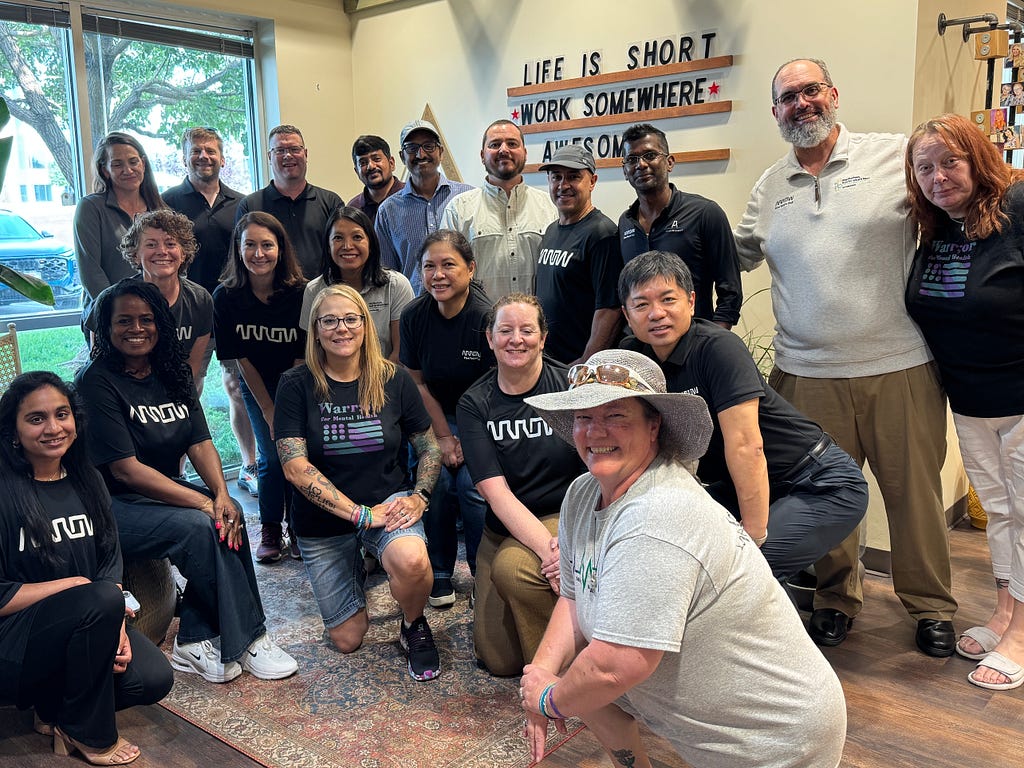
When I started this journey, I believed that if I could help one person, I had done my part. I still believe that. What I didn’t understand then was how far one act of compassion can travel. One conversation can lead to recovery. One person can go on to help hundreds of others. One training can ripple through families, workplaces, schools, and entire communities. This organization started with my story. But somewhere along the way, it stopped being about me. Today, it’s about every person who has found hope, every family that has learned new ways to support one another, every volunteer, instructor, partner, donor, and community member who has become part of this mission.
Can you please give us your favorite “Life Lesson Quote”? Can you share how that was relevant to you in your life?
One of my favorite life lesson stories has always been The Starfish Story. A young boy is walking along a beach covered with thousands of stranded starfish. One by one, he picks them up and throws them back into the ocean. An older man watches for a while before saying, “There are thousands of starfish. You can’t possibly make a difference.” The boy bends down, picks up another starfish, throws it into the water, and replies, “I made a difference for that one.” For many years, that story was the foundation of my life and my work. After losing my sister to suicide, I told myself that if I could help just one person, then I had done my part. But something changed along the way. As our organization grew, I realized this was no longer just my story. It became Alex’s story. It became Ellen’s story. Somewhere along the way, I realized my job was never to throw every starfish back into the ocean myself. My job was to invite more people onto the beach.
Is there a person in the world, or in the US with whom you would like to have a private breakfast or lunch with, and why?
If I could have breakfast with anyone, it would be Lady Gaga. Not because she’s a global icon, but because she’s used her platform to change the conversation around mental health with honesty, courage, and authenticity. She’s shown people that you can embrace who you are, speak openly about your struggles, and still use your story to create hope for others. I admire that deeply. I’d love to spend less time talking about accomplishments and more time talking about the human side of leadership. What keeps her grounded? How does she continue showing up for others while taking care of herself? How does she handle the weight that comes with being someone so many people look to for hope?
You are a person of enormous influence. If you could inspire a movement that would bring the most amount of good to the most amount of people, what would that be?
If I could inspire one movement, it wouldn’t be a movement centered around me or even around Make Mental Health Matter. It would be a movement that reminds every person they have the power to change someone else’s story. I believe one of the greatest misconceptions we have is that helping someone through a mental health challenge is the responsibility of professionals alone. Imagine if mental health confidence became as common as CPR training. Imagine if parents knew how to recognize when their child was struggling. If teachers felt confident starting difficult conversations. If employers created workplaces where asking for help was seen as a strength. If neighbors checked in on one another. If friends weren’t afraid to ask, “Are you thinking about suicide?” because they understood that asking doesn’t plant the idea, it opens the door to hope.
How can our readers further follow your work online?
If something in this interview resonated with you, I’d love to invite you to become part of the movement. Whether you’re looking for hope, resources, training, a speaker for your organization, ways to support our mission, or simply a community that believes no one should have to struggle alone, we’d love to connect with you. You can learn more about Make Mental Health Matter, our programs, upcoming trainings, the Make Mental Health Matter Show, and opportunities to get involved by visiting www.mmhm.org. You can also follow our journey on social media by searching @MakeMentalHealthMatter, where we share stories of hope, practical mental health education, and everyday reminders that one conversation really can change a life.
This was very meaningful, thank you so much. We wish you only continued success in your great work!
Social Impact Heroes: How Kelli Melissa Reinhardt Of Make Mental Health Matter Is Helping To Change… was originally published in Authority Magazine on Medium, where people are continuing the conversation by highlighting and responding to this story.