


Natural Hair Advocates: Jessica Kwalli On Five Things You Need To Understand About Hair Discrimination
There is no substitute for personal experience. I’m not sure I would be as effective with my customers if I hadn’t gone through similar struggles growing up. If you’re having trouble finding the right solution for your hair, talk to someone who knows what it’s like and can relate.
As a part of our series about “Five Things You Need To Understand About Hair Discrimination”I had the pleasure of interviewing Jessica Kwalli.
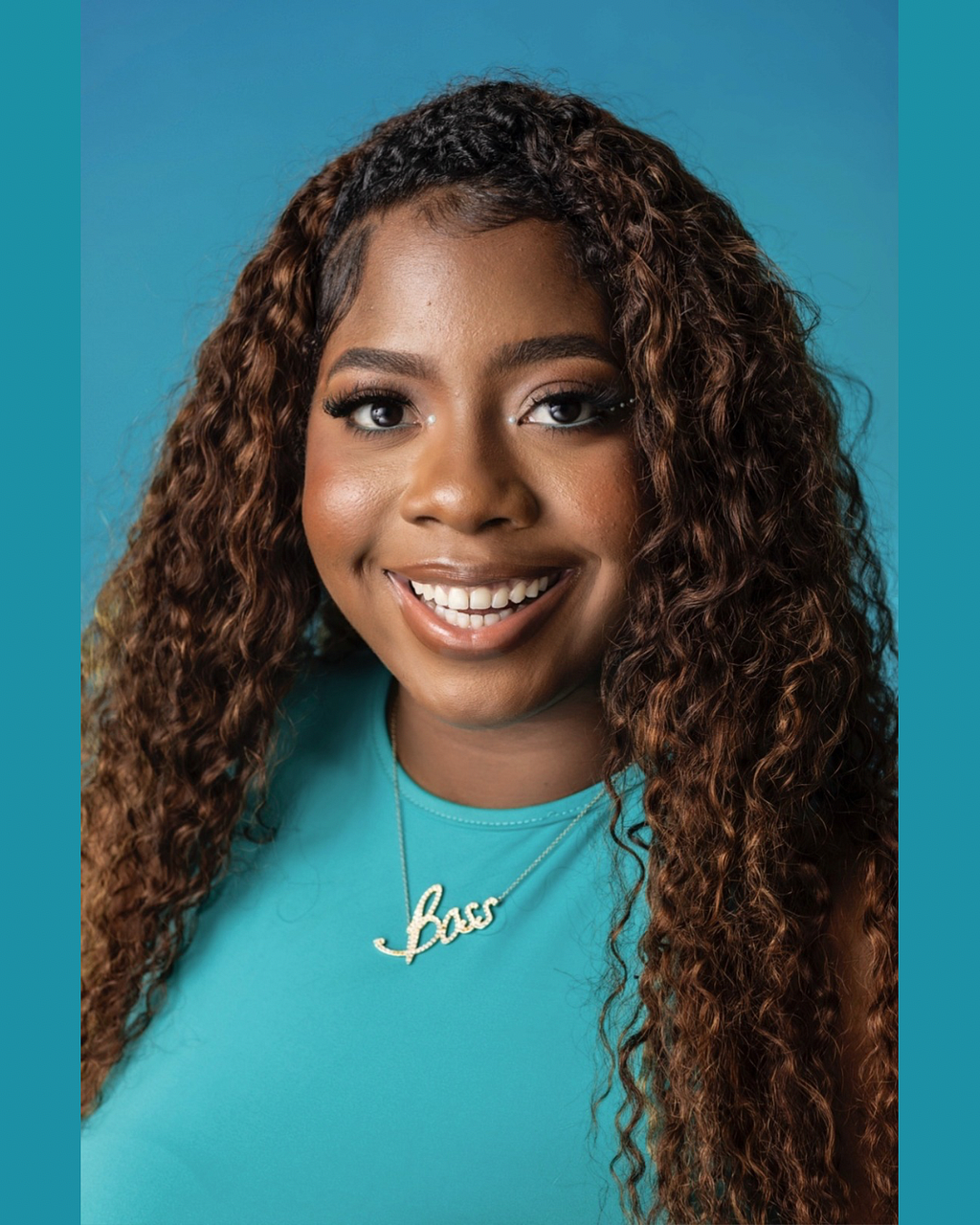
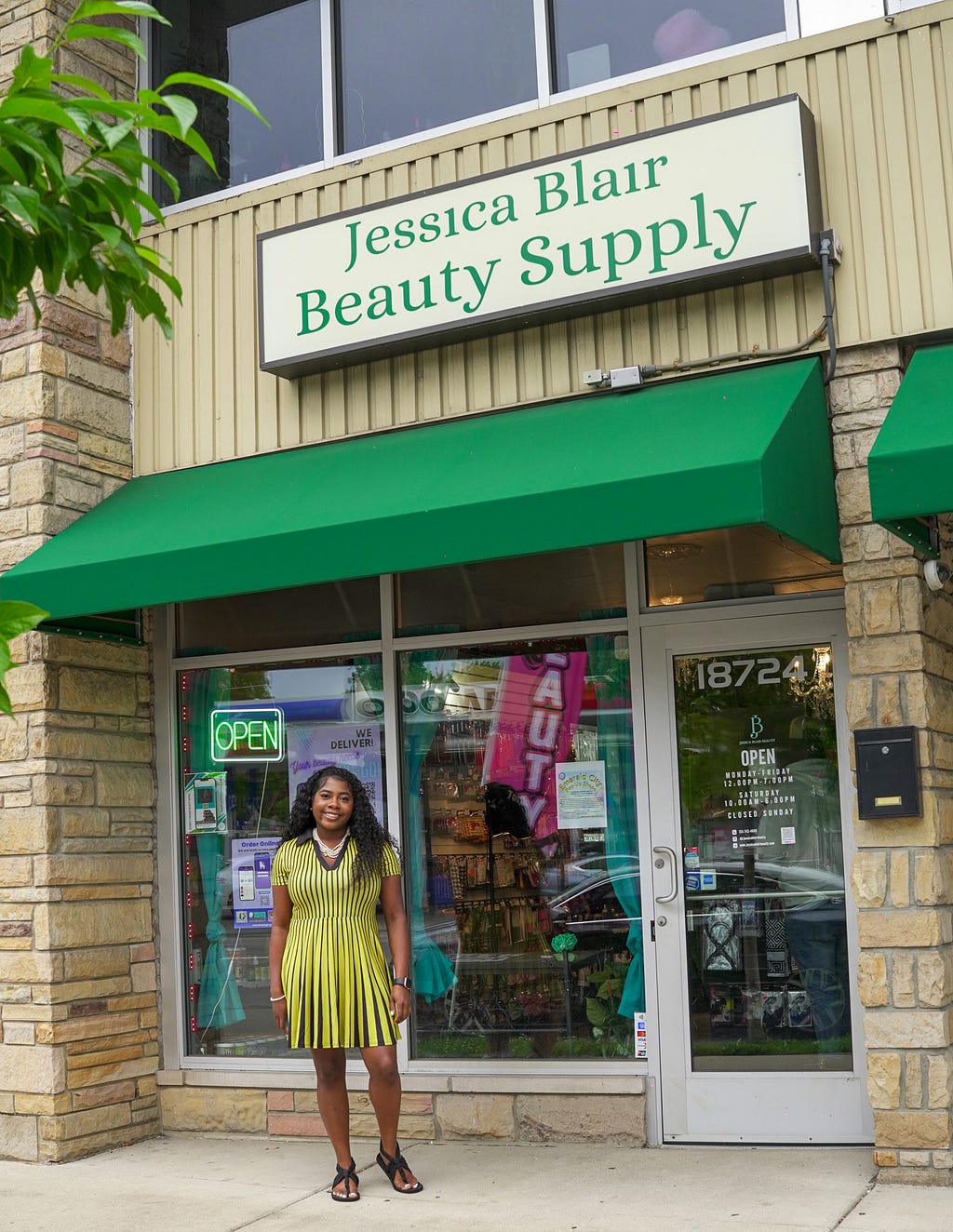
Jessica Kwalli is the Founder & Owner of Jessica Blair Beauty, a curated beauty supply company and retail storefront based in Detroit, Michigan, created to redefine the beauty supply shopping experience for underserved communities. A native Detroiter raised at the intersection of beauty, culture, and fashion, Jessica recognized early on the lack of representation, ownership, and customer care within the beauty supply industry — despite African Americans being its largest consumers.
After years of experiencing poor customer service, limited product knowledge surrounding Black haircare, and witnessing minority-owned beauty brands struggle to gain shelf space in traditional beauty supply stores, Jessica made it her mission to disrupt the industry by creating a beauty destination built by the community, for the community. Jessica Blair Beauty was founded with the vision of providing an elevated, inclusive, and empowering shopping experience while also creating opportunities for local and minority-owned beauty brands to thrive.
Jessica is a graduate of Michigan State University, where she earned her Bachelor of Science degree. Prior to entrepreneurship, she worked in several roles serving underserved youth and adults within the healthcare and medical field. While impactful, she realized her true passion was building something that could create long-term economic and community impact on a larger scale.
In 2020, Jessica began investing heavily into business education, mentorship, and beauty supply operations training to transform her vision into reality. What started as an online business evolved into a growing brick-and-mortar beauty supply store known for its clean aesthetic, quality products, exceptional customer service, and community-centered approach. Today, Jessica Blair Beauty offers a wide range of haircare products, premium hair extensions, beauty accessories, cosmetics, and products from emerging local brands.
Jessica’s entrepreneurial journey has been marked by resilience, determination, and innovation. Despite overcoming major startup challenges — including financial setbacks, inventory loss, and operational obstacles — she successfully built a reputable and rapidly growing beauty brand recognized throughout Detroit and beyond. Her work has led to partnerships, mentorship opportunities, grant programs, and community initiatives focused on empowerment, representation, and economic growth.
Driven by purpose and passion, Jessica continues to expand her impact through entrepreneurship, mentorship, and community engagement — proving that beauty businesses can be both profitable and transformational.
Thank you so much for doing this with us! Before we dive in, our readers would love to learn a bit more about you. Can you tell us a bit of your childhood backstory and how you grew up?
I’m the owner of Jessica Blair Beauty, a full-service beauty-supply store based in Detroit.
Growing up, our family included my Mom, Dad & brother. I spent a considerable amount of time going to beauty-supply shops with my Mom, as she shopped for herself and her mom, and I rarely saw anyone who looked like me in ownership or even working behind the counter, and that always stayed with me. When we visited beauty supply stores in the city, I noticed a lack of good customer service. To get it, we had to go to the suburban malls.
I knew early on that I could provide a better experience for urban women. I know many of my customers by name. Young women on their way home from the bus stop come into my store and we just talk. They love the fact that I understand their hair and they look to me for advice.
I’ve intentionally created a space that feels welcoming, safe, and personal. Many of my customers are dealing with sensitive or vulnerable situations — hair loss, medical conditions, or simply trying to feel confident again. They trust me enough to open up in ways they haven’t in other beauty-supply stores, and that level of connection means everything to me.
Today, Jessica Blair Beauty is what I call a full-service beauty supply store. We carry everything from hair care products — shampoos, conditioners, oils, and styling products — to wigs, braiding hair, bundles, tools, accessories, cosmetics, and select skincare items, including products from local brands. But beyond the products, what I really focus on is the experience.
It’s more than just a retail space — it’s a community-centered environment. I’m deeply involved in giving back, whether it’s hosting events, supporting local initiatives, or partnering with other organizations. I also make it a point to educate my customers, both in-store and on social media, by sharing tutorials and showing how I personally use the products I sell. That authenticity matters, and I think people can feel that.
At the end of the day, I want people to know that Jessica Blair Beauty is more than just a place to shop — it’s a place where you can come for guidance, for community, and for an experience that truly puts you first.
Can you tell us a story about what inspired you to become a natural hair advocate?
My journey into this industry really started from my own personal experience.
My Mom was perming my hair — a lot. But it didn’t need it. My Grandma overprocessed Mom’s hair, so she didn’t know any better. In middle school, I went perm free, and my hair started flourishing, free of chemicals.
This encouraged me to suggest chemical-free products as an option. I always start by asking customers what they’re currently using on their hair. Then I’m very honest with them, especially when I know they’re asking for something that is wrong for them. Often, they’re suffering from hormonal issues and they really appreciate the advice, coming back in later to say thanks. I don’t “push” all-natural products, but I do recommend them, especially when someone is suffering from a physical condition that affects their hair.
One of the older women from the neighborhood came in with a silver afro, saying “I don’t know what to do with my hair.” She was using creams, but wanted to highlight her curls. I suggested a gel and she came back in, thrilled, saying, “Look at my hair.”
I also ask about the tools they’re using on their hair. Many people don’t know the difference between a titanium or ceramic pressing comb for flat irons, and also they’re using too high a temperature, thinking that it will be more effective, but it can be very harmful to the hair.
Can you share the most interesting story that happened to you since you began your career?
Well, it was the craziest thing. I had a plan to open in 2020, but of course, it was impossible to know that COVID would happen, so I was doing pop-ups in late 2020, into early 2021. I participated in pop-ups all over, to expose my brand to multiple corridors. East Warren. Rosedale Park. Riverside Mall on East Jefferson.
I was always on the lookout for development corporations that were supporting their neighborhoods. Michigan State University Black Alums brought in a few different businesses at a park. One day set up and break down. One of the pop-ups was a holiday event for the Grandmont Rosedale Development Corporation, and I fell in love with the Rosedale Park neighborhood, so that’s where I started looking for a storefront.
Things were moving along for a Summer of 2024 opening, but before I even opened my doors, I took a $20,000 loss after paying an out-of-state vendor who never delivered the inventory and services I ordered. That setback pushed my grand opening from summer 2024 to February 2025 and left me operating for months without full inventory, just as the tariffs went into effect. Even when a partial shipment finally arrived, it still didn’t reflect what I had paid for.
At that point, I had to pivot quickly. I repurchased inventory — even with tariffs increasing costs — and made major adjustments in my personal life to stay afloat. I also leaned heavily into marketing and built partnerships with local organizations to make the most of what I did have. It definitely wasn’t something I could have planned for, but it forced me to become more resourceful and resilient early on. So two crazy things happened to thwart my efforts, but my desire to help my community won out.
You have been blessed with great success in a career path that many have attempted, but eventually gave up on. Do you have any words of advice for others who may want to embark on this career path but know that their dreams might be dashed?
In 2020, while working in healthcare during the pandemic, I reached a point of burnout and started rethinking what I wanted long-term. I knew I was passionate about helping people, but I wanted to do it in a way that felt more fulfilling. The idea of opening a beauty-supply store came to me unexpectedly, but once it did, I couldn’t let it go. I spent months researching how to break into an industry that isn’t always easy to access — learning about vendors, product sourcing, and what it really takes to build something sustainable.
Before opening my storefront, I spent several years building my brand through pop-up shops and an online store. That time allowed me to connect directly with the community and build trust, which became the foundation of my business.
Hair is a billion-dollar industry but hard to penetrate because of the amount of capital necessary to get started, especially for smaller players. So, here I am, a solopreneur and first-generation owner. Lots of shops and businesses have been in the family for many years, and have multiple locations, which provides a safety net to ride out situations that present unforeseen circumstances. For the small businesses, it’s hard to stay competitive and keep stuff in stock.
It may look glamorous on the outside, but it’s not necessarily so. Gatekeepers (distributors) didn’t want black people to be in the business. So, I partnered with other businesses, made connections, and made it happen. Also, I took the time to educate myself. In 2020, before starting the business, I spent 6–8 months researching the industry. Five years felt forever between the pop-ups and the storefront, but the patience it took has paid off.
Now that I’ve celebrated a year in a brick-and-mortar business, I’m still enthusiastic, but it’s still a challenge. I love being at the store. It’s my happy place. Outside factors, out of my control, started to get to me because no matter how much you plan, things are going to happen. The best thing is to adopt a positive mindset. Entrepreneurship makes you stronger and appreciate the good things. Every day when I wonder if I should be here, a customer comes in that makes it all worth it.
Can you share three ideas that anyone can use “to feel beautiful”? (Please share a story or example for each.)
- Do the little things. You don’t have to spend a lot of money or do something extravagant. Options should be based on your budget. Achieve the same look without spending a bundle. For instance, for extensions, synthetic hair can be just as good as human hair, and much more reasonably priced.
- Accessorizing goes a long way — a hair clip with rhinestones or a new pair of earrings can make a big difference in the way you feel about yourself.
- Do what works best for you. Don’t follow all the TikTok trends. So many trends are not appropriate for everyone.
- Treat yourself. Women are always taking care of someone else … husbands, children, parents etc. I encourage them to do something nice for themselves. I always say, “when you look good, you feel good.”
Can you share with our readers some of your techniques to style natural hair?
I try to educate my customers in the shop and my followers on TikTok, especially regarding healthy hair techniques so people don’t spin their wheels without getting the results they want. So many folks are using products the wrong way.
For those using high-heat styling tools, the alternative is heatless curling systems, like foam flexi-rods, coated in silk (not cotton), that you wrap your hair around overnight.
Also, for wet styles, mousse vs. cream vs. gel. Mousse and flexi-rods are good for a natural look. And curling custard works well with certain types of hair.
Education is the biggest differentiator, based on mine and my customers’ experience. I do get a lot of repeat and referral customers. For instance, the granddaughter of the woman with the silver afro now comes in pretty regularly.
Can you share some of your techniques about how to best maintain natural hair?
Silk and satin are your best friends. For overnight, use a satin-lined bonnet or shower cap or a silk scarf instead of cotton scarves or bandanas, which break your hair. Don’t over-process with flat irons for straightening. Don’t use titanium every day on the highest setting (500 degrees). Use a lower temperature for a little longer to get the same effect.
Ok super. Let’s now shift to the main part of our discussion. Can help articulate to our readers your “Five Things You Need To Understand About Hair Discrimination.” If you can, please share a story or example for each.
- Cosmetology schools are now teaching students how to treat different hair types, including African-American hair. For years, this was not being done. Now, it’s part of the curriculum.
- The beauty supply industry is extremely competitive. Smaller beauty-supply shops are a platform for local, smaller brands to be carried. For the big-box stores like Walmart and Target, unless you already had a recognizable brand name or a top-selling product on their shelves, your chances are slim to get display space. However, lately some of them are allowing a “pop-up” or a small display of local brands.
- A lot of customers come to me for the products I carry as they believe they are better for African-American hair, but not available at Ulta and Target. Now Sally Beauty and Ulta have a minority hair care section, but there is no credible counseling for the customer.
- I heard an interesting perspective from a person in one of my classes. Mom is Caucasian, dad is African-American, so she has a very different hair type and couldn’t find/didn’t know what to use. She’s in the middle because most products are specifically marketed either for African-American hair or Caucasian hair. Generally, someone with “mixed” hair, who doesn’t know how to effectively deal with it, is looking for options, which they can find at Jessica Blair Beauty.
- There is no substitute for personal experience. I’m not sure I would be as effective with my customers if I hadn’t gone through similar struggles growing up. If you’re having trouble finding the right solution for your hair, talk to someone who knows what it’s like and can relate.
Can you please give us your favorite “Life Lesson Quote”? Can you share how that was relevant to you in your life?
My favorite “life lesson quote” is from the poem Our Deepest Fear by Marianne Williamson.
“Our deepest fear is not that we are inadequate. Our deepest fear is that we are powerful beyond measure. It is our light, not our darkness that most frightens us.”
This quote from childhood carried me through my entire life and helped me penetrate an industry I was told wouldn’t be receptive to me. You can be a barrier-breaker. Put in the work and the time.
Also, I’m always happy to encourage others about business, and I pay it forward as much as possible, mentoring Motor City Match participants, for example.
We are very blessed that some of the biggest names in Business, VC funding, Sports, and Entertainment read this column. Is there a person in the world with whom you’d like to have a private breakfast or lunch with, and why? He or she might just see this 🙂
Michelle Obama, because being First Lady is a tough gig. On the outside, she carries herself with such grace and elegance. No one ever saw her discouraged. Throughout eight years in the White House, and raising two young girls in the spotlight, she maintained her composure, spreading love.
How can our readers follow you online?
Facebook: https://www.facebook.com/jessicablairbeauty?ref=bookmarks&_rdr
Instagram: https://www.instagram.com/jessicablairbeauty/
TikTok: https://www.tiktok.com/@jessicablairbeauty?lang=en
LinkedIn: https://www.linkedin.com/company/jessica-blair-beauty/about/
Thank you so much for this. This was very inspirational, and we wish you only continued success!
Natural Hair Advocates: Jessica Kwalli On Five Things You Need To Understand About Hair… was originally published in Authority Magazine on Medium, where people are continuing the conversation by highlighting and responding to this story.