An Interview With Rachel Kline
Sustainable change is incremental, and trying to move too fast usually undermines the whole effort.
Companies That Are Breaking the Cycle of Non-Renewable Consumption As a part of this series, we had the pleasure to interview Jeff Carcara.
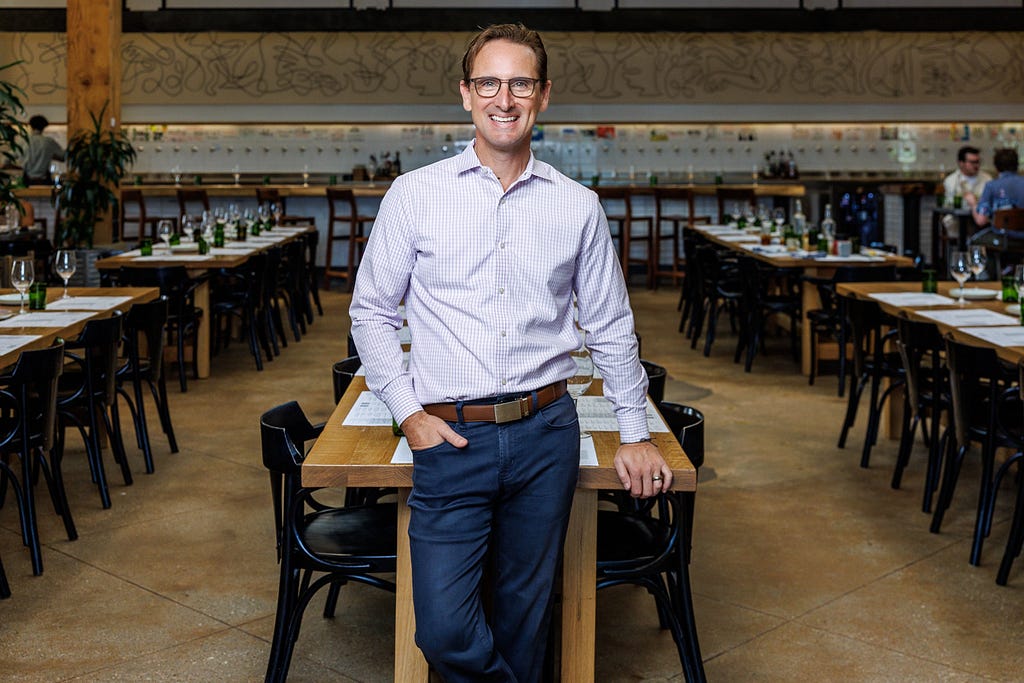
Jeff Carcara is CEO of Sixty Vines, a wine country-inspired restaurant concept on a mission to change wine culture. Under his leadership, Sixty Vines has grown to 16 locations across the country and eliminated more than 1.4 million glass bottles from landfills through its wine-on-tap program. He has held senior leadership roles at Del Frisco’s, Barteca, Darden, and Hillstone, building high-performing teams and scaling multi-unit concepts across the country.
Thank you so much for doing this with us! Before we dig in, our readers would like to get to know you a bit. Can you tell us a bit about how you grew up?
I grew up in the restaurant business. My family owned several restaurants, so this has been my world for as long as I can remember. It’s really the only industry I’ve ever known.
None of us can achieve success without some help along the way. Is there a particular person who you are grateful towards who helped get you to where you are? Can you share a story about that?
There have been so many great leaders who have shaped me throughout my career. I’ve been fortunate to work alongside some of the best operators in this business. But if I had to name one, it would be Stephen Judge, who was President of Seasons 52 when we worked together. He’s gone on to lead other great brands since then. I credit him with helping me believe in myself and building the confidence to step into higher leadership roles. He saw something in me before I fully saw it in myself.
What is the mission of your company? What problems are you aiming to solve? What is your “why”?
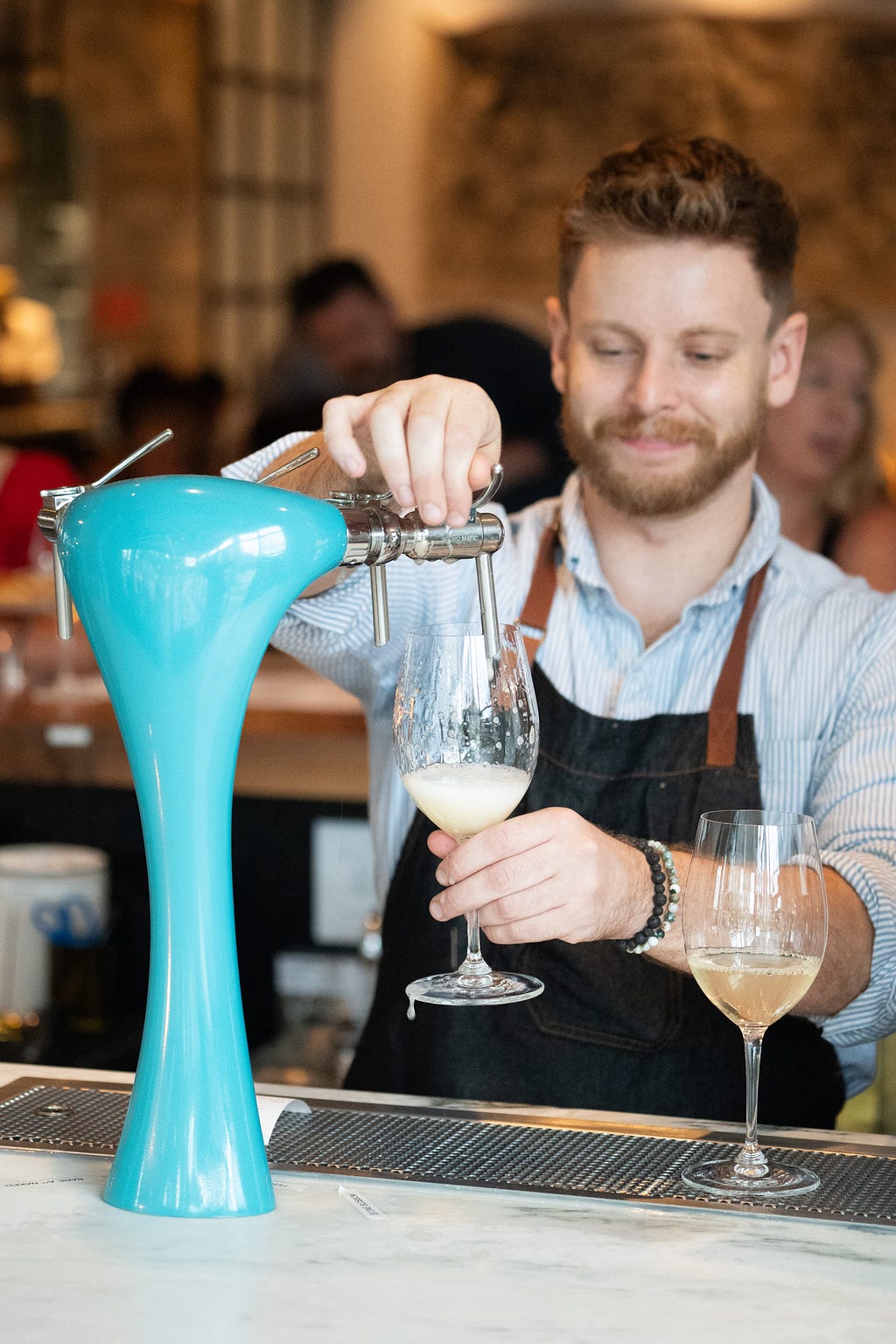
Sixty Vines was created by Jack Gibbons and Randy DeWitt, two first-round hall of famers in the restaurant industry who have built some truly great concepts. The seed for this brand was sustainability. They watched glass pile up in the dumpsters every night — wine bottles, specifically — and knew there had to be a better way. Even when you recycle, roughly 80% of glass still ends up in a landfill. By replacing bottles with reusable kegs, Sixty Vines dramatically reduces the amount of glass going into the ground.
But the commitment doesn’t stop at wine. We compost food waste, invest in low-energy equipment, lighting, and ventilation, and look for ways to recycle and repurpose wherever we can. Food is one of the top contributors to landfill waste, so that piece matters a lot to us.
The other side of our “why” is changing wine culture itself. We want people to feel at home with wine, not intimidated by it. We call it a “pinkies down” approach. Any guest can taste any wine on the menu, complimentary, and our servers are trained to ask questions about the flavors and style and even the color to help guide a guest on their journey. There are no smelling corks, no formal presentation and no waiting for approval before pouring. We meet guests where they are and let the wine speak for itself.
Can you share the most interesting story that happened to you since you began leading your company or organization?
Starting a few days before the world shut down during the pandemic was one of the most challenging experiences of my professional life. I have never worked so hard to bring in so little revenue. We were hustling every single day just to stay alive, and then when we were finally able to reopen, we had to adapt on the fly to social distancing and all the public safety concerns that came with it. Anyone in this industry remembers that period vividly.
On a more positive note, watching the culture around kegged wine shift has been one of the most fulfilling parts of building this brand. Early on, we approached wineries about kegging and many of them passed. Now most of those same wineries have changed their position entirely, and our list is filled with incredible winemakers who are proud to be on our taps. We’re also seeing other restaurants and hotels move toward this model. That’s the culture changing in real time, and it’s something I’m genuinely proud of.
Do you have a favorite life lesson quote? Can you tell us how that was relevant to you in your own life?
My team would tell you I have a few. But the one that has changed me most is this: “easier is rarely better.” Whenever we chase the easy path, we usually give up quality and results in the process. That’s true whether you’re talking about diet, fitness, relationships, or running a business. There’s no easy button, and when something is hard, that’s usually a sign it’s working.
Let’s now shift to the main part of our interview. Can you tell our readers about the initiatives that you or your company are taking to help break the cycle of non-renewable consumption? What specific problems related to non-renewable consumption are you aiming to solve?”
The foundation is our wine-on-tap system. Each keg holds the equivalent of 26 bottles and can be reused for decades, keeping thousands of glass bottles, corks and foils out of landfills over its lifetime. Across our restaurants, that has added up to more than 1.4 million bottles saved.
Beyond wine, we compost food waste, run low-energy equipment and lighting throughout our restaurants, and actively look for ways to recycle and repurpose materials at every level of the operation. These aren’t programs we promote for optics. They’re built into how we run the business every day.
How do you measure the impact of your company’s sustainability initiatives, both in terms of environmental benefits and business growth? Can you share any key metrics or success stories?
Honestly, I don’t think about this as something to score. Being sustainable takes more effort from our entire team, and we do it because it’s the right thing to do. The metric I care about most is whether we have a continued hunger to be better. Are we always looking for the next place we can improve? That ongoing commitment is the real measure of success for us.
What challenges have you faced while implementing sustainable practices in your company, and how did you overcome them? Can you share a specific example?
Sustainable practices are almost always more costly and more labor-intensive than the alternative. That creates resistance, and the first instinct for a lot of people is to look for an easier way. Getting buy-in is the real work. Over time, we’ve built a culture where that buy-in exists, and bringing new sustainability initiatives to the team is much easier today than it was in the beginning.
Composting was probably our hardest lift. There were a lot of concerns when we first introduced it, but we pushed through. We’re still working through it in a few locations, and sometimes the challenge isn’t internal at all — it’s finding partners who share the same standards and commitment to make a program like that actually work.
How would you articulate how a business can become more profitable by being more sustainable and more environmentally conscious? Can you share a story or example?
We don’t think about sustainability as a profit driver. It’s typically more costly to the business. That said, I do believe it builds trial and loyalty, and those things lead to revenue over time.
Our kegging program is the best example. When you tell someone that a single keg saves the equivalent of 26 bottles from a landfill — and 26 bottles that never had to be produced in an energy-intensive glass plant — it resonates. Then you show them they can taste any wine on the menu before committing to a glass, and something clicks. If you love wine, you’re immediately invested in what we’re doing. That kind of connection is what brings people back, creating long-term loyalty.
This is the signature question we ask in most of our interviews. What are your “5 things I wish someone told me when I first started promoting sustainability and climate justice” and why? Please share a story or example for each.
1. Be patient. Don’t try to do everything at once.
Sustainable change is incremental, and trying to move too fast usually undermines the whole effort. Early on, we set out to bring more winemakers into the kegging model, and many of them said no. Some said no more than once. In late 2020, we were literally knocking on doors in Napa, having conversations with winemakers who weren’t sure about us yet. We didn’t force it. We kept showing up, kept demonstrating how we valued their wine — three temperatures in the cooler, no air, no light — and eventually they saw that it was the best way to serve wine by the glass. Today, some of those early conversations have turned into our most meaningful partnerships with producers like Ridge Vineyards and Chappellet. But it took patience.
2. Create a plan.
We had strong initial ideas, but without a clear plan to sustain the focus over time, it’s easy to drift. When I came on board, we used the extra time during the pandemic to completely reimagine our sourcing strategy. We stopped taking whatever we could get and built a real platform around finding partners who believed in what we were doing. That shift from reactive to intentional was everything. It gave our sustainability initiatives structure and momentum, and it’s what allowed us to grow into the brand we are today.
3. Expect pushback.
It doesn’t matter how obviously right something is. When you introduce more work and more cost, there will be resistance. Composting is probably the clearest example for us. There were so many concerns when we first introduced it — operational complexity, finding the right partners, getting team buy-in. We pushed through, but I won’t pretend it was easy. We still have a few restaurants where we’re working through the logistics, and sometimes the obstacle isn’t even internal. Finding partners who share your standards can be just as hard as convincing your own team. Knowing that going in makes you a lot more resilient when you hit the wall.
4. Build a coalition.
This can’t just be a leadership priority. The team has to own it and carry it forward. What helped us was integrating sustainability into the daily fabric of how we operate, rather than positioning it as a special initiative. When someone on our team refills a votive candle with soy wax instead of throwing it out or sees that our water glasses are made from recycled wine bottles, those things reinforce the culture. The goal had to live at the team level, not just at mine. Once it did, bringing new ideas to the floor became significantly easier.
5. Don’t give up.
It’s hard. Easier isn’t better, and if you genuinely commit to these practices, your business will be stronger for it. When we launched Sesenta Cava, our carbon-neutral sparkling wine, it required real problem-solving. Sparkling wine on tap is technically challenging due to its carbonation. We could have skipped it. Instead, we worked through it with our partners, got it certified carbon neutral through CarbonHero, and offset its remaining emissions through regenerative grazing in Texas, forest management in Tennessee, and landfill gas capture in Florida. That’s not a shortcut. But when you raise a glass of it, there’s a story behind it that means something. That’s worth the hard work.
You are a person of great influence and doing some great things for the world! If you could inspire a movement that would bring the greatest amount of good to the greatest amount of people, what would that be? You never know what your idea can trigger. 🙂
I’ve had some health challenges in my life, and through that I’ve learned a great deal about diet, exercise, and mental well-being. My wife will tell you I have to be talked off my soapbox when someone asks for advice. But I genuinely love helping people navigate their personal health journey. I don’t have the big idea fully formed yet, but I have a feeling that after my time in restaurants, you’ll find me trying to figure out how to help more people.
What is the best way for our readers to continue to follow your work online?
You can reach us through sixtyvines.com, and honestly, the best thing you can do is come dine with us. I think once you experience what we’ve built, you’ll be hooked — and not just for the sustainability story.
This was so inspiring. Thank you so much for joining us
Jeff Carcara Of Sixty Vines On How They Are Breaking the Cycle of Non-Renewable Consumption was originally published in Authority Magazine on Medium, where people are continuing the conversation by highlighting and responding to this story.